


Accounts Payable Process Flow Chart For Sales




Try Before you Buy Download Free Sample Product
 Impress Your
 Audience
 100%
100% Editable
 Save Hours
 of Time


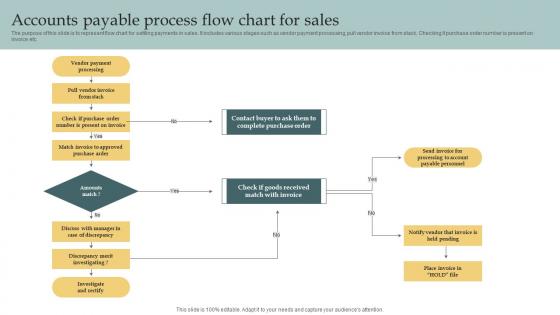
The purpose of this slide is to represent flow chart for settling payments in sales. It includes various stages such as vendor payment processing, pull vendor invoice from stack, Checking if purchase order number is present on invoice etc.
People who downloaded this PowerPoint presentation also viewed the following :
Accounts Payable Process Flow Chart For Sales with all 6 slides:
Use our Accounts Payable Process Flow Chart For Sales to effectively help you save your valuable time. They are readymade to fit into any presentation structure.





FAQs for Accounts Payable Process Flow
So accounts payable is basically your company's bill-paying department. They process invoices, make sure they're real, get approvals, then send out payments on time. Pretty straightforward stuff. They also track what you owe and when it's due - kind of like being everyone's responsible older sibling lol. Managing vendor relationships is part of it too, plus dealing with payment disputes when they come up. The real trick is timing everything right so you don't miss those early payment discounts (free money!) or get hit with late fees. Keeps the whole cash flow thing running smooth.
Honestly, automation is a game-changer for AP - it cuts out all that mind-numbing manual data entry. OCR tech pulls invoice details automatically and pushes everything through digital workflows. Your team stops doing busy work and can actually handle the tricky stuff that matters. Processing gets way faster, fewer dumb mistakes happen, and the system catches mismatches between POs and invoices before they become headaches. Oh, and definitely start with your high-volume invoices first. That's where you'll feel the difference immediately instead of messing around with one-off payments.
Ugh, invoice processing delays are the absolute worst - you're constantly chasing down approvals. Manual data entry creates so many stupid errors too. Duplicate payments happen more than you'd think, especially when departments don't talk to each other. Like, purchasing will set up new vendors without telling anyone! Cash flow gets messy when you can't predict payment timing. Missing those early payment discounts really stings financially. Vendor disputes over late payments are exhausting to deal with. Honestly, automation helps a ton if you can swing it. Set up clear approval workflows first though - that'll save your sanity.
Pay them early when you can - seriously builds trust fast. Most vendors just crave predictability over everything else, so nail down your AP process and make it transparent. They need to know exactly when payment's coming and who to bug if something goes sideways. Honestly, proactive communication saves you so much headache later. Don't ghost them when there's delays or disputes - just shoot them a heads up. Maybe set up regular check-ins or a vendor portal. Oh, and audit your current payment timeline first. You'd be surprised how many random days you can cut just by tweaking the process.
Think of accounts payable as your secret cash flow hack. Instead of paying suppliers right away, you stretch those payment terms - like going from 15 to 30 days. That way you're keeping money in your account longer for other stuff or just earning a bit more interest. It's honestly pretty brilliant when you think about it. Short on cash? Take your time paying. Flush with money? Jump on those early payment discounts. Just don't piss off your suppliers by being too aggressive with delays. Track everything so you know when the big payments are coming.
Honestly, start with approval workflows - multiple people need to sign off on payments. Saves you from fraud and catches mistakes before they happen. I'd also separate who enters invoices from who cuts the checks, trust me on this one. Regular reconciliations between your AP system and general ledger are a must. Oh, and audit your vendor files once a year to catch duplicates or sketchy accounts - you'd be surprised what you'll find. Document your processes well and train everyone the same way. Sounds boring but it'll save your butt later.
Okay so first thing - document what you're doing now, then figure out what's driving you crazy. Set up three-way matching between your PO, receipt, and invoice. Paper invoices are honestly the worst thing ever, so digitize whatever you can. Get clear approval workflows going and maybe do early payment discounts if your cash flow can handle it. Your vendor data needs to be clean (learned this the hard way). Automated reminders for due dates will save your sanity. But honestly? The real game-changer is having one central system where everyone can check invoice status instead of constantly asking you about it.
So accounts payable is actually pretty telling about how you're managing cash flow and vendor relationships. Managing it well means you're basically getting free short-term financing from payment terms - which honestly is genius. You'll build solid credibility by paying on time, and vendors might hook you up with better deals later. But here's the thing - if your AP balance is growing way faster than revenue, that's trouble. Classic cash flow warning sign. I'd watch your days payable outstanding ratio to make sure you're not screwing over relationships while trying to preserve cash. It's a balancing act.
Oh man, there's so much good stuff out there now. MineralTree and AvidXchange are solid for scanning invoices automatically - no more manual data entry hell. Approval workflows can all be digital too, which beats hunting people down for signatures. Your ERP system (QuickBooks, SAP, whatever) should sync with most tools pretty seamlessly. OCR pulls data right from PDFs, and you can automate ACH payments and check runs. Honestly though, I'd figure out what's driving you crazy first. Then demo like 2-3 options that actually fix those specific problems instead of getting distracted by fancy features you won't use.
Honestly, data analytics completely changed how we handle AP - no more flying blind on payments. We can finally see which vendors give the best early pay discounts and catch those annoying duplicate invoices before they hit. The cash flow forecasting is probably my favorite part, though I'm kind of a numbers nerd. You'll spot exactly where your approval workflows are getting stuck too. Just start pulling some basic reports on payment patterns first. I'm telling you, the stuff you'll discover about your own processes will blow your mind. Way better than the guesswork we used to do.
Track DPO first - that's how long you're taking to pay suppliers. Invoice processing time matters too, from when it hits your desk to approval. Cost per invoice was honestly a game-changer for me when I started measuring it. Don't sleep on early payment discount rates either. You'll also want to watch duplicate payments (awkward conversations with vendors, trust me), exception rates for manual intervention, and basic vendor satisfaction. Throw these on a simple dashboard and check monthly. The trends will tell you exactly where things are breaking down.
Just call up your biggest vendors and ask about early payment discounts - something like 2/10 net 30 works well. Honestly, way more suppliers say yes than you'd think because it helps their cash flow too. The math's pretty sweet: 2% discount for paying 20 days early = roughly 36% annual return. Obviously you need to know your cash situation first so you don't screw yourself over. I'd start with whoever you spend the most money with since that's where you'll see the biggest impact. My buddy did this last year and was kicking himself for not asking sooner.
Think of accounts payable as free money you get to hold onto longer. Stretch those payment terms with suppliers and boom - you've got more cash sitting in your account instead of theirs. Obviously don't be a jerk about it or burn bridges, but there's usually wiggle room. Short payments keep cash flowing for whatever pops up. Most businesses leave money on the table here, honestly. Take 60 days instead of 30 if you can swing it. That extra cash can cover emergencies or fund growth stuff instead of just disappearing to vendors immediately.
So it really depends on what industry you're in, honestly. Retail moves super fast - they need that inventory flowing. Construction? Total opposite - they'll stretch payments 60+ days because of how project billing works. Manufacturing gets tricky with all those different component suppliers to juggle. Healthcare and government are the worst though - all that red tape and approval stuff drags everything out forever. The cool thing is your industry also shapes how much negotiating power you have with vendors. I'd just peek at what similar companies are doing in your space to see if you're keeping up or falling behind somewhere.
Oh man, international vendors are such a pain. Currency fluctuations will throw off your budgets constantly, and payments take forever to process. Banking requirements are different everywhere too. The tax stuff is honestly the worst part - VAT rules, withholding taxes, transfer pricing regulations... it varies by country and makes zero sense half the time. Some regions won't even take ACH or checks, so you're stuck figuring out wire transfers. I'd definitely get your tax people involved early before things get messy. Also set up solid onboarding procedures that grab all the international requirements right away.
-
The best collection of PPT templates!! Totally worth the money.
-
I am really satisfied with their XYZ products. Used their slides for my business presentations and now I am taking their help for my son's high-school assignments. Super satisfied!!