


Cash Management Flow Chart For Vendor




Try Before you Buy Download Free Sample Product
 Impress Your
 Audience
 100%
100% Editable
 Save Hours
 of Time


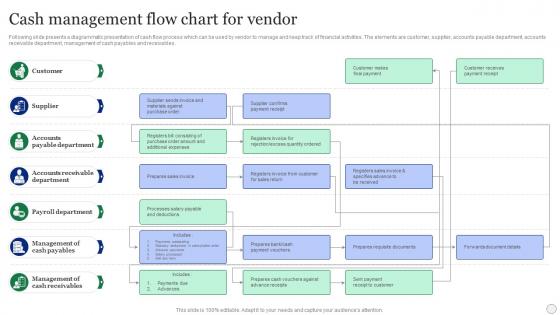
Following slide presents a diagrammatic presentation of cash flow process which can be used by vendor to manage and keep track of financial activities. The elements are customer, supplier, accounts payable department, accounts receivable department, management of cash payables and receivables.
People who downloaded this PowerPoint presentation also viewed the following :
Cash Management Flow Chart For Vendor with all 6 slides:
Use our Cash Management Flow Chart For Vendor to effectively help you save your valuable time. They are readymade to fit into any presentation structure.





FAQs for Cash Management Flow
Look, cash flow management really comes down to three things: good forecasting, strong bank relationships, and systems that track everything automatically. Most people totally underestimate how tricky the forecasting piece is though - I've seen so many businesses get burned by this. Daily cash reporting is a must so nothing sneaks up on you. You'll also want solid policies for collecting payments and deciding what to do with extra cash when you have it. My advice? Get your forecasting sorted first, then build everything else around that. Once you can predict your cash needs accurately, the rest becomes way more manageable.
Track your cash coming in and going out over 13 weeks - gives you time to catch issues early. Pull those receivables aging reports from your accounting software weekly. Customers always pay slower than they say they will, trust me on this one. Don't just look at invoice due dates, check your actual payment patterns instead. Build in buffer time for collections because people suck at paying on time. Factor in seasonal stuff and any big expenses coming up. Update it weekly with real numbers. Oh, and don't forget about your vendor payment terms - those matter too.
Cash flow forecasting software is a game changer - seriously. Automated bank reconciliation tools save so much time too. Payment automation platforms handle your AP/AR stuff, plus you get real-time dashboards showing exactly where your cash sits. Banks have these integrated treasury workstations that do multiple things at once, but honestly? Sometimes the fintech point solutions work better for specific problems. I'd map out which manual processes are driving you crazy first. Then find tools that fix those exact headaches instead of trying to revolutionize everything overnight. Way less overwhelming that way.
Basically, it's all about scale and complexity. Small businesses usually just check their bank balance daily and shuffle money between a few accounts. Big corporations? They've got whole teams forecasting cash months out and managing crazy complex treasury systems across different divisions. Honestly, I kinda envy small business owners sometimes - way less headache. Your approach should match your size though. Focus on tracking daily cash flow accurately and keep 3-6 months of expenses saved up as a safety net. Don't get caught up in fancy tools you don't actually need yet.
Dude, banking relationships are honestly a game changer for cash management. Better loan rates, higher credit limits, faster cash access - all that good stuff comes with solid relationships. Your relationship manager will actually answer when you call (which sounds basic but is huge when shit hits the fan). They'll waive fees sometimes and create custom solutions for your cash flow weirdness. Oh, and you get priority service which... honestly feels pretty nice. Don't spread yourself across ten different banks though. Stick with fewer institutions and talk to your banker regularly, not just when you're desperate for money.
Dude, the cash flow forecasting thing trips up so many people - they confuse profit on paper with actual money in the bank. Totally different beasts. Don't let cash just sit there doing nothing, but also don't blow through your emergency fund like an idiot. Invoice immediately too - I learned this the hard way when I was being "nice" about payment terms. Automate your collections if you can, seriously saves so much headache. Build a 13-week rolling forecast and check it weekly. Sounds boring but it'll catch problems before they wreck you.
Invoice right when you deliver - don't sit on it for days like some people do. Tighten up your payment terms and actually stick to them. Early payment discounts work great, like 2/10 net 30. Most customers will jump on that if it saves them money. Chase down overdue accounts fast, not weeks later. For big projects, get deposits upfront or break payments into milestones. Honestly, half the battle is just setting clear expectations from the start and not being wishy-washy about collections. Be proactive instead of scrambling to catch up later.
Honestly, start with demand forecasting - look at your historical data to predict what you'll actually need. Then do ABC analysis: categorize stuff by value and how fast it moves. Your expensive, quick-turnover items need tight control, but the cheap stuff? Don't stress as much about those. Just-in-time ordering works great until your supplier has a meltdown (been there). Set up automatic reorder points based on lead times, and maybe get key suppliers to manage their own inventory at your location. The whole game is not tying up cash in dead stock while avoiding those "oh crap, we're out" moments.
Look, cash management is literally what keeps you alive or kills you in business. You can be profitable on paper but still go bankrupt if you can't pay bills when they're due - sounds crazy but happens all the time. Good cash flow means you'll cover short-term stuff (liquidity) and have enough assets for long-term debts (solvency). Honestly, I think most business failures come down to timing issues more than anything else. You gotta forecast what you'll need and keep some reserves around, but don't just let money sit there doing nothing either.
So basically you're pooling all your subsidiary cash into central accounts - gives you way better visibility over what you actually have globally. Interest earnings go up, banking fees drop, and you're not stuck with dead money sitting around. Honestly the currency hedging alone makes it worth it since you finally know your real exposure instead of playing guesswork across regions. Quick money movement is huge too when you need liquidity fast. I'd start by mapping where your cash flows right now, then figure out which spots make sense to consolidate first.
Honestly, you've gotta pad your cash flow estimates by like 10-15% minimum. Trust me on this - our AC crapped out last July and I was scrambling. Keep some emergency money separate from your regular operating cash, somewhere you can actually get to it fast. I check our cash situation every week now because getting blindsided sucks. Here's the thing though - start tracking what keeps hitting you unexpectedly. Is it equipment breaking? Seasonal stuff? Once you see the pattern, you can plan for it better. Some "emergencies" aren't really emergencies if you think about it.
Honestly, start with your cash conversion cycle and DSO - that's days sales outstanding if you haven't seen it before. DSO shows how fast you're actually collecting money from customers. Cash conversion cycle is bigger picture stuff, like how long your money sits stuck in operations before coming back to you. Cash runway is huge too - basically tells you how many months you can keep the lights on with what you've got. Oh, and track your daily cash swings. Sounds boring but you'll catch problems way earlier. These four will get you in good shape.
So basically good cash management is like having gas in the tank when cool opportunities show up. Map out your cash cycles first - that's where you'll find the biggest wins usually. Speed up collecting what people owe you, maybe delay paying bills a bit (strategically though), and keep liquid cash around for investments. Forecasting is huge because cash flow surprises will mess you up every time. Lines of credit help bridge gaps too. I'd honestly start by just identifying where your money gets stuck - new equipment, hiring, expansion, whatever. The timing piece is everything.
Dude, cash reserves are basically your "oh shit" fund for the business. Aim for 3-6 months of expenses saved up - though yeah, that sounds terrifying when you're bootstrapping. It keeps you from panicking when sales drop or your equipment randomly dies (because it always does at the worst time). Plus you can actually say yes to good opportunities instead of being broke all the time. I'd start small though. Even saving 10% of what comes in each month adds up. Your stressed-out future self will literally love you for it.
Cash flow basically controls your whole investment game. Too much sitting around and you're losing money to inflation. Too little? You can't grab good deals when they show up. Honestly, it's so frustrating when you see a perfect opportunity but don't have the liquid cash. You'll also end up selling investments at terrible times just to pay bills. I keep about 3-6 months of expenses handy, then invest the rest. Track when money comes in and goes out - that way you know exactly when you can make moves.
-
Extremely professional slides with attractive designs. I especially appreciate how easily they can be modified and come in different colors, shapes, and sizes!
-
The best part about SlideTeam is their meticulously prepared presentations (complete-decks and single-slides both), infused with high-quality graphics and easy to edit. All-in-all worthy products.