


Align Projects With Project Resource Planning Reports And Dashboards For Resource Management




Try Before you Buy Download Free Sample Product
 Impress Your
 Audience
 100%
100% Editable
 Save Hours
 of Time


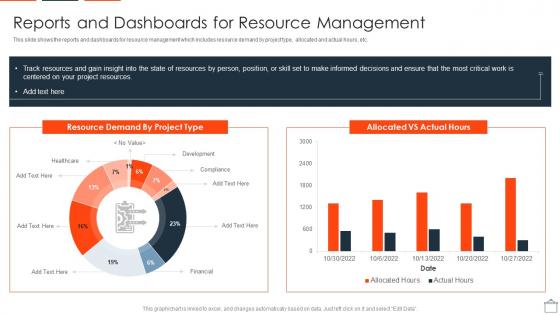
This slide shows the reports and dashboards for resource management which includes resource demand by project type, allocated and actual hours, etc.
People who downloaded this PowerPoint presentation also viewed the following :
Align Projects With Project Resource Planning Reports And Dashboards For Resource Management with all 7 slides:
Use our Align Projects With Project Resource Planning Reports And Dashboards For Resource Management to effectively help you save your valuable time. They are readymade to fit into any presentation structure.





FAQs for Align Projects With Project Resource Planning Reports And Dashboards
Look, first thing - figure out what resources you actually have available. People aren't working 40 hours a week on your stuff, trust me on that one. Map out everyone's real capacity upfront, then add buffer time because something always goes sideways. Focus on your most critical resources first and have backups ready. Track everything as you go too - your plan's worthless if you're not checking actual usage vs what you expected. Honestly, most people skip the resource inventory step, but do that before anything else kicks off.
Honestly, start with a boring resource audit - I know, I know, but hear me out. Map what your team can actually handle vs what you're asking of them. Don't dump everything on your star players (been there, regretted it). Cross-training is huge because when Sarah goes on vacation, you're not scrambling. Budget and equipment matter too obviously. The trick is staying flexible with assignments and checking in regularly. You can't just set this up once and walk away - it needs tweaks. Maybe start small this week?
Dude, tech is a total game-changer for figuring out where to put your resources. Real-time data shows you exactly what's happening, plus AI can predict demand patterns before you're scrambling. Dashboards give you that bird's-eye view, and automation kills those annoying bottlenecks. Managing resources without tech? Yeah, that's like trying to drive with your eyes closed. Pick something that works with what you already have though - don't create more headaches. I'd start with whatever's bugging you most and find one tool that fixes that specific mess.
Honestly, the whole "butts in seats" approach is so outdated - you need to track actual output instead of just who's physically there. Get some decent time-tracking software and shared dashboards so everyone can see project progress in real-time. Communication protocols are huge too, especially with different time zones (learned that one the hard way). Digital collaboration tools will show you who's available and working on what without being all micromanage-y about it. Trust through transparency beats hovering any day. Maybe start by checking what tools you already have and see where the gaps are?
Ugh, scope creep is seriously the absolute worst - it'll kill your project faster than anything else. Resource scarcity and poor allocation are nightmares too, but at least you can see those coming. My advice? Do proper planning upfront (I know, boring but necessary) and actually use resource management tools to track who's available when. Don't let people push your boundaries on scope - just say no. Also, try doing weekly resource check-ins to spot problems before they explode. Oh, and start by looking at where you're overcommitted right now. Trust me on this one.
So it really depends on your industry, right? Manufacturing companies obsess over supply chains and keeping machines running. Tech firms? They're all about talent and server capacity. Healthcare is honestly a nightmare - they're juggling staff, equipment, AND patient flow simultaneously. Retail lives and dies by inventory turnover, especially during peak seasons. Consulting firms just want to maximize those billable hours. Here's what I'd do: figure out which resource shortage would absolutely wreck your business. Maybe it's skilled workers, maybe it's raw materials. Once you know that, build everything around protecting that one thing first. The rest will follow.
Honestly, I'd start with utilization rates - basically how much your stuff is actually being used vs just sitting there. ROI and cost-per-output are obvious must-haves for the money side. Throughput's huge too since it shows what you're actually cranking out. Quality metrics are clutch though - no point being "efficient" if everything sucks, right? Also watch your resource allocation (right people, right jobs) and turnaround times. My advice? Pick like 2-3 that actually matter for your setup. Getting buried in endless spreadsheets is the worst.
Look, sustainable resource management is basically just not being stupid with your resources. You pace yourself instead of going all-out and crashing later - kinda like that marathon analogy but for business. Don't burn through your budget in month one, don't overwork your team until they quit. Build some cushion into everything. Honestly, most companies are terrible at this because they get greedy during good times. The smart move? Figure out where you're currently overdoing it and create buffer zones. Your future self will thank you when you're not scrambling to fix everything.
Dude, engaged employees will totally spot waste because they actually give a shit about results. They'll jump on cross-training to fill skill gaps, maintain equipment properly instead of letting it fall apart, and call out bottlenecks before they become disasters. Job hunting? Not happening - which saves you a fortune on hiring costs alone. Honestly, the collaboration gets so much better when people want the company to win. They'll work together on planning and resource stuff instead of just going through the motions. Start by asking where they think you're bleeding money.
Look at your old projects first - what patterns do you see in how long stuff actually took vs. what you planned? Break everything into smaller chunks because honestly, predicting 6 months out is basically impossible. Always pad your timelines by like 15-20% minimum. Trust me on this one - there's always some random thing that pops up. Your team leads are gonna know the real deal better than any fancy spreadsheet. Ask them what they think. Make a few different scenarios too - best case, realistic, and "everything goes wrong" case. Oh and don't just set it and forget it. Keep updating as you learn new info along the way.
Start by tracking how your resources actually get used vs what you think happens - the gap is usually wild. Pick your most expensive equipment or biggest team first and set up proper data collection. Watch for equipment downtime, when people are actually productive, inventory turnover, all that stuff. Most companies are genuinely surprised by what they find! Dashboards help you see bottlenecks and underused assets in real time. Honestly, I'd focus on peak demand periods too since that's where you'll probably save the most money. Just don't try to track everything at once or you'll go crazy.
Honestly, communication makes or breaks the whole thing. Weekly check-ins with your team leads are where you'll catch problems before they explode. People always ask for way more than they actually need - there's this weird psychology thing where everyone hoards resources "just in case." But if you're upfront about what's actually available and what the priorities are, most people will adjust. Short, regular conversations work better than those marathon planning sessions nobody wants to sit through. Oh, and definitely call out bottlenecks the second you spot them. Don't wait.
Honestly, start by figuring out what resources you actually need for your big goals. Map out the people, budget, and tools required to hit those targets. Getting leadership on board early is huge - they eat this stuff up when you connect resources directly to their pet projects. Track everything consistently so you can pivot when priorities shift (because they definitely will). The key is being super transparent about why you're putting money and people where you are. If you tie decisions to real business results, nobody can argue with your logic. Makes those budget conversations way less painful too.
Dude, bad resource management will absolutely wreck your project. Missed deadlines, busted budgets, team members rage-quitting - the whole nine yards. It's like dominoes falling everywhere. Map out what you actually need upfront (people, time, cash) and when you need it. Trust me on this one - I've watched solid projects turn into dumpster fires because nobody planned properly. Your deliverables tank, stakeholders lose faith, and suddenly you're just putting out fires instead of getting stuff done. Way easier to plan ahead than clean up the mess later.
Honestly, you've gotta nail down who owns what resources right from the start. Assign specific people to specific stuff and make it visible to everyone - no guessing games. Regular check-ins are crucial, but make sure teams actually explain their usage instead of just dumping random numbers somewhere. I've watched too many companies turn "accountability" into straight-up blame fests when things blow up. Celebrate smart resource choices as much as you call out bad ones. Real-time dashboards help people catch issues before they spiral. Oh, and start with just one team first - let the wins speak for themselves.
-
Thanks to SlideTeam, we have an ideal template to present all the info we need to cover. Their slides give our numbers and projections a more clear and enchanting look.
-
I faced no difficulty while searching for the slide I wanted. Honestly, the website’s interface is easy to use and can be navigated easily!