


Analysis Of Hedge Fund Performance Powerpoint Presentation Slides





Try Before you Buy Download Free Sample Product
 Impress Your
 Audience
 100%
100% Editable
 Save Hours
 of Time


Hedge funds are limited partnerships made up of private investors whose money is managed by experienced fund managers. Here is a professionally designed Analysis of the Hedge Fund Performance template. At first, the module covers the problems related to investment decisions that generate low ROI it includes company investment preference and the present value of investments with impacts of unsuitable investment. Further, it includes the global hedge fund performance, which showcases why companies should invest in hedge funds, hedge fund structure with liquidity, and redemption period with the comparison with hedge and mutual funds. Additionally, it covers the investment strategies of hedge funds, including relative value investment strategy, Event-driven, directional trading, long-short equity, short selling, and other strategies in hedge funds. Moreover, it includes the risk management for hedge funds which includes fund managers role, manager toolkit, and hedge fund diversity with asset class instruments. At last, it covers the hedge fund portfolio selection with the selection of funds using SWOT analysis, sector-wise portfolio structure, and selection of private equity and hedge fund investment with the evaluation of the monthly performance of hedge funds. Get access now.
People who downloaded this PowerPoint presentation also viewed the following :
Content of this Powerpoint Presentation
Slide 1: This slide displays the title Analysis of Hedge Fund Performance.
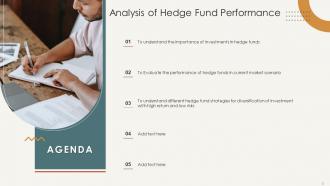
Slide 2: This slide displays the title AGENDA.
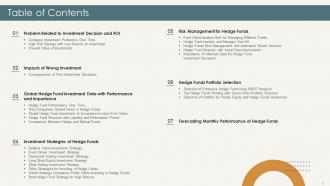
Slide 3: This slide exhibit table of content.
Slide 4: This slide exhibit table of content- Problem Related to Investment Decision and ROI.
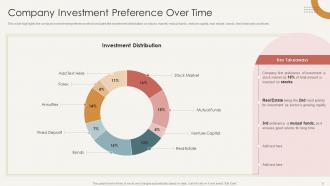
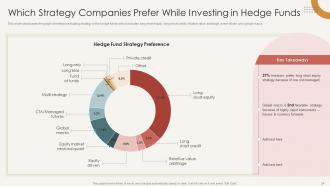
Slide 5: This slide highlights the company investment preference.
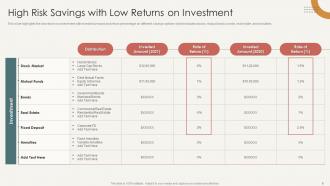
Slide 6: This slide highlights the low return on investment with invested amount and return percentage on different savings options.
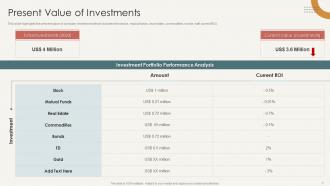
Slide 7: This slide highlights the present value of company investment which includes the stocks, mutual funds, real estate, commodities, bonds, with current ROI.
Slide 8: This slide exhibit table of content- Impacts of Wrong Investment.
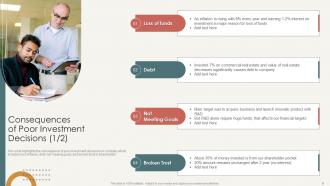
Slide 9: This slide highlights the consequence of poor investment decisions on company.
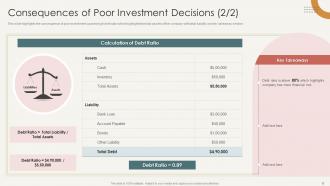
Slide 10: This slide highlights the consequence of poor investment.
Slide 11: This slide exhibit table of content- Global Hedge Fund Investment Data with Performance and Importance.
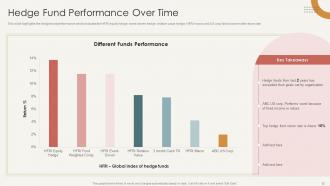
Slide 12: This slide highlights the hedge fund performance.
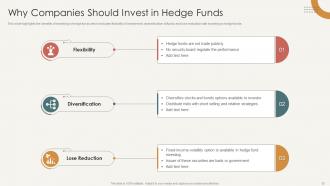
Slide 13: This slide highlights the benefits of investing in hedge funds.
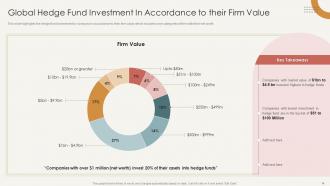
Slide 14: This slide highlights the hedge fund investment by company in accordance to their firm value which includes nine categories of firm with their net worth.
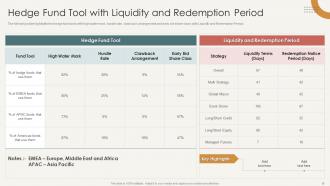
Slide 15: The following slide highlights the hedge fund tools.
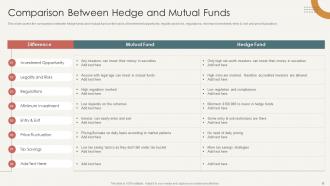
Slide 16: This slide covers the comparison between hedge funds and mutual fund on the basis of investment opportunity, legality and risks, regulations etc.
Slide 17: This slide exhibit table of content- Investment Strategies of Hedge Funds.
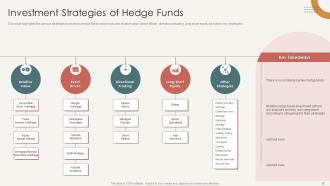
Slide 18: This slide highlights the various strategies to invest in hedge funds.
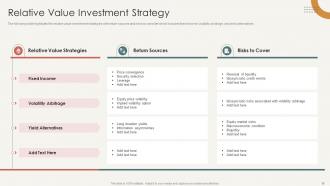
Slide 19: The following slide highlights the relative value investment strategies with return sources and risks.
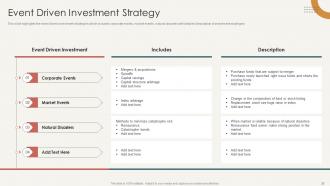
Slide 20: This slide highlights the event driven investment strategies.
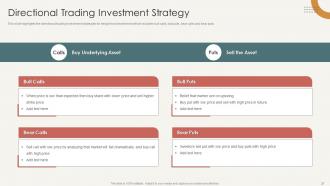
Slide 21: This slide highlights the directional trading investment strategies for hedge fund investment which includes bull calls, bull puts, bear calls and bear puts.
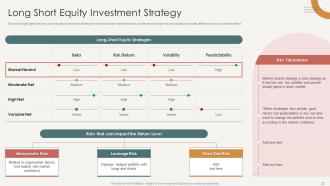
Slide 22: This slide highlights the long short equity investment strategies.
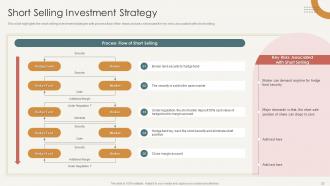
Slide 23: This slide highlights the short selling investment strategies with process flow of five steps and also showcase the key risks associated with short selling.
Slide 24: This slide showcases the graph of enterprise trading strategy in the hedge funds.
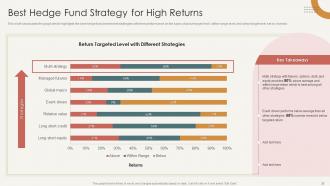
Slide 25: This slide showcases the graph which highlights the best hedge fund investment strategies.
Slide 26: This slide exhibit table of content- Risk Management for Hedge Funds.
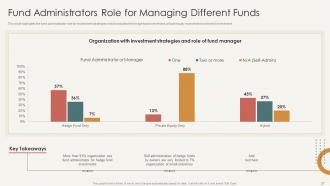
Slide 27: This slide highlights the fund administrator role for investment strategies.
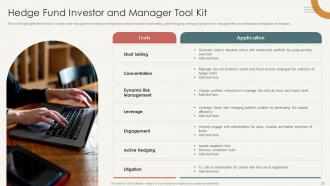
Slide 28: This slide highlights the tool kit for investor and manager for investing in hedge funds.
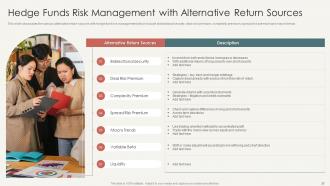
Slide 29: This slide showcases the various alternative return sources with hedge fund risk management.
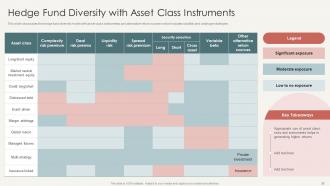
Slide 30: This slide showcases the hedge fund diversity model with asset class instruments and alternative return sources which includes volatility and arbitrage strategies.
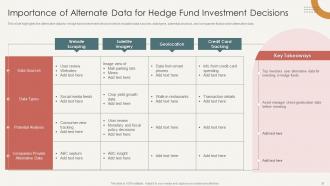
Slide 31: This slide highlights the alternative data for hedge fund investment decision.
Slide 32: This slide exhibit table of content- Hedge Funds Portfolio Selection.
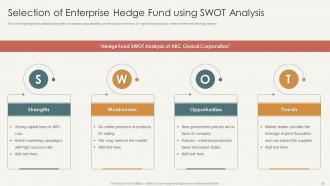
Slide 33: This slide highlights the detailed strengths, weakness, opportunities, and threats for selection of right hedge funds for better investment with high returns.
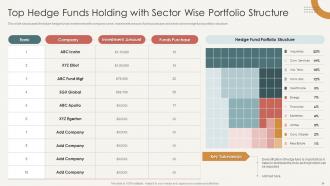
Slide 34: This slide showcases the future hedge funds investment with company name, investment amount, funds purchase and sector wise hedge fund portfolio structure.
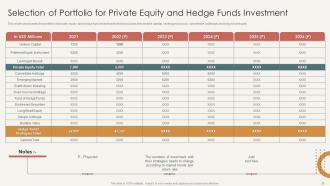
Slide 35: This slide showcases the portfolio of private equity and hedge fund investment.
Slide 36: This slide exhibit table of content- Forecasting Monthly Performance of Hedge Funds.
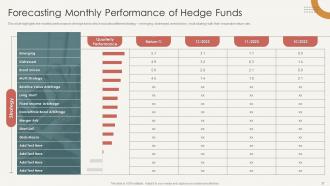
Slide 37: This slide highlights the monthly performance of hedge funds.
Slide 38: This is the icons slide.
Slide 39: This slide presents title for additional slides.
Slide 40: This slide presents your company's vision, mission and goals.
Slide 41: This slide presents title About Us.
Slide 42: This slide depicts posts for past experiences of clients.
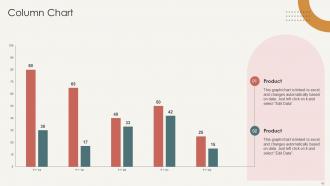
Slide 43: This slide exhibits coloumn charts for different products.
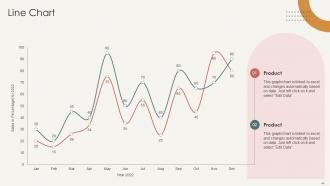
Slide 44: This slide exhibits yearly profits stacked line charts for different products.
Slide 45: This slide presents the title Our Goal.
Slide 46: This slide exhibits ideas generated.
Slide 47: This is thank you slide & contains contact details of company like office address, phone no., etc.
Analysis Of Hedge Fund Performance Powerpoint Presentation Slides with all 52 slides:
Use our Analysis Of Hedge Fund Performance Powerpoint Presentation Slides to effectively help you save your valuable time. They are readymade to fit into any presentation structure.












FAQs for Analysis Of Hedge Fund Performance
Investors should focus on risk-adjusted returns through Sharpe and Sortino ratios, maximum drawdown periods, alpha generation, volatility measures, and correlation to market benchmarks. These metrics enable comprehensive assessment by evaluating consistency, downside protection, and manager skill, with many institutional investors finding that combined analysis of return patterns and risk management delivers clearer insight into long-term performance potential.
Hedge funds differ from mutual funds through more sophisticated performance metrics like alpha generation, Sharpe ratios, and downside protection measures, while mutual funds typically focus on benchmark tracking and relative returns. Hedge funds employ complex strategies including derivatives, short selling, and leverage across alternative investments, enabling potentially higher returns but requiring advanced risk-adjusted analysis, with many institutional investors finding that hedge fund evaluation demands deeper expertise in absolute return assessment.
Alpha measures a hedge fund's ability to generate returns beyond market performance, while beta indicates correlation with market movements and risk exposure. These metrics enable investors to evaluate manager skill versus market timing, assess risk-adjusted performance, and make strategic allocation decisions, with many institutional investors finding that consistent positive alpha justifies higher fees and demonstrates genuine value creation.
The Sharpe ratio measures risk-adjusted returns by dividing excess returns by volatility, enabling investors to compare hedge funds with different risk profiles on an equal basis. This metric helps institutional investors and wealth managers identify funds delivering superior returns per unit of risk, with many finding that funds showing consistently high Sharpe ratios over multiple years ultimately deliver better long-term portfolio performance.
Liquidity significantly impacts hedge fund performance analysis by affecting portfolio valuation accuracy, exit timing flexibility, and risk assessment calculations. While liquid positions enable more precise daily NAV calculations and faster portfolio adjustments, illiquid investments can create valuation delays and redemption constraints, with many institutional investors increasingly weighing liquidity provisions against potential returns when evaluating hedge fund performance.
Fees and expenses significantly reduce hedge fund net returns through management fees, performance fees, and operational costs that can total 2-4% annually. While these fees may seem substantial, they cover sophisticated strategies, risk management, and specialized expertise, with many institutional investors finding that top-performing funds still deliver competitive risk-adjusted returns after expenses.
Traditional performance metrics like Sharpe ratio and standard deviation often fail to capture hedge funds' unique risk profiles, including tail risk, illiquidity, and non-normal return distributions. These limitations can mislead investors, as traditional metrics don't account for hedge funds' complex strategies, leverage usage, and alternative risk factors, with many institutional investors finding that comprehensive due diligence requires specialized analytical frameworks.
Market conditions significantly influence hedge fund performance through volatility patterns, interest rate changes, liquidity availability, and sector rotations that affect different strategies differently. During market downturns, long-short equity funds may outperform while momentum strategies struggle, whereas rising interest rate environments benefit credit-focused funds, with many institutional investors finding that diversified hedge fund portfolios help navigate varying market cycles more effectively than single-strategy approaches.
Hedge funds can implement diversification across asset classes, rigorous risk management protocols, dynamic hedging strategies, quantitative analytics, and regular portfolio rebalancing to mitigate risks and enhance performance. These approaches enable funds to minimize downside exposure, optimize returns across market conditions, and maintain competitive advantage, with many institutional investors finding that systematic risk controls ultimately deliver more consistent alpha generation.
Track record is critically important in hedge fund performance analysis, serving as the primary indicator of a manager's ability to generate consistent returns, navigate market volatility, and preserve capital during downturns. Institutional investors and family offices typically require minimum three-to-five-year performance histories before committing capital, with many finding that managers demonstrating consistent alpha generation and effective risk management across multiple market cycles ultimately deliver superior long-term returns and reduced portfolio volatility.
Leverage amplifies both hedge fund returns and risks by allowing funds to control larger positions with less capital, magnifying gains during favorable market conditions while significantly increasing potential losses. Through strategic debt utilization, hedge funds can enhance portfolio diversification and exploit market inefficiencies, but this creates complex risk profiles requiring sophisticated monitoring systems, ultimately demanding more rigorous due diligence from institutional investors.
Hedge funds utilize derivatives through options for directional bets, futures for portfolio hedging, swaps for interest rate exposure, and credit default swaps for risk management. These instruments enable funds to amplify returns, hedge existing positions, and access markets with limited capital, while sophisticated strategies like long-short equity and global macro approaches deliver enhanced risk-adjusted performance.
Common benchmarking practices in hedge fund performance evaluation include peer group comparisons, risk-adjusted return metrics like Sharpe and Sortino ratios, maximum drawdown analysis, alpha generation measurement, and volatility assessments. These methodologies enable institutional investors and fund managers to evaluate relative performance, risk management effectiveness, and competitive positioning, with many asset management firms finding that comprehensive benchmarking ultimately delivers enhanced transparency and improved investment decision-making across portfolios.
Investor sentiment significantly influences hedge fund performance by affecting capital flows, redemption pressures, and asset pricing across market cycles. During bull markets, positive sentiment drives increased allocations and risk-taking, while bear markets trigger redemptions and forced selling, with many funds finding that managing investor psychology becomes as critical as investment strategy for maintaining performance consistency.
Methodologies for accurate hedge fund performance attribution include factor-based attribution models, risk-adjusted return analysis, sector and style attribution, benchmark decomposition, and alternative beta analysis. These approaches enhance transparency by isolating alpha generation, identifying specific risk exposures, and separating manager skill from market movements, with many institutional investors finding that comprehensive attribution analysis ultimately delivers better due diligence insights and portfolio optimization.
-
SlideTeam is the best in the business. Their templates are engaging and customizable. You can rely on them.
-
Great product with effective design. Helped a lot in our corporate presentations. Easy to edit and stunning visuals.