


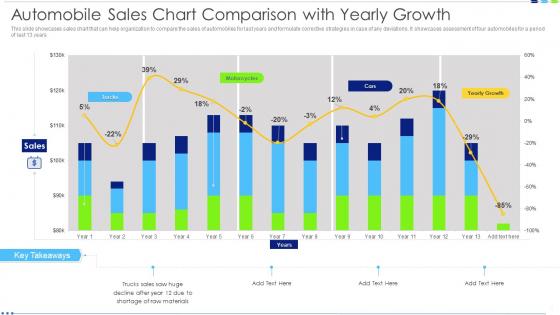
Automobile Sales Chart Comparison With Yearly Growth




Try Before you Buy Download Free Sample Product
 Impress Your
 Audience
 100%
100% Editable
 Save Hours
 of Time


This slide showcases sales chart that can help organization to compare the sales of automobiles for last years and formulate corrective strategies in case of any deviations. It showcases assessment of four automobiles for a period of last 13 years
People who downloaded this PowerPoint presentation also viewed the following :
Automobile Sales Chart Comparison With Yearly Growth with all 7 slides:
Use our Automobile Sales Chart Comparison With Yearly Growth to effectively help you save your valuable time. They are readymade to fit into any presentation structure.





FAQs for Automobile Sales Chart Comparison
Honestly, it's mostly economic recovery driving things right now. People have more money to spend again. Plus there's all that pent-up demand from when everyone was broke during COVID. Governments are throwing crazy incentives at EVs - like, genuinely insane amounts of money to get people to switch. China's EV scene is absolutely bonkers right now, even though they're still bouncing back overall. Interest rates matter way more than people think too. Oh, and emerging markets like India are finally getting the infrastructure to support car buying. If you're trying to predict this stuff, watch EV policies and regional economic data - that's your best bet.
Dude, the whole car industry is getting flipped upside down right now. EVs are exploding - we're talking 50-60% growth year-over-year while regular gas cars are basically stalling out. Tesla's still crushing it, but now you've got all these legacy automakers freaking out trying to catch up. People don't just want horsepower anymore either. They actually care about sustainability and all the tech bells and whistles. Honestly, it happened way faster than I expected. Just make sure when you're looking at the numbers, you separate EVs from gas cars because the trends are night and day different.
Honestly, people's buying habits are what make or break car sales. Good economy? Everyone's suddenly shopping for shiny new rides with all the bells and whistles. But when things get sketchy financially, they're keeping their old cars way longer or hitting up used lots instead. Different generations want totally different stuff too - like millennials are obsessed with tech while boomers just want something that won't break down. Tax season always brings a sales bump, winter kills it. Oh, and don't sleep on the whole environmental thing pushing hybrid and EV sales these days. If you're digging into the data, definitely cross-reference it with consumer confidence reports and demographic trends. That's where you'll find the actual story.
Car sales get crushed when the economy's rough. High interest rates make loans super expensive, so monthly payments become unaffordable for most people. Unemployment makes it even worse - nobody's buying cars when they're worried about keeping their job. But flip that around and you've got perfect buying conditions. Cheap money plus job security equals people actually shopping for cars. The auto industry is crazy sensitive to interest rates, probably more than almost any other business. Oh, and if you're looking at sales data, definitely check what the Fed was doing during those months. It'll make the patterns way more obvious.
Honestly, digital marketing is where it's at right now. Video content kills it - like actual test drives and real customer reviews on social media. Those online car configurators are weirdly addictive too (I spent way too long playing with one last week). Younger buyers want flexibility, so ride-sharing partnerships and subscription models are huge. Meet people online first, then make the dealership visit smooth when they're ready. Oh, and targeted social ads work way better than the old spray-and-pray approach.
So here's the thing - competition actually boosts car sales instead of hurting them. Companies start innovating like crazy when they're fighting for customers. Better tech, lower prices, higher quality. Look at Tesla - they basically forced everyone into the EV game and boom, whole new market segment. It's pretty wild how that works. Short bursts of competition create new financing deals and features that get more people buying cars period. Not just stealing each other's customers, but actually expanding the pie. When you're looking at growth trends, heavy competition usually means the market's about to get bigger.
Honestly, Asia-Pacific is where all the action is - they're hitting 6-8% growth annually thanks to China and India going crazy. Europe and North America? Pretty stagnant, maybe declining 1-2%. Africa's doing surprisingly well at 4-5% but the market's still tiny. Brazil is just... ugh, total mess depending on their economy that week. If you're looking for opportunities, Asian markets are your goldmine, but heads up - consumers there are way more price-sensitive than what you're probably used to. Different preferences too.
Policy changes totally drive EV sales more than people realize. Federal tax credits give you up to $7,500 back, plus states throw in their own rebates and perks like HOV lanes. Some places even do free parking which is honestly pretty sweet. Then there's the stick approach - higher gas taxes, emissions rules, ICE bans in certain areas. California's ZEV thing basically forces car companies to push more electrics whether they want to or not. Sales usually jump 6-12 months after new policies kick in, so that's worth watching if you're following the market trends.
Dude, supply chain issues totally mess with your sales forecasts. Your demand might be there, but if you can't get the parts? Game over. We saw this big time with cars - people wanted to buy but dealers had empty lots because of chip shortages. Super frustrating. So now you've got to think beyond just "how many people want this" and actually look at "how many can we realistically make." Build a few different scenarios into your numbers. Oh, and definitely buddy up with your supply chain people - they'll give you the heads up on what's about to go sideways before it hits your forecast.
Millennials and Gen Z are hitting prime car-buying age right now - that's massive. Boomers are downsizing too, ditching the big SUVs for something smaller. City folks want hybrids and EVs, but suburban families still love their trucks and crossovers. The Hispanic market is exploding too, honestly they're becoming huge players. Focus on electric and tech features - these younger buyers are obsessed with connectivity and actually care about environmental stuff. Way different from older generations who just wanted reliable transportation. Urban migration patterns are shifting everything around, so you've got to think location-specific when planning inventory.
Dude, the whole car dealer thing is getting turned upside down. Tesla started this direct-sales trend and now everyone's panicking to catch up online. Post-pandemic, people literally expect to buy cars like they're ordering from Amazon – configure it, get financing, the whole deal without leaving home. Pretty crazy if you think about it. Walk-ins used to be king, but online inquiries actually convert better now. Virtual showrooms are everywhere. Oh, and if you're measuring success, ditch the old foot traffic metrics. Focus on digital engagement and how well your online leads turn into actual sales instead.
Track your unit sales month-over-month and year-over-year - that's your bread and butter. Revenue growth and market share changes matter too. Sales velocity is everything though, seriously. If cars aren't moving off the lot, you've got problems. Inventory turnover rates will save you from those brutal floor plan costs eating your lunch. Don't forget lead conversion and customer acquisition costs either. Oh, and average selling price trends - almost forgot that one. Start with these basics, then you can get fancy with model-specific breakdowns later.
Yeah, spring and early summer are huge for car sales - people get their tax money back and want something nice before vacation time. Fall's pretty solid too when the new models show up. Winter though? Total dead zone, especially January when everyone's broke from Christmas lol. Weather's a killer factor - nobody's shopping cars in a blizzard, but nice weekends bring crowds. Honestly, if you're planning inventory or ads, just remember those spring months are where the money is. Front-load everything then and you'll be set.
Yeah, fuel prices do affect what people buy, but honestly it's more about how people *feel* than actual savings. Like when gas gets expensive, suddenly everyone wants a Prius. SUV sales drop off. But most folks are terrible at doing the real math on long-term fuel costs - it's weird how that works. There's usually a delay too, maybe 3-6 months, since people don't just impulse-buy cars. For forecasting stuff, I'd look at longer price trends instead of those crazy week-to-week swings that don't really mean much.
Dude, luxury cars are crushing it right now - like 8-12% growth compared to economy cars at just 3-5%. Makes sense though when you think about it. Rich people didn't really stop buying during all the economic weirdness, but regular folks? They're either waiting or going used. Electric luxury is even crazier at 15-20% growth. I was just reading about this yesterday actually. If you're looking at market stuff, premium's definitely where the action is. Budget buyers are being super cautious right now.
-
Professional and unique presentations.
-
Innovative and Colorful designs.