

Bar Chart Representing Tracking Of Budget And Expenses





Try Before you Buy Download Free Sample Product
 Impress Your
 Audience
 100%
100% Editable
 Save Hours
 of Time


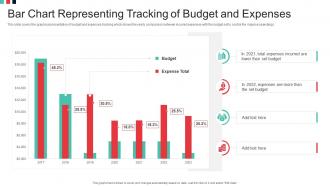
This slide covers the graphical presentation of budget and expenses tracking which shows the yearly comparison between incurred expenses with the budget set to control the impulse spendings.
People who downloaded this PowerPoint presentation also viewed the following :
Bar Chart Representing Tracking Of Budget And Expenses with all 7 slides:
Use our Bar Chart Representing Tracking Of Budget And Expenses to effectively help you save your valuable time. They are readymade to fit into any presentation structure.





FAQs for Bar Chart Representing Tracking Of
Honestly, start by just tracking what you spend for like a month - you'll probably be shocked where your money actually goes lol. After that, pick whatever method won't make you want to quit after two weeks. Mint and YNAB are solid apps if you want something automated. Spreadsheets work great too if you're a control freak like me. The envelope method is my favorite though - you basically set aside specific amounts for different categories each month. Whatever you choose, just stick with it! Seriously, the "perfect" system means nothing if you abandon it by week three.
Dude, just get an app that syncs with your bank - it'll categorize stuff automatically and you don't have to mess with spreadsheets anymore. I use Mint for personal stuff, but YNAB is solid too if you want more control. For business, QuickBooks is pretty much the standard (though honestly it's kinda clunky). The best part? You set it up once and it sends you alerts when you're about to blow your budget. Don't go crazy downloading a bunch of different apps though - pick one and actually stick with it. Game changer compared to tracking everything manually.
Honestly, the worst thing you can do is try tracking every little expense right away - total recipe for burnout. I made that mistake with super strict budgets too, like $50 for fun stuff monthly. Yeah, that lasted maybe two weeks lol. Oh, and don't forget about random expenses! Car repairs, yearly subscriptions, that kind of stuff will mess up your budget if you don't plan for them. Just start basic with your main spending categories. Track everything for a month without stressing about it, see what you actually spend, then tweak from there. You can get fancy with details later once it becomes automatic.
Honestly? I'd say monthly at the very least, but I'm kind of obsessive and check mine every week. Life gets crazy fast and before you know it you've blown your dining budget on takeout (guilty). Monthly reviews help you spot where you're consistently overspending and figure out if your categories actually make sense. Weekly check-ins are clutch if you're new to budgeting or dealing with major changes. Don't stress about making it perfect though - even a super quick 10-minute glance is better than ignoring it completely. Set a phone reminder or you'll definitely forget!
I've tried both Mint and YNAB and honestly they're both solid choices. Mint's free which is nice, plus it auto-categorizes everything so you don't have to think much. YNAB costs like $14/month but it basically forces you to plan where every dollar goes before you spend it - kinda annoying at first but actually works really well. Oh, and don't sleep on Google Sheets if you're into that sort of thing. Sometimes simple is better. Just pick whatever doesn't make you want to quit after a week, because consistency beats perfection every time.
So I'd go with the big ones first - housing, food, transport, entertainment. That covers like 80% of what you spend. Then break food into groceries vs eating out because wow, the restaurant spending adds up fast. Don't go crazy with categories though or you'll burn out in a week (been there). Maybe 8-12 total? After tracking for a month you can always split the bigger ones if needed. Honestly the hardest part is just starting and sticking with it consistently.
Look, budgets only work if they're actually doable. Build in some wiggle room with a "random stuff" fund because life happens - your car will need repairs or you'll impulse-buy something stupid. I check my spending weekly instead of waiting till month-end. Catches problems early. Automate what you can so you're not constantly making decisions about money. Here's the thing though - when you screw up (you definitely will), don't trash the whole thing. Just tweak it and move on. Honestly, if you can stick to it 80% of the time, you're golden.
Honestly, tracking your budget is a game-changer because you finally see where your money actually goes. I was shocked when I realized I was dropping like $200 a month on random coffee runs and DoorDash. Once you have that data, decisions get way easier - should I book that trip or tackle my credit card debt first? You'll catch yourself overspending before it spirals too. The patterns become super obvious after just a few weeks of tracking. Trust me, one month of writing everything down and you'll never go back to guessing.
Honestly, goal-setting changes everything with budget tracking. Without it, you're just staring at a bunch of numbers that don't mean anything. Been there! I used to track every penny but had zero clue what I was actually trying to accomplish. Your goals give context to whether you're doing well or totally screwing up. Pick something specific - like "save $500 monthly" or "cut restaurant spending by 30%." Then tracking becomes way more satisfying because you can actually see if you're winning. It's the difference between collecting random data and having an actual game plan, you know?
Oh totally! I started tracking my spending last year and wow, I had no clue where my money was going. Like I was dropping $80/month on coffee without even thinking about it. Once you actually see the numbers, you'll naturally start cutting back on dumb purchases. Those little $5-15 things really add up fast. Just track everything for a month - even the weird stuff like that random Target run. Then you can move all that wasted money into savings instead. It's honestly kind of addicting once you get into it.
Start with income vs expenses - that's your foundation. I'd track spending categories too, like how much goes to rent, groceries, nights out. Your savings rate is actually my favorite metric though, there's something satisfying about watching that percentage climb each month. If you've got debt, definitely monitor your debt-to-income ratio. Oh and compare month to month so you catch weird spending spikes or whatever. Don't go crazy tracking everything at first - pick maybe 2 or 3 things and build from there.
Oh man, family budget tracking is basically impossible if everyone's not aligned. You'll have one person obsessing over every coffee purchase while someone else is out there buying random stuff without a second thought. Kids definitely don't get why any of this matters - mine roll their eyes every time I mention money. Partners fight about what counts as "needs" vs "wants" too, which gets messy fast. Honestly, you gotta have that awkward family meeting first to figure out what you're all actually trying to achieve. Otherwise you're just arguing about spreadsheets nobody wanted to fill out anyway.
Honestly, our brains are kinda working against us when it comes to money. You know how it physically hurts to spend money but saving doesn't feel as good? That's loss aversion messing with you. Then there's this thing where we prioritize what we want right now over future stuff - like buying coffee instead of putting money toward that vacation fund. Mental accounting is weird too. People will blow through a tax refund on random stuff but pinch pennies with their regular paycheck. I do this constantly! The trick is just catching yourself when these patterns kick in.
Look at your worst-earning months from last year - that's your baseline budget. Never plan for more than that. I'd stash away 25-30% for taxes right off the bat, plus extra for emergencies. Trust me, learned this during one awful winter where everything dried up! When you're killing it, don't upgrade your life. Seriously, it's so tempting but just pump those good months into savings instead. Try percentages over fixed amounts - like 50% needs, 20% fun stuff, 30% for taxes and savings. Also, track weekly not monthly so you can catch problems early when projects randomly disappear.
Honestly, monthly reviews are a lifesaver - compare what you actually spent vs. what you planned before things get out of hand. Get some accounting software that sorts expenses automatically because doing it by hand is such a pain. Give each department spending limits and make them get approval for bigger purchases. I'd check the numbers weekly instead of waiting until something feels wrong. Oh, and definitely loop in your team leads so they actually understand their budgets. They'll catch problems way faster than you will since they're in the weeds every day.
-
Great product with effective design. Helped a lot in our corporate presentations. Easy to edit and stunning visuals.
-
Helpful product design for delivering presentation.