

Cost revenue with bar graph





Try Before you Buy Download Free Sample Product
 Impress Your
 Audience
 100%
100% Editable
 Save Hours
 of Time


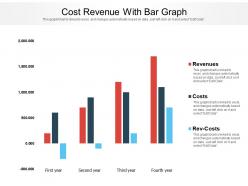
Introducing the PowerPoint template titled Cost Revenue With Bar Graph. Use this PPT layout to track the performance of your profit to the expenditure made using a bar graph. Plot this graph for different years and compare your net revenue made simultaneously. When revenue is greater than the cost expended, you will find a positive or an upright graph on the Rev-Cost parameter. Similarly, a negative plot on this parameter will comply with losses in this PPT presentation. This PowerPoint design can be easily used by industries, business hubs, Fintech companies, management accountants, and economists to track performance and map growth or regression. Organizations or individuals can perform visual comparisons of vast amounts of data to present simple conclusions using this PPT layout. You can download this editable template here. Click below.
People who downloaded this PowerPoint presentation also viewed the following :
Cost revenue with bar graph with all 2 slides:
Give your audience a fulfilling experience. They will find our Cost Revenue With Bar Graph elevating.
FAQs for Cost revenue
So basically you need to track four things: direct costs (materials, labor), indirect costs (overhead, utilities), all your revenue streams, and profit margins. Honestly, the hardest part is catching everything - I've watched so many people mess this up because they forgot about random stuff like storage fees or shipping costs. Map out all your costs first, that's way easier. Then add the revenue piece. Break down fixed vs variable costs since they act totally different when you scale up. Also throw in your volume numbers, break-even points, and maybe run a few "what if" scenarios for different sales levels. Trust me, you'll want those later.
Go after the easy wins first - stuff that barely takes effort but saves you real money. Look through your expenses and cut anything that's not directly making you cash. Those random subscriptions you forgot about? Gone. Most people try fixing everything at once, which is honestly just setting yourself up to fail. Focus on what's already working revenue-wise and put more energy there instead. Oh, and try making one of those simple cost vs. benefit charts - sounds boring but it actually helps you see which moves are worth your time. Don't overcomplicate it.
Honestly, Excel with some advanced functions can get you pretty far if you know your way around it. For visualization stuff, Tableau's solid. QuickBooks or Sage work great for the financial tracking side. Power BI's decent for dashboards too - though I feel like half the features are overkill for most people. If you're into coding, Python or R open up way more possibilities. The real game-changer is connecting your accounting data with operational stuff in real-time instead of waiting for monthly reports. Just start with whatever you're already using and build from there.
Ok so here's the thing - fixed costs don't change whether you sell 10 units or 1000, but variable costs go up with every sale. That totally changes your pricing game. High fixed costs mean you need serious volume to break even, but honestly once you hit that point? Each sale is basically pure profit. Variable-heavy businesses are way more flexible but you'll never get those crazy margins at scale. Figure out your cost structure first because that tells you if you should go premium with fewer sales or price low and chase volume. Oh and definitely know your breakeven number - makes everything clearer.
Look, cost revenue analysis is basically your pricing cheat sheet. It shows you exactly where you break even and which products are actually profitable - honestly, some results might shock you. You'll see how different price points affect your margins and spot where you're either undercharging or scaring customers away. What I love about it is you can test scenarios first. Like, run the numbers on a 10% bump or new pricing tiers before making any moves. Super helpful for understanding profit margins across customer types too.
Dude, you gotta break down your customers into segments for cost analysis - it's a game changer. Without it, you're flying blind on which groups actually make you money. Some segments look amazing revenue-wise but then you realize the acquisition costs are insane. Others might seem meh but they're basically printing money with zero drama. Track lifetime value and acquisition costs separately for each group - trust me on this. Then you can focus on the goldmines and figure out what to do with the money pits. Way better than treating everyone the same.
Oh man, seasonal trends will absolutely wreck your cost-revenue analysis if you're not paying attention. I made this mistake once - our Q4 numbers were so good they made everything else look like garbage! What worked for me was switching to year-over-year comparisons instead of month-to-month. Also break your data into quarters or seasons. Plot out your historical stuff first though, that'll show you exactly where the patterns are. Then normalize those fixed costs across your busy and slow periods. Honestly, you might need separate models for peak vs off-season because the numbers can be that different.
Honestly, the biggest trap is mixing up your fixed and variable costs - I've seen people mess this up so many times. Those sneaky overhead expenses will bite you if you're not careful. Also don't use old data or just guess what customers will do. Validate that stuff first! Short-term revenue looks nice but customer lifetime value matters way more. Seasonal changes too if that's your thing. My take? Keep it simple at first, double-check your cost buckets, and test everything with real numbers before you do anything crazy.
Dude, you absolutely need that historical data for decent forecasts. Plot your cost-to-revenue ratios monthly going back 2-3 years if possible. You'll catch seasonal stuff and see which costs jump when revenue climbs. I swear you'll spot patterns you completely missed before. Your margins probably follow cycles you didn't even realize existed. Way better than shooting in the dark, right? Oh and watch for those random outliers too - they'll mess with your predictions if you're not careful.
Start with profit margins - that's where you see how much you're actually pocketing after all the expenses hit. ROI and ROAS are no-brainers since they show if your spending is worth it. Cost per acquisition is honestly clutch for marketing stuff (I'm obsessed with that metric). Revenue per employee tells you if you're scaling smart or just throwing people at problems. Don't track everything at once though - pick like 2-3 max or you'll drive yourself crazy. Operating expense ratios are solid too but maybe add those later once you've got the basics down.
Honestly, visual templates are a game changer for presenting cost/revenue stuff. Charts and dashboards beat the hell out of dense spreadsheets - people's eyes just glaze over with all those numbers. I've been in way too many meetings where everyone's staring blankly at data they can't process. Templates save you from rebuilding everything each time too. Executives can spot trends and problems instantly with simple bar charts for costs and line graphs for revenue. Trust me, you'll see people actually engage instead of checking their phones during your next presentation.
Look, don't save cost-revenue analysis for some separate meeting later. Build it right into your quarterly reviews from the start. Before any big moves - new product launch, market expansion, whatever - run those numbers first. I can't tell you how many companies I've watched crash because they figured out their margins were garbage way too late. The whole point is stress-testing your ideas before you commit. Which initiatives actually make you money? Start small though. Pick one decision you're facing and do a quick cost-benefit breakdown this week.
Look, don't fudge the numbers to make your bosses happy - I've seen people get burned by this. Include ALL the costs, even the crappy ones that tank your ROI. Cherry-picking data or convenient timeframes is tempting but it'll bite you later. Think beyond just profit too - how does this affect actual people, employees, the community? Your work should be transparent enough that another analyst could recreate it. Oh and document everything properly because you'll definitely forget your methodology six months from now. Trust me on that one.
Honestly, track your unit economics every month - I know it's not the fun part of running a startup, but it's what keeps you alive. Figure out which customer segments and channels actually make you money, then go hard on those. The ones bleeding cash? Cut 'em loose. Your LTV to CAC ratio is basically your north star here. I've seen too many startups just throw money at everything hoping something sticks. Don't be that guy. Let the data tell you where to put your limited cash instead of guessing.
Netflix totally nailed this when they ditched DVDs for streaming - they crunched the numbers on customer costs vs. lifetime value and saw streaming would crush it long-term, even with crazy upfront tech costs. Amazon did something similar with Prime. Free shipping sounds expensive but people buy way more stuff and stick around longer. Oh and Southwest - they're ruthless about cutting routes that don't make money while going all-in on the profitable ones. You should totally do this with your customers too. Figure out which segments actually make you money, not just the ones bringing in revenue.
No Reviews