


Financial Recession 2008 Powerpoint Presentation Slides




Try Before you Buy Download Free Sample Product
 Impress Your
 Audience
 100%
100% Editable
 Save Hours
 of Time


Explain the damaging impact of the financial crisis using our Financial Recession 2008 PowerPoint Presentation Slides. The stagnation PPT templates showcase the major financial bubble burst of all times and the impact of the great recession on the financial banks. The financial crisis PowerPoint presentation also explains the contribution of investment banks, money lenders, and credit rating agencies in fueling the condition. The inflation PPT slideshow conveys important facts like the introduction of credit default swaps by the traditional insurance companies to back the insolvency of homemakers, subprime effect, bailout packages, and fine paid by banks. You can also explain the current scenario as included in the economic slump PowerPoint slideshow along with various measures taken for economic growth like fed tapering quantitative easing etc. You can also focus on the unequal effect of recession around the world using our global depression PPT graphic, with a sustained recession in the developed economies particularly North America, and South America.
People who downloaded this PowerPoint presentation also viewed the following :
Content of this Powerpoint Presentation
Slide 1: This title slide introduces Financial Recession 2008. Add the name of your company here.
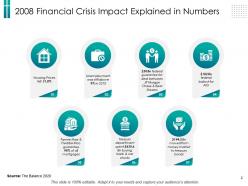
Slide 2: This slide presents the 2008 Financial Crisis Impact Explained in Numbers. This includes: Housing Prices fell 31.8%, Unemployment was still above 9% in 2010, $30 Bn federal guarantee for a deal between JP Morgan Chase & Bear Stearns, and many more.
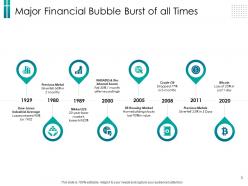
Slide 3: This slide presents the Major Financial Bubble Burst of all Times. Some examples are: Dow Jones Industrial Average in 1929, Precious Metal in 1980, Nikkei 225 in 1989, and more.
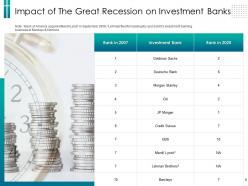
Slide 4: This slide presents the Impact of The Great Recession on Investment Banks. This includes banks like Goldman Sachs, Deutsche Bank, Morgan Stanley, and others.
Slide 5: This slide presents the 2008 Financial Crisis Cost with regards to Bear Stearns Bailout, Fannie & Freddie Bailout, TARP Bank Bailout, and APRA Tax Cuts & Spending.
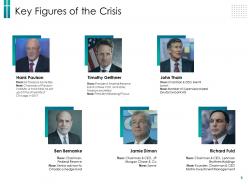
Slide 6: This slide shows the Key Figures of the Crisis which include Hank Paulson, Timothy Geithner, John Thain, and others.
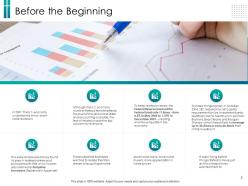
Slide 7: This slide writes what happened Before the Beginning.
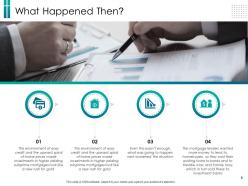
Slide 8: This slide presents What Happened Then?
Slide 9: This slide showcases How did it Spread?
Slide 10: This slide shows How did those who bought CDOs Protect themselves?
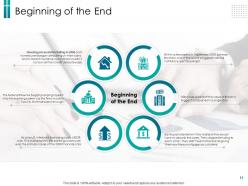
Slide 11: This slide showcases the Beginning of the End.
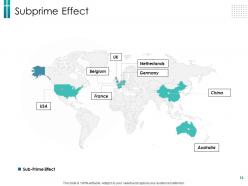
Slide 12: This slide shows the Subprime Effect in various countries like the UK, Netherlands, Germany, and many others.
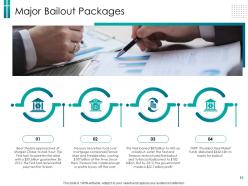
Slide 13: This slide lists the Major Bailout Packages.
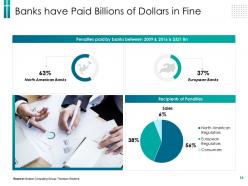
Slide 14: This slide shows how the Banks have Paid Billions of Dollars in Fine.
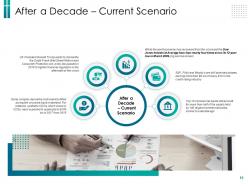
Slide 15: This slide represents After a Decade – Current Scenario.
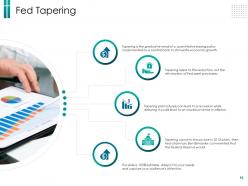
Slide 16: This slide details the Fed Tapering.
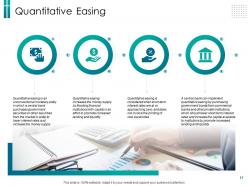
Slide 17: This slide talks about Quantitative Easing.
Slide 18: This slide contains the Financial Recession 2008 Icons Slide for your choosing.
Slide 19: This slide introduces the Additional Slides.
Slide 20: This slide provides the Mission for the entire company. This includes the vision, the mission, and the goal.
Slide 21: This slide shows the members of the company team with their name, designation, and photo.
Slide 22: This slide contains the information about the company aka the ‘About Us’ section. This includes the Professional, Creative and Talented.
Slide 23: This slide presents Our Goal- the various goals of the company.
Slide 24: This slide shows comparison between laptop and mobile users.
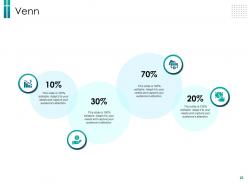
Slide 25: This slide provides a Venn diagram that can be used to show interconnectedness and overlap between various departments, projects, etc.
Slide 26: This is a slide with a 30 60 90 Days Plan to set goals for these important intervals.
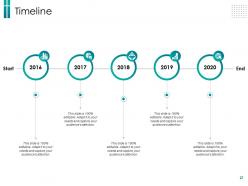
Slide 27: This slide is a Timeline template to showcase the progress of the steps of a project with time.
Slide 28: This slide will have a quote of your choosing.
Slide 29: This slide contains Post It Notes that can be used to express any brief thoughts or ideas.
Slide 30: This is a Thank You slide where details such as the address, contact number, email address are added.
Financial Recession 2008 Powerpoint Presentation Slides with all 30 slides:
Use our Financial Recession 2008 Powerpoint Presentation Slides to effectively help you save your valuable time. They are readymade to fit into any presentation structure.










FAQs for Financial Recession 2008
The 2008 financial recession stemmed from subprime mortgage lending, excessive risk-taking by financial institutions, inadequate regulatory oversight, complex derivatives like mortgage-backed securities, and unsustainable housing market speculation. These interconnected factors created systemic vulnerabilities that, when housing prices collapsed, triggered widespread bank failures, credit freezes, and global economic contraction, ultimately demonstrating how institutional risk management failures can cascade across entire economies.
Subprime mortgage lending fueled the crisis by extending credit to borrowers with poor credit histories, packaging these risky loans into complex securities, and spreading them throughout the global financial system. Banks, investment firms, and insurance companies found themselves holding worthless mortgage-backed assets when housing prices collapsed, ultimately triggering widespread institutional failures and requiring massive government bailouts.
The housing bubble inflated global asset values, created excessive financial interconnectedness through mortgage-backed securities, and encouraged risky lending practices across international markets. When housing prices collapsed, it triggered cascading failures in banks worldwide, froze credit markets, and ultimately delivered a synchronized global recession, with many economies finding their financial systems deeply interconnected and vulnerable.
Financial derivatives, particularly mortgage-backed securities and credit default swaps, amplified the 2008 recession by spreading subprime mortgage risks across global financial institutions, creating interconnected vulnerabilities that traditional risk models failed to capture. These complex instruments transformed localized housing market problems into systemic failures, with banks, investment firms, and insurance companies finding their derivative exposures ultimately delivered catastrophic losses rather than the promised risk diversification.
Government policies significantly contributed through deregulation of financial markets, relaxed lending standards, and policies encouraging homeownership without adequate oversight. The repeal of Glass-Steagall, reduced capital requirements for banks, and government-sponsored enterprises promoting subprime mortgages created systemic vulnerabilities, while regulatory agencies failed to monitor increasingly complex financial instruments, ultimately enabling the widespread risk-taking that precipitated the crisis.
The 2008 recession caused U.S. unemployment to surge from 5% to over 10% by 2009, with approximately 8.8 million jobs lost between 2007 and 2010. Manufacturing, construction, and financial services experienced the steepest declines, while many organizations found that strategic workforce restructuring and enhanced operational efficiency became essential for navigating the challenging economic landscape and maintaining competitive advantage.
The 2008 financial crisis severely undermined consumer confidence through massive job losses, plummeting home values, and widespread economic uncertainty, leading to dramatically reduced spending across all sectors. Consumers shifted toward essential purchases, delayed major investments like homes and cars, and increased savings rates, ultimately creating a prolonged economic contraction that required years of recovery.
Key lessons include implementing stronger capital requirements, diversifying risk portfolios, enhancing stress testing protocols, improving liquidity management, and establishing comprehensive oversight frameworks. Financial institutions now prioritize real-time risk monitoring, regulatory compliance, and strategic reserve allocation, with many banks finding that these enhanced practices deliver greater operational stability, improved investor confidence, and competitive advantage in an increasingly volatile economic landscape.
The 2008 recession impacted banks differently based on their exposure to subprime mortgages, with investment banks like Lehman Brothers collapsing while commercial banks faced varying degrees of losses. Large institutions such as Bank of America and Citigroup required significant government bailouts, while smaller community banks often struggled with commercial real estate portfolios, ultimately reshaping the entire financial landscape through increased regulation and consolidation.
The federal government implemented the Troubled Asset Relief Program (TARP), American Recovery and Reinvestment Act, Federal Reserve quantitative easing, bank stress tests, and Dodd-Frank financial reforms. These comprehensive measures stabilized financial institutions through capital injections, stimulated economic growth via infrastructure spending, and enhanced regulatory oversight, ultimately restoring market confidence and delivering sustained economic recovery.
Global interconnectedness amplified the 2008 recession by enabling rapid contagion across borders through integrated banking systems, cross-border investments, and interdependent trade relationships. When major financial institutions like Lehman Brothers collapsed, the shock waves immediately spread to European banks, Asian markets, and emerging economies, ultimately creating synchronized global downturn with reduced trade and coordinated economic decline.
Credit rating agencies played a critical role by assigning inflated AAA ratings to mortgage-backed securities and collateralized debt obligations that contained high-risk subprime mortgages, misleading investors about actual risk levels. These agencies, including Moody's and Standard & Poor's, faced conflicts of interest since they were paid by the same financial institutions whose products they rated, ultimately contributing to widespread investment in toxic assets that collapsed when the housing bubble burst.
The 2008 recession prompted comprehensive regulatory overhauls, including the Dodd-Frank Act, Basel III capital requirements, enhanced stress testing, and stricter oversight of systemically important financial institutions. These reforms fundamentally transformed banking operations by increasing capital buffers, limiting proprietary trading, and enhancing consumer protections, with financial institutions finding that while compliance costs rose, these measures ultimately delivered greater market stability and restored public confidence in the financial system.
The 2008 recession severely impacted small businesses through reduced consumer spending, tightened credit access, decreased cash flow, and limited investment capital, forcing many to downsize or close operations. However, it also sparked entrepreneurial innovation, with many displaced professionals launching cost-effective startups and nimble businesses finding opportunities in emerging markets, ultimately delivering new business models and services.
Future recessions can be mitigated through enhanced financial regulation, improved risk management systems, stronger capital requirements for banks, and better early warning mechanisms. These approaches enable more robust oversight of systemic risks, streamlined crisis response protocols, and strategic diversification across sectors, with many financial institutions finding that proactive stress testing and regulatory compliance ultimately deliver greater market stability and competitive resilience.
-
Great product with effective design. Helped a lot in our corporate presentations. Easy to edit and stunning visuals.
-
Unique and attractive product design.
-
Awesome presentation, really professional and easy to edit.
-
Great designs, really helpful.
-
Thanks for all your great templates they have saved me lots of time and accelerate my presentations. Great product, keep them up!
-
I discovered this website through a google search, the services matched my needs perfectly and the pricing was very reasonable. I was thrilled with the product and the customer service. I will definitely use their slides again for my presentations and recommend them to other colleagues.
-
Innovative and attractive designs.
-
Awesome presentation, really professional and easy to edit.
-
Unique and attractive product design.
-
Excellent products for quick understanding.