


Financial Reporting Powerpoint Ppt Template Bundles




Try Before you Buy Download Free Sample Product
 Impress Your
 Audience
 100%
100% Editable
 Save Hours
 of Time


Introducing our comprehensive PowerPoint PPT presentation on Financial Reporting, designed to provide a detailed understanding of the accounting and analysis aspects involved in the financial reporting process. Our visually engaging financial presentation ppt explores the fundamental concepts of financial reporting and the importance of accurate financial statements. With a focus on transparency and compliance, our PPT covers key topics such as balance sheets, income statements, cash flow statements, and more. Delve into the intricacies of accounting methods, measurement principles, and disclosure requirements, enabling you to confidently interpret financial data and make informed business decisions. Whether youre a student, professional, or entrepreneur, this PPT serves as an essential resource for mastering financial reporting and enhancing your financial analysis skills.
People who downloaded this PowerPoint presentation also viewed the following :
Financial Reporting Powerpoint Ppt Template Bundles with all 19 slides:
Use our Financial Reporting Powerpoint Ppt Template Bundles to effectively help you save your valuable time. They are readymade to fit into any presentation structure.
-
Financial Reporting
-
Strategies to improve financial reporting process
-
Comparison matrix of financial reporting software
-
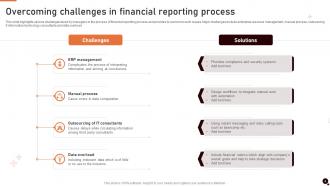
Overcoming challenges in financial reporting process
-
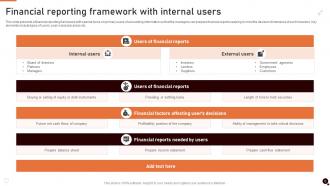
Financial reporting framework with internal users
-
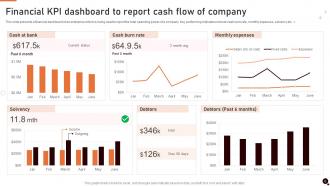
Financial KPI dashboard to report cash flow of company
-
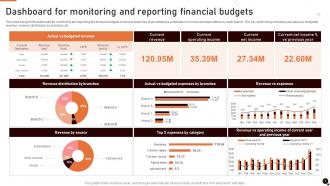
Dashboard for monitoring and reporting financial budgets
-
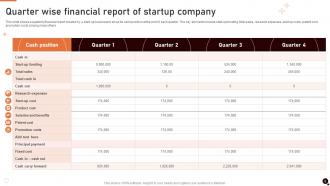
Quarter wise financial report of startup company
-
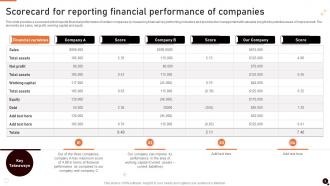
Scorecard for reporting financial performance of companies
-
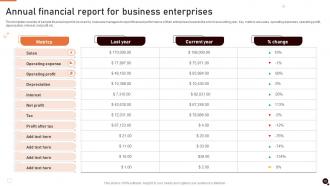
Annual financial report for business enterprises
-
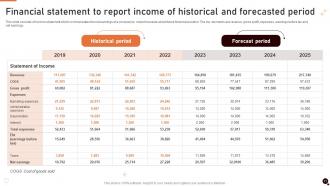
Financial statement to report income of historical and forecasted period
-
Financial performance analysis and reporting icon
-
Financial statement reporting and analysis icon
-

Thanks for watching
-

-

-

-

-

FAQs for Financial Reporting Powerpoint
Okay so first thing - always check the income statement for revenue and expenses. Balance sheet shows what they own vs what they owe. Cash flow is honestly way more important than profit though, like you can be "profitable" but still broke if cash isn't actually coming in. Also don't ignore those boring footnotes, they'll tell you if they're doing any weird accounting stuff. I always compare at least 3-4 quarters to see if there's actually a pattern or just a lucky month. The numbers tell a story but you gotta look at the whole picture, not just one snapshot.
So basically, public companies are a total pain compared to private ones. Way more red tape - you've got quarterly 10-Qs, annual 10-Ks, and the SEC breathing down your neck constantly. GAAP compliance is non-negotiable. Private companies? They can pretty much do whatever works for their stakeholders. The audit requirements alone make public accounting way more stressful, plus you're dealing with SOX compliance on top of everything else. Mess up and you could face securities violations. If you're switching between them, definitely get familiar with SOX if going public. For private, just ask what their reporting setup looks like since it varies so much.
So IFRS is way more flexible - you get to use professional judgment for stuff like asset valuations and revenue recognition. GAAP? Total opposite. It's super rule-based and tells you exactly what to do in most situations. Honestly, IFRS can feel liberating but also kinda scary if you're not used to making those judgment calls. Here's the thing though - if you're dealing with international stuff, IFRS is probably your best bet since like 140+ countries use it. Just figure out what your stakeholders actually expect first. Oh, and make sure your team's comfortable with the flexibility because it's a different mindset entirely.
Okay so first thing - get your team on the same page with procedures and stick to them. I know documentation is mind-numbing but you've gotta do it anyway. Regular audits (both internal and external) will save your butt by catching mistakes early. Train your people on current standards because rules change constantly and nobody has time for compliance issues. Oh, and always have someone else review the big stuff before it goes out. Trust me, two sets of eyes beats one every time. Strong internal controls aren't glamorous but they'll keep you out of trouble.
Dude, financial reporting tech has gotten insane lately. Everything's automated now - data collection, error checking, real-time reports instead of waiting forever. Your team can work from literally anywhere with cloud stuff. AI even catches weird patterns you'd totally miss. I swear it's like 10x faster than when I started working. Just make sure whatever tools you pick actually play nice with what you're already using, or you'll hate your life. Nothing worse than software that doesn't talk to each other.
Think of financial ratios as your cheat sheet for reading companies without drowning in boring spreadsheets. Compare things like debt-to-equity or current ratio over time and you'll catch trends fast. Way better than staring at raw numbers when you're looking at different sized companies - honestly saved me so much time when I was researching stocks last year. Don't just pick one ratio though, that's like judging a movie from the trailer. You want the full picture: profitability, liquidity, debt levels, and how efficiently they're running things. Use them together and you'll actually know what's going on.
Honestly, you're gonna hate the impairment testing most - figuring out what assets are actually worth when everything's tanking. Revenue recognition becomes a nightmare since clients keep changing or ditching contracts. Fair value measurements? Good luck when markets are bouncing around like crazy. The disclosure requirements will kill you too - so much extra documentation about risks and uncertainties. Management's making judgment calls left and right, which means you need bulletproof notes for everything. Start those impairment tests way earlier than usual though, trust me. Auditors turn into hawks during downturns and will question every single assumption you made.
Honestly, charts and graphs are a lifesaver for financial stuff. Nobody wants to dig through endless spreadsheet rows trying to spot what's going on with revenue trends. A good dashboard can turn your messy P&L into something that actually tells a story right away. Bar charts work great for comparisons, line graphs for showing changes over time. Pie charts... eh, use them sparingly though. They're kind of overrated IMO. Start with whatever metric matters most to your audience and build everything else around that. Way easier than making people hunt through numbers for twenty minutes.
Close all journal entries first and reconcile everything - yeah, even those tiny accounts that seem pointless because they'll definitely cause headaches later. Get your inventory counts locked down. Record all accruals and deferrals properly, and honestly, the auditors will love you for having solid documentation on estimates. Don't forget to double-check debt schedules, asset rolls, and equity stuff. Here's what I always do though - compare everything to last year and budget numbers because that's where you'll catch the weird errors. Budget extra time because something random always goes wrong.
Oh man, currency stuff is such a pain. So when you're consolidating foreign subs, you translate their financials into your reporting currency and boom - exchange rate changes hit your equity as translation gains/losses. Transaction gains/losses from foreign sales or purchases during the year? Those mess with your income statement instead. Honestly, the worst part is how it makes your performance look all over the place even when business is actually running smooth. Just make sure you break out the FX impacts clearly in your notes - otherwise people won't know what's real operations vs just currency noise.
Honestly, it all comes down to not screwing over the people who trust your numbers. Be accurate and transparent - don't hide stuff in footnotes hoping nobody notices. Follow GAAP rules, disclose anything material, and avoid sketchy conflicts of interest. I mean, auditors aren't stupid, they'll catch creative accounting eventually. Your investors and creditors are making real decisions based on what you report. Would you bet your own money on financial statements that were deliberately misleading? Probably not. So don't put others in that position either.
Honestly, start with segregation of duties - don't let one person handle an entire financial process alone. Regular reconciliations and approval workflows are your friend. External audits are a given, but internal ones? Super underrated for catching stuff early. Your accounting team needs ongoing training on standards and ethics, obviously. The real game-changer though is building a culture where people actually speak up about problems without worrying they'll get fired for it. Oh, and definitely review your current approval processes first - you'll probably find some glaring gaps that are easy fixes.
Honestly, non-financial metrics are where the real story lives. Your revenue might look solid this quarter, but what if customer churn is through the roof? That's the stuff investors actually need to know about. These metrics - customer satisfaction, employee turnover, market share - they're like early warning signs for what's coming financially. Way more predictive than just looking at last quarter's numbers. Find the ones that actually move the needle for your specific business and track them religiously. It's kinda like having a crystal ball, but with data.
So basically the SEC and other regulators make companies follow accounting rules like GAAP or IFRS - it's like having referees in a game. Independent CPAs audit everything to make sure the numbers aren't BS. They'll literally question every single expense (learned this the hard way at my last job). The auditors give their opinion on whether your financials are accurate or if there's sketchy stuff going on. If you're doing reports, document everything because they'll want proof for absolutely everything. It's honestly pretty intense but keeps companies from lying about their finances.
Honestly, quarterly reports looking backwards feel ancient at this point. Real-time dashboards are where it's at now - plus you gotta include ESG stuff since that's what investors actually want to see. Forward-looking metrics beat historical numbers every time. Think scenario planning, risk assessments for things like supply chain chaos (ugh, don't get me started on that mess). Cybersecurity risks too. Your stakeholders want transparency around sustainability impacts and market volatility. Start by figuring out what non-traditional metrics your investors keep asking about, then build frameworks around those emerging needs. Way more useful than the old approach.
-
Really like the color and design of the presentation.
-
Superb! The innovative and inspiring template designs provide an edge to the presentation.