


Five Stages Of Procurement Process Flow Chart




Try Before you Buy Download Free Sample Product
 Impress Your
 Audience
 100%
100% Editable
 Save Hours
 of Time


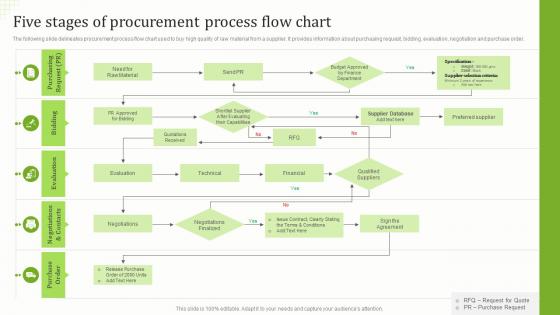
The following slide delineates procurement process flow chart used to buy high quality of raw material from a supplier. It provides information about purchasing request, bidding, evaluation, negotiation and purchase order.
People who downloaded this PowerPoint presentation also viewed the following :
Content of this Powerpoint Presentation
Eraser, rubber band, and nail cutter! These daily-use essentials vanish when you need them the most. You won’t find the correct twin of the pair of socks when you're getting late for work. Disorganization is the new normal of today’s generation.
Even as the end-user might struggle to find the staples, procurement of these items cannot be a step out of order or delayed by a day.
However, you can’t gamble with subpar efforts in the procurement business.
Everything must be on point, or you may have to deal with financial stress for many reasons: over-purchasing raw materials, inadequate bidding, and more!
Paper-driven procurement has a ripple effect on an organization's bottom line. Manual inefficiencies cost businesses a lot of money through long purchase cycles, missed discounts, and transaction disputes. Accelerating procurement processes with antiquated tools like spreadsheets and emails is akin to starting a microwave with steel and flint.
Organizations must abandon out-of-date procurement practices to benefit from early purchase and payment discounts and adopt technological solutions. Automating your procurement process with our Procurement Process Flow Chart Template is a great way to accomplish this. It marks steps you must follow to ensure nothing is omitted. The 100% editable and customizable nature of our PowerPoint Templates provides you with the structure and the desired flexibility to edit your presentations.
Let’s get started!
Template 1: Five Stages of Procurement Process Flow Chart
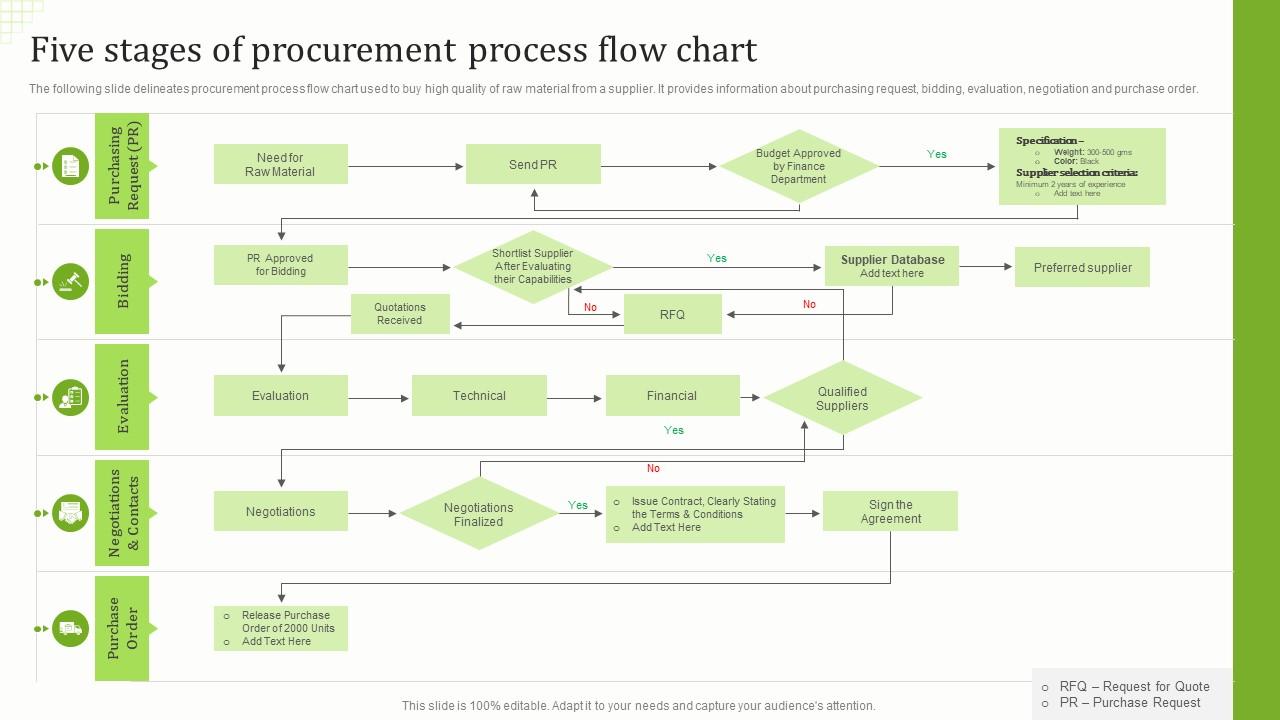
This PPT Slide with a unique white and green layout presents the five major stages of the procurement process: purchasing request, bidding, evaluation, negotiations & contracts, and purchase order. Throughout these stages, several smaller pieces work to ensure an inclusive approach. What are these? Highlighting the need for raw materials, sending purchase requests, approving the budgets, shortlisting suppliers after receiving quotations, doing negotiations, and signing the final contract. This PPT ensures the procurement process is well automated in a way that streamlines activities for optimal results.
One Product and Five Stages of Efficiency
Procurement is an inevitable process and it must be streamlined to extract value-added results for an organization. With the help of our Five Stages of Procurement Process Flow Chart PPT Template, you can achieve just that. It outlines steps supplemented with relevant activities to ensure that every piece is at the right place in the procurement puzzle.
Procurement is increasingly seen as an automated process. However, certain people shoulder the responsibility of ensuring it doesn’t crack and fail. Explore our premium product on ‘Procurement Process Overview flow Chart based on Relevant Roles’ to better understand the concept.
We have another product on the ‘Business Purchasing and Procurement Process Flow Chart.’ Click here to explore.
Five Stages Of Procurement Process Flow Chart with all 6 slides:
Use our Five Stages Of Procurement Process Flow Chart to effectively help you save your valuable time. They are readymade to fit into any presentation structure.





FAQs for Five Stages Of Procurement
Honestly, the boring stuff comes first - figure out what you're actually spending money on and where. Look around at who else is selling what you need. What's your company actually trying to achieve here? Cost cuts, less risk, going green? Match that up with what the business wants overall. From there, you can map out different approaches for different types of purchases. Set up whatever processes and tools you need to make it happen. But here's the thing - get people on board early or you'll be banging your head against the wall later when nobody wants to cooperate with your shiny new system.
Honestly, automation is a game changer for all that tedious stuff - purchase orders, approvals, vendor setup. AI tools are pretty good at spotting spending patterns and savings you'd totally miss on your own. Digital platforms give you way better visibility into suppliers and risk issues too. Teams I know have cut their processing time by 60% just from going digital with workflows. Oh, and cloud-based software makes it so much easier when you're juggling multiple people on projects. My advice? Don't try to overhaul everything at once. Pick your biggest headache first and find one tool that actually fixes it.
Look, good supplier relationships are honestly what separate decent procurement from great procurement. You'll get better prices when they actually like working with you. During shortages? You're first in line instead of scrambling. They'll also tip you off about new stuff before your competitors hear about it. The smartest teams I know treat their top suppliers like actual partners - working together on cutting costs and improving quality, not just placing orders. Pick your 5-10 most important suppliers and start having real conversations with them regularly. Trust me, it pays off way more than just being transactional about everything.
Ugh, supply chain chaos basically blows up your whole procurement game. Single suppliers? Forget it - you need multiple options now or you're screwed when things go sideways. Lead times are all over the place, so stock up earlier and keep extra inventory (annoying but necessary). Budgeting becomes this wild guessing game since costs jump around constantly. Here's what really matters though - pick suppliers who can actually handle disruptions, not just whoever's cheapest. Honestly, flexibility is everything now. Always have backup plans ready because something will definitely break.
Track cost and performance stuff together - you need both sides. Cost savings and spend under management are obvious ones, but honestly those savings percentages can be total BS sometimes. Supplier performance scores matter too. Cycle time from req to PO tells you if your process is dragging. Contract compliance rates, supplier diversity, delivery performance - all good indicators. Oh and keep an eye on supplier financial health because nobody wants their key vendor going under. Pick like 3-5 metrics that actually matter to your business instead of drowning in data.
Honestly, just bake sustainability stuff right into how you pick vendors. Check their environmental certs, how they treat workers, carbon footprint - the usual. Most companies expect this now anyway, so you're not being weird about it. Track things like waste and energy use so you can actually see if it's working. Oh and definitely start with your biggest suppliers first - way more bang for your buck there. Don't make it some separate thing either, just fold it into your normal buying process. It'll become second nature pretty quick.
Honestly, the worst part is you're always working with half the info you need - supplier financials are sketchy at best, and good luck getting real performance data. Supply chains are so tangled now that you can't even properly vet the subcontractors. Rush jobs make everything worse (why is it always "we needed this yesterday"?). Global sourcing adds language barriers and regulatory headaches that change by country. My advice? Build a solid evaluation system with multiple sources. Always call references, even when you think you already know enough. Trust me on that last one.
Honestly, it's a game-changer compared to just winging it with gut instincts. You'll actually see your spending patterns clearly - like which suppliers are reliable and which ones flake out constantly. The forecasting part is clutch because you can predict when demand's gonna spike instead of scrambling last-minute (and paying way more). I pulled our spend data from last year just to see what would happen, and wow - so many cost-saving opportunities just sitting there. Analytics also help you check if you're getting ripped off on pricing. Trust me, start with your past year's data and look for trends. You'll probably find some stuff that makes you go "seriously?"
Start with the basics - check their finances, compliance record, and security setup. You don't want them going belly-up with your data. Always call their other clients because vendors will promise you the moon (learned that one the hard way). Set up some kind of scoring system so you can actually compare different options fairly. Business continuity plans matter too, especially if they're in hurricane country or whatever. The real trick is doing your homework before signing anything. Nobody wants to find out their vendor sucks after it's too late. Plan to review them yearly or if something big changes.
So basically, you want to stop letting everyone buy their own random stuff and start buying in bulk instead. That's where the real savings come from - better prices when you consolidate orders and negotiate as one big customer. Plus you'll cut out duplicate purchases and get departments using the same suppliers. Honestly, most companies mess this up by treating procurement like it's just paperwork. Build good relationships with your vendors too - they'll hook you up with better deals over time. Track those savings numbers because leadership loves seeing actual dollars saved.
Honestly, negotiation and relationship stuff is where you'll live day-to-day. Data analysis has gotten massive too - you're constantly digging into spend reports and supplier metrics. Risk management is critical now (supply chains are still kinda wild post-COVID). Digital tools are everywhere, so being tech-comfortable helps. Communication matters since you're basically translating between departments and vendors all the time. Oh, and procurement software changes fast, so staying curious about new platforms pays off. I'd focus on whatever feels shakiest first - maybe take a course or something?
So e-procurement basically puts everything on digital platforms - you get automated workflows, real-time spending data, better vendor management. The biggest win? It centralizes all your supplier stuff and makes compliance way less of a headache than those messy spreadsheets we all hate. You'll also get AI insights for smarter sourcing and risk calls. Time savings are huge too - no more hunting down approvals or losing contracts. My old company dragged their feet on this forever and regretted it. Start with a pilot program for one category first, see how it goes.
Honestly, the big stuff you can't mess around with is procurement regs (especially government work), IP rights, and liability clauses. Payment terms and deliverables need to be super specific - trust me, vague language will screw you over later. Data protection is huge if you're touching sensitive stuff. Termination conditions matter too, plus throw in some dispute resolution process. Your legal team might roll their eyes, but run major contracts by them anyway. I know it seems like extra work, but it's way better than dealing with a nightmare situation down the road.
Start by actually looking at what you're spending - that's where you'll find the easiest wins. Don't spread yourself thin with tons of suppliers. Pick 2-3 solid ones and build real relationships with them. They'll hook you up with better rates when you give them consistent business. For anything over a couple hundred, always get multiple quotes. Set up some kind of system for purchase orders - even a basic Google Sheets template is way better than the mess most small companies deal with (and honestly, it's free). Oh, and negotiate payment terms that don't kill your cash flow. That part's huge.
You'd be surprised - procurement actually sparks innovation by tapping into your suppliers' ideas and pushing internal teams out of their comfort zones. Put innovation requirements in your RFPs and you're basically getting free R&D help from outside. Smart move, right? Try piloting new tech on small projects first before going big. The real shift is moving from just "buying stuff" to partnering with vendors who solve problems you didn't even realize existed. Oh, and next time you meet with suppliers, ask "what else have you got?" You might be amazed at what they bring to the table.
-
Loved the fact that SlideTeam provides clean, high-definition, and professional PowerPoint products.
-
One word for SlideTeam–Versatile!