

Etapas do Processo de Aquisição




Try Before you Buy Download Free Sample Product
 Impress Your
Audience
 100%
Editable
 Save Hours
of Time


Processo de aquisição de matéria-prima de alta qualidade de um fornecedor. Solicitação de compra, licitação, avaliação, negociação e pedido de compra.
People who downloaded this PowerPoint presentation also viewed the following :
Conteúdo desta apresentação em PowerPoint
Borracha, elástico e corta-unhas! Esses itens essenciais de uso diário desaparecem quando mais precisamos deles. Você não encontrará o par certo das meias quando estiver atrasado para o trabalho. A desorganização é o novo normal da geração de hoje.
Mesmo que o usuário final tenha dificuldade em encontrar os itens básicos, a aquisição desses itens não pode ser um passo fora da ordem ou adiado por um dia.
No entanto, você não pode arriscar com esforços medíocres no processo de aquisição.
Tudo deve estar em ordem, ou você pode ter que lidar com estresse financeiro por vários motivos: compra excessiva de matérias-primas, licitação inadequada e mais!
A aquisição baseada em papel tem um efeito cascata na linha de fundo de uma organização. As ineficiências manuais custam muito dinheiro às empresas por meio de longos ciclos de compra, descontos perdidos e disputas de transações. Acelerar os processos de aquisição com ferramentas antiquadas como planilhas e e-mails é como tentar ligar um micro-ondas com aço e pederneira.
As organizações devem abandonar as práticas de aquisição desatualizadas para se beneficiar de descontos antecipados de compra e pagamento e adotar soluções tecnológicas. Automatizar seu processo de aquisição com nosso Modelo de Fluxograma do Processo de Aquisição é uma ótima maneira de fazer isso. Ele marca as etapas que você deve seguir para garantir que nada seja omitido. A natureza 100% editável e personalizável de nossos Modelos de PowerPoint fornece a estrutura e a flexibilidade desejada para editar suas apresentações.
Vamos começar!
Modelo 1: Cinco Estágios do Fluxograma do Processo de Aquisição
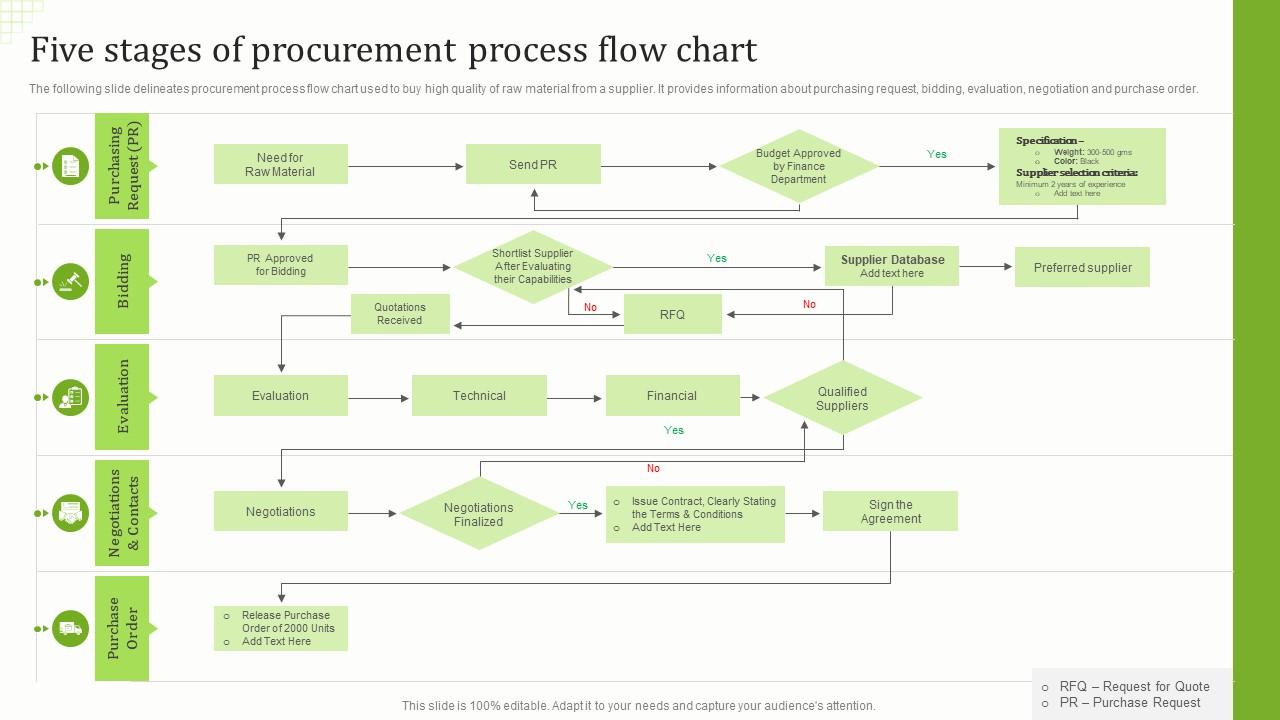
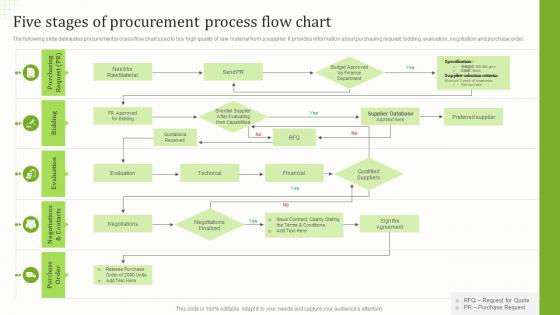
Este slide do PPT com um layout único branco e verde apresenta os cinco principais estágios do processo de aquisição: solicitação de compra, licitação, avaliação, negociações e contratos, e ordem de compra. Ao longo dessas etapas, várias peças menores trabalham para garantir uma abordagem inclusiva. Quais são elas? Destacar a necessidade de matérias-primas, enviar solicitações de compra, aprovar os orçamentos, selecionar fornecedores após receber cotações, fazer negociações e assinar o contrato final. Este PPT garante que o processo de aquisição seja bem automatizado de uma maneira que agilize as atividades para obter resultados ideais.
Um Produto e Cinco Estágios de Eficiência
A aquisição é um processo inevitável e deve ser agilizado para extrair resultados de valor agregado para uma organização. Com a ajuda de nosso Modelo de PowerPoint Fluxograma do Processo de Aquisição em Cinco Estágios, você pode alcançar exatamente isso. Ele descreve as etapas complementadas com atividades relevantes para garantir que cada peça esteja no lugar certo no quebra-cabeça da aquisição.
A aquisição é cada vez mais vista como um processo automatizado. No entanto, certas pessoas assumem a responsabilidade de garantir que ela não rache e falhe. Explore nosso produto premium sobre 'Visão Geral do Processo de Aquisição com base em Funções Relevantes 'para entender melhor o conceito.
Temos outro produto sobre o 'Fluxograma do Processo de Compras e Aquisição de Negócios'.Clique aqui para explorar.
1. Identificação da necessidade 2. Pesquisa de mercado 3. Seleção de fornecedores 4. Negociação e contratação 5. Acompanhamento e avaliação
Utilize nosso Fluxograma de Processo de Aquisição em Cinco Etapas para ajudá-lo a economizar seu tempo valioso. Eles estão prontos para se encaixar em qualquer estrutura de apresentação.





FAQs for Five Stages Of Procurement
Honestly, the boring stuff comes first - figure out what you're actually spending money on and where. Look around at who else is selling what you need. What's your company actually trying to achieve here? Cost cuts, less risk, going green? Match that up with what the business wants overall. From there, you can map out different approaches for different types of purchases. Set up whatever processes and tools you need to make it happen. But here's the thing - get people on board early or you'll be banging your head against the wall later when nobody wants to cooperate with your shiny new system.
Honestly, automation is a game changer for all that tedious stuff - purchase orders, approvals, vendor setup. AI tools are pretty good at spotting spending patterns and savings you'd totally miss on your own. Digital platforms give you way better visibility into suppliers and risk issues too. Teams I know have cut their processing time by 60% just from going digital with workflows. Oh, and cloud-based software makes it so much easier when you're juggling multiple people on projects. My advice? Don't try to overhaul everything at once. Pick your biggest headache first and find one tool that actually fixes it.
Look, good supplier relationships are honestly what separate decent procurement from great procurement. You'll get better prices when they actually like working with you. During shortages? You're first in line instead of scrambling. They'll also tip you off about new stuff before your competitors hear about it. The smartest teams I know treat their top suppliers like actual partners - working together on cutting costs and improving quality, not just placing orders. Pick your 5-10 most important suppliers and start having real conversations with them regularly. Trust me, it pays off way more than just being transactional about everything.
Ugh, supply chain chaos basically blows up your whole procurement game. Single suppliers? Forget it - you need multiple options now or you're screwed when things go sideways. Lead times are all over the place, so stock up earlier and keep extra inventory (annoying but necessary). Budgeting becomes this wild guessing game since costs jump around constantly. Here's what really matters though - pick suppliers who can actually handle disruptions, not just whoever's cheapest. Honestly, flexibility is everything now. Always have backup plans ready because something will definitely break.
Track cost and performance stuff together - you need both sides. Cost savings and spend under management are obvious ones, but honestly those savings percentages can be total BS sometimes. Supplier performance scores matter too. Cycle time from req to PO tells you if your process is dragging. Contract compliance rates, supplier diversity, delivery performance - all good indicators. Oh and keep an eye on supplier financial health because nobody wants their key vendor going under. Pick like 3-5 metrics that actually matter to your business instead of drowning in data.
Honestly, just bake sustainability stuff right into how you pick vendors. Check their environmental certs, how they treat workers, carbon footprint - the usual. Most companies expect this now anyway, so you're not being weird about it. Track things like waste and energy use so you can actually see if it's working. Oh and definitely start with your biggest suppliers first - way more bang for your buck there. Don't make it some separate thing either, just fold it into your normal buying process. It'll become second nature pretty quick.
Honestly, the worst part is you're always working with half the info you need - supplier financials are sketchy at best, and good luck getting real performance data. Supply chains are so tangled now that you can't even properly vet the subcontractors. Rush jobs make everything worse (why is it always "we needed this yesterday"?). Global sourcing adds language barriers and regulatory headaches that change by country. My advice? Build a solid evaluation system with multiple sources. Always call references, even when you think you already know enough. Trust me on that last one.
Honestly, it's a game-changer compared to just winging it with gut instincts. You'll actually see your spending patterns clearly - like which suppliers are reliable and which ones flake out constantly. The forecasting part is clutch because you can predict when demand's gonna spike instead of scrambling last-minute (and paying way more). I pulled our spend data from last year just to see what would happen, and wow - so many cost-saving opportunities just sitting there. Analytics also help you check if you're getting ripped off on pricing. Trust me, start with your past year's data and look for trends. You'll probably find some stuff that makes you go "seriously?"
Start with the basics - check their finances, compliance record, and security setup. You don't want them going belly-up with your data. Always call their other clients because vendors will promise you the moon (learned that one the hard way). Set up some kind of scoring system so you can actually compare different options fairly. Business continuity plans matter too, especially if they're in hurricane country or whatever. The real trick is doing your homework before signing anything. Nobody wants to find out their vendor sucks after it's too late. Plan to review them yearly or if something big changes.
So basically, you want to stop letting everyone buy their own random stuff and start buying in bulk instead. That's where the real savings come from - better prices when you consolidate orders and negotiate as one big customer. Plus you'll cut out duplicate purchases and get departments using the same suppliers. Honestly, most companies mess this up by treating procurement like it's just paperwork. Build good relationships with your vendors too - they'll hook you up with better deals over time. Track those savings numbers because leadership loves seeing actual dollars saved.
Honestly, negotiation and relationship stuff is where you'll live day-to-day. Data analysis has gotten massive too - you're constantly digging into spend reports and supplier metrics. Risk management is critical now (supply chains are still kinda wild post-COVID). Digital tools are everywhere, so being tech-comfortable helps. Communication matters since you're basically translating between departments and vendors all the time. Oh, and procurement software changes fast, so staying curious about new platforms pays off. I'd focus on whatever feels shakiest first - maybe take a course or something?
So e-procurement basically puts everything on digital platforms - you get automated workflows, real-time spending data, better vendor management. The biggest win? It centralizes all your supplier stuff and makes compliance way less of a headache than those messy spreadsheets we all hate. You'll also get AI insights for smarter sourcing and risk calls. Time savings are huge too - no more hunting down approvals or losing contracts. My old company dragged their feet on this forever and regretted it. Start with a pilot program for one category first, see how it goes.
Honestly, the big stuff you can't mess around with is procurement regs (especially government work), IP rights, and liability clauses. Payment terms and deliverables need to be super specific - trust me, vague language will screw you over later. Data protection is huge if you're touching sensitive stuff. Termination conditions matter too, plus throw in some dispute resolution process. Your legal team might roll their eyes, but run major contracts by them anyway. I know it seems like extra work, but it's way better than dealing with a nightmare situation down the road.
Start by actually looking at what you're spending - that's where you'll find the easiest wins. Don't spread yourself thin with tons of suppliers. Pick 2-3 solid ones and build real relationships with them. They'll hook you up with better rates when you give them consistent business. For anything over a couple hundred, always get multiple quotes. Set up some kind of system for purchase orders - even a basic Google Sheets template is way better than the mess most small companies deal with (and honestly, it's free). Oh, and negotiate payment terms that don't kill your cash flow. That part's huge.
You'd be surprised - procurement actually sparks innovation by tapping into your suppliers' ideas and pushing internal teams out of their comfort zones. Put innovation requirements in your RFPs and you're basically getting free R&D help from outside. Smart move, right? Try piloting new tech on small projects first before going big. The real shift is moving from just "buying stuff" to partnering with vendors who solve problems you didn't even realize existed. Oh, and next time you meet with suppliers, ask "what else have you got?" You might be amazed at what they bring to the table.
-
Loved the fact that SlideTeam provides clean, high-definition, and professional PowerPoint products.
-
One word for SlideTeam–Versatile!