


Transaction Monitoring Dashboard With Multi Level Alerts




Try Before you Buy Download Free Sample Product
 Impress Your
 Audience
 100%
100% Editable
 Save Hours
 of Time


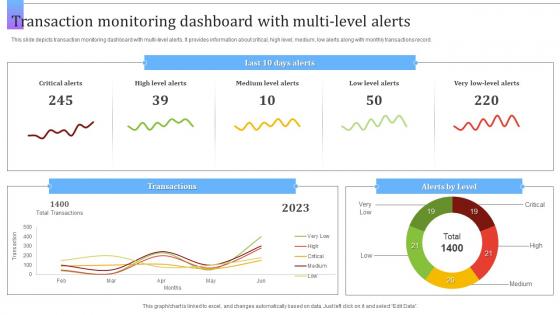
This slide depicts transaction monitoring dashboard with multi-level alerts. It provides information about critical, high level, medium, low alerts along with monthly transactions record.
People who downloaded this PowerPoint presentation also viewed the following :
Transaction Monitoring Dashboard With Multi Level Alerts with all 7 slides:
Use our Transaction Monitoring Dashboard With Multi Level Alerts to effectively help you save your valuable time. They are readymade to fit into any presentation structure.






FAQs for Transaction Monitoring Dashboard With
So basically you're trying to catch sketchy stuff before it blows up - money laundering, fraud, terrorist financing, all that nastiness. Look for weird patterns that don't match how customers normally act. Like if someone suddenly starts moving huge amounts or sending money to sketchy countries. Honestly feels like playing detective sometimes! Your system will flag the weird stuff, then you dig in to see if it's legit or if you need to report it. The tricky part is not drowning your team in false alarms while still catching the real problems. Oh, and definitely learn your customers' normal patterns first - makes spotting the odd stuff so much easier.
So ML is actually pretty game-changing for fraud detection. Your false positives drop way down, and it catches sneaky stuff that old rule-based systems totally miss. The algorithms learn from your past data instead of just using rigid thresholds - honestly, it's wild how they adapt to new scams on their own. Way fewer legit transactions get flagged, so your team stops drowning in garbage alerts. I'd say start small though. Run ML alongside your current setup first, then dial up its influence once you trust it's working right.
Ugh, there's so much to track. BSA/AML hits you with suspicious activity reporting requirements, which is honestly a pain. KYC means doing customer due diligence on everyone. Don't even think about screwing up OFAC sanctions - that'll destroy your business fast. You'll also deal with the USA PATRIOT Act for risky customers and probably some state money transmitter stuff depending on what you're doing. Each one watches different transaction patterns and dollar amounts. Seriously though, figure out which ones actually apply to your setup first. Otherwise you'll be drowning in compliance work that doesn't even matter for your business model.
Honestly, start by looking at your current false positive patterns - that's where you'll find the biggest wins. Machine learning models are your best friend here since they actually learn what normal looks like for each customer. Don't treat a college kid the same as some wealthy businessman, you know? Different risk profiles need different rules. When customers complain about false positives, definitely loop that feedback back into your system. Oh, and tune your thresholds based on real transaction history, not just generic rules. The models get way better at spotting actual sketchy stuff vs. just unusual activity once they have enough data.
Banks are all about AML compliance - tons of regulatory hoops to jump through and suspicious activity reports to file. E-commerce is different though, they're hunting for stolen cards and account takeovers instead. The regulatory stuff banks deal with is honestly insane compared to online retailers who can adapt their fraud rules way faster. Really depends what you're doing - if you're handling deposits and transfers, brace yourself for compliance hell. Processing online purchases? Focus on catching fraud in real-time without making checkout a pain for customers.
So here's the thing - customer behavior analysis is what separates good transaction monitoring from garbage. You gotta build profiles showing how people normally spend (amounts, frequency, where they shop, all that). Then flag anything weird compared to their usual patterns. Way better than rigid rules because honestly, dropping $5K might be Tuesday for some rich customer but totally sketchy for someone else. Oh and segment customers into groups first - makes everything easier. Without knowing individual patterns, you'll miss real fraud or get buried in false alarms. It's night and day difference.
Honestly, data quality will bite you harder than you expect. Your current data's probably a mess and cleaning it up eats through budgets fast. False positives are brutal too - these systems love spamming alerts about nothing while missing actual threats. Training your team on new workflows takes forever, and don't get me started on making legacy systems play nice together. Oh, and alert fatigue is real - your analysts will hate you if they're drowning in notifications. Run a small pilot first. Work out the bugs before going full scale or you'll regret it.
So transaction monitoring basically watches for sketchy patterns that scream money laundering. You know - stuff like moving money rapidly between accounts, staying just under reporting limits, or activity that's totally off for that customer. It's like having someone constantly watching for weird behavior. When people start pushing large amounts through shell companies or making random cash deposits that don't fit their usual habits, the system flags it. Then you can dig deeper and file those SARs if needed. Honestly, the tricky part is setting up your rules right so you catch actual threats without getting buried in useless alerts.
Real-time streaming is huge right now - Kafka and similar platforms let you catch stuff as it happens instead of waiting for batch processing. AI and ML have gotten crazy good at pattern recognition without flooding you with bogus alerts. Graph analytics is a game changer too, showing how transactions actually connect rather than treating each one separately. Some companies are even doing behavioral biometrics now (which honestly feels a bit sci-fi to me). The trick is finding solutions that blend AI detection with real-time capabilities. Don't go for anything that can't handle your transaction volume though.
So basically these systems are like having a guard dog that never gets tired - they'll bark at weird stuff before it becomes a real mess. Set up rules for big transfers, sketchy countries, customers acting totally off. Real-time alerts are where the magic happens though, you can jump on suspicious stuff right away instead of finding out about fraud three weeks later when it's too late. Oh and definitely customize your alert thresholds based on what you can actually handle, not whatever generic settings they give you.
Look at three main things: alert accuracy (real threats vs false alarms), how fast your team closes cases, and detection coverage - basically what percentage of sketchy stuff you're actually catching. False positives will drive you absolutely insane, trust me. Nobody wants to waste time on fake alerts all day. Track your regulatory deadlines too and any you've missed. It's all about finding that sweet spot between being thorough but not drowning your team. I'd start with monthly tracking, then dig into what's actually causing your numbers to suck so you can fix it.
Honestly, you've gotta stay on top of regulatory changes or you'll get blindsided. Sign up for alerts from financial authorities and join those industry groups - sounds boring but the intel is solid. Build your monitoring system so rules are configurable, not hardcoded into oblivion. Changing a threshold shouldn't take three weeks and two developers. Network with compliance folks too; they've seen every weird edge case imaginable. Do quarterly effectiveness reviews and document everything (I know, paperwork sucks). Start by testing how flexible your current setup actually is. If tweaking one rule feels like performing surgery, time for an upgrade.
So SAR is basically the final step of your whole transaction monitoring setup - that's how you officially report sketchy stuff to FinCEN and other regulators. Your monitoring system throws up alerts, you dig into them, and if something actually looks fishy, you've got 30 days to file that SAR. It's like your proof that you're not just sitting there twiddling your thumbs. Honestly, without filing these properly, all that monitoring work doesn't mean squat to compliance folks. Oh, and definitely stay on top of those deadlines - regulators really don't mess around when you're late on this stuff.
Honestly, data integration is like finally seeing the whole picture instead of random puzzle pieces. You pull stuff from different places - your internal systems, outside feeds, whatever databases you use. A transaction might seem totally fine by itself, but add in customer behavior patterns and location data? Boom, red flags everywhere. I've seen this work way better than siloed monitoring - you catch the sketchy stuff while cutting down on those annoying false alarms. The more complete your view gets, the smarter your system becomes. I'd start by just writing down what data sources you actually have right now, then figure out what's missing.
Look, it's basically about walking that tightrope between following regulations and not being creepy to your customers. Banks have to watch for sketchy transactions, but most people don't realize how much they're actually being monitored - which honestly feels pretty invasive. You'll want to be transparent about what you're tracking and only grab data you actually need. Don't hang onto info forever either. Also watch out for your algorithms accidentally discriminating against certain groups. I'd start by checking if your privacy policy actually explains this stuff clearly, because most are garbage.
-
The team is highly dedicated and professional. They deliver their work on time and with perfection.
-
I came across many PowerPoint presentations with excellent creatives and I believe they would be beneficial to my work.