

Cyber threat dashboard with current risks and security service




Try Before you Buy Download Free Sample Product
 Impress Your
 Audience
 100%
100% Editable
 Save Hours
 of Time


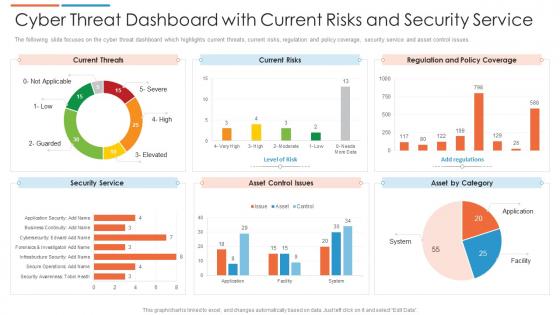
The following slide focuses on the cyber threat dashboard which highlights current threats, current risks, regulation and policy coverage, security service and asset control issues.
People who downloaded this PowerPoint presentation also viewed the following :
Cyber threat dashboard with current risks and security service with all 7 slides:
Use our Cyber Threat Dashboard With Current Risks And Security Service to effectively help you save your valuable time. They are readymade to fit into any presentation structure.







FAQs for Cyber threat dashboard with current risks
Dude, you're mainly looking at ransomware, phishing, and social engineering stuff. Phishing emails are probably already sitting in your inbox waiting to mess with you. Ransomware will straight up lock everything until you pay - which sucks. Your employees might accidentally give away login info or click sketchy links. Don't forget about angry ex-employees either, they're surprisingly dangerous. Oh, and people still use "password123" somehow. Supply chain attacks are getting weird too. Honestly? Just train your team and set up multi-factor authentication. Those two things stop like 90% of attacks.
Start with a full security audit - map out your assets, vulnerabilities, and what protections you already have. Run pen tests and vulnerability scans regularly (this stuff changes insanely fast, btw). Test your team with phishing simulations and see how security-aware they actually are. Also check your incident response plans and backup procedures. The trick is making it ongoing, not just doing it once. Set up a basic dashboard to track your security metrics each month. That way you'll catch problems early instead of scrambling later. Trust me, the monthly check-ins are worth it.
Look, most cyber attacks happen because someone on your team clicks a sketchy email or uses "password123" - not from some Matrix-level hacking. Training turns your people from security risks into actual defenders. Teach them to spot phishing emails, create decent passwords, and follow basic protocols. Think of it like making sure everyone locks their car instead of just crossing your fingers that criminals won't try the door handles (which they absolutely will). Don't do training once and forget about it though. Make it regular - maybe quarterly refreshers or something.
Yeah, remote work basically turns everyone's house into a potential security nightmare. Your team's connecting from sketchy home wifi and old laptops IT never touched. Video calls got hit hard too - remember all those Zoom disasters in 2020? That was insane. The main stuff to worry about is weak home networks, outdated personal devices, and phishing emails targeting remote workers specifically. Get your people on VPNs, turn on multi-factor auth for everything important. Oh, and make sure they're treating their home setup like they would the office network.
First thing - do a data audit so you know what you're actually collecting and where it lives. Then map out how that data flows around your company. Set up proper access controls and get solid consent processes going. Train your employees regularly because honestly, most data breaches happen when someone does something dumb like clicking a sketchy link. Document your incident response plan and actually practice it - can't tell you how many companies skip this part. Don't try to tackle everything at once though. Pick one regulation that hits your business and get really good at that first. Compliance isn't something you do once and forget about.
Start with 12+ characters mixing uppercase, lowercase, numbers and symbols. Yeah the symbols are a pain but they actually work. Ban obvious stuff like "Password123" - people always try that garbage. Multi-factor authentication is huge, way more important than perfect passwords honestly. Don't make people change passwords constantly, it just creates "Password124" situations. Length beats complexity most of the time. Oh and get your team using a password manager if you can swing it - makes everything way easier.
So regular cyberattacks are like smash-and-grab jobs - hit fast, steal what they can, get out. APTs though? Total opposite. These guys will camp in your network for months, maybe years. They're not rushing anywhere. Nation-states mostly, or really well-funded criminal groups who've got time to burn. While you're worried about your firewall, they're already inside mapping everything out and slowly siphoning data. Honestly, it's kinda terrifying how patient they are. You can't just rely on basic security anymore - you need that continuous monitoring stuff to spot their weird behavior patterns.
So AI in cybersecurity is pretty solid - catches threats super fast and spots weird patterns humans would totally miss. Plus it handles crazy amounts of data without breaking a sweat. Zero-day attacks? It's actually decent at catching those too. Downside though - it's pricey as hell to set up and maintain. False positives will make your security team want to throw their laptops out the window. Oh, and hackers are using AI now too, which is fun. I'd say start with just one tool first. Let your team get comfortable before going all-in.
So blockchain basically spreads your data across tons of computers instead of keeping it all in one place that hackers can target. Way harder to break into since they'd have to hit multiple systems at once. Think of it like having copies of your house key with different trusted neighbors - good luck stealing all of them. You also get these permanent audit trails that nobody can mess with after the fact, which is pretty cool for tracking who did what. Honestly, if you're worried about data getting tampered with or need rock-solid identity verification, it's worth checking out some blockchain options.
Look, you absolutely need an incident response plan - it's your lifeline when cyber stuff hits the fan. Without one, everyone freaks out and makes things worse. I've watched companies lose more money from bad handling than the actual breach itself, which is honestly pretty ridiculous when you think about it. Your plan should spell out who does what, have ready-to-go communication templates, and actually get practiced. Can't stress this enough - test it regularly! A plan sitting in some drawer won't save you when attackers are actively in your network. Quick containment and evidence preservation are everything.
Okay so basically treat third-party vendors like they're part of your own team security-wise. Do proper security checks before bringing anyone on, then make your contracts spell out exactly what standards they need to hit. Keep tabs on their security stuff ongoing - don't just check once and forget about it. Have a solid plan ready for when (not if) someone gets breached that includes what your vendors need to do. Oh and this sounds obvious but keep a current list of who has access to what. I've seen companies get burned because they literally forgot about some random vendor that still had network access. Can't protect against threats you don't even know exist.
So basically you need five things for decent cybersecurity: identity management, asset protection, threat detection, incident response, and recovery planning. Start with strong access controls and multi-factor auth - that's your identity stuff. Then protect your assets with firewalls, encryption, endpoint security, whatever keeps the hackers out. Detection systems monitor for sketchy activity. Recovery and incident response are huge but people always put them off (big mistake). Oh, and mapping what you actually have first is way smarter than just buying random security tools. Focus on your worst gaps before anything else.
So encryption scrambles your data into complete nonsense that only people with the right "key" can read. Like if someone steals your locked phone - they can't see anything without your passcode. The math behind it is actually insane, would take hackers literally centuries to crack good encryption. Works whether your stuff's sitting on a server or flying through the internet. You'll want AES-256 for anything really important - that's the gold standard right now. Honestly blows my mind how secure it makes everything.
Okay so first - isolate those compromised systems RIGHT NOW and stop any data that's still leaking out. Document everything you can remember about what happened and when. I get that you're probably freaking out (who wouldn't?) but try to stay organized here. Get your legal team involved ASAP, plus you'll need to notify authorities and maybe customers depending on where you are. Oh and don't touch anything that could be evidence - preserve it for forensics. Move quickly but don't skip steps. Create a timeline, assign people to handle communications, tech stuff, and compliance reporting.
Honestly, you've got to get everyone involved, not just dump it on IT. Those boring training modules? Trash them. People need stuff that actually relates to what they do every day - real examples, real consequences. Keep policies simple so people will actually follow them. I'd say consistency matters way more than perfection here. Monthly phishing tests work better than once-a-year panic sessions. Bring up security tips in regular meetings, and don't make people feel dumb for asking questions. Oh, and actually celebrate when someone spots something fishy! Your leadership team needs to walk the walk too, otherwise nobody takes it seriously.
-
Very unique, user-friendly presentation interface.
-
Graphics are very appealing to eyes.