

Lean Kaizen Dashboard To Track And Monitor Project Performance




Try Before you Buy Download Free Sample Product
 Impress Your
 Audience
 100%
100% Editable
 Save Hours
 of Time


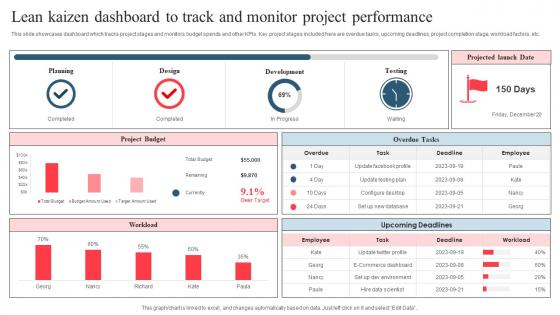
This slide showcases project management based on DMAIC methodology of define, measure, analyze, improve and control. It is quality improvement and problem-solving method which is used to improve employees and customer satisfaction.
People who downloaded this PowerPoint presentation also viewed the following :
Lean Kaizen Dashboard To Track And Monitor Project Performance with all 7 slides:
Use our Lean Kaizen Dashboard To Track And Monitor Project Performance to effectively help you save your valuable time. They are readymade to fit into any presentation structure.





FAQs for Lean Kaizen Dashboard To Track And
So basically, Kaizen is about making tiny improvements constantly instead of waiting for some huge overhaul. Your regular employees spot the daily annoyances and try quick fixes - way better than those intimidating Six Sigma things, honestly. Everyone gets to suggest changes rather than waiting around for expensive consultants. The cool part? Just spend like 10 minutes weekly with your team talking about what's bugging them. Small stuff adds up fast. It becomes this natural habit where people actually want to improve things instead of management forcing changes from above.
Daily 15-minute huddles are honestly where the magic happens - teams spot issues fast and bounce ideas around. Train everyone on simple stuff like 5 Whys, then actually let them fix small things without asking permission first. Visual boards help too since people can see what's happening. The trick is making it feel organic, not like some BS corporate program getting shoved down their throats. Quick wins deserve celebration. Encourage people to experiment with ideas. Oh, and you gotta jump in yourself - can't just tell everyone else to do it.
Honestly, if your people aren't engaged, your Kaizen efforts are basically dead in the water. Frontline workers know exactly where the problems are - they deal with the BS every single day. Without their buy-in, you're just guessing at what needs fixing. The whole point is getting everyone comfortable enough to actually speak up about issues instead of just dealing with them silently. I'd start by asking your team what annoys them most about their daily work. That's usually gold right there. Too many companies skip this step and wonder why their improvement programs flop. You need those small suggestions flowing constantly, not just from the top down.
For Kaizen stuff, I'd track the obvious metrics first - cycle time, throughput, defect rates. That kind of thing gives you actual numbers to point to. Get at least 2-4 weeks of baseline data before you change anything. Employee feedback is honestly just as important since they're living with these processes daily. After implementing changes, keep measuring the same stuff for several weeks. Quick tip - seasonal variations can totally mess with your data if you're not careful. Set up some kind of simple tracking sheet so everyone can see the progress happening. Really helps keep people engaged.
Start with 5S and gemba walks - those are your bread and butter. Value stream mapping shows you the big picture flow, which is super helpful once you get the hang of it. For digging into problems, try the "5 Whys" method (sounds cheesy but it works). Kaizen events are like focused improvement sprints when you need quick wins. Visual management boards and standard work docs keep everything organized. Oh, and don't try tackling every tool at once - I made that mistake early on. Pick 2-3 that actually fit your situation. The 5S thing looks simple on paper but it's crazy how much it changes things once you really commit to it.
Yeah, totally works for remote teams! Just gotta switch up your tools. We use Miro for those improvement sessions - way better than trying to coordinate sticky notes over video calls, trust me. Virtual gemba walks are weird at first but screen sharing actually works pretty well for watching processes. The hard part? Keeping everyone engaged when you're all scattered. Weekly 15-minute Zoom check-ins help a lot. Set up some shared digital space where people can dump ideas throughout the week. Short huddles work better than long meetings - nobody wants another hour-long video call about process improvement.
Honestly, people just hate change - even the good stuff. Your biggest headache will be getting everyone on board. Leadership has to be 100% committed or the whole thing falls apart (learned this the hard way at my last job). Plus it eats up time and money for training that doesn't pay off immediately. Teams start strong but then drift back to old routines. Start with small wins first. Pick one area, show results, then expand from there. Way easier to sell success than theory.
Yeah, totally! Office work, healthcare, retail - pretty much anywhere you've got processes that could run smoother. The whole idea is spotting waste in your workflows and cutting it out. Like, I've watched teams use it to slash email response times or fix those awful patient check-ins at clinics. Once you start noticing inefficiencies everywhere (and trust me, you will), it gets weirdly satisfying to eliminate them. Figure out what actually adds value for your customers first. Then ruthlessly remove everything else that's just... there. Pick one process that drives everyone nuts and start there.
Look, you can't just do kaizen once and call it done. Build it into your daily stuff - have team leaders ask "how do we make this better?" in huddles and reviews. Create systems where people naturally spot issues and pitch solutions. Most companies mess this up because they get pumped about early wins then totally drop the ball on follow-through. Put up tracking boards, celebrate tiny improvements too, and actually give people time to work on fixes. Oh, and here's the big one - when someone suggests something, either do it fast or tell them why you can't. Ignored ideas kill this whole thing dead.
Okay so Lean Kaizen is all about cutting waste - there's like 8 different types (overproduction, waiting, moving stuff around unnecessarily, you get it). The cool part is you make tiny improvements with your team instead of some crazy company-wide shakeup that makes everyone panic. Honestly once you start seeing inefficiencies everywhere it becomes kind of addictive? You're constantly going "wait, why do we do it this way" and chipping away at the wasteful stuff. My advice - pick one process this week and just watch where time or materials disappear. Small changes add up way faster than you'd think.
Honestly, your leaders need to actually walk the talk here - can't just send out some company-wide memo about Kaizen and call it done. Get them on the floor asking real questions and listening to what people say. Celebrate the small wins loudly, give teams resources when they spot improvements. But here's where most companies mess up: managers get antsy when they don't see instant results. Let people experiment and fail without drama. Train your managers to coach instead of bark orders, and always - I mean always - follow up on suggestions even if it's just to explain why something won't work.
Start with basic Lean training - waste identification, value stream mapping, PDCA cycle stuff. A couple workshop days usually does it. Your team needs hands-on practice too: 5S, root cause analysis, standard work docs. But honestly? Classroom learning only goes so far. Real progress happens when people dive into actual projects with a good coach walking them through those first events. That's where it clicks. Pick one small pilot team first. Train them right, then let them teach others as you grow. Something about that peer teaching just works better - maybe because it feels less corporate? Either way, that approach has way better staying power than the typical top-down rollout.
Think of customer feedback as your GPS for Kaizen - it shows you exactly where to focus your efforts. Why waste time perfecting processes that don't actually solve real problems? I've seen teams spend months optimizing stuff nobody even cares about anymore. Start by checking which of your current improvement projects actually match what customers are complaining about. You'll probably find some weird disconnects there. Market trends help too since they give you a heads-up on what's coming next. Makes way more sense than just improving random internal processes and hoping it matters.
Toyota's the obvious one - they literally created Lean Kaizen and still use it to cut waste and boost their production lines. Ford slashed inventory costs by 75% at some plants, which is honestly insane. 3M did these Kaizen events that turned hours-long setup times into just minutes. Even hospitals got in on it - Virginia Mason Medical Center used it to reduce wait times and medical mistakes. Here's the thing though: it's always about small changes that employees suggest, not big top-down overhauls. Start with quick wins in your processes - they'll give you momentum for the bigger stuff later.
Honestly, digital tools are a game-changer for Kaizen stuff. Mobile apps let people submit ideas right when they think of them instead of forgetting by the next meeting. You'll get way better data tracking and can spot problems faster with dashboards. Real-time collaboration across teams becomes super easy too. I'd start with just one tool that fixes your biggest headache first - don't go crazy trying to digitize everything at once. The analytics side is pretty cool because you can actually see patterns in your improvement efforts instead of just guessing what's working.
-
The slides come with appealing color schemes and relevant content that helped me deliver a stunning presentation without any hassle!
-
Exclusive and extensive collection of templates. Really helped me create a professional presentation in just no time.