


Market Forecast Powerpoint Presentation Slides





Try Before you Buy Download Free Sample Product
 Impress Your
 Audience
 100%
100% Editable
 Save Hours
 of Time


Access this Market Forecast PowerPoint Presentation Slides to address the core components of market analysis. Whether it is projection of upcoming numbers, trends or characteristics, all one actually needs is graphic loaded presentation layout. On the basis of key statistics and standard analysis in PPT graphic, the customer base can be sectioned out and segmented well. The size of the market based on the product at a specific time can be targeted with ease by placing the right data in the PowerPoint slide. Sales value or volume of sales can be managed well with this slide layout, as both form important characteristics of market potential. Fine quality of statistics tools, personal data and other techniques used in market forecast presentation graphic makes business all the more easy and manageable. Analysis of past and present data in chart or tabular format in slide layout helps to analyze your performance vis-a-vis business competitors with ease. Topics of concern like overhead issues, budget and cash flow can be rightly addressed in PowerPoint slide. Balance the information with our Market Forecast Powerpoint Presentation Slides. Decipher the individual importance of each fact.
People who downloaded this PowerPoint presentation also viewed the following :
Content of this Powerpoint Presentation
Slide 1: This slide introduces Market Forecast. State Your Company Name and begin.
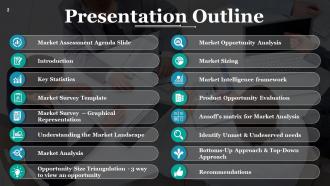
Slide 2: This slide showcases Presentation Outline with these points- Market Assessment Agenda Slide, Introduction, Key Statistics, Market Survey Template, Market Survey – Graphical Representation, Understanding the Market Landscape, Market Analysis, Opportunity Size Triangulation - 3 way to view an opportunity, Recommendations, Market Opportunity Analysis, Market Sizing, Market Intelligence framework, Product Opportunity Evaluation, Ansoff’s matrix for Market Analysis, Identify Unmet & Undeserved needs, Bottoms-Up Approach & Top-Down Approach.
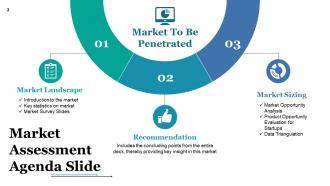
Slide 3: This slide shows Market Assessment Agenda Slide with these steps involved- Introduction to the market, Key statistics on market, Market Survey Slides, Market Landscape, Market To Be Penetrated, Market Opportunity Analysis, Product Opportunity Evaluation for Startups, Data Triangulation, Market Sizing, Recommendation.
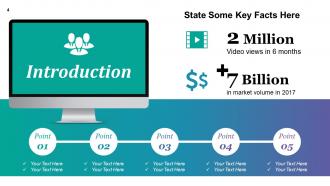
Slide 4: This slide showcases Introduction.
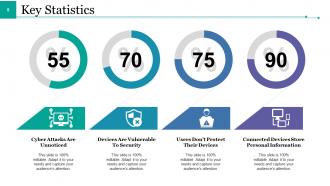
Slide 5: This slide presents Key Statistics with these four factors- Cyber Attacks Are Unnoticed, Devices Are Vulnerable To Security, Users Don’t Protect Their Devices, Connected Devices Store Personal Information.
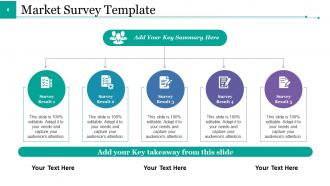
Slide 6: This slide shows Market Survey Template.
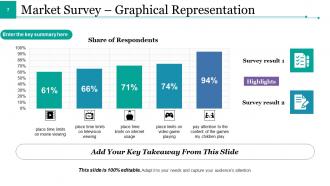
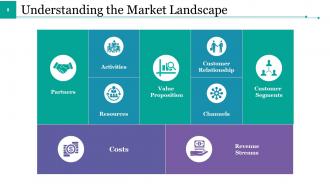
Slide 7: This slide presents Market Survey – Graphical Representation with these of the parameters- place time limits on movie viewing, place time limits on television viewing, place time limits on internet usage, place limits on video game playing. br/>Slide 8: This slide presents Understanding the Market Landscape with these parameters- Partners, Activities, Resources, Value, Proposition, Customer, Segments, Costs, Revenue, Streams, Customer Relationship, Channels.
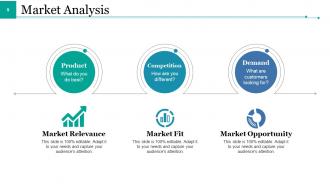
Slide 9: This slide presents Market Analysis with these of the factors- Demand, Product, Competition, Market Relevance, Market Fit, Market Opportunity.
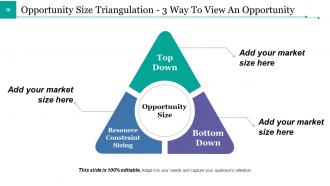
Slide 10: This slide presents Opportunity Size Triangulation - 3 Way To View An Opportunity, Opportunity Size, Resource Constraint Sizing, Top Down, Bottom Down.
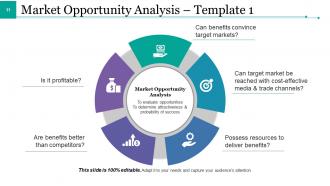
Slide 11: This slide showcases Market Opportunity Analysis – Template 1 with these of the stages- Market Opportunity Analysis To evaluate opportunities To determine attractiveness & probability of success Is it profitable Can benefits convince target markets Can target market be reached with cost-effective media & trade channels Possess resources to deliver benefits Are benefits better than competitors
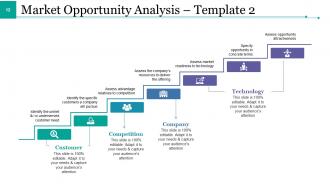
Slide 12: This slide showcases Market Opportunity Analysis – Template 2 with these of the stages- Company, Customer, Competition, Technology.
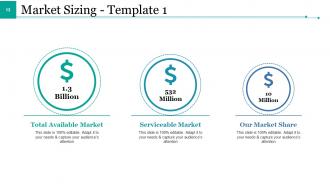
Slide 13: This slide presents Market Sizing - Template 1 in which you can add Total Available Market.
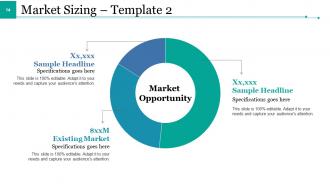
Slide 14: This slide presents Market Sizing – Template 2.
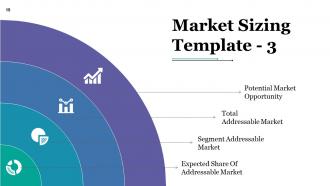
Slide 15: This slide showcases Market Sizing Template - 3 with these of the four parameters- Expected Share Of Addressable Market, Segment Addressable Market, Total Addressable Market, Potential Market Opportunity.
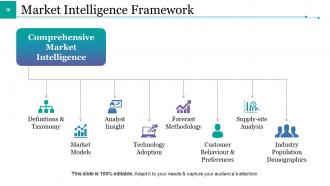
Slide 16: This slide shows Market Intelligence Framework with these of the listed categories- Comprehensive Market Intelligence, Definitions & Taxonomy, Market Models, Analyst Insight, Technology Adoption, Forecast Methodology, Customer Behaviour & Preferences, Supply-site Analysis, Industry Population Demographics.
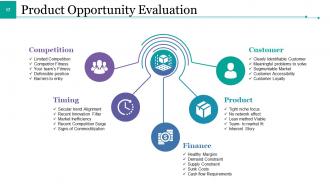
Slide 17: This slide presents Product Opportunity Evaluation.
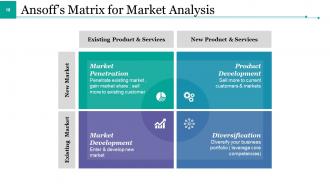
Slide 18: This slide shows Ansoff’s Matrix for Market Analysis with these four of the factors- Market Penetration, Product Development, Market Development, Diversification.
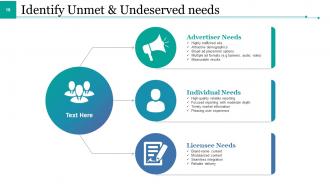
Slide 19: This slide presents Identify Unmet & Undeserved needs with these of the factors- Advertiser Needs, Individual Needs, Licensee Needs.
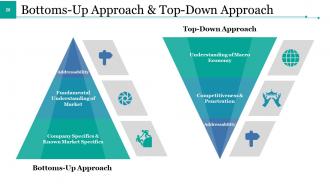
Slide 20: This slide presents Bottoms-Up Approach & Top-Down Approach. We have listed some of them- Addressability, Fundamental Understanding of Market, Company Specifics & Known Market Specifics, Addressability, Competitiveness & Penetration, Understanding of Macro Economy.
Slide 21: This slide presents Recommendations Telecommunication Market Analysis.
Slide 22: Market Forecast Icon Slides 22
Slide 23: This slide presents Market Forecast Icon Slides cont.
Slide 24: This slide is a Coffee Break image for a halt.
Slide 25: This slide forwards to Charts & Graphs.
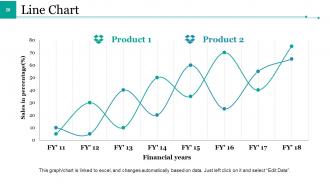
Slide 26: This slide shows a Line Chart for two product comparison.
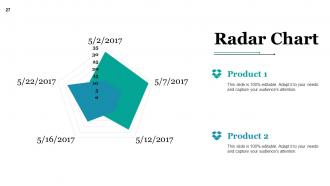
Slide 27: This slide presents a Radar Chart graph/chart. Compare Product 01, Product 02 and use as per required.
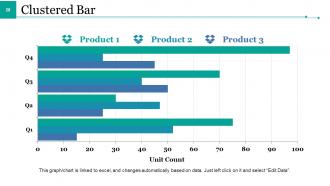
Slide 28: This slide showcases Clustered Bar.
Slide 29: This slide is titled Additional Slides.
Slide 30: This slide represents Our Mission. State your mission, goals etc.
Slide 31: This slide showcases Our Team with Name and Designation to fill.
Slide 32: This slide helps show- About Our Company. The sub headings include- Creative Design, Customer Care, Expand Company
Slide 33: This slide shows Our Goals for your company.
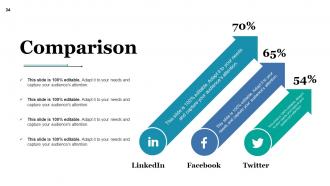
Slide 34: This slide shows Comparison of Positive Factors v/s Negative Factors with thumbsup and thumb down imagery.
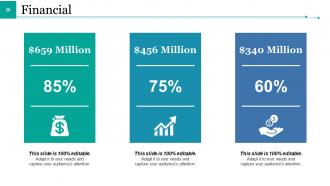
Slide 35: This is a Financial Score slide to show financial aspects here.
Slide 36: This is a Quotes slide to convey message, beliefs etc.
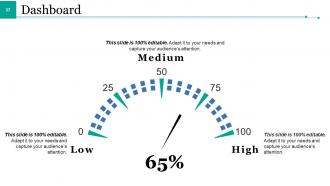
Slide 37: This is a Dashboard slide to show- Strategic System, Success, Goal Process, Sales Review, Communication Study.
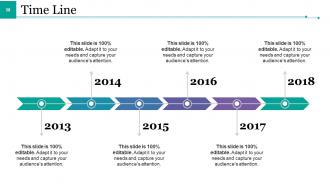
Slide 38: This is a Timelines slide to show- Plan, Budget, Schedule, Review.
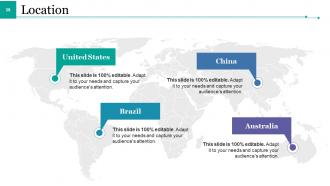
Slide 39: This slide showcases Global Project Locations with a World map and text boxes to make it explicit.
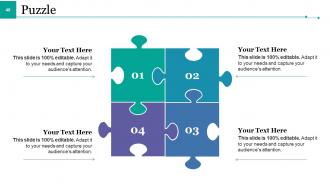
Slide 40: This slide presents a puzzle slide with the following subheadings- Integrity and Judgment, Critical and Decision Making, Leadership, Agility
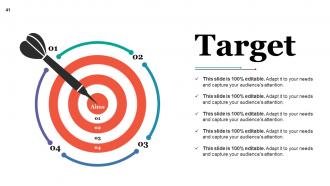
Slide 41: This slide showcases Aims. You can use it for your own requirement.
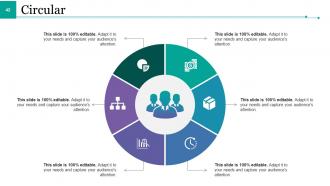
Slide 42: This is a Circular slide to show information, specification etc.
Slide 43: This is a Venn diagram image slide to show information, specifications etc.
Slide 44: This slide shows a Mind map for representing entities
Slide 45: This slide displays a Magnifying Glass with icon imagery.
Slide 46: This is a Thank You slide with Address# street number, city, state, Contact Numbers, Email Address.
Market Forecast Powerpoint Presentation Slides with all 46 slides:
Create emotional bonds with your team. Our Market Forecast Powerpoint Presentation Slides will emit your deep concern.







FAQs for Market Forecast
So interest rates and inflation are still messing with everything - consumer spending, business decisions, you name it. Supply chain stuff is still a headache too, which honestly surprises me at this point. The whole AI boom is shaking up traditional industries big time. Oh, and people are way more focused on sustainability now, plus remote work changed what everyone wants to buy. Tech adoption is happening crazy fast across sectors. You should probably check in on these trends weekly since things are moving so quickly right now.
Market forecasts are clutch for timing your big moves - whether that's hiring, launching products, or jumping into new markets. I mean, the accuracy can be all over the place depending on your industry, but even rough directional trends help a ton. Use them for budgeting and spotting opportunities before your competitors catch on. Here's the thing though - don't put all your eggs in one forecast basket. Mix multiple sources together, kinda like diversifying your investments. Also great for inventory planning if you're dealing with physical products. Honestly beats flying blind.
Honestly, consumer behavior is everything when it comes to market forecasts. Think about it - people's preferences and spending habits literally drive demand. You've got to watch how demographics shift, what cultural trends are popping off, whether folks feel confident about the economy. Like, plant-based foods went crazy once everyone got obsessed with being healthy. Don't just rely on old sales data though. Social media sentiment, surveys, actual buying patterns - that's the good stuff. Your forecasts will be way more on point if you're tracking what consumers actually think and do.
So macroeconomic indicators are like your economic health check - they show where the market's probably going. GDP growth tells you if we're expanding or shrinking. Inflation numbers? That's your hint about what the Fed might do next, and honestly those Fed moves can send everything haywire. Employment data shows how much cash people have to spend. Interest rates hit everything from bonds to housing. Don't get caught up analyzing every single number though - it's about spotting trends across multiple indicators. I'd start tracking maybe 3-4 that actually matter for whatever sector you're watching.
So forecasting? Mix your numbers with real-world insights. Historical data and regression analysis give you the baseline - that's your starting point. But honestly, spreadsheets can't predict when some startup's gonna flip an industry upside down. Talk to experts, run surveys, see what competitors are actually doing. Build multiple scenarios too, don't just bet on one outcome. I learned this the hard way on a project last year. The strongest forecasts come from combining all these approaches rather than picking just one method.
Honestly, new tech just bulldozes through markets by creating demand nobody knew existed while killing off old solutions. Look at AI wrecking traditional software or EVs flipping the car industry upside down. Timing's the killer though - tech adoption is weird and jumpy, not some smooth curve. Consumer behavior changes crazy fast once something hits that perfect combo of actually working and being affordable. Oh, and keep an eye on patent filings in your space - boring but they usually show where things are headed before everyone else catches on.
Renewable energy and healthcare tech are gonna be huge over the next five years. AI/automation too, obviously. Electric vehicles and battery stuff - basically anything green transition related is blowing up right now. Healthcare's benefiting from aging boomers plus all that telehealth adoption that actually stuck around after COVID. Cybersecurity's another big one I'd watch. If you're thinking investments or career moves, look for companies mixing these trends together. Health AI, clean energy security systems - that intersection stuff is where the money's hiding. Oh, and don't sleep on battery tech, that market's going absolutely crazy.
Don't put all your eggs in one basket with forecasting - mix up your methods and data sources. Scenario planning is your friend here, so you're ready for whatever curveball gets thrown at you. Keep those business plans flexible because honestly, predictions are wrong more often than we'd like to admit. I can't tell you how many times I've watched companies bet everything on one rosy forecast and crash hard. Fresh data beats stale projections every time, so update regularly. Oh, and keep some cash on hand - never go all-in based on optimistic numbers alone. Maybe start auditing your current process this week?
Political stuff totally messes with market predictions - I learned this the hard way during Brexit honestly. Elections, trade wars, regulatory shake-ups... they can flip entire sectors in a day. Investor confidence gets shaky when there's uncertainty, and money starts moving unpredictably. Risk premiums go up, making long-term forecasts pretty much impossible to nail down. Here's what works: don't assume things'll stay stable. Build different scenarios into your analysis and stress-test everything against potential political chaos. Even random geopolitical tensions can throw off your models completely.
Honestly, being small is actually your advantage here. Big companies have all this fancy data but they're stuck in meetings for months before doing anything about it. You can spot a trend and test it out next week. Focus on the niche stuff they ignore - like local markets or specialized segments that seem "too small" for them to bother with. Free forecasting tools work fine to start. The real win is speed - you'll be selling to new customer needs while they're still forming committees to discuss it. Plus you can pivot fast if something doesn't work.
Honestly, forecasting models are pretty bad at handling sudden market shocks and messy data. They assume history repeats itself, which - surprise - it doesn't always. Remember GameStop? No model saw that coming because they can't read human psychology or catch when people just decide to act crazy. Most models get too obsessed with past patterns and freeze up when markets actually change. Markets are basically chaos with millions of moving parts we barely understand. My advice? Run several different models at once, admit they'll probably be wrong sometimes, and test your predictions against wild "what if" scenarios. Better to be prepared than sorry.
Numbers tell you what's happening, but qualitative stuff tells you why. Like, your sales might be down but customer interviews reveal it's actually because your checkout process sucks - not your product. Focus groups are gold for catching things surveys miss. I've seen companies completely miss cultural shifts until they actually talked to people. Plus you'll spot problems way earlier than waiting for them to show up in your data. Honestly, pairing interviews with your regular metrics gives you such better predictions. Worth the extra effort.
Look, you've gotta move fast before everyone else catches on. Shift your budget toward whatever demographics are actually growing - Gen Z's hot right now, so throw more money there. Forecasts aren't perfect but they beat guessing, right? Update your content to match what people actually care about these days. Jump on new platforms early while they're still cheap (wish I'd done that with TikTok). Build campaigns you can tweak quickly when things change. The trick is acting while it's still just data, not waiting until your competitor's already crushing it there.
Honestly, retail, old-school media, and fossil fuels are kinda screwed for the next few years. Digital transformation is your lifeline here - yeah I know everyone's sick of hearing that phrase, but it's legit the move. Follow where your customers are going. Retail? Go hard on e-commerce and creating actual experiences people want. Media companies better get serious about streaming and interactive stuff. Energy sector needs to at least dabble in renewables or some hybrid approach. Just don't wait until you're scrambling to catch up later, you know?
Oh definitely, you can't really skip demographic stuff when you're doing market forecasts. Like, you're basically guessing what people will buy without knowing anything about them? Age, income, where they live - it all matters way more than you'd think. Take luxury cars for example. If you're looking at an area full of retirees with money, that's a totally different story than young families scraping together down payments. I learned this the hard way on a project last year actually. Start with demographics early on, don't just tack it on at the end.
-
Graphics are very appealing to eyes.
-
Excellent template with unique design.