


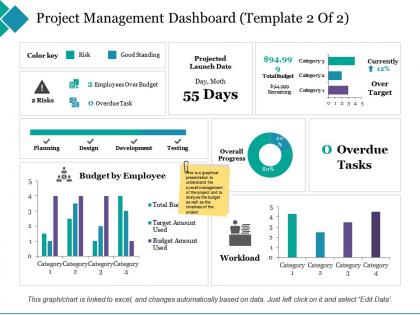
Project Management Dashboard Budget By Employee




Try Before you Buy Download Free Sample Product
 Impress Your
 Audience
 100%
100% Editable
 Save Hours
 of Time


If you are managing a project, it is important to have a clear understanding of where your budget is going. The Project Management Dashboard Budget By Employee can help you do just that. This dashboard provides a clear and concise view of how much each employee is costing you, and where the money is being spent. With this information, you can make informed decisions about where to allocate your resources.SlideTeam is a great resource for project management templates and tools. Our team can help you get started quickly with professional PowerPoint presentations that are ready to use. With our templates, you can easily create beautiful and informative project management dashboards that will help keep your budget on track. Download our templates today to get started.
People who downloaded this PowerPoint presentation also viewed the following :
Project Management Dashboard Budget By Employee with all 5 slides:
Add colour to your speech with our Project Management Dashboard Budget By Employee. Your presentation will leave your audience speechless.




FAQs for Project Management Dashboard
First thing - get your tracking system down, everything else follows from that. I do monthly reviews to compare what I actually spent vs what I planned. You'll want some way to forecast where you'll end up by December, plus figure out why you're over or under budget. Honestly, the approval process for budget changes is crucial but kind of a pain. Oh, and always build in contingency money - I learned this the hard way because random stuff always pops up. Like always. Variance analysis sounds fancy but it's just understanding your spending patterns really.
Dude, QuickBooks or Xero will change your life - they connect to your bank and sort expenses automatically. Saves me like 3 hours a week, no joke. The dashboards show spending in real time so you catch problems early. Most of them work with project tools too if you need to track specific budgets. My take? Pick whatever fixes your biggest headache first. Maybe that's expense tracking, maybe forecasting. Don't try to do everything at once or you'll get overwhelmed. Build from there once you've got the hang of it.
Honestly, forecasting is like having a heads-up for your budget - you can see what's coming instead of getting blindsided by cash crunches. Look at your past data first, that's your starting point. Then think about what's changing in your business or industry. This way you'll catch potential problems early and actually plan for busy/slow seasons instead of scrambling. I learned this the hard way lol. Short version: it helps you set realistic goals and move money around smarter. Way better than just winging it and crossing your fingers.
Dude, get your reconciliation game down first - do it monthly, not yearly when everything's a mess. Categorize expenses right from the start or you'll hate yourself later. Automated software saves your ass from typos and math errors, trust me on this one. Also set up approval workflows so multiple eyes see reports before they go out. I know it sounds boring but these habits will literally save you from financial disasters. My cousin learned this the hard way when his startup's books were completely wrong for tax season. Start these routines early and don't slack off on them.
Honestly, most people totally lowball their costs from the start. You'll burn through money way faster than expected if you're not checking spending constantly - like weekly, not just when quarterly reports come out. Don't make your budget super rigid either, that never works in real life. Seasonal stuff always catches people off guard too. One-off expenses pop up at the absolute worst moments, obviously. Here's the thing though - actually talk to your department heads when planning this stuff. They know what they actually need better than anyone sitting in corporate. Always build in some cushion money for random disasters.
Honestly, you can't just copy some random budget template - different industries are totally different beasts. Manufacturing? You're dealing with massive equipment costs upfront. Service companies worry more about labor and those annoying seasonal dips. Healthcare gets buried in compliance paperwork (seriously, it's insane how much that costs). Retail has to nail inventory forecasting or they're screwed. Tech needs flexible R&D budgets since priorities shift constantly. Figure out what actually burns through your money first, then build categories around that. Way better than forcing your business into someone else's framework.
Honestly, you've gotta track everything first - yeah it sucks but there's no way around it. I split my budgets between fixed costs and the stuff that changes month to month. Always add like 10-15% extra because something always comes up (learned that the hard way). The 50/30/20 thing works pretty well: half for must-haves, 30% for running and growing the business, 20% for savings and paying off debt. Don't wait until quarterly reviews - check monthly or small problems turn into big ones. Being consistent with tracking matters way more than having some fancy system.
Check your budget monthly for sure, but honestly I peek at mine weekly because financial surprises are the worst. Track your actual spending against what you planned, look at variance percentages, and watch your cash flow trends. Category breakdowns help too - like are you blowing it on food or random Amazon stuff? If money's tight, definitely monitor your burn rate. Monthly reviews should dig deeper though. Look at quarterly projections, spot your spending patterns, then adjust accordingly. Don't just stare at numbers - figure out why you overspent and whether your original budget even makes sense anymore.
Getting your team involved in budgeting is honestly a game-changer. People actually follow through when they help create the plan instead of just getting handed targets. Your frontline staff know exactly where money gets wasted - they see it daily. Department heads can spot opportunities you'd never catch from up top. Make them feel like actual partners in the process, not just rule-followers. I'd start with quarterly reviews where department heads can weigh in. It's way more work upfront but saves headaches later when everyone's bought in.
Try a 70/30 or 80/20 split - put most money toward immediate stuff but always set aside some for long-term projects. Here's the thing though: treat those long-term goals like they're bills you can't skip, not something you'll fund "if there's money left over." I swear, every team I've worked with says "next quarter" until suddenly it's been two years. When cash gets tight, sure, you can adjust the percentages. Just don't ever go to zero on the future stuff. Focus on long-term goals that'll actually make money or save costs first - those are worth protecting even when things get rough.
I always throw in a 10-15% buffer for stuff like groceries and utilities - saves me from those "why is my electric bill so high this month" moments. Separate your fixed costs from the flexible stuff so you know what you can actually cut if things get tight. Zero-based budgeting is clutch because you're questioning every expense each month instead of just copying last time. Review everything monthly to see where you went over or under. Honestly, treating your budget like it can change is way better than making some perfect spreadsheet you'll abandon by week two.
Track program costs separate from admin stuff - that's where you'll find the real savings. Zero-based budgeting is annoying but works great, basically you justify every expense fresh each time. Diversify your funding so one failed grant doesn't wreck everything. Build dashboards showing spending vs actual impact in real time. Good financial software costs money upfront but saves you headaches later (learned this the hard way). Meet with program managers quarterly to catch waste early. Oh, and don't let finance people make all the decisions without program input - they miss important context.
Honestly, I'd start with Mint since it's free and pulls everything together automatically. YNAB is better for actually learning how to budget properly, but it costs like $14/month so maybe try that later. I still use Excel sometimes when I'm feeling old school lol. QuickBooks is pretty much the go-to if you've got a business, or FreshBooks if you want something simpler. Really depends on whether you want something that just tracks your spending or actually forces you to plan ahead. Mint's probably your best bet to start with though.
So variance analysis is basically comparing what you budgeted vs what you actually spent - then figuring out why things went sideways. Look for patterns in your biggest misses first since those mess up your planning the most. Like maybe you always lowball your marketing spend or way overestimate travel costs. Honestly, I used to be terrible at guessing software subscription renewals. Once you spot these trends, you can tweak your assumptions and maybe add some padding where you need it. It's pretty much the best way to stop making the same budgeting mistakes over and over.
Dude, benchmarks are like a reality check for your money situation. You can actually see if you're hitting your targets or if things are going sideways. I track mine weekly now - maybe that's overkill but whatever works, right? Compare your spending patterns month to month, watch your revenue trends, catch problems early. Without them you're basically guessing and crossing your fingers. Pick 3-5 metrics that actually mean something to your business though. Don't just chase random numbers that look impressive but tell you nothing useful.
No Reviews