

Retirement planning powerpoint presentation slides





Try Before you Buy Download Free Sample Product
 Impress Your
 Audience
 100%
100% Editable
 Save Hours
 of Time


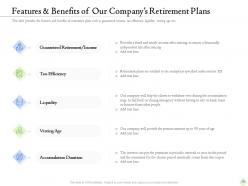
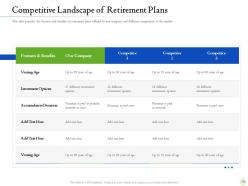
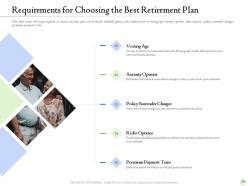
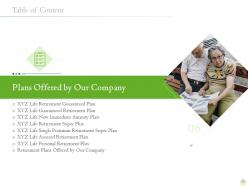
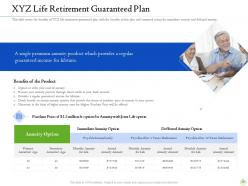
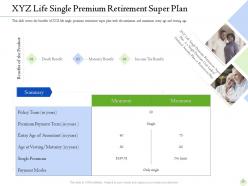
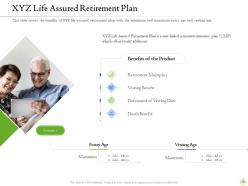
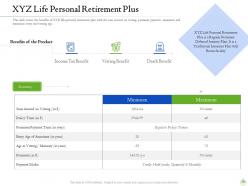
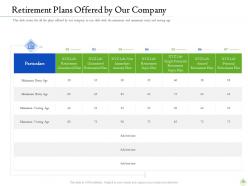
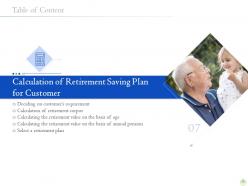
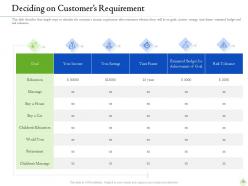
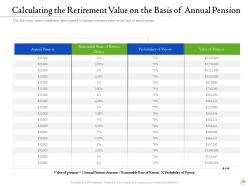
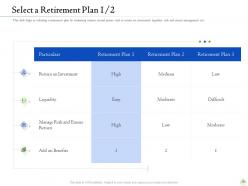
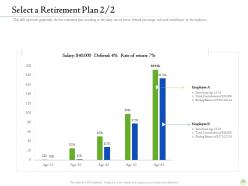
Plan and manage client finances for the post-retirement period by utilizing Retirement Planning PowerPoint Presentation Slides. Showcase a long-term comprehensive financial plan for retirement years with the aid of this pension plan PPT slideshow. Highlight the features and benefits of the retirement plan offered by your company using the professionally designed pension plan PPT slideshow. Use our thoroughly researched retirement insurance plan PPT graphics to describe the steps for calculating customer’s income requirements like goals, income savings, time frame, estimated budget, and risk tolerance. This visually appealing pension planning PowerPoint complete deck helps to discuss the criteria for choosing the best retirement plan, such as vesting age, annuity options, policy surrender charges, and rider options. Take advantage of the ready-to-use retirement planning PowerPoint templates to describe the plans offered by your company with maximum and minimum entry. Thus, download our eye-catching and engaging retirement planning PowerPoint presentation to attract the attention of your viewers.
People who downloaded this PowerPoint presentation also viewed the following :
Retirement planning powerpoint presentation slides with all 58 slides:
Use our Retirement Planning Powerpoint Presentation Slides to effectively help you save your valuable time. They are readymade to fit into any presentation structure.










FAQs for Retirement planning
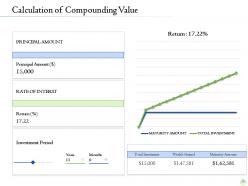
Okay so retirement planning really comes down to four big things. First, figure out your savings vehicles - 401k, IRA, whatever your company offers. Then nail down an investment strategy that actually makes sense for how long you have. Healthcare costs are honestly brutal (my parents are dealing with this now), so don't ignore that part. Most people need around 70-80% of what they're making now to live comfortably later. Starting early is everything because compound interest is literally free money over time. I'd sit down and crunch the numbers - what do you actually need in today's dollars? Work backwards from there and you'll know exactly what to save each month.
Okay so first grab all your numbers - 401k, savings, house value, whatever - then subtract what you owe. That's your net worth. Now here's the fun part (not really): figure out what you'll actually need to live on, probably like 70-80% of what you make now. Do the math over 20-30 years and yeah, it's kinda terrifying. Check what you'll get from Social Security and any pensions, plus what your current savings might spit out. Compare that to what you need. There's probably a gap but honestly don't freak out - you've still got time to save more or push back your timeline.
Dude, grab that employer match first if you've got it - seriously, who turns down free money? Your 401k lets you stash way more cash ($23k vs $7k for IRAs), but honestly the investment options usually suck compared to what you can get with an IRA. Think about taxes too - traditional gives you a break now, Roth pays off later when you retire. Max out any company match first, then shop around and compare fees between your 401k and IRA providers. Oh and consider where your tax bracket's headed - that'll help you pick traditional vs Roth.
Honestly, everyone says 10-15% of your income but that's kinda brutal when you're starting out. I'd say just do whatever you can swing - even 5% is solid. You can always bump it up later when you're making more money. Starting early is where the magic happens though, compound interest will do most of the work for you over the decades. Oh and definitely grab any employer matching if your job has it - that's basically doubling your money instantly. Whenever you get a raise, try increasing your contribution by like 1%. You won't even notice it but future you will thank you.
Okay so here's the deal - taking Social Security at 62 instead of waiting until full retirement age (66 or 67) will permanently slash your benefits by like 25-30%. Ouch. Each month you claim early reduces it a bit, so 65 isn't as brutal as 62 but you're still losing money for life. And if you're still working? They might temporarily hold back some payments if you earn too much, though you do get that back later. Honestly, the math gets pretty complicated depending on your situation. I'd crunch the numbers first since this decision sticks with you forever.
So here's the thing with inflation - it's basically stealing your money super slowly. That 100k you save today? Won't buy nearly as much stuff in 20 years. Even if you don't change your lifestyle at all, everything just costs more. It's wild how it sneaks up on you! You need investments that can actually beat inflation - stocks tend to do way better than bonds or CDs for this. I'd plan for around 2-3% inflation per year when you're figuring out retirement numbers. Otherwise you'll think you're set but actually be kinda screwed.
So annuities are basically like creating your own pension since most jobs don't offer those anymore. You give them a chunk of money upfront and they pay you monthly for life - can't outlive it no matter what. Honestly, they're pretty boring as investments go and the fees can be awful. But here's the thing - they solve that nightmare scenario of running out of money when you're 85. If you're thinking about it, stick with simple immediate ones and definitely shop around. The pricing differences between companies will shock you.
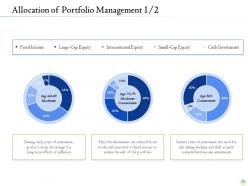
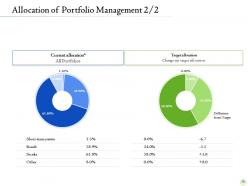
So basically you want to diversify and change things up as you get older. Young? Go heavier on stocks - you've got decades to bounce back from crashes. Getting closer to retirement means slowly moving more into bonds and safer stuff. That old "age in bonds" rule is kinda weak though since we're all living way longer now. Most people do this "glide path" thing where your portfolio gets more boring over time automatically. I'd say figure out how much risk makes you comfortable first, then just rebalance once a year and call it good.
Okay so Medicare premiums are just the start - you've also got supplemental insurance plus all those deductibles and copays. The scary part? Long-term care costs, which can easily run $50k+ per year for nursing homes or even in-home help. Prescription drugs add up quick too, especially if you end up with chronic stuff. And here's what nobody tells you - Medicare coverage for dental and vision is pretty much garbage. My neighbor found that out when she needed major dental work last year. Most people say plan for healthcare to take about 15% of your retirement income, though honestly it depends on your luck with staying healthy. Start looking into Medicare options early so you're not panicking at 65.
So basically taxes mess with your retirement money twice - when you put it in and when you take it out. Traditional 401(k)s give you a tax break now, but you'll pay later when you retire. Roth accounts are backwards - pay taxes today, withdraw tax-free later. Here's what's tricky though: nobody knows what tax bracket you'll be in when you're 65. Could be way higher, could be lower. That's why mixing both account types is smart - gives you options down the road. Honestly, I'd crunch some numbers or chat with a tax person about your specific deal.
Honestly, downsizing your house is probably the biggest money-saver. My neighbor went from a 4-bedroom to a condo and her property taxes dropped like crazy. Moving somewhere cheaper helps too - places like Tennessee or Texas can cut your housing costs in half compared to coastal cities. That geographic thing is real. Transportation's another big one. If you end up somewhere walkable, maybe ditch the car entirely? Public transit beats car payments and insurance. I'd start looking at potential spots now and actually run the numbers on what housing would cost. The math might surprise you.
Honestly, this stuff is expensive - we're talking $50K+ per year and Medicare won't help much. I'd look into long-term care insurance while you're in your 50s and still healthy. Premiums get crazy expensive later. You could also just save separately for it or check out those hybrid life insurance policies that cover care too. My parents just hoped their regular retirement savings would work, but that's kinda gambling when you think about how much care costs these days. Get quotes from a few companies and work it into your retirement planning now before you're scrambling later.
First thing - definitely max out that 401k, especially the employer match part. That's just free money sitting there. A Roth IRA is solid too since you won't pay taxes when you pull it out later. If you can swing it, wait until 70 to claim Social Security - you get like 8% more each year you delay, which adds up fast. I'd also look into other income sources... rental property's been good to me, or dividend stocks work too. Honestly though, start by figuring out what you'll actually need first, then work backwards from there.
Honestly, once a year is the bare minimum but life changes are what really matter. New job? Marriage? Kids? That's when you gotta dive in. I always tell people to pick a date that sticks - like your birthday or tax season, whatever you won't forget. Check if you're contributing enough, if your investments still make sense, and whether you're actually gonna hit your goals. Market dips will freak you out but don't go crazy making changes every time. Though I'll admit, easier said than done when everything's tanking! The big life stuff is what really moves the needle anyway.
Honestly, people mess up retirement planning in a few big ways. They wait too long to get serious about it - like, way too long. Healthcare costs will absolutely destroy your budget if you're not ready for them. I've seen people think they'll live on nothing in retirement, which is just delusional. Don't rely on just your 401k or Social Security either. That's risky as hell. Oh, and here's something nobody talks about enough - pulling too much money out early totally screws your compound growth. Start putting more away now if you can. Spread your investments around different things. Maybe talk to someone who actually knows what they're doing to double-check your math.
-
Perfect template with attractive color combination.
-
Presentation Design is very nice, good work with the content as well.
-
Awesomely designed templates, Easy to understand.
-
Easily Understandable slides.