


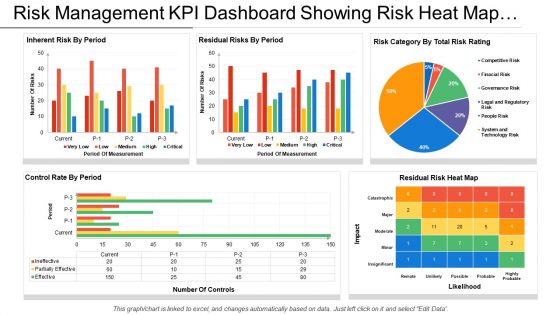
Risk Management Kpi Dashboard Showing Risk Heat Map And Control Rate By





Try Before you Buy Download Free Sample Product
 Impress Your
 Audience
 100%
100% Editable
 Save Hours
 of Time


Get on a firm footing with our Risk Management Kpi Dashboard Showing Risk Heat Map And Control Rate By Period. They allow you to hold your ground.
People who downloaded this PowerPoint presentation also viewed the following :
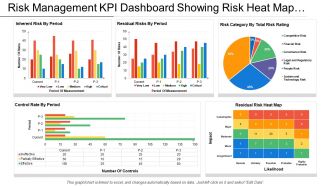
Risk Management Kpi Dashboard Showing Risk Heat Map And Control Rate By with all 6 slides:
It is carnival time for your ideas. Feast upon our Risk Management Kpi Dashboard Showing Risk Heat Map And Control Rate By Period.


FAQs for Risk Management Kpi Dashboard Showing Risk Heat Map And
Honestly, break it down into four main things: figuring out what could go wrong, checking how likely/bad each thing would be, then deciding how to handle each risk. The assessment part is where most people mess up - they either skip it or just guess. You've got options for dealing with stuff: avoid it completely, pass it off to someone else, reduce the damage, or just accept it. Oh, and you can't just do this once and forget about it. Risks change all the time. I'd start with a simple spreadsheet listing everything out, then get fancier later.
Start with mapping out all your operational stuff - get input from different departments since they know the real pain points. Frontline people are goldmines for this honestly, they see what could go wrong every day. Make a simple matrix for likelihood vs impact, don't get fancy with it. Cover everything - cyber stuff, compliance, supply chain mess, financial risks, whatever applies to you. Oh and this isn't a one-and-done thing. You've gotta review quarterly or it gets stale fast. Some companies skip that part and wonder why they missed obvious red flags later.
Dude, technology completely changed the game for risk management. Instead of crossing your fingers with old spreadsheets, you can actually spot problems as they happen. AI catches weird patterns, dashboards show you what's going wrong in real-time, and predictive stuff helps you see disasters coming. Honestly, those quarterly reviews we used to do were kind of a joke - so much could go sideways between meetings. Cloud platforms make team collaboration way less painful too. My advice? Start small and automate whatever boring monitoring tasks eat up most of your time first.
So you gotta weave risk thinking into your strategy planning right from the start. During those early strategy meetings, map out what could go sideways - market changes, new regulations, operational stuff breaking down. Build your backup plans directly into each initiative and make someone own watching for red flags. I swear, I've watched brilliant strategies totally implode because teams didn't ask "what if this goes wrong?" early enough. Oh, and definitely make risk review a regular thing in quarterly check-ins. Way better to catch problems coming than scramble when they hit.
Honestly, the worst mistake is treating risk management like some box you check once and forget about. Teams get so caught up making perfect spreadsheets and matrices – meanwhile they're missing obvious red flags happening right now. Also don't just focus on the big scary risks everyone talks about. It's usually the weird connected stuff that'll bite you. Oh, and stop keeping departments in separate bubbles! Get finance talking to operations, you know? Schedule regular check-ins with people who can actually make decisions, not just the compliance team.
Honestly, the best way is tracking how often bad stuff happens and how much damage it causes. Are you dealing with fewer incidents? Smaller financial hits? That's progress right there. Also compare what you predicted would happen versus what actually went down - shows if you're getting better at spotting risks. Response time matters too since quick reactions usually mean you were prepared. I check these numbers every few months because quarterly reviews help you catch patterns. The whole point is seeing if your strategies actually work when things go sideways, which unfortunately they will.
Look, compliance isn't just some box to check - it literally becomes the backbone of how you handle risk. Most of the time, those regulations end up dictating how you assess stuff, what you report, and how you document everything. Yeah, it's annoying sometimes but honestly? It makes you way more organized than you'd be otherwise. You get forced to actually track risks you'd probably ignore. Oh, and definitely map out what compliance stuff you're already doing against your current risk processes. You'll spot holes everywhere - I guarantee it. The structure thing is actually pretty helpful once you get used to it.
Honestly, risk management is super industry-specific. Finance folks are constantly worried about market crashes and regulatory stuff - they're running stress tests 24/7. Healthcare is totally different though. Patient safety, malpractice suits, data breaches - completely different headaches. The frameworks look similar but they're not really. What I'd do is figure out your industry's worst nightmare scenarios first. Like, what would actually destroy your business? Then build everything around those specific threats instead of some cookie-cutter approach. Way more effective that way.
Honestly, risk culture is what separates companies that survive from ones that don't. People need to feel safe calling out problems without getting thrown under the bus - that's huge. You'll catch way more issues early when everyone's naturally thinking about what could go wrong. Short circuits beat long disasters every time. Plus you get all these extra people watching for red flags instead of just relying on your official processes. I've seen places where people knew something was sketchy but stayed quiet because... well, nobody wants to be the bearer of bad news, right? Don't let that happen.
Use a risk matrix - probability vs impact. Super simple way to see what's urgent. Obviously tackle the high-probability, high-impact stuff first, but honestly don't sleep on those "black swan" events that seem unlikely but would totally destroy your business. Give each risk a number, multiply probability times impact, then work down from the highest scores. The trick is being brutally honest about both factors though. I've watched so many businesses get wrecked by things they swore would never happen. Wishful thinking is basically the enemy of good risk planning.
For most stuff, I'd go with risk matrices first - they're dead simple and plot probability against impact. SWOT analysis and fault tree analysis are your other basics. Monte Carlo gets useful when things get messy with tons of variables. Manufacturing? HAZOP and FMEA are clutch for operational risks. Honestly, don't overthink it - Excel templates handle like 80% of what you'll need. I've seen people burn weeks on fancy tools when a basic matrix would've worked fine. Pick what fits your situation instead of going crazy with complexity. Start simple, then add layers if stakeholders actually want more detail.
When the economy tanks, your whole risk game changes overnight. What felt safe before? Suddenly looks terrifying. I learned this the hard way - you've got to stress-test everything and hoard way more cash than feels comfortable. New investments become basically off-limits. Building flexibility into your framework ahead of time is clutch though. Have backup plans sitting in your drawer before things go sideways. The pivot has to be fast when markets freak out. It's wild how external stuff can completely wreck your risk calculations, but that's just reality I guess.
Okay so here's what works for me - executives just want the bottom line impact, but your tech people need all the nitty-gritty details. Don't lead with scary scenarios though, that backfires. Start with how this actually messes with their specific goals. Visual stuff like heat maps are clutch because honestly, people zone out in meetings otherwise. Show both probability AND impact. But here's the key thing - never present a problem without giving them options to fix it. Stakeholders get super frustrated when you dump risks on them with zero solutions. Always send a follow-up email after because people forget half of what you discussed.
Honestly, you gotta nail down your risk limits before you do anything else - like what's too risky vs what's worth a shot. Companies flip-flop between being scared of everything then making insane bets when they panic. Don't be those guys. Set up different approval levels based on how risky something is. Spread your bets around instead of going all-in on one thing. And yeah, always keep enough cash cushion so you won't be screwed if stuff goes wrong. Regular check-ins help too - just don't overthink it.
Risk management dies without regular updates - seriously, I've seen companies get blindsided by stuff they should've caught. You gotta review what's working every few months and toss what isn't. New risks pop up constantly, so staying static is basically asking for problems. It's like those people who never update their apps then wonder why everything crashes. Set up quarterly check-ins with your team. Get their honest feedback about your current processes. Then actually adjust based on what you're seeing in real situations, not just theory.
-
excellent performance
-
Really like the color and design of the presentation.
-
Excellent products for quick understanding.