


Sales Pipeline Management Sales Pipeline Tracking And Reporting




Try Before you Buy Download Free Sample Product
 Impress Your
 Audience
 100%
100% Editable
 Save Hours
 of Time


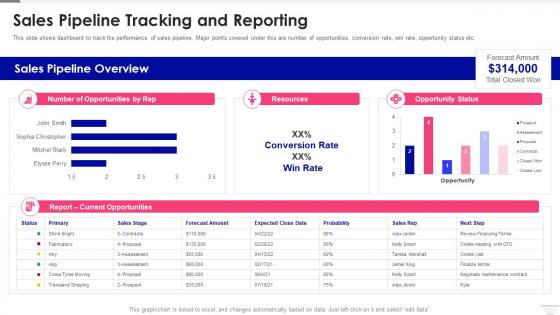
This slide shows dashboard to track the performance of sales pipeline. Major points covered under this are number of opportunities, conversion rate, win rate, opportunity status etc.
People who downloaded this PowerPoint presentation also viewed the following :
Sales Pipeline Management Sales Pipeline Tracking And Reporting with all 7 slides:
Use our Sales Pipeline Management Sales Pipeline Tracking And Reporting to effectively help you save your valuable time. They are readymade to fit into any presentation structure.





FAQs for Sales Pipeline Management Sales Pipeline
Look, sales is basically like dating with spreadsheets. You start with lead gen - just finding people who might want your stuff. Then you qualify them (are they actually worth your time?). After that comes the pitch/proposal stage where you show off your solution. Negotiation follows - that's where things get interesting because everyone's trying to win. Finally you close the deal. Each step means the buyer's getting more serious, and honestly? Your job shifts from teacher to problem-solver to someone they actually trust. Just make sure you know when to move on from dead deals.
Honestly, get a decent CRM - spreadsheets are a total pain and nobody keeps them updated anyway. Define your pipeline stages clearly so your team knows exactly when to move leads along. Every call, email, interaction needs to get logged or you'll lose track of everything. The biggest thing though? Make sure people actually update lead status regularly. I've seen too many pipelines turn into garbage because half the data is stale. Weekly reviews help catch leads that are just sitting there going nowhere.
Focus on conversion rates between stages and your average deal size first. Sales velocity matters too - basically how fast deals actually close. Pipeline coverage is critical, shoot for 3x your quota minimum. Win rates will tell you if you're qualifying prospects properly or just wasting time on bad fits. Watch activities per opportunity and how long deals sit in each stage - that's where you'll spot the real bottlenecks. Pipeline leakage drives me crazy but you gotta track it. Pull these weekly, don't obsess over daily swings. Trends matter way more than single data points.
Honestly, CRM tools are game-changers for tracking your sales pipeline. Every prospect gets automatically logged with their interactions and deal stages, so nothing falls through the cracks. The analytics side is where it gets really useful though - you'll spot exactly where deals stall and which leads are worth chasing. Plus it handles all those annoying follow-up reminders so you're not constantly setting phone alarms like some kind of cave person. Revenue forecasting becomes way more accurate too. My advice? Set up your deal stages first to match how you actually sell, not some generic template. That foundation makes everything else click.
Honestly, start by looking at your current pipeline data to see where people are dropping off the most. You'll want to qualify leads way better upfront - no point having your team chase people who aren't serious buyers. I always tell people to stop skipping discovery calls and jumping straight into pitches, but nobody listens lol. Different content works for different stages too. Case studies hit different when someone's actually ready to buy. Don't give generic responses to objections either. Figure out what specific concerns come up at each stage and address those head-on. Fix your biggest bottlenecks first.
Honestly, B2B pipelines are a total nightmare compared to B2C. You're dealing with months-long cycles where like 5 different people need to sign off - the CEO, CFO, some random VP who barely understands what you're selling. Miss tracking one stakeholder's feedback and boom, your deal's dead after 3 months of work. B2C is so much cleaner - usually one person decides in days or weeks. For B2B you need way more qualification stages and relationship stuff, while B2C is just about fast conversions and volume. Start by figuring out who actually influences decisions in your deals.
Dude, lead scoring is basically ranking your prospects so you don't waste time on people just browsing around. You give points for stuff like company size, budget, how much they're engaging with your content - whatever shows they might actually buy. Think of it like a priority system for your pipeline. Higher scores = more attention from sales. Honestly, the tricky part is keeping your criteria updated because what worked a few months ago might be totally off now. But yeah, just follow the numbers and focus where you're most likely to close deals.
Honestly, it all comes down to keeping everyone in the loop - update your CRM religiously so people aren't guessing where deals actually are. Weekly pipeline meetings help tons, just quick ones to flag stuck deals and what's coming up. Slack channels (or whatever you use) are clutch for hot prospect updates. Here's the thing though - pipeline visibility can't just be your manager's problem, everyone needs to own it. Oh and set up those automated stage alerts so stuff doesn't slip through. Trust me, those alerts have saved me more times than I can count.
Ugh, the worst thing is keeping dead deals around forever - they just sit there making your pipeline look way better than it actually is. Been guilty of this myself! Seriously though, clean that stuff out weekly. Also? Don't let your reps just randomly change probability percentages without showing you why. Like what actual buyer behavior happened, you know? Set up stage criteria that aren't total BS, and honestly be harsh about close dates. I'd rather have a smaller pipeline that's real than some massive wishful thinking spreadsheet. Those fantasy numbers help nobody.
Dude, you'll save SO much time automating the boring pipeline stuff. Start with lead scoring - your CRM can automatically rank prospects based on what they actually do. Email sequences run themselves once you set them up, which honestly feels like cheating. AI even predicts which deals will close (scary accurate sometimes). The trick is picking one thing first instead of going crazy with everything at once. Maybe I'm lazy, but having deals move through stages automatically when someone downloads something or books a call? Game changer. Build it piece by piece and you won't drown in the setup.
Honestly, good pipeline management is a game changer for forecasting. You're working with real data instead of just guessing. Update your deal stages and timelines consistently - you'll start seeing patterns in your sales cycle and catch bottlenecks before they screw you over. The biggest thing? Don't lie to yourself about where deals actually stand. I see so many people being way too optimistic and it kills their numbers later. Clean up your pipeline stages first, then get your team updating weekly. Oh and catch those stalled deals early - they're forecast killers. Your predictions will get so much better.
Honestly, your closed deals are pure gold for figuring out what actually works. Make your reps write down the key stuff right after they close - decision factors, timeline, competitor info, all that. Yeah I know nobody wants to do paperwork after a win, but trust me on this. Look for patterns in your wins: which lead sources convert, what messaging hits, where deals typically stall. Then use those patterns to fix your qualification process and coach your team on tactics that actually work. The data's sitting right there - you just gotta dig into it.
Oh man, team training is seriously underrated. Your pipeline data becomes actually useful when everyone qualifies leads the same way and updates stages consistently. No more random systems that make zero sense. Deals move faster too - people know exactly what to do at each stage instead of just winging it. Your forecasting won't be total guesswork anymore, which is honestly refreshing. I'd start with basic pipeline training first. You'll probably see conversion rates improve within like a month or so.
Map your marketing stuff to each funnel stage first. What content actually pushes people from awareness to considering your product to buying? Build campaigns around those specific moments. Focus on qualified leads that fit your ideal customer - random traffic is basically useless (took me way too long to figure that out). Your sales team needs to tell marketing what's working and where people drop off. Oh, and set up shared metrics so you can track how marketing leads convert at each stage. Regular check-ins help too.
Check your pipeline every week with the same criteria for moving deals forward. How long are opportunities stuck in each stage? That's where your bottlenecks are hiding. Update probabilities based on real buyer engagement - not the wishful thinking we're all guilty of sometimes. Honestly, gut feelings rarely beat data. Clean out anything stale after 30 days and ask hard questions about qualification. Write down your process so reviews stay consistent. Track stuff like meeting-to-proposal ratios too - they'll predict better than just looking at dollar amounts.
-
“Detailed and great to save your time.”
-
Thank you for offering such fantastic custom design services. The team is really helpful and innovative. In a very short time, I received my personalized template.