


Weekly Call Center Progress Report With KPIs





Try Before you Buy Download Free Sample Product
 Impress Your
Audience
 100%
Editable
 Save Hours
of Time


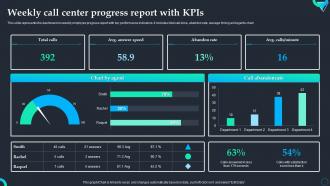
This slide represents the dashboard on weekly employee progress report with key performance indicators. It includes total call done, abandon rate, average timing and agents chart.
People who downloaded this PowerPoint presentation also viewed the following :
Weekly Call Center Progress Report With KPIs with all 7 slides:
Use our Weekly Call Center Progress Report With KPIs to effectively help you save your valuable time. They are readymade to fit into any presentation structure.






FAQs for Weekly Call Center Progress
You'll want to focus on First Call Resolution, Average Handle Time, and Customer Satisfaction scores. FCR shows if your team's actually fixing problems - nobody wants to call back four times for the same stupid issue. AHT keeps things efficient without rushing people off the phone. CSAT gives you the real deal from customers. Service Level and Agent Utilization are worth tracking too. Honestly, start with those five and see what patterns pop up. Then you can dig deeper into whatever's causing headaches. The data usually tells a pretty clear story once you know what to look for.
Connect your call center numbers directly to what the business actually wants - revenue, keeping customers, cutting costs. Don't just track handle time; link it to satisfaction scores and whether people buy again. Honestly, I've watched teams get obsessed with call volume while leadership's thinking about lifetime value. Create dashboards showing both your day-to-day stuff AND business impact. Review these KPIs with other departments regularly so you're all on the same page. Most important part? Change agent incentives to match these bigger goals instead of just rewarding speed.
CSAT is your reality check - tells you if customers are actually happy after talking to you, usually rated 1-5 or 1-10. Sure, fast call times look good on paper, but what's the point if you're pissing people off in the process? Track it with your other numbers because honestly, a rep crushing their handle time but bombing CSAT scores is doing it all wrong. The trends show you where training might help. Plus you can spot which reps are nailing the whole customer experience thing - those are the ones worth celebrating.
Look, AHT totally affects how customers feel about your service. Rush through calls to hit those targets? People feel blown off and you're barely fixing anything. But super long calls mean everyone's waiting forever, which sucks too. Here's what I've learned - don't get crazy obsessed with that number. Train your team to work smart, not just fast. Actually, focus more on fixing things right the first time. Yeah, those calls might run longer, but customers won't have to call back three times for the same stupid issue. That's way better for everyone.
FCR tracking is seriously worth doing - it shows you're actually fixing problems, not just taking calls. You'll spot which agents need help and catch those annoying recurring issues before they blow up. Customers hate calling back multiple times (honestly who doesn't?), so higher FCR keeps them way happier. Plus it cuts costs since you're not dealing with the same crap over and over. I'd grab a baseline first, then track weekly. That's where you'll find your biggest wins hiding.
Happy agents seriously make or break your numbers. They stick around longer, so you're not constantly training new people (which is exhausting, honestly). Better employee satisfaction means fewer sick days and way less burnout too. Your customer satisfaction scores will thank you - satisfied agents are just naturally more patient and helpful on calls. First-call resolution goes up because they actually want to solve problems instead of rushing people off. I'd definitely track internal surveys and exit interviews alongside your regular performance stuff. You'll start seeing patterns pretty quickly once you connect the dots.
Honestly, first-call resolution is your golden metric - check it before and after training. Customer sat scores matter too, obviously. Handle times usually improve when people actually know what they're doing. Oh, and escalation rates! That one's huge because good agents don't punt everything upstairs. Quality scores from your QA team will show you the real deal. Sure, do those knowledge tests right after training, but the operational stuff tells you if people actually retained anything. Set up some dashboards comparing like 30-60-90 days post-training. That's how you'll know if you wasted money or not.
So abandonment rates are basically customers hanging up before they talk to anyone - super frustrating for them. When you see spikes during certain times, that's screaming "we need more people working." Track those patterns for a few weeks and you'll start seeing when you're consistently short-staffed. Here's the annoying part though - you can't just throw bodies at it because overstaffing tanks your other numbers. I've seen teams get obsessed with perfect metrics, but honestly? Focus on matching your staff levels to when customers actually call most. Short bursts of higher abandonment aren't the end of the world.
Honestly, you gotta start with your actual data first - figure out where you're at right now before setting any targets. Industry benchmarks are useful but don't just copy-paste them since your center's probably different. Here's what I learned the hard way: those crazy aggressive "stretch goals" just crush team morale. Shoot for 5-10% improvement instead. Way more realistic. Don't forget about seasonal stuff and staffing changes when you're crunching numbers. Oh, and definitely loop in your team leads - they actually know what's doable on the floor, unlike us sitting in meetings all day.
So SLAs are basically the promises you make to clients - like "we'll answer 80% of calls in 20 seconds" or keep systems up 95% of the time. Your KPIs? That's how you actually track if you're hitting those targets. Here's the thing - you can't know if you're about to blow an SLA without good KPI monitoring. I've seen companies get hit with penalties because they weren't watching their numbers closely enough. Just make sure your dashboards actually match what you promised in those contracts. Otherwise you're flying blind.
Dude, stop torturing yourself with spreadsheets every week. Your call center software probably already tracks handle time, resolution rates, and customer satisfaction automatically - you just need to dig into the reporting features. Set up real-time dashboards so you can actually see what's happening without pulling manual reports constantly. The AI analytics stuff is pretty cool too, spots patterns and helps predict when you'll need more staff. Oh, and definitely set alerts for when metrics go sideways. That way you're not scrambling later when everything's already on fire. Just start with whatever system you've got first.
So basically you want to track stuff like how long calls take, whether issues get fixed on the first try, and customer satisfaction scores. Watch these over weeks or months and you'll start seeing patterns - like maybe wait times always get crazy at 2pm or customer complaints jump after you launch new products. Most call center software already has dashboards for this (thank god, because doing it manually would suck). Pick 3-4 metrics that matter most to your business and check them weekly. The weird thing is when you compare different data points together, connections pop up that you'd never spot otherwise.
Ugh, low NPS is brutal for call centers. Your customers are pissed and calling back constantly with the same problems. Agents get stuck dealing with angry people all day, which honestly sucks for morale. Handle times drag on forever because everything's a complaint now. Plus you'll probably see people quit more often - I mean, who wants to deal with that negativity every shift? The worst part? Getting new customers costs like 5x more than keeping current ones happy. I'd dig into what's actually making people so mad in the first place. Fix that root issue or you're just playing whack-a-mole with symptoms.
Yeah, so multi-channel stuff actually screws with your normal KPIs in weird ways. Your handle time gets inflated because agents waste time switching between platforms - honestly it's pretty annoying. First call resolution tanks too since customers bounce around channels before anything gets fixed. But the crazy thing is customer satisfaction usually goes up because people can contact you however they want. Individual channel metrics look terrible, but that's misleading. You're better off tracking how issues get resolved across all channels and measuring total customer effort instead of obsessing over each channel separately.
Okay so first thing - you gotta figure out what's actually broken. Dig through your data to see if it's training, staffing, or just crappy processes. Low FCR? Usually means agents don't know enough or calls are getting routed wrong. High AHT is almost always about clunky systems or bad scripts (seriously, some of these tools are ancient). CSAT problems? That's empathy training plus actually letting agents fix stuff instead of just taking notes. Don't try fixing everything at once though - pick your worst metric and test small changes first. I'd measure weekly to see what's working.
-
I really liked their customized design services. I got my desired template made by their expert team. Thank You!
-
Topic best represented with attractive design.