


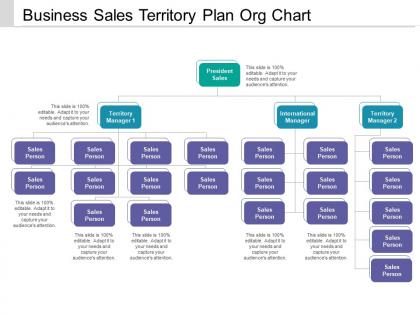
Business sales territory plan org chart




Try Before you Buy Download Free Sample Product
 Impress Your
 Audience
 100%
100% Editable
 Save Hours
 of Time


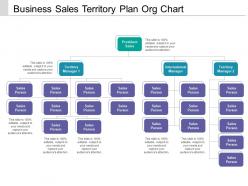
Download our predesigned business sales territory plan org chart PowerPoint templates designed by a team of design experts at SlideTeam. We have created this business sales plan org chart PPT template while keeping the customer needs in mind. This creative business plan organizational chart showcases seven level using which you can highlight the plan for members in a different position. Deploy this editable sales territory plan hierarchy chart template slide in your presentation design to represent the procedure of preparing a successful plan for targeting the right customers. Using our sales territory planning best practices organization chart PPT template, you will be able to analyze your business goals and objectives and will be able to achieve them. You can utilize this stunning business sales org chart slide design for creating a presentation on topics such business development, sales plan, business strategies, sales management, sales operations, sales territory, sales, and operations planning, marketing plan, profit bases sales target, strategic planning, and more. Impress your audience with this stunning presentation template. Hurry up and download this editable business sales territory plan org chart PowerPoint templates. Derive the benefits of glocal capability with our Business Sales Territory Plan Org Chart. Be able to communicate with customers anywhere.
People who downloaded this PowerPoint presentation also viewed the following :
Business sales territory plan org chart with all 5 slides:
Our Business Sales Territory Plan Org Chart have a wide span. Bridge the divide with your views.



FAQs for Business sales territory
So you're splitting up territories? Start by mapping where your actual revenue sits - current customers plus good prospects. Don't just make pretty squares on a map though, travel time will wreck your reps' days. Balance is huge too. Nobody should be drowning while someone else has three accounts to manage (been there, it sucks). Match territory types to your people's strengths - some spots need hunters, others need relationship people. Geographic size matters less than workload and opportunity density. Map everything out first, then see where the natural breaks make sense.
Look, territory management is honestly a game-changer for sales. Map out your current territories first and see where you've got gaps or too much overlap - that's usually eye-opening. Your reps can actually focus on the good prospects instead of just throwing stuff at the wall. Better relationships happen when people aren't spread crazy thin across too many accounts. Plus you can finally track what's working in different areas. The trick is balancing workloads so nobody gets buried while still covering everything. I learned this the hard way at my last job - wish someone had told me sooner!
So if you're already using Salesforce, their Territory Management is actually pretty solid for mapping stuff out. HubSpot works great too, especially if you've got a smaller team. Look, I know this sounds basic but Google Maps or even Excel can work fine for simple territory planning - no joke. Sometimes you don't need all the bells and whistles. MapInfo and Geopointe are worth checking out if you want something more advanced that'll play nice with your CRM. But honestly? Pick whatever your team will actually stick with instead of the fanciest option that'll just collect dust.
Look at your demographics first - population density, income, age groups, that kind of stuff. Growing markets obviously need more resources than dying ones. Match your reps to areas where they'll actually succeed based on their experience. I learned this the hard way when we put our new guy in the toughest territory and wondered why he struggled. Review the data regularly because markets change fast. Your boundaries should shift with them, not stay stuck in some plan from two years ago.
Honestly, you can't optimize territories without diving into the data first. Pull your last 12 months of sales and map it out geographically - bet you'll spot weird imbalances immediately. Look at sales numbers, customer demographics, geographic spread, all that stuff. You'll probably find one rep drowning in accounts while another's barely breaking a sweat. The data shows you where future growth might pop up and which areas are getting ignored. It's kinda like detective work - patterns jump out once you start connecting the dots. Balance things better and your team will actually thank you for it.
Honestly, you've gotta ditch the gut-feeling approach and actually crunch the numbers. Check revenue potential, customer density, travel times - all that stuff. Mapping software helps tons for visualizing everything geographically. Being transparent about how you're splitting territories is huge. Nobody wants to feel screwed over, you know? I'd also factor in market maturity and competition, not just the obvious revenue stuff. Quarterly reviews work well - gives everyone a chance to voice concerns. Oh, and don't be stubborn about adjustments when the data clearly shows someone got dealt a bad hand. Flexibility keeps people happy.
Stay flexible with your territories and check your data monthly - seriously, that's what makes the difference. When demand shifts or competitors move in, don't be afraid to reassign accounts based on potential instead of just sticking to geographic boundaries. High-growth areas? Split them up so reps can actually focus. Struggling accounts might need your best performers temporarily. I learned this the hard way - waiting for the annual territory review is way too slow. Make small tweaks as you go rather than one massive overhaul. Trust me, your numbers will thank you.
Dude, territory design is basically everything when it comes to rep performance. Give someone a territory loaded with big prospects in a tight area? They'll crush their numbers without breaking a sweat. Meanwhile, another rep gets stuck covering half the state with tiny accounts scattered everywhere - and somehow management wonders why they're struggling. It drives me crazy how overlooked this is when companies evaluate their people. You gotta balance the opportunities, workload, and travel so you can actually tell who's killing it vs. who just lucked into a goldmine territory. Otherwise you're comparing apples to... well, really expensive oranges.
Track revenue stuff like territory earnings and deal sizes, but don't ignore the activity metrics either. Call volume and lead generation tell you what's actually working behind the scenes. Pipeline velocity is honestly my favorite - shows how fast deals close in your area. Customer satisfaction matters too since happy clients refer others (and stick around longer). Oh, and conversion rates obviously. Pick maybe 3-4 that match your goals and check them monthly. You don't need to track everything at once or you'll go crazy with data overload.
Territory maps are honestly a total game-changer - way better than drowning in Excel sheets. Color-code by performance or rep assignments and you'll spot gaps instantly. I use them to balance workloads and show my boss exactly where we're crushing it vs. struggling. The visual part is huge because patterns jump out that you'd never catch in spreadsheets. Oh, and they're perfect for planning where to expand next. Start with your current accounts, then add prospects and competitor intel. Makes everything click into place visually.
Ugh, territory management is such a pain. You'll have reps complaining about unbalanced accounts - some get the big spenders while others are left with nothing. Overlap is another nightmare because everyone's stepping on each other's toes. Customers don't even know who to call anymore. Plus your territories go stale the second your business grows or markets change. Getting your team on board with changes? Good luck with that - nobody wants to give up their favorite accounts. Honestly feels like you're constantly playing catch-up. I'd start by looking at what's most broken first.
Dude, get your team on a good CRM first - everyone can see customer updates in real time instead of playing phone tag forever. Mobile apps work great for quick messages between reps. Video calls save you tons of drive time too, which honestly beats sitting in traffic for two hours. Shared dashboards keep everyone on the same page with territory goals, plus you can set up alerts for when clients need immediate attention. GPS tracking helps coordinate visits efficiently, though that might feel weird at first. Pick whatever communication tool your team will actually use and go from there.
Dude, start with role-playing and territory mapping - that stuff actually works. Get them shadowing your best reps right away. Local market knowledge is huge though, seriously can't stress this enough. Most launches fail because people don't get the regional differences. Skip the boring PowerPoint sessions and do interactive demos instead. Pair newbies with mentors who've worked that territory before - they'll learn way more from real stories than training manuals. Do like a 30-day intensive thing, then check in weekly to see what's bombing and what's not. Oh, and drill objection handling hard for that specific region's complaints.
Dude, sales is SO different across cultures - like what crushes it in New York will totally flop in Tokyo. You've gotta switch up everything: how you talk, build relationships, negotiate, even pitch your product. Some places want those long-term connections before any deal happens. Others are super blunt while some beat around the bush forever. I've watched good reps crash and burn because they missed this stuff. My advice? Do your homework on local customs first, then maybe find a local partner who actually gets the territory.
Start with your data - look at account overlap, revenue, and travel patterns before doing anything else. Nobody wants commission surprises, so give your reps 30-60 days heads up and be super transparent about what's changing. I'd map out natural boundaries first, maybe geographic or industry-based, then think about each rep's relationships and strengths. Watch out for conflicts where accounts might bounce between territories - that gets messy fast. Don't dump everything on them at once though. Phase changes in gradually and create a solid handoff plan. Trust me, your reps will appreciate the heads up way more than you think.
No Reviews