Business strategy ppt summary layout

Rating:
80%
Slide 1 of 5
Favourites Favourites

Try Before you Buy Download Free Sample Product

Audience Impress Your
Audience
Editable 100%
Editable
Time Save Hours
of Time
The Biggest Sale is ending soon in
0
0
:
0
0
:
0
0
Rating:
80%
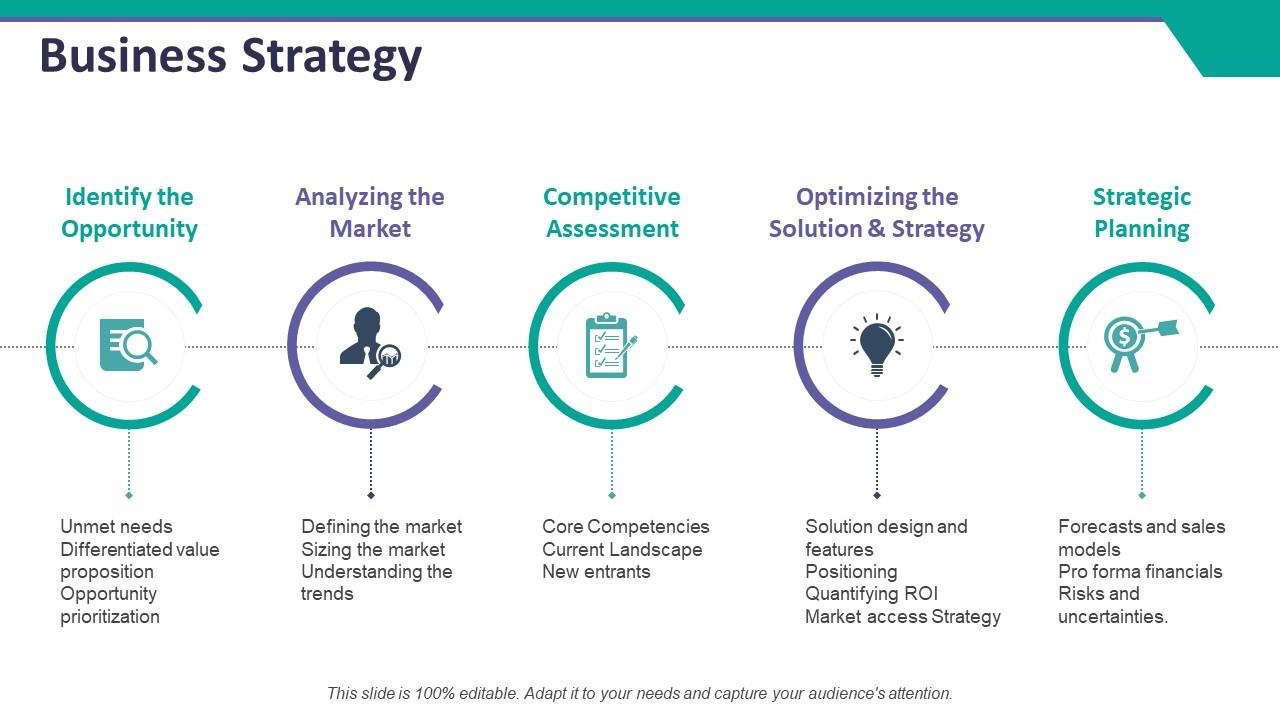
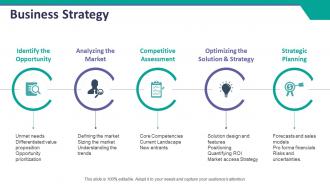
Presenting this set of slides with name - Business Strategy Ppt Summary Layout. This is a five stage process. The stages in this process are Identify The Opportunity, Analyzing The Market, Competitive Assessment, Optimizing The Solution And Strategy, Strategic Planning.

FAQs for Business strategy

Start with your core value prop - that's your foundation. From there you'll need vision/mission stuff, competitive analysis, target market definition, and strategic objectives with actual metrics. Resource allocation and timelines matter too, but here's the thing - most strategies crash during execution, not planning. I've watched this happen so many times it's not even funny. Your competitive positioning has to be solid, plus build in regular review cycles because stuff changes fast. Oh, and keep it simple enough that anyone on your team can explain it without stumbling over buzzwords.

Here's the thing - don't try to beat them at their own game, you'll get crushed. Big companies are slow as hell, stuck in endless meetings while you can actually make decisions. Find whatever niche they're half-assing or completely ignoring. Maybe it's customer service, maybe it's turnaround time - honestly, most corporations suck at both. Pick your one superpower and go all in on that. Like, if you can deliver in 2 days vs their 2 weeks, make that your entire brand. Personal relationships matter too - you can actually remember people's names and preferences while they're just account numbers to the big guys.

Look, market research is basically what keeps you from throwing money into a black hole. It shows you what customers actually need and who you're really up against. Plus you'll spot those gaps everyone else missed. I've watched so many startups skip this step and just... yikes. The smart move? Dig into both the hard numbers and the messy human stuff - like what actually pisses people off about current options. You want real data backing your strategy, not just crossing your fingers and hoping it works out.

Look, don't just freak out and blow up your whole business model. Figure out what's actually shifting in your market first. Netflix nailed this - they saw streaming coming and ditched DVDs before everyone else. Keep what's working, ditch what isn't. Your core strengths matter, but you might need to deliver them differently. Start small though. Test stuff with tiny experiments before going all-in on some massive pivot. I can't stress this enough - talk to your customers constantly during this mess. They'll tell you if you're heading in the right direction way before your quarterly numbers will.

Honestly, focus on both money stuff and operations - revenue growth, margins, ROI on big projects. But also track customer acquisition costs, how many people quit, market share shifts. Pick maybe 5-7 max or you'll go crazy with all the numbers. I learned this the hard way lol. The real trick? Only measure what actually connects to your main goals, not just flashy stats for presentations. Monthly check-ins work best to stay consistent without overdoing it.

Look, when your team actually believes in the same stuff you do, they'll make the right calls without you hovering over them constantly. It's honestly the best way to get your strategy executed properly. People work harder when they're bought into the mission - way better than trying to control every little thing they do. The tricky part is making sure your culture actually matches where you want the business to go. Not just some BS poster on the wall. Short version: good culture = people doing what needs to be done even when you're not around.

Honestly, competitive analysis is like having a cheat sheet for your business. You'll see what gaps others are missing and learn from their wins AND their flops. Do it quarterly if you can - I know it sounds like a lot but trust me on this. Without it, you're just guessing at what might work. The best part? You get to legally stalk your competition lol. Look for patterns in what they're doing wrong, then swoop in with better solutions. It's saved my ass more times than I can count.

Honestly, digital transformation isn't just some IT buzzword anymore - it's literally reshaping how entire companies operate. Traditional manufacturers are becoming tech companies now, which is wild if you think about it. Your competitive edge comes down to how well you use data analytics and automation to streamline things and create better customer experiences. Don't treat it like just another expense though. Smart companies are building whole new revenue streams around digital tools. The trick is making sure whatever digital stuff you do actually connects to your real business goals, not just doing it because everyone else is.

Honestly, tech can totally transform how you approach strategic planning. Analytics tools will show you market trends and customer behavior you'd miss otherwise. Project management platforms actually keep your initiatives moving forward instead of stalling out. There's even AI now that runs different scenarios so you can test strategies before spending money - which is pretty neat. Oh, and cloud tools let everyone jump in with ideas instead of those awful email threads that go nowhere. I'd start with just one thing though, like tracking competitors or performance metrics. Get that down first, then build from there.

Dude, the worst thing is when leadership just assumes everyone understands the strategy without actually explaining it. I've watched so many solid plans crash because of that. Then you've got messy resource allocation - nobody knows what's actually a priority. Setting crazy unrealistic deadlines kills everything too. And honestly? Most companies are terrible at pivoting when the market shifts. Here's what actually works: talk about your strategy way more than feels necessary. Break it into clear milestones and check in constantly to fix what's not working. Don't just send one email and call it done.

Dude, you absolutely need to talk to people before making any big strategy moves. I've watched so many "genius" plans crash and burn because nobody asked employees or customers what they actually wanted. Your team, clients, investors - they all see stuff you're missing. Get them involved early and you'll avoid those painful "why didn't anyone tell me this would never work?" moments. Plus people are way more likely to execute something they helped create. Start by figuring out who really matters, then just... talk to them regularly while you're planning. Sounds obvious but most leaders skip this step entirely.

Focus on three main things: don't put all your eggs in one basket revenue-wise, keep investing in new ideas/R&D, and build solid relationships with customers who'll keep coming back. Cash flow is huge though - I've watched companies literally grow themselves broke by expanding too fast. Also work on training your team and setting up processes that can scale. Oh, and definitely figure out where your money's actually coming from right now. Try to identify at least two new revenue streams you could realistically start this quarter. It's way easier than you think once you map it out.

Look, risk assessment is basically your crystal ball for big decisions. You map out what could go wrong - market changes, competitors swooping in, operational stuff breaking down. Then you can actually plan for that chaos instead of just hoping for the best. Honestly, most people only do this when they're already panicking, but it works way better as a regular habit. Think of it like checking the weather before a road trip, you know? You'll make smarter choices when you can see both the upside AND the downside clearly. I'd start by listing your top 3-5 risks this quarter.

Look, global stuff will mess with your local plans whether you like it or not. Tech changes and consumer habits from other markets show up at your door pretty quick these days. The real challenge? Figuring out what actually applies to you instead of getting distracted by every trend. Like, sustainability isn't going anywhere—that one's legit. Same with how people want to pay for things. I'd honestly just track 2-3 big shifts that hit your industry and check in on them each quarter. Don't try to chase everything though, you'll go crazy.

Look, strategic alliances are basically about borrowing each other's best stuff. You get their customer base, expertise, maybe distribution - things that'd take you years to build yourself. They get whatever you're good at in return. Honestly, it's one of those win-win things that actually works when you don't mess it up. The trick is finding partners who fill your gaps instead of doing what you already do well. I'd start by figuring out what you need vs what you bring to the table, then hunt for companies where you both clearly benefit. Makes sense?

Ratings and Reviews

80% of 100
Review Form
Write a review
Most Relevant Reviews
  1. 80%

    by Duane Ray

    Commendable slides with attractive designs. Extremely pleased with the fact that they are easy to modify. Great work!
  2. 80%

    by Columbus Vasquez

    Excellent products for quick understanding.

2 Item(s)

per page: