Capacity Allocation Dashboard With Staff Demand

Rating:
80%
Capacity Allocation Dashboard With Staff Demand
Slide 1 of 7
Favourites Favourites

Try Before you Buy Download Free Sample Product

Audience Impress Your
Audience
Editable 100%
Editable
Time Save Hours
of Time
The Biggest Sale is ending soon in
0
0
:
0
0
:
0
0
Rating:
80%
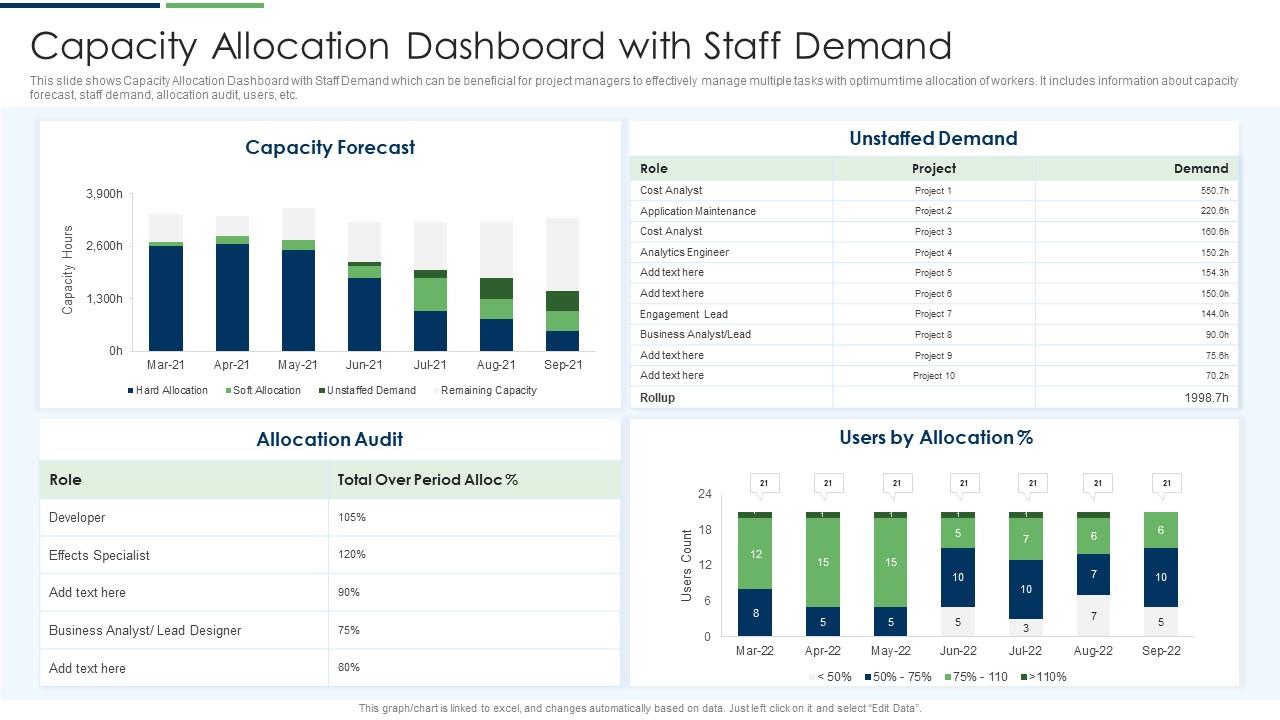
This slide shows Capacity Allocation Dashboard with Staff Demand which can be beneficial for project managers to effectively manage multiple tasks with optimum time allocation of workers. It includes information about capacity forecast, staff demand, allocation audit, users, etc. Introducing our Capacity Allocation Dashboard With Staff Demand set of slides. The topics discussed in these slides are Capacity, Allocation, Dashboard. This is an immediately available PowerPoint presentation that can be conveniently customized. Download it and convince your audience.

FAQs for Capacity Allocation Dashboard

Look, start with your demand forecast - that's your foundation. Customer patterns will tell you a lot. Then map out what equipment you've actually got and where it breaks down (maintenance schedules are sneaky capacity killers). Labor availability matters more than people think, especially if you've got complex products that need skilled workers. Some products are just resource hogs compared to others - product mix complexity can mess with your whole plan. Raw material flow is another big one. Honestly, supplier reliability keeps me up at night sometimes. Once you see your real bottlenecks against demand, you'll know where to focus your capacity.

Start by figuring out where work gets stuck - that's usually your biggest problem. Check your old data to see when things get crazy busy vs. slow. Don't overcomplicate the math part, most companies go way overboard there. Your bottlenecks are what actually matter since they control everything downstream. Try capacity planning software or honestly just Excel works fine for modeling different scenarios. The trick is making small tweaks first. See what happens, then do more of what actually works. I learned this the hard way at my last job.

Look, data analytics is basically your crystal ball for figuring out capacity stuff. You can spot demand patterns and bottlenecks before they screw you over. Historical data shows seasonal trends - like how everyone hits your system during Black Friday (learned that one the hard way). The cool part? You're not just seeing what already happened, but predicting what's coming next. Start tracking your key utilization metrics consistently - that's honestly the foundation for everything else. Without it, you're just guessing and hoping things don't break.

Dude, capacity allocation basically makes or breaks your supply chain. Get it wrong and you'll have bottlenecks everywhere - delayed shipments, angry customers, total chaos. Picture trying to push a river through a straw, that's what bad allocation looks like. You want to match your production capacity with what you think demand will be, plus your shipping capabilities. Everything flows better that way. Honestly, the companies that wing it based on hunches usually regret it. You've got to check your performance data regularly and tweak your strategy. Otherwise you're just guessing and hoping for the best.

Honestly, demand forecasting is your starting point - figure out which products need resources when. Cross-training is a game changer because you can move people around as things shift. I'd also dig into bottleneck analysis since it shows you exactly where you're getting stuck. Portfolio prioritization helps too, just focus on your money-makers first. Oh, and flexible scheduling plus dynamic pricing can help smooth out those crazy demand spikes we all deal with. The whole thing's really about staying nimble and watching your metrics so you can pivot fast when priorities change. It's messier than it sounds but totally doable.

Oh man, seasonal swings are brutal for capacity planning. You're basically screwed either way - too much downtime when it's slow, angry customers when you're slammed. Cross-training helps a ton so people can jump between roles. Temp workers during busy seasons too. Some companies partner up to share capacity when their peak times don't overlap, which is pretty clever actually. Honestly? A lot of places just eat the seasonal inefficiency because fixing it costs too much. Pull your demand data from the last 2-3 years and you'll start seeing the patterns. Then build flexibility into your plan.

Ugh, services are brutal compared to manufacturing. You literally can't save anything - empty hotel room tonight? Gone forever, can't stick it in storage like a TV. Demand's all over the place too. Rideshare during rush hour vs 3am? Totally different worlds. Restaurant packed Friday, dead Tuesday. Your staff can't magically multiply when you need them either. Honestly the whole thing gives me anxiety just thinking about it. Dynamic pricing helps though - jack up rates when everyone wants your service. Flexible scheduling too, but that's easier said than done with real humans who have lives.

So basically, AI can crunch through all your historical data and spot patterns you'd never catch manually. It'll predict when you're about to hit bottlenecks and suggest moving resources around when things change. Pretty cool stuff, honestly - like having a really smart assistant who never sleeps. The algorithms factor in everything from seasonal spikes to how your team members actually perform. I'd start simple though, maybe just basic demand forecasting first? Then you can add the fancier optimization features once everyone's used to it. Trust me, trying to do this stuff by hand is exhausting.

Look, start with just three key metrics - utilization rates, throughput, and cycle time. Track your resource utilization but keep it around 70-85% max. Going for 100% is tempting but you'll create bottlenecks everywhere. Measure actual output against what you planned, plus how long stuff takes to move through your system. Lead time and queue length help too, though they're secondary. Honestly? Skip building fancy dashboards initially - that's just procrastination. Check these numbers weekly and actually adjust based on what you see. Don't set your allocation once and walk away.

Look, demand forecasting is where you gotta start - dig into your historical data and customer patterns to predict what's coming. Don't put all your eggs in one basket with suppliers though. Most companies I've seen totally screw this up by getting too cozy with just one vendor. You'll want multiple options so you can scale fast when things change. Real-time dashboards help track capacity daily. Cross-training your team is huge too - they can jump between processes when demand gets weird. And honestly? Have backup plans ready because JIT doesn't forgive capacity surprises.

Ugh, regulatory stuff is such a pain but you can't ignore it. You'll have to carve out time for audits, safety checks, all that paperwork nobody wants to do. It doesn't make you money but skip it and you're screwed. I learned the hard way to bake this into your capacity planning right from the start - don't just tack it on later. Track how long these compliance tasks actually take. That way you won't be scrambling next quarter wondering where all your productive hours went. Seriously makes such a difference.

Honestly, it's pretty simple - how you spread out your resources totally shapes your environmental impact. Better capacity planning means less waste and fewer emissions from transportation. You're not running trucks that are barely full or keeping facilities open when they don't need to be. The efficiency stuff naturally helps your green goals, which is kind of a win-win if you ask me. Most companies have no clue where they're being wasteful though. I'd start by figuring out your biggest inefficiencies first, then work backwards from there.

Dynamic pricing works great - just bump rates up when demand's high to spread things out naturally. Cross-training helps a ton since your team can jump between different areas when one gets slammed. Oh, and flexible scheduling is clutch for peak times. You can also shuffle resources between product lines or markets pretty easily. Honestly though, being flexible beats having everything locked down rigid. Map out where you're getting bottlenecked first, then tackle whatever's causing the biggest headache. Don't try to fix everything at once - that's just overwhelming.

So here's the thing - capacity elasticity is basically how fast you can scale when demand goes crazy. Cloud systems? Super flexible, so you can be more aggressive with your bets. But if you're dealing with something like old manufacturing equipment or legacy tech, you're kinda stuck being conservative with bigger buffers. Honestly, the elastic stuff lets you chase those demand spikes without tons of waste. Fixed capacity though? You'll be playing it safe constantly. I'd figure out how elastic your setup actually is first, then build your allocation strategy around what you can realistically adjust when things inevitably don't go as planned.

Training your people is huge for capacity planning - it totally changes how you can distribute work. Cross-train everyone so you're not screwed when Sarah's the only one who can handle those tricky client calls (been there!). You'll get way better at predicting who can actually take on what tasks. Plus flexibility becomes your friend - suddenly you have backup options when someone's sick or swamped. Start by figuring out where your skill gaps are, then focus on training that opens up the most options for shuffling work around. Makes everything smoother honestly.

Ratings and Reviews

80% of 100
Review Form
Write a review
Most Relevant Reviews
  1. 80%

    by Callum Gonzalez

    Excellent Designs.
  2. 80%

    by Daryl Silva

    “Detailed and great to save your time.”

2 Item(s)

per page: