


Diapositivas de presentación de PowerPoint de gobernanza de datos





Try Before you Buy Download Free Sample Product
 Impress Your
 Audience
 100%
100% Editable
 Save Hours
 of Time


Cree una política de sus elementos de datos utilizando las diapositivas de presentación de PowerPoint de gobernanza de datos. Con la ayuda de esta plantilla PPT de gestión de almacenamiento de datos, puede medir y capturar la eficacia de la información almacenada. Puede supervisar el rendimiento de los proveedores de datos de terceros utilizando una plataforma completa de PowerPoint de gestión de datos. Si desea resaltar la importancia de las actividades analíticas y los problemas de informes, utilice estas diapositivas PPT de arquitectura de datos. Hay varios problemas que sufren las empresas al recopilar las estadísticas, por lo tanto, describa ese punto con la ayuda de una plataforma de presentación de PowerPoint sobre gobernanza de la información. Mediante el uso de nuestros elementos visuales PPT de gestión de semántica empresarial diseñados profesionalmente, puede comparar los datos de forma manual o automática. El marco de trabajo de gestión de datos PPT contiene diagramas exclusivos e iconos de alta calidad con los que puede hacer que su presentación sea aún más atractiva. Esta presentación de PowerPoint de integración de datos consta de un total de veinticinco diapositivas. Por lo tanto, descargue esta plantilla PPT del sistema de recopilación de datos lista para usar y especifique la liquidez y las responsabilidades.
People who downloaded this PowerPoint presentation also viewed the following :
Contenido de esta presentación de Powerpoint
Diapositiva 1 : esta diapositiva presenta la gobernanza de datos. Indique el nombre de su empresa y comience.
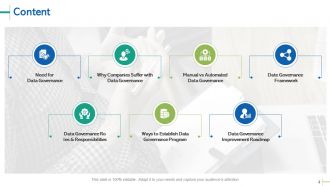
Diapositiva 2 : esta diapositiva muestra el contenido de la presentación.
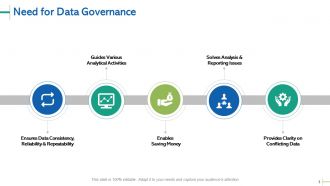
Diapositiva 3 : Esta diapositiva presenta la necesidad de una descripción de la gobernanza de datos: guía varias actividades analíticas, resuelve problemas de análisis e informes, garantiza la coherencia, confiabilidad y repetibilidad de los datos, permite ahorrar dinero, brinda claridad sobre los datos en conflicto.
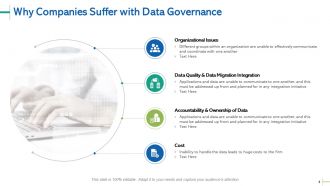
Diapositiva 4 : Esta diapositiva muestra por qué las empresas sufren con la gobernanza de datos.
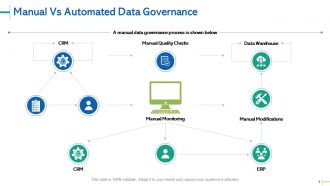
Diapositiva 5 : Esta diapositiva muestra la gobernanza de datos manual versus automatizada con el gráfico relacionado.
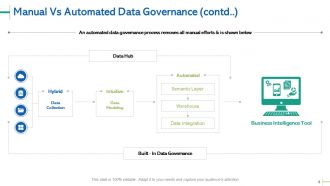
Diapositiva 6 : Esta es otra diapositiva que continúa con la gobernanza de datos automatizada y manual.
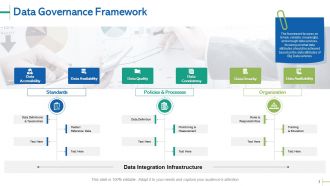
Diapositiva 7 : Esta diapositiva representa el marco de gobernanza de datos que describe: estándares, políticas y procesos, organización.
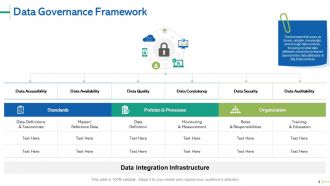
Diapositiva 8 : esta es una diapositiva opcional para el marco de gobierno de datos.
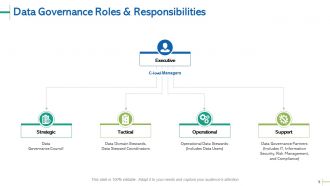
Diapositiva 9 : Esta diapositiva muestra las funciones y responsabilidades de la gobernanza de datos que describen: estratégicas, tácticas, operativas y de apoyo.
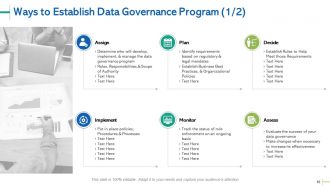
Diapositiva 10 : Esta diapositiva presenta formas de establecer un programa de gobernanza de datos que describe: asignar, decidir, planificar, implementar, evaluar y monitorear.
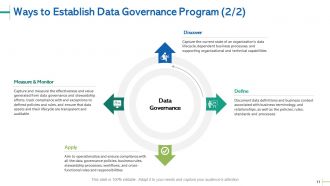
Diapositiva 11 : Esta diapositiva muestra Formas de establecer un programa de gobernanza que describe: Descubrir, Definir, Aplicar, Medir y Supervisar.
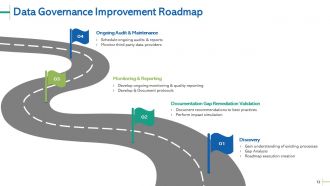
Diapositiva 12 : Esta diapositiva representa la hoja de ruta para la mejora de la gobernanza de datos que describe: descubrimiento, validación de corrección de brechas de documentación, monitoreo e informes, auditoría y mantenimiento continuos.
Diapositiva 13 : esta diapositiva muestra los iconos de gobierno de datos.
Diapositiva 14 : esta diapositiva se titula Diapositivas adicionales para avanzar.
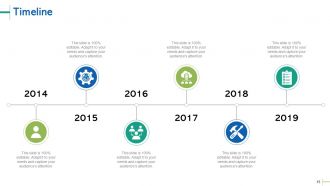
Diapositiva 15 : esta es una diapositiva de la línea de tiempo para mostrar información relacionada con el período de tiempo.
Diapositiva 16 : Esta es la diapositiva Acerca de nosotros para mostrar las especificaciones de la empresa, etc.
Diapositiva 17 : esta es una diapositiva de Venn con cuadros de texto.
Diapositiva 18 : Esta es la diapositiva de Nuestro equipo con nombres y designaciones.
Diapositiva 19 : Esta es una diapositiva de Bombilla o Idea para enunciar una nueva idea o resaltar información, especificaciones, etc.
Diapositiva 20 : Esta es la diapositiva de Nuestro objetivo. Indique sus objetivos aquí.
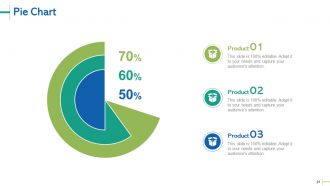
Diapositiva 21 : Esta diapositiva muestra un gráfico circular con datos en porcentaje.
Diapositiva 22 : Esta es la diapositiva Nuestra misión con imágenes y texto relacionados.
Diapositiva 23 : Esta es una diapositiva financiera. Muestre sus cosas relacionadas con las finanzas aquí.
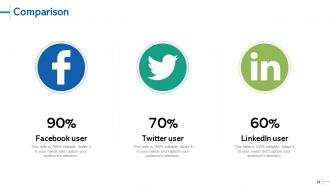
Diapositiva 24 : Esta es una diapositiva de comparación para establecer una comparación entre productos básicos, entidades, etc.
Diapositiva 25 : Esta es una diapositiva de agradecimiento con dirección, números de contacto y dirección de correo electrónico.
Diapositivas de presentación de Powerpoint de gobernanza de datos con las 25 diapositivas:
Obtenga una calificación alta con nuestras diapositivas de presentación de PowerPoint sobre gobernanza de datos. Dé una cuenta impresionante de sí mismo.






FAQs for Data governance
Honestly, start small - pick customer data or something specific instead of trying to tackle everything at once. You'll need someone owning each dataset (data stewardship), solid policies, and quality checks. Security controls are obvious but people skip them. Metadata management sounds boring but trust me, it becomes a nightmare if you ignore it early on. Define who does what so there's no confusion later. Some monitoring system helps track if people actually follow the rules. Biggest mistake I see? Building frameworks that only make IT happy instead of solving real business problems.
Ok so first thing - map out all your data flows and figure out which regulations hit you (GDPR, CCPA, whatever). Build your policies around those from the start, don't try to bolt compliance on later. Honestly the audits are annoying but you gotta do them regularly. Set up automated alerts if you can - way better to catch issues early than deal with fines later. Oh and make it part of your actual workflow, not some quarterly thing everyone ignores. Trust me, treating compliance like a daily habit vs a checkbox saves so much headache down the road.
So data stewards are basically the people who actually make your governance work day-to-day. They're managing who gets access to what, catching quality issues, making sure policies don't just sit there looking pretty. Honestly, they're probably more important than the fancy frameworks everyone obsesses over. Think of them as your data domain experts - they know their stuff inside and out and can spot problems early. Without good stewards, you'll have beautiful documentation but everything falls apart in practice. My advice? Find these people first before you do anything else with governance.
Think of data governance like having actual rules for your data mess. You assign someone to own each dataset - no more "not my problem" when sales numbers don't match between teams. Set up validation rules so garbage data can't sneak in from the start. Honestly, most companies skip this step and wonder why their reports are trash. Create clear definitions so everyone knows what "customer" actually means in your system. Start small though - pick your most important data first and get stewards watching over it. That's where you'll actually see results.
Honestly, the politics are the worst part - every department thinks their data is sacred and they'll fight you on new processes. Breaking down those ancient data silos? Good luck with that. Legacy systems are a nightmare too since they weren't designed for any kind of governance. Oh, and finding someone who gets both the tech stuff AND the business side is like finding a unicorn. Start with just one important area though. Get a win there first, show people it actually works, then slowly expand. Don't try to fix everything at once - you'll just burn out and piss everyone off.
Track the obvious stuff first - data quality scores, compliance rates, how fast you fix issues. But here's the thing: the soft metrics are where you'll actually see impact. Survey people about whether they trust the data now. Are teams using your processes without being forced to? Cross-functional projects getting smoother? Honestly, you know it's working when nobody's bitching about crappy data in meetings anymore. Pick 3-4 metrics based on whatever's driving everyone crazy right now and check monthly.
Start by cataloging what you actually have - can't manage data you can't even find, right? Get a decent data catalog to map everything out, then add lineage tools so you know where stuff comes from. Quality monitoring tools will catch issues before they become headaches. Access management platforms are honestly clutch for controlling permissions (learned that one the hard way). MDM tools keep your core data from getting messy across different systems. Oh, and privacy management is basically required now with all the compliance stuff. The cataloging step first though - that's where most people should start.
So data governance is like the big picture framework that covers how you deal with data from start to finish. You've got to map out who accesses what and set up your classification rules first. Security jumps in to protect against threats, privacy makes sure you're not screwing up with personal data (GDPR is such a pain). Honestly, without governance holding it all together, your security and privacy stuff just becomes a mess of random tactics. Short version: figure out where your data actually lives before you try to control it.
You absolutely need executive backing first - without it, you're just creating another pointless committee. Pull in people from IT, legal, compliance, and your main business areas. Seven to nine people tops, or you'll never agree on anything. Monthly meetings work well for most places. The key thing though? Give them real power to make decisions that stick. Otherwise everyone will just nod along then do whatever they want anyway - which honestly happens way too often. Oh, and make sure you cover your major data areas but keep the group small enough to actually function.
Honestly, the trick is making data governance actually help people instead of slowing them down. Get your executives hooked on using dashboards in meetings first - everyone else will copy them. Keep your policies simple and findable (not some massive PDF nightmare). Quick wins are everything here. Pick one flashy project where better data directly fixes a real business problem, then milk that success story. Train folks on basic data stuff, but don't overcomplicate it. Oh and celebrate when teams actually use data to make decisions - people love recognition. Once leadership sees fast ROI, you're golden.
So basically, data governance is like setting the rules - who gets access to what data, quality standards, privacy stuff. Data management? That's actually doing the work - storing files, running databases, all the hands-on tasks. Picture it like this: governance writes the employee handbook with all the policies. Management is you clocking in and following those rules every day. Honestly, most companies mess this up by focusing too much on one side. You really can't have one without the other though - just policies with no execution is useless paperwork, but doing data work with zero guidelines? Total nightmare waiting to happen.
Build flexibility into your governance from day one - don't create rigid rules for specific tech. Focus on principles that work across different data sources and tools instead. I've watched so many teams crash and burn with overly prescriptive approaches that become useless in six months (honestly, it's painful to see). Regular review cycles help you assess new tech and data types. Your governance team needs people who actually get emerging technologies, not just policy wonks. Stay agile but keep your core standards for quality, security, and compliance intact. First step? Document what principles actually matter to your org.
Start with training that's actually tailored to each role - show people how data governance hits their daily tasks specifically. Most companies just throw generic policies at everyone and wonder why it doesn't stick. Build scenarios using your real data so they get it. Workshops beat one-time training sessions every time. Cover both what the policies are AND why they matter. Put data champions in each department for quick questions. Honestly, the biggest mistake is treating this like some boring compliance box to check. Make it relevant to what they actually do, not theoretical BS.
Yeah, so it really depends on your industry. Healthcare has super strict frameworks because of HIPAA - like, they don't mess around with patient data access. Banking and finance are honestly a nightmare with all their audit requirements and SOX compliance stuff. Manufacturing cares more about data quality than privacy weirdly enough. Retail's somewhere in the middle - they want customer protection but still need flexibility for analytics. I'd definitely look up industry-specific frameworks first rather than trying to force a generic one to work.
Dude, garbage data = garbage decisions. Your teams end up launching products that flop or missing actual opportunities because they're working with inconsistent, outdated info. Different departments will use totally different definitions for the same metrics - everyone thinks they're right but they're all looking at different numbers. I've watched teams waste months building strategies around duplicate customer records (seriously painful to witness). Start with your most critical datasets and figure out who actually owns what. Trust me, it beats those awkward meetings where you realize your entire strategy was built on bad data.
No Reviews