


Financial Assets Management Kpi And Dashboard Powerpoint Presentation Slides




Try Before you Buy Download Free Sample Product
 Impress Your
 Audience
 100%
100% Editable
 Save Hours
 of Time


Measure and track the status of your project health with our content ready Financial Assets Management Kpi And Dashboard PowerPoint Presentation Slides. Showcase project progress through a range of key performance indicators given in the portfolio performance dashboard presentation deck. This business dashboard PPT sample is helpful in providing an overview of setting up KPI reports for your business. The visually appealing balanced scorecard for the asset management presentation deck includes a set of twenty-five ready-to-use PPT slides. Summarize your business information and present an impressive report of business performance to help decision-makers. Use this financial key performance indicators PowerPoint complete deck as reporting tools to monitor and optimize your financial performance. Make use of the KPI for accounting department PPT visuals to indicate how well your company is doing in terms of generating revenue and profits. Download the high quality and professionally designed financial KPI & metrics PowerPoint Presentation to manage the wealth performance of your business. In any event our Financial Assets Management Kpi And Dashboard Powerpoint Presentation Slides will come handy. The have an array of applications.
People who downloaded this PowerPoint presentation also viewed the following :
Content of this Powerpoint Presentation
Slide 1: This slide introduces Financial Assets Management KPI & Dashboard. State Your Company Name and begin.
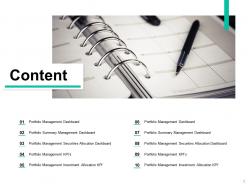
Slide 2: This slide shows Content of the presentation.
Slide 3: This slide presents Portfolio Performance Dashboard with the help of graphs.
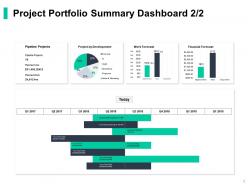
Slide 4: This slide displays Project Portfolio Summary Dashboard.
Slide 5: This is another slide showing Project Portfolio Summary Dashboard.
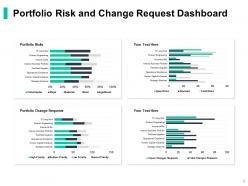
Slide 6: This slide represents Portfolio Risk and Change Request Dashboard.
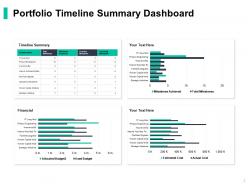
Slide 7: This slide showcases Timeline Summary. You can add or edit data as per requirements.
Slide 8: This slide shows Portfolio Dashboard with Cost and Benefit.
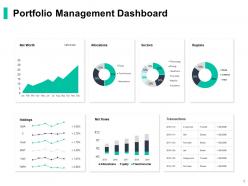
Slide 9: This slide presents Portfolio Management Dashboard describing- Net Worth, Allocations, Sectors, Regions, Holdings, Net Flows.
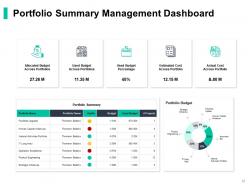
Slide 10: This slide displays Portfolio Summary Management Dashboard.
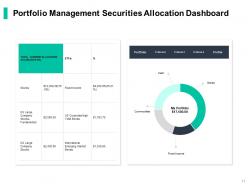
Slide 11: This slide represents Portfolio Management Securities Allocation Dashboard.
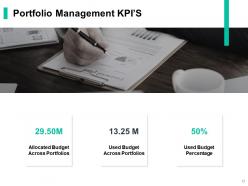
Slide 12: This slide showcases Portfolio Management KPI’S with related imagery.
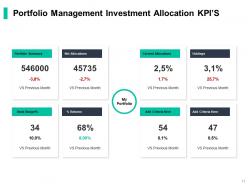
Slide 13: This slide shows Portfolio Management Investment Allocation KPI’S.
Slide 14: This slide displays Financial Assets Management Icons.
Slide 15: This slide reminds about 15 minutes coffee break.
Slide 16: This slide is titled as Additional Slides for moving forward.
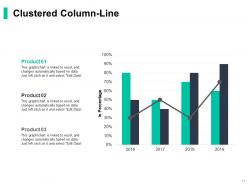
Slide 17: This slide represents Clustered Column-Line chart with three products comparison.
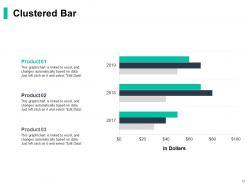
Slide 18: This slide displays Clustered Bar chart with three products comparison.
Slide 19: This is Our Mission slide with related imagery and text.
Slide 20: This is Meet Our Team slide with names and designation.
Slide 21: This is About Us slide to show company specifications etc.
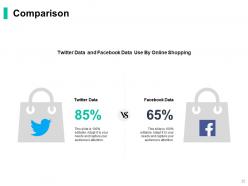
Slide 22: This is a Comparison slide to state comparison between commodities, entities etc.
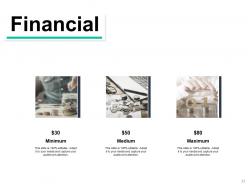
Slide 23: This is a Financial slide. Show your finance related stuff here.
Slide 24: This is a Venn slide with text boxes.
Slide 25: This is a Thank You slide with address, contact numbers and email address.
Financial Assets Management Kpi And Dashboard Powerpoint Presentation Slides with all 25 slides:
Use our Financial Assets Management Kpi And Dashboard Powerpoint Presentation Slides to effectively help you save your valuable time. They are readymade to fit into any presentation structure.










FAQs for Financial Assets Management Kpi And Dashboard
So basically you want to spread your money around different stuff - stocks, bonds, real estate, whatever. Don't put everything in one place, obviously. Write down what you're actually trying to achieve first and how much risk you can handle. That'll guide everything else. Rebalancing used to seem like a pain to me, but you gotta do it to keep your ratios on track. It's like a checkup for your money. Oh, and track how you're doing against some benchmarks - though honestly half the time those are kind of arbitrary anyway. Set clear timelines too.
Dude, market trends basically control how much your stuff is worth. Bull markets make everyone confident and prices go up. Bear markets? Total opposite - people panic and everything tanks, even good companies. Honestly drives me crazy how emotions can matter more than actual numbers sometimes! Interest rates and economic data feed into all this too. Your portfolio's gonna swing with these big patterns no matter what you own. Just watch for major shifts so you can tweak things when needed.
Risk assessment is honestly the foundation of good asset management - helps you figure out potential losses and if you're cool with that exposure. I use it for balancing my portfolio, sizing positions, and setting stop-losses. Skipping it? You're basically gambling blindfolded lol. The trick is matching your risk comfort with your timeline and goals. My buddy learned this the hard way last year when he went all-in on some meme stock without thinking it through. Calculate your max acceptable loss per trade before putting money down. That way you're making smart moves instead of just hoping for the best.
So basically you're spreading your money around different stuff - stocks, bonds, maybe some international markets - so if one thing tanks, you're not totally screwed. Think of it like not putting all your eggs in one basket, you know? Your portfolio won't swing around as wildly when markets get crazy. I mean, you can't eliminate risk completely (that'd be nice though), but you can definitely manage it better. Check if you're too heavy in one company or sector right now. You'll probably see steadier growth over time instead of those heart attack moments.
Personal Capital or Mint are good starting points for basic tracking. Excel still does the job fine too – I know it's old school but whatever works, right? Morningstar Direct is solid if you've got the budget for it. Bloomberg Terminal and FactSet are the heavy hitters, though they'll cost you. SigFig and Tiller won't break the bank for DIY folks. Honestly, just pick something you'll actually open and check regularly. The fanciest tool means nothing if it sits there collecting digital dust.
Yeah so basically when new regs hit, you're looking at restructuring your whole portfolio management setup. Capital requirements change, so risk allocations get shuffled around. Your reporting systems need updates too - plus you'll probably end up hiring more compliance people which gets expensive fast. What I've learned is you gotta watch the regulatory pipeline way before stuff actually drops. Most changes give you like 6-18 months to get ready, which honestly isn't that much time when you think about it. Set up alerts from your main regulators and just build extra compliance costs into your budget from day one.
Pick a schedule - quarterly or when stuff drifts 5-10% from your targets - then actually stick to it. Sell the winners, buy what's lagging. I get it, selling winners feels backwards but that's literally buying low/selling high on autopilot. Tax tip: try rebalancing with new money first before selling in taxable accounts. Oh and set phone reminders or you'll forget until the market's crashing and panic. Been there! The whole point is doing it consistently, not just when everything feels scary.
Dude, don't just look at raw returns - that's what everyone does and they're missing half the story. Track your total return (gains plus dividends) and compare it to benchmarks like the S&P 500. The Sharpe ratio is clutch because it shows return per unit of risk. Check your volatility and maximum drawdown too, especially during market crashes. I use Morningstar for this stuff since doing the math myself is annoying. Your broker probably has decent performance tracking tools built in. Review everything quarterly and you'll actually know if you're doing well or just got lucky in a bull market.
Honestly, figure out your timeline first - retiring in 30 years vs buying a house next year are totally different games. Your risk tolerance matters too. Can you stomach watching your portfolio drop 20% without panicking? Then think about what you're actually trying to accomplish with this money. Diversification is huge - spread things around different asset types and sectors. I learned this one the hard way back in 2018, lol. Don't forget about fees either, they'll slowly kill your returns. Also consider how quickly you might need the cash. Market timing is tricky, but you can't ignore what's happening around you. Start with those basics and build from there.
Look, economic indicators are basically your cheat sheet for portfolio moves. GDP growth, inflation, employment stats - they show you where things are headed before markets catch up. Rising inflation? Time to grab some commodities or TIPS because nobody wants their money losing value. Interest rate shifts tell you whether bonds or stocks make more sense right now. Honestly, most people wait too long and miss the boat. Set up alerts for the big data releases so you're not scrambling after everyone else figures it out. Way better than playing catch-up later.
So liquidity is just how fast you can turn your stuff into actual cash without getting screwed on price. You'll want some mix because yeah, you need returns but also access to your money when shit hits the fan. Stocks? Pretty easy to sell. Real estate though - good luck with that, could take months. I learned this the hard way actually. Anyway, spread things around different liquidity levels so you're not forced to dump your long-term investments at terrible times. Always keep some portion in money market funds or short-term bonds for quick access.
So basically, work WITH people's psychology instead of fighting it. Set up automatic rebalancing so you're not making emotional calls when markets go nuts - trust me, our instincts are terrible at timing. I always tell clients about gains first since everyone hates losses way more than they love wins. Short sentences help too. Design your whole process around the fact that people act weird with money rather than pretending we're all robots. It's honestly just accepting that behavioral stuff is real and planning for it.
Honestly, start with maxing out your 401k and IRA - that's the easiest win. Tax-loss harvesting is clutch for taxable accounts, and definitely hold stuff over a year for those sweet long-term capital gains rates. Municipal bonds might work if you're getting hammered by taxes. Oh, and don't sleep on asset location - stick your tax-heavy investments in retirement accounts and keep simple index funds in taxable ones. I'd probably look at how you've got everything spread out first though. That'll show you where the biggest opportunities are.
Dude, the change has been insane. We went from literal spreadsheets and cold calls to algorithms making thousands of trades per second. Real-time analytics, robo-advisors that rebalance everything automatically, blockchain making stuff more secure - it's honestly mind-blowing. Clients want instant portfolio updates on their phones now (which makes sense tbh). Machine learning spots market patterns we'd never catch manually. The fintech tools out there are actually pretty solid if you want to try some - even basic automation saves me like 3-4 hours weekly. Worth checking out for sure.
Honestly, put their interests first - always. Transparency is huge too, so be upfront about fees and any conflicts you might have. Don't chase fat commissions at their expense because I've watched that blow up in people's faces. Keep their financial stuff confidential obviously. Only suggest investments that actually match what they want and can handle risk-wise. Oh and document everything properly - covers your ass later. My dad always said treat other people's money better than your own, which sounds backwards but makes sense. Over-communicate rather than leaving them guessing about anything.
-
Awesomely designed templates, Easy to understand.
-
Excellent template with unique design.