Financial Investment Portfolio Management Dashboard Showcasing Portfolio Investment Performance
Try Before you Buy Download Free Sample Product
Audience
Editable
of Time
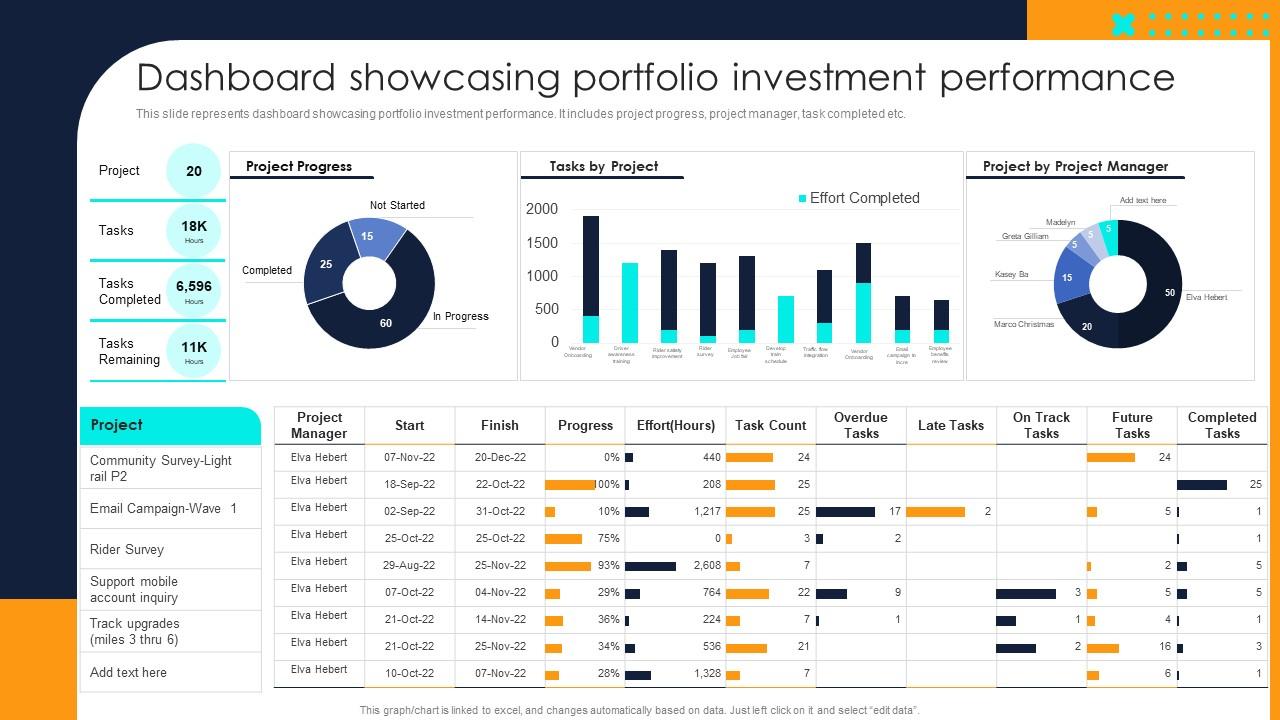
This slide represents dashboard showcasing portfolio investment performance. It includes project progress, project manager, task completed etc.
People who downloaded this PowerPoint presentation also viewed the following :
Financial Investment Portfolio Management Dashboard Showcasing Portfolio Investment Performance with all 7 slides:
Use our Financial Investment Portfolio Management Dashboard Showcasing Portfolio Investment Performance to effectively help you save your valuable time. They are readymade to fit into any presentation structure.
FAQs for Financial Investment Portfolio Management Dashboard Showcasing
Look, diversification is huge - spread your money across different stuff so you're not screwed if one sector tanks. I learned that lesson the expensive way lol. Match everything to how much risk you can actually stomach and your timeline. Hot stock tips? Ignore them. Timing the market is basically impossible. Set up quarterly check-ins to rebalance back to your target mix - I use a calendar reminder or I'll totally forget. Oh and write down your actual goals first, then stick to the plan when things get crazy. Markets always do their dramatic thing but consistency wins.
Look, risk tolerance is just how much you can handle watching your money swing up and down without losing sleep. Conservative people usually go like 70% bonds, 30% stocks - boring but steady. More aggressive? Load up on stocks, maybe some international stuff, crypto if you're into that chaos. Here's the thing though - be honest about how you'd actually react if everything dropped 20% overnight. I've seen too many people think they're risk-takers until markets crash and they panic-sell everything. Figure out what kind of losses would genuinely stress you out, then work backwards from there. Better to be slightly too conservative than completely wrong about yourself.
Think of diversification like not betting everything on one stock or sector. You spread your money across different types of investments - stocks, bonds, maybe some international stuff. That way if tech crashes (again), your whole portfolio doesn't go down with it. Your mom's "don't put all your eggs in one basket" thing actually makes sense here. The tricky part is balancing safety with growth potential. I'd honestly just look at what you own now and see if you're too heavy in one area. Most people are way more concentrated than they realize.
Honestly, your portfolio basically moves with whatever the economy's doing. Strong GDP and low unemployment? Stocks usually do great because companies are making bank. Interest rates mess with bonds though - rates go up, bond prices tank. It's annoying but that's just how it works. The market can be totally unpredictable sometimes too, like it'll crash over nothing or rally for no reason. That's why spreading your money across different stuff helps. Oh, and watch those leading indicators if you can - they give you a heads up before things get crazy.
Look, there's a few ways to tackle this. I always start with the boring stuff - financial statements, how the company's growing, where they stand against competitors. Technical analysis helps if you're trading more actively (though I'm pretty meh on it personally). Quantitative stuff like Sharpe ratios and beta calculations will show you risk-adjusted returns, which is actually useful. But honestly? Don't just pick one method. I set up this scoring system that weighs what matters most for my goals, then I stress-test everything against different market scenarios before throwing money at it.
Check your portfolio every few months and rebalance when something's off by 5% or more from your target. Honestly, I just set phone reminders because I'll totally forget otherwise. The weird part is you're selling your winners and buying the stuff that's been sucking - but that's literally how you buy low/sell high. Feels wrong but it works. During crazy market swings is actually when this matters most, even though that's when you least want to mess with anything. Just stick to your plan and don't overthink it.
Index funds are pretty solid - low fees, you get everything, and you'll match whatever the market does. Never gonna beat it though, and when things get rough you're just stuck riding it out. Active managers? Sure, they might outperform and can actually do something when markets tank. But honestly, most of them suck once you factor in their crazy fees. You're also betting on some fund manager not screwing up. I'd probably do like 80% index funds as your base, then throw some active stuff on top if you want to get fancy with specific bets.
Honestly, our brains are wired to sabotage investing. Loss aversion makes you cling to terrible stocks way too long - been there! Meanwhile you'll chase whatever's trending because recent performance feels like it predicts the future (spoiler: it doesn't). Overconfidence leads to way too much trading, and you get anchored to meaningless price points. Fear and greed mess with your timing constantly. Plus confirmation bias means you only read stuff that agrees with what you already think. Best defense? Set up automatic systems like rebalancing schedules and stick to predetermined exit rules so your emotions can't hijack everything.
Track both your basic returns and risk-adjusted stuff to get the real story. Sharpe ratio's your friend here - tells you if the risk is worth it. Alpha and beta matter too since they show how you're doing against benchmarks and market volatility. Maximum drawdown is honestly huge but people sleep on it. Shows your worst-case losses which... yeah, that's kinda important to know. If you're following a specific benchmark, tracking error's useful too. Pick maybe 3-4 metrics that actually fit your strategy and check them monthly. Don't overcomplicate it.
Taxes will absolutely destroy your returns if you don't think about them. Max out those 401ks and IRAs first - that's the easy stuff. Hold investments over a year so you get the lower capital gains rate instead of getting hammered at ordinary income levels. Tax-loss harvesting helps offset your gains too. Municipal bonds could work if you're in a high bracket, though honestly I never loved them. Try putting your dividend stocks in tax-sheltered accounts when you can. The key thing? Always calculate what you're actually keeping after taxes, not just what the investment made on paper.
First thing - figure out when you actually want to retire. Everything flows from that decision. Risk tolerance matters way more now since you can't just ride out a bad market crash when you need cash. Don't go crazy with diversification though - like 5 solid asset classes beats 20 random ones. Healthcare costs are honestly terrifying, so factor those in big time. Map out your expected expenses and see what you'll get from Social Security or pensions. Inflation's gonna eat away at stuff over 20+ years too. I'd start with your timeline and work backwards.
So basically when interest rates move around, you gotta rebalance your portfolio. Bond prices drop when rates go up (long-term bonds get hit hardest), so maybe shift to shorter bonds or more stocks. Rates fall? Bonds look better and stocks get expensive - honestly this stuff stresses me out sometimes lol. Higher rates mean new bonds pay more though, which changes your income expectations. Oh and don't forget about duration risk in your bond holdings, that'll bite you. Just build rate changes into your rebalancing plan.
Depends what you're after really. Bloomberg Terminal and Morningstar Direct are solid but crazy expensive - like, unless you're managing serious money, don't bother. Personal Capital's free and decent for tracking basics. Mint works too but the interface kinda bugs me. If you want something fancier, Quicken's worth the cost. Betterment and Wealthfront are good if you want the robo-advisor thing doing work for you. Honestly? Start with Excel or Google Sheets first. Figure out what you actually need before dropping money on software. You can always upgrade later once you know what's missing.
Honestly, ESG investing isn't as complicated as people make it sound. Start by filtering out the obvious bad actors - tobacco, weapons, whatever doesn't align with your values. Then flip it and look for companies actually doing good stuff. MSCI and Sustainalytics have solid data now, way better than the sketchy info we had years ago. You could also just buy ESG-focused ETFs if you don't want to research individual stocks. Some people get into shareholder activism too, though that's more work. Just figure out what matters to you first, then track both your returns and actual impact.
Honestly, the two biggest traps are getting too emotional and putting everything into one stock. Don't panic sell when stuff crashes or get crazy greedy during rallies - I totally did this in 2020 and regretted it. Chasing whatever's trending never works out either. Market timing is basically a myth, at least for regular people like us. Spread your money across different sectors and maybe set up automatic investing so you're not constantly second-guessing yourself. Diversify, rebalance once in a while, and try not to let fear or FOMO mess with your head.
-
“I always have a wonderful experience with SlideTeam. It's my ""go to"" when I need a template.”
-
Best way of representation of the topic.