


Fixed asset management powerpoint templates download




Try Before you Buy Download Free Sample Product
 Impress Your
 Audience
 100%
100% Editable
 Save Hours
 of Time


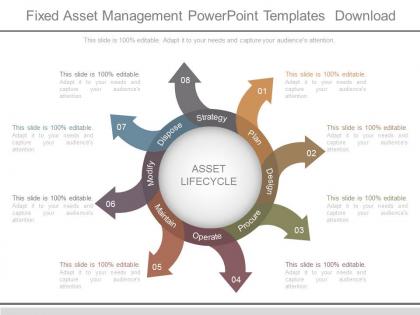
Our team of experts have developed and designed a presentation to talk about the major points associated with FAM under the heading fixed asset management PowerPoint templates download. The provided fixed asset management and control PPT slide design brings into limelight all the stages of asset lifecycle as plan, design, procure, operate, maintain, modify, dispose and strategy. Fixed asset PPT presentation slides have thoroughly editable content related to the intrinsic process of selecting the right software to successfully run the process. Fixed asset management PowerPoint presentation template deciphers knowledge about tracking the fixed assets of an organization with a view of ensuring theft deterrence, financial accounting and preventive maintenance. Finance professionals often require our fixed asset accounting and management procedure PPT infographic for control, accounting and recording the cycle of their assets. So if you are the accounts professional you should waste no time in extending your search further, rather you should just download the entire fixed asset management procedure PPT PowerPoint presentation, to guarantee your next corporate hike.Our Fixed Asset Management Powerpoint Templates Download have many functions. They are effective in many departments.
People who downloaded this PowerPoint presentation also viewed the following :
Fixed asset management powerpoint templates download with all 7 slides:
Our Fixed Asset Management Powerpoint Templates Download have a dynamic format. They can adjust to changing demands.
FAQs for Fixed asset management
So you'll want asset tracking, lifecycle management, and something that connects to your accounting stuff. Track everything from when you buy it to when you toss it - location, condition, maintenance records, all that. Most companies totally blow it on the tracking part though, they start organized then just... stop updating things. Get automated depreciation calculations and compliance reporting built in. Oh and maintenance scheduling is clutch for avoiding those surprise breakdowns that cost a fortune. I'd start by actually figuring out what assets you have now, then find software that won't become useless if you grow.
Honestly, you're probably doing way too much manual work right now. Asset management software with barcode scanning will save your sanity - it updates locations and maintenance schedules automatically. Real-time dashboards beat digging through spreadsheets any day. Your team can update stuff on mobile too, which is clutch. Here's the thing though: you'll spot problems instantly instead of scrambling during audit season (been there, not fun). I'd start by figuring out what's driving you crazy first, then tackle that.
Honestly, the worst parts are tracking where everything actually is and staying compliant with regulations. Way too many places still use spreadsheets - total mess. You'll spend forever figuring out what assets you even have, their condition, depreciation math. Maintenance scheduling becomes this whole thing too. Then when stuff dies, disposing of it properly is another headache. My advice? Get a real asset management system from day one. Trust me, trying to organize thousands of mystery assets later is pure hell. Oh and lifecycle management - that's probably the trickiest piece overall.
Look, depreciation is basically your heads-up for when to replace stuff. Check those reports monthly - trust me on this one. It shows the real declining value so you're not scrambling when equipment craps out unexpectedly. Once maintenance costs start eating up more than what the asset's worth, time to move on. The scheduling also helps with budgeting replacements and getting better tax timing. I learned this the hard way with our old printer that died right before quarter-end. Super annoying timing, but the depreciation schedule actually warned us it was coming.
So maintenance is actually huge for protecting your assets - like, way more than most people realize. Your truck could easily hit 200k miles instead of dying at 100k if you stay on top of things. Small fixes now prevent those massive repair bills that totally wreck an asset's value. Better performance, higher resale value, all that good stuff. I'd honestly set up some kind of preventive schedule ASAP. Trust me, you don't want to explain to your boss why equipment failed when it could've been avoided. Your balance sheet will look way better too.
Honestly, it's all about nailing three things: keeping crazy detailed records, doing regular audits, and using the right depreciation methods. Document everything - purchases, sales, transfers, the whole nine yards. Those boring paper trails will literally save your butt when compliance people show up. Physical counts are a pain but you've got to verify your stuff actually exists where the system thinks it does. For depreciation, stick with whatever your industry requires (not just what's convenient). Oh, and create some kind of quarterly checklist - way better to catch problems yourself than have auditors find them first. Trust me on that one.
Honestly, you don't want to wait until year-end to discover problems. Those quarterly checks help you catch missing equipment before it becomes a disaster. I learned this the hard way when a client found their $50k server had vanished months earlier – super awkward audit meeting. You'll spot stuff that needs writing off and catch depreciation errors too. Auditors always appreciate seeing regular asset tracking. Yeah, it's boring work, but way better than scrambling later. Start with your priciest equipment first, then work down the list.
Honestly, your fixed asset data is sitting there with tons of insights you're probably missing. Check your depreciation patterns and utilization rates - they'll show you exactly when equipment needs replacing or if you've bought too much stuff in certain areas. Maintenance costs are huge for spotting efficiency problems too. Got underused assets? Perfect candidates for redeployment or selling to free up cash. This also helps you budget smarter for future purchases and time big investments better. I'd start by running a utilization report this quarter and just see what weird patterns pop up.
So you'll need management sign-off first - document why you're disposing it, how, and what you got for it (or wrote off). Pull it from your fixed asset register and figure out any gain/loss. Here's the thing though - don't just chuck stuff in a dumpster. Environmental rules can bite you, plus wipe any hard drives for data security. Maybe see if you can sell or donate instead? Oh, and keep all your disposal certificates and receipts. Auditors love that paper trail when they come sniffing around later.
Look, buying means you're stuck with all the paperwork - depreciation schedules, maintenance logs, tracking when stuff breaks. It's a total pain. Leasing cuts that down since you just track payments and make sure you don't trash anything before returning it. Though honestly? Some lease contracts are still pretty messy to deal with. Purchased stuff shows up as assets on your balance sheet, which looks good. Most operating leases don't. Really depends on whether your team can handle the extra tracking work and if you actually want to own this stuff long-term.
Focus on utilization rates first - like, how much are your assets actually working vs just sitting there collecting dust? Then track maintenance costs as a percentage of what the asset's worth, plus how often things break down. ROI and payback periods are huge too. Are these things actually making you money or what? Mean time between failures is solid for lifecycle stuff, and OEE if you're into manufacturing. Oh, and compliance metrics if you're stuck in a regulated industry (ugh). Honestly though? Pick maybe 3-4 that actually connect to what you're trying to achieve. Don't go crazy measuring everything - you'll just drown in data.
Look, getting your fixed assets sorted will literally save you money. Track depreciation right, maintain stuff properly, and you'll squeeze way more value out of everything you buy. Cash flow gets easier too since you'll know when big replacements are coming. Honestly, some companies I know cut equipment costs by 15-20% just from getting organized about this. Start with auditing what you actually own vs what's in your books - I bet you'll find some weird discrepancies. The whole thing sounds boring but it's worth doing.
Honestly, this was a game-changer for us. When you connect your asset management to ERP, everything just syncs up automatically - depreciation, maintenance schedules, where stuff actually is. No more spreadsheet hell or data that doesn't match (trust me, I've wasted hours on that mess). Your teams stop playing phone tag about asset statuses. Real-time visibility means you can actually see what's happening with your equipment. Compliance reports generate themselves, which is pretty sweet. Financial and operational data finally work together like they should. I'd map out your current workflows first - find where you're bleeding time and start there.
Start by figuring out what you actually have and where it's going - most companies are surprisingly clueless about this basic stuff. Track how much everything gets used, then move idle assets to where they're actually needed. Regular audits help too, otherwise departments just hoard things. Oh, and set up sharing policies so teams aren't buying the same equipment twice. Honestly, if you're not tracking this data, you're probably throwing money at new purchases while perfectly good stuff sits unused somewhere else. It's wild how often this happens.
Honestly, start with IoT sensors and RFID - that's your biggest bang for buck on tracking stuff in real time. Cloud platforms are pretty much taking over because scaling them doesn't suck like the old on-premise setups. AI analytics for predictive maintenance is getting really solid too. Most companies are hooking everything up to their ERP systems now, plus mobile apps so your team can just scan and update things instantly. Blockchain's creeping in for audit trails but that feels a bit overkill for most situations right now. Focus on the IoT tracking first though - you'll actually see results fast.
-
I discovered this website through a google search, the services matched my needs perfectly and the pricing was very reasonable. I was thrilled with the product and the customer service. I will definitely use their slides again for my presentations and recommend them to other colleagues.
-
Excellent work done on template design and graphics.