

Investment risk management strategies powerpoint presentation slides




Try Before you Buy Download Free Sample Product
 Impress Your
 Audience
 100%
100% Editable
 Save Hours
 of Time


Planning to invest? Don’t rest until everything is perfect. Here our PPT example on asset risk management strategies helps to brief employees to go for good investment management. You can use our slide presentation to share insights and motivate employees for making low risk investments. Besides this with help of our PowerPoint slide deck you can illustrate in’s and out’s of investment risk management framework for your company’s precise portfolio management. Going further, for apt asset management our PPT model supports to train employees for quick identification and assessment of an uncertainty and risks. Most exciting thing here is that PowerPoint presentation slides like portfolio management process, risk tolerance objectives, risk reward matrix, target modeling etc. are incorporated to completely address all aspects of investment strategies and portfolio management. Good news is that we also offer customized presentation deck to well match any sort of requirement. Crux is that to get best out of your investment you need to get it in front of teammates for discussions. So why to wait? Get started now with our investment risk management strategies PowerPoint presentation. Enable folks to build an authentic impression with our investment ppt Slides. Ensure they are correctly informed.
People who downloaded this PowerPoint presentation also viewed the following :
Content of this Powerpoint Presentation
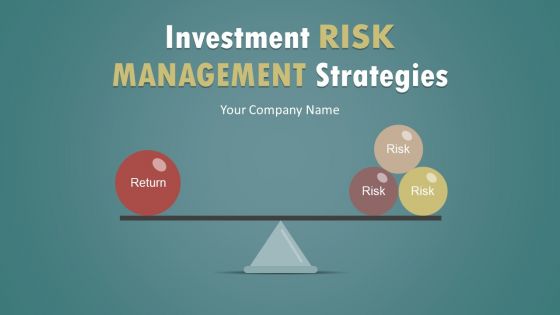
Slide 1: This slide introduces Investment Risk Management Strategies. State your company name and begin.
Slide 2: This slide showcases Agenda. You can add the company agenda and make use of it.
Slide 3: This slide shows Portfolio Management Process in a flow diagram form with the following steps- Define, Measure, Analyze, Improve, Control.
Slide 4: This slide shows Investment Objectives listed as- Asset Management, Tax Reduction, Risk Management, Management Team, Set Your Goals.
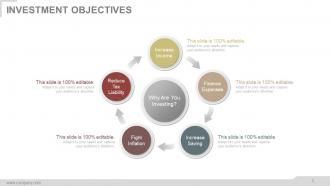
Slide 5: This slide also shows Investment Objectives which includes- Increase Income, Finance Expenses, Increase Saving, Fight Inflation, Reduce Tax Liability.
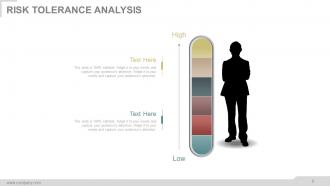
Slide 6: This slide shows Risk Tolerance Analysis with High and Low parameters.
Slide 7: This slide also presents Risk Tolerance Analysis with the following three parameters- Low, High, Medium.
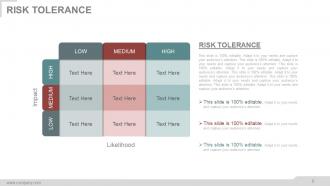
Slide 8: This is Risk Tolerance matrix slide showing Impact and Likelihood raging form High, Medium to Low.
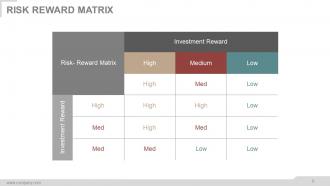
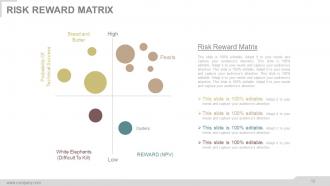
Slide 9: This is a Risk Reward Matrix slide showing Investment Reward with High, Medium and Low parameters.
Slide 10: This slide also presents Risk Reward Matrix. Put relevant comparing data in it and use it.
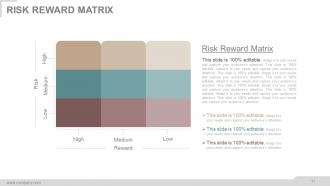
Slide 11: This slide shows another variation of Risk Reward Matrix. Use it as per your business requirement.
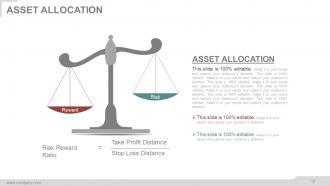
Slide 12: This slide shows Asset Allocation with balancing scale imagery to go with.
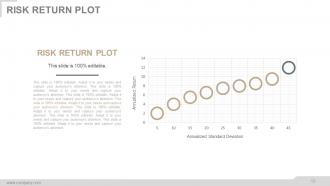
Slide 13: This is Risk Return Plot slide to show- Annualized Return, Annualized Standard Deviation.
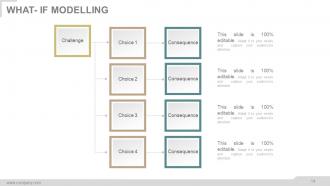
Slide 14: This slide presents What- If Modelling flow chart to state the following three aspects- Challenge, Choice, Consequence.
Slide 15: This slide shows another variation of What- If Modelling.
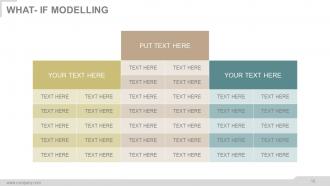
Slide 16: This is also What- If Modelling slide with text boxes.
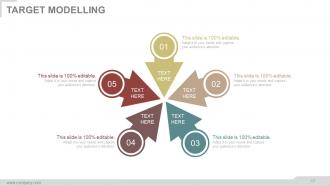
Slide 17: This is Target Modelling slide with five text boxes to add your data/ information.
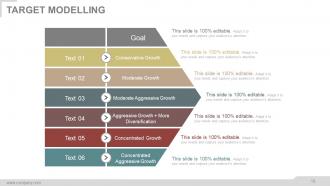
Slide 18: This is also Target Modelling slide to show the following growth aspects- Conservative Growth, Moderate Growth, Moderate Aggressive Growth, Aggressive Growth + More Diversification, Concentrated Growth, Concentrated Aggressive Growth.
Slide 19: This slide showcases Key Driver Analytics. State your facts in these given text boxes.
Slide 20: This slide also showcases Key Driver Analytics with icon imagery.
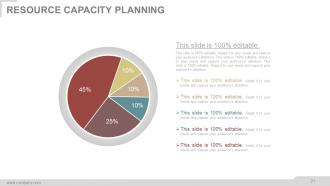
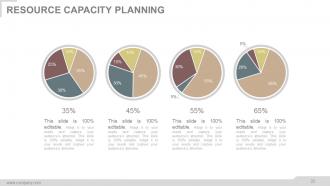
Slide 21: This slide presents Resource Capacity Planning in a pie chart/ graph form.
Slide 22: This slide also presents Resource Capacity Planning in a pie chart/ graph form.
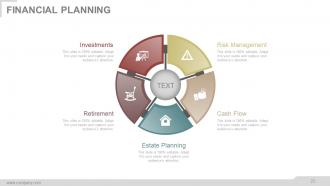
Slide 23: This slide shows Financial Planning with the following aspects to be kept under consideration- Estate Planning, Risk Management, Cash Flow, Retirement, Investments.
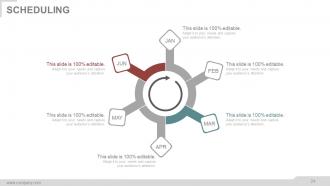
Slide 24: This is a Scheduling slide presented in months with text boxes.
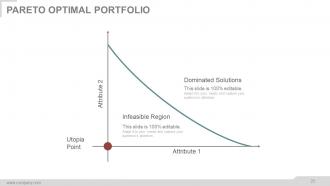
Slide 25: This slide shows Pareto Optimal Portfolio with two attributes you can add. It also shows Utopia Point, Dominated Solutions and Infeasible Region.
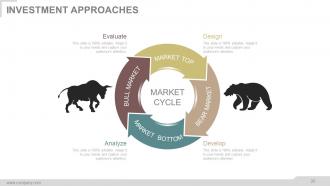
Slide 26: This slide shows Investment Approaches with Market Cycle.
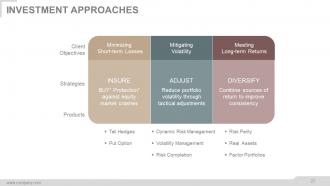
Slide 27: This slide also shows Investment Approaches with the following aspects to be listed- Client Objectives, Strategies, Products.
Slide 28: This is Investor Personality matrix slide to show- Risk Tolerance Score, Time Horizon Score.
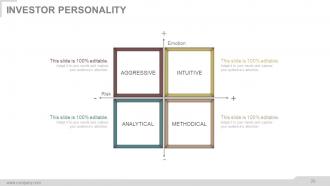
Slide 29: This slide also presents Investor Personality in a matrix form to show- AGGRESSIVE, INTUITIVE, ANALYTICAL and METHODICAL aspects.
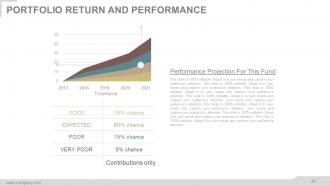
Slide 30: This slide shows Portfolio Return And Performance graph with the following 4 parameters- Good, Expected, Poor, Very Poor.
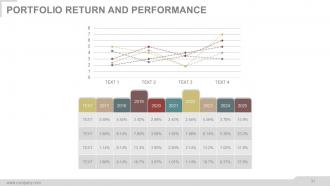
Slide 31: This slide also presents Portfolio Return And Performance in a graphical form.
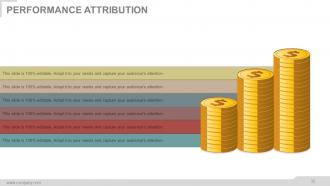
Slide 32: This is Performance Attribution slide with imagery and text boxes to state.
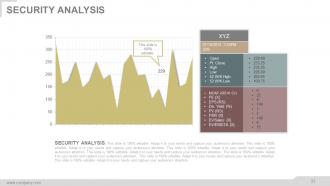
Slide 33: This slide shows Security Analysis graph. Use it to analyse your company security needs.
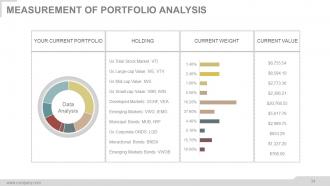
Slide 34: This slide presents Your Current Portfolio in charts and graphs.
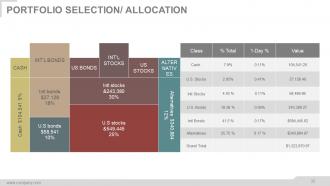
Slide 35: This is Portfolio Selection/ Allocation slide. Use it to select/ allocate your company portfolio.
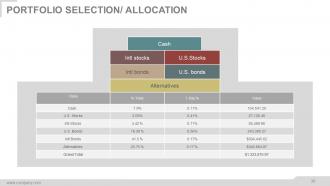
Slide 36: This slide also shows Portfolio Selection/ Allocation.
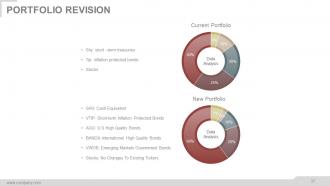
Slide 37: This is Portfolio Revision slide showing- Current Portfolio and New Portfolio in a pie chart form.
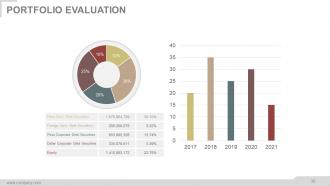
Slide 38: This slide shows Portfolio Evaluation in a pie chart and bar graph form.
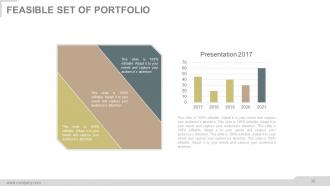
Slide 39: This slide shows Feasible Set Of Portfolio.
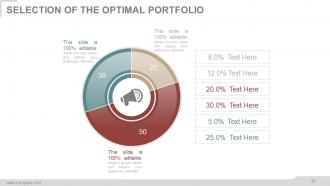
Slide 40: This is Selection Of The Optimal Portfolio slide with text boxes. Add relevant data and use it accordingly.
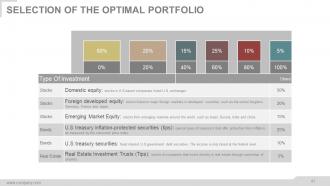
Slide 41: This is another slide showing Selection Of The Optimal Portfolio with Types of Investment Table.
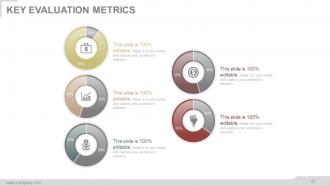
Slide 42: This slide shows Key Evaluation Metrics in a circular form and icon imagery to go with.
Slide 43: This slide is titled Additional Slides to move forward. You can change the slide content as per need.
Slide 44: This is Our Mission slide. State your mission and vision here.
Slide 45: This slide helps depict Our Team with text boxes.
Slide 46: This is Our Goal slide. State your goals here.
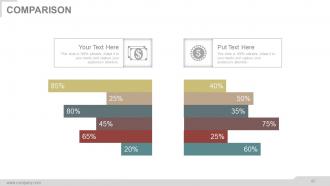
Slide 47: This slide showcases Comparison between entities/ products etc.
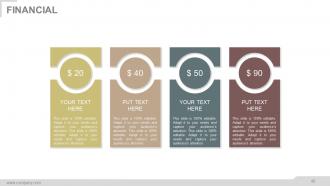
Slide 48: This is a Financial score slide. State financial aspects, information etc. here.
Slide 49: This is a Quotes slide to convey company/ organization message, beliefs etc. You may change the slide content as per need.
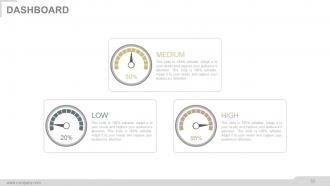
Slide 50: This is a Dashboard slide to state Low, Medium and High aspects, kpis, metrics etc.
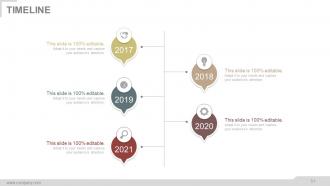
Slide 51: This is a Timeline slide to present important dates, journey, evolution, milestones etc.
Slide 52: This is a Target image slide. State your targets, etc. here.
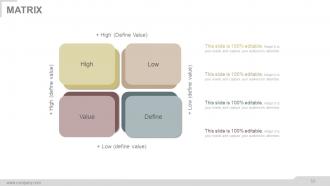
Slide 53: This is a Matrix slide to show information, specifications etc.
Slide 54: This is a LEGO slide with text boxes to show information.
Slide 55: This is a Magnifier Glass image slide with text boxes. State information etc. here.
Slide 56: This slide presents a Bar Graph for showcasing product/ company growth, comparison etc.
Slide 57: This is a Thank You slide with Address# street number, city, state, Contact Numbers, Email Address.
Investment risk management strategies powerpoint presentation slides with all 57 slides:
Our Investment Risk Management Strategies Complete Powerpoint Deck With Slides ensure all critical clauses are included. It helps draw up a contract.













FAQs for Investment risk management strategies
Honestly, just focus on three main things and you'll be way ahead of most people. Don't put everything in one stock or sector - spread it around different stuff like international markets, bonds, whatever. Position sizing is huge too - I see so many people blow up their accounts betting the farm on some "guaranteed" winner. Set limits on how much goes into each pick beforehand. Oh, and check in on your portfolio every few months to rebalance things. Markets change, your life changes, so your mix should probably shift too. The hardest part is sticking to your plan when everything's going crazy instead of panicking.
Basically you spread your money around different types of investments so they don't all tank at the same time. Stocks might crash while bonds stay stable - or even go up. Commodities do their own weird thing. You want stuff that moves differently from each other, so when one sector gets destroyed, you're not totally screwed. Mix some stocks with bonds, throw in REITs or international funds. Classic "eggs in different baskets" but it actually works. I learned this the hard way in 2020 when I had everything in tech stocks lol.
Volatility basically tells you how crazy your investments might get - it's like watching how much prices bounce around so you know what you're getting into. High volatility means bigger swings, which sounds exciting until you're watching your portfolio tank 20% in a week. I always check the VIX or standard deviation before jumping into anything sketchy. The wilder something moves, the less I put into it. Makes sense, right? You don't want to bet the farm on something that acts like it's on espresso. Position sizing is everything when the markets get moody.
Think of quantitative models as your heads-up for investment risks - they dig through old data to catch problems early. VaR models estimate potential losses, while correlation analysis shows if your assets might crash together (which honestly happens more than you'd expect). Monte Carlo simulations run thousands of scenarios to preview disasters. Don't put all your faith in one model though - markets are weird like that. I'd start with basic risk metrics first, then add fancier stuff once you're comfortable reading the numbers.
Honestly, derivatives are like insurance for your investments - you can hedge specific risks without actually selling anything. They're super cost-effective and let you target exactly what you're worried about. But man, they get complicated fast and you're dealing with counterparty risk too. Plus they expire so you've gotta keep rolling them over, which gets annoying. The whole amplification thing means tiny moves can bite you hard if you mess up. My advice? Start really small until you actually get how they work. I've seen too many people jump in thinking they understand and get burned.
Wars, elections, trade stuff - they all make markets go crazy overnight and investors just panic-sell everything risky for safe bonds and gold. You can't predict when this crap will happen, which is why spreading your money around different investments matters so much. I'd stress-test your portfolio against various political scenarios, maybe keep some defensive positions just in case. Oh and accept that volatility is gonna happen - don't try timing these events perfectly because you'll probably get it wrong. Build some cushion into your risk strategy instead.
So stress testing is basically running worst-case scenarios on your portfolio to see how screwed you'd be. Like "what happens if we get another 2008?" or "what if inflation hits 10%?" You know, the fun stuff. It shows you where you're vulnerable before you actually lose money, which is obviously way better than finding out the hard way. I usually do it every few months - more often when markets feel sketchy. Oh and definitely run one before you make any big changes to your allocation. Trust me, it beats getting blindsided by a market meltdown.
Honestly, behavioral finance is a game changer for investing. It shows you all the ways your brain works against you - like panic selling when markets tank or chasing whatever stock is trending. Once you know your biases, you can set up systems to counteract them. I actually use cooling-off periods before making big moves and stick to rebalancing schedules so emotions don't take over. Even brilliant people make dumb choices when they're stressed. The trick isn't fighting human nature - it's working around it. Figure out your weak spots first, then build guardrails that'll save you from yourself.
Honestly, most new investors mess up by chasing whatever's hot without spreading their money around. They'll dump everything into meme stocks or crypto, then freak out when it tanks. Risk tolerance is another big one - people think they can handle watching their money swing wildly until it actually happens. Your portfolio drops 20% and suddenly you're selling everything at the bottom like an idiot. Oh, and everyone focuses on the gains but never thinks about how much they could actually lose. Figure out what dollar amount would genuinely stress you out first, then work backwards from there.
Honestly, tech has completely changed the investment game. AI can catch market patterns way faster than we ever could - like, it's actually wild how much data it processes. Real-time alerts keep you posted on portfolio shifts, and those stress-testing platforms let you see how your investments would handle different market crashes (which is kind of depressing but useful). Robo-advisors will automatically rebalance everything based on your risk level too. I'd say pick whatever tool fixes your biggest headache first. Then you can add more later without getting overwhelmed by all the options out there.
So I'd track four main things if I were you. Standard deviation shows how much your returns jump around - more volatility = higher numbers. VaR is basically your worst-case loss scenario over a set time, which honestly scares me more than it should lol. Maximum drawdown tells you how far your portfolio dropped from its peak. Oh and Sharpe ratio - that one's clutch because it shows if you're getting decent returns for the risk you're taking. I check mine monthly now and it's way easier to see patterns. These will give you the real picture of what's happening with your money.
Ugh, regulatory changes are such a headache - you basically have to rebuild your whole risk setup from scratch. New rules come out and suddenly you're stress-testing everything, maybe even ditching positions that don't fit anymore. I've learned it's way better to track proposed regulations early rather than freaking out later. Build some wiggle room into your systems so you can pivot fast. Oh, and always keep more capital on hand than they require. Trust me, you don't want to be the guy scrambling when the next round hits.
Your risk tolerance is honestly the most important thing to figure out first - it shapes your whole investment approach. Can you handle aggressive growth with lots of stocks? Or do market swings make you want to hide under a blanket? High risk tolerance means you can go for the volatile stuff that might pay off big. More conservative? You'll probably stick with bonds and safer bets. Think about it this way: if your portfolio dropped 20% tomorrow, would you panic and sell everything? That's your real test right there. Everything else builds from that answer.
Honestly, spread your liquidity around different timeframes. 3-6 months expenses should sit in cash or high-yield savings - boring but necessary. After that, mix in some short-term bonds and money market stuff for when you need cash in a few months. Don't get seduced by those flashy real estate or private equity returns and lock everything up. I've seen people get totally screwed when they suddenly needed money. Keep maybe 20-30% of your portfolio in things you can actually sell within a week without taking a huge hit. Trust me on this one.
So credit risk management - basically don't put everything in one place, even if those AAA bonds look super safe. I always check the company's financials first (cash flow, debt ratios, that stuff). Position limits are your friend here. Laddering maturities helps too since you won't get stuck reinvesting everything at once. CDS can work for hedging if you're into derivatives. Honestly though? Just look at your concentration levels first - that's where most people mess up. Oh, and spread across different sectors and credit ratings obviously.
-
Easy to edit slides with easy to understand instructions.
-
Amazing product with appealing content and design.