


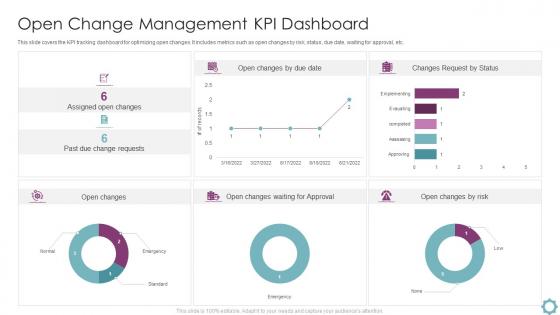
Open Change Management KPI Dashboard




Try Before you Buy Download Free Sample Product
 Impress Your
 Audience
 100%
100% Editable
 Save Hours
 of Time


This slide covers the KPI tracking dashboard for optimizing open changes. It includes metrics such as open changes by risk, status, due date, waiting for approval, etc.
People who downloaded this PowerPoint presentation also viewed the following :
Open Change Management KPI Dashboard with all 7 slides:
Use our Open Change Management KPI Dashboard to effectively help you save your valuable time. They are readymade to fit into any presentation structure.





FAQs for Open Change
Honestly, it all comes down to three big things. First off, communicate like crazy - people get super anxious when they don't know what's happening to their jobs. Get your leaders actually walking the walk too, not just sending emails about "exciting changes ahead" or whatever. But here's the thing that really makes a difference: bring your team into the planning part. When people help design the change, they won't fight it as much. Also heads up - some resistance is gonna happen no matter what you do. That's just how humans work. Find a couple people who are naturally excited about new stuff and get them talking it up to everyone else.
Start with three things: how committed your leadership actually is, what employees think about change, and how you've done with past projects. Survey people about trusting leadership and handling uncertainty - they're usually pretty honest about this stuff. Timing's everything too, so check your current workload first. Nobody wants another initiative when they're already drowning. Look for people in different departments who could champion the change. Honestly, surveys alone won't cut it. You need real conversations with your team to get the full picture of what you're working with.
Dude, communication can totally make or break your whole thing. People hate change when they don't get why it's happening, so you gotta explain the reasoning over and over. Don't just send one email and call it done - I've watched so many good plans crash because of that mistake. Mix up how you're getting the message out there. Answer questions directly when people push back. Honestly, you should probably be talking about it way more than feels necessary. Oh and actually listen to what your team's saying back to you. Trust me, all that extra communication upfront saves you from headaches later when everything's actually working.
Look, people can spot fake leadership from a mile away, so just be real with them. When changes happen, explain the why instead of just dropping announcements. Don't have all the answers? Say so. Listen when they complain instead of bulldozing forward - honestly, half the time they're raising valid points you missed. Let them mess up without freaking out, and celebrate the small stuff during transitions. Here's what really works though: ask what's bugging them first. You'll probably discover they want to change things you didn't even think about. Getting them involved beats the top-down approach every time.
Honestly, the biggest thing is getting people involved from the start - like actually involved, not just told what's happening. When you're planning stuff, bring in the key players so they feel like it's partly their idea. Don't dismiss pushback either... sometimes people actually have good points (learned that the hard way). Find your early adopters first and let them help convince the skeptics. Training obviously matters, but so does celebrating those little wins to keep momentum going. Oh, and be super clear about WHY you're changing things - people hate mystery changes. Start with whoever's most adaptable and work from there.
Track the hard stuff first - turnover rates, sick days, productivity numbers. Those will spike if people are struggling. But honestly? The real gold comes from just talking to people. Set up some focus groups or grab coffee with folks individually. Numbers show you what's happening, conversations tell you why it's happening. I'd also run quick pulse surveys every few weeks instead of waiting months for formal feedback - way better for catching problems early. Oh, and definitely survey before you start so you have something to compare against later.
Honestly? It's all about what fits your company's vibe. Tech moves crazy fast, so they usually stick with Agile change stuff. Healthcare and finance love ADKAR because it's super structured and covers all the compliance boxes they need. Big old-school corporations swear by Kotter's 8-step thing for major overhauls. But here's what I'd actually do - ignore the "industry standard" advice for a sec. What's your company culture like? How much pushback are you expecting? Look at what bombed (or worked) when your org tried changes before. Manufacturing does well with Lean approaches since it meshes with their existing processes anyway.
Tech can really help with change management stuff. Use collaboration platforms to keep everyone on the same page and project management tools for tracking timelines. Analytics show you adoption rates in real-time - way better than just hoping things are working. Digital surveys catch pushback early, which honestly saves so much headache later. Training software speeds up upskilling too. The visibility aspect is huge though - you'll actually know what's happening instead of guessing. Don't go crazy with too many tools at once. Start small with maybe two solutions, then build from there.
Ugh, the worst thing is when leadership isn't actually committed - like they say they are but then don't show up. Communication always falls apart too. People get resistant because nobody explains WHY things are changing, which honestly makes sense if you think about it. Most companies rush everything and skip training people properly. Then they're shocked when it doesn't go smoothly! Don't expect perfection. You've gotta over-communicate from day one, get leaders visibly involved, and actually measure success somehow. The emotional stuff hits harder than most people realize.
You've gotta create different ways for people to actually speak up about what's working and what sucks. Weekly check-ins with key people help. Pulse surveys too - though honestly, anonymous feedback is where you'll get the real tea since people won't hold back when their name isn't attached. But here's the thing: don't just collect all this feedback and let it sit there. Act on it and tell people what you changed based on their input. Otherwise they'll think you don't care about their opinions. Pick one method this week and go from there.
Honestly, it's all about mixing people skills with the technical stuff. Communication is everything - you're constantly explaining changes and dealing with pushback from people who hate anything new. Project management keeps things moving, and you need solid analytical skills to spot problems before they blow up. Emotional intelligence is underrated but super important since change freaks everyone out (even the executives who pretend they're cool with it). Stakeholder management helps you navigate all the different personalities and hidden agendas. Data analysis proves you're actually making progress. Figure out what you're already good at, then work on the rest.
Honestly, get your key people involved from the very beginning - don't just tell them what's happening after you've already decided everything. Figure out who this actually affects and have real conversations with them first. I've watched so many changes crash and burn because everyone felt completely blindsided by it. Set up regular check-ins, feedback sessions, maybe even get your biggest players on a steering committee or something. You want them feeling like they're part of building this thing, not like it's being done to them. Oh, and start small - grab your top 5 most important stakeholders and set up one-on-ones this week.
Look, you can't just throw people into change and expect them to figure it out. Training is huge because it actually gives your team the skills they need to handle whatever's coming. I've watched so many changes crash and burn simply because nobody knew what they were doing. People get way less resistant when they feel prepared - makes sense, right? Plus it shows you're not just abandoning them. Figure out what gaps you've got early on, then build training around both the technical stuff and the people skills. Oh, and don't forget the confidence factor - that's probably half the battle right there.
Look, the real work starts after launch day - that's when everyone thinks they're done but you're actually just getting started. Build feedback systems to catch people sliding back into old ways (spoiler: they absolutely will). Bake the new stuff right into performance reviews and job descriptions. People forget why changes matter, so keep explaining the reasoning. Find champions throughout your org who'll keep pushing the new approach. Oh, and start tracking the right numbers now so you'll know if it's actually working months from now. Most changes die because nobody maintains them.
Dude, org structure makes or breaks change efforts. Too many layers? Your initiative dies in bureaucratic hell - trust me on this one. Information crawls, decisions take forever, and nobody knows who's actually in charge. Flat structures work way better because there aren't as many roadblocks slowing things down. You want your structure working with you, not against you. Here's what I'd do: sketch out who makes what decisions before you launch anything major. Spot the bottlenecks early and you'll save yourself tons of headaches later. Clear accountability is everything.
-
Happy to incorporate such stunning templates in my presentation. Made my presentation look professional and engaging.
-
“I really like the convenient operation and professionalism I saw on the SlideTeam website. I want to express my regards and appreciation to the team.”