

Operating expense powerpoint presentation slides




Try Before you Buy Download Free Sample Product
 Impress Your
 Audience
 100%
100% Editable
 Save Hours
 of Time


Showcase plan to carry out the organization’s day to day activities by employing Operating Expense Powerpoint Presentation Slides. Showcase the details of capital expenditure using the capital budgeting PPT templates. Take advantage of the operating cost PPT slideshow to discuss capital expenditure valuation methods such as discount payback period, net present value method, internal rate of return, etc. You can also display the advantages and disadvantages of the discounted payback period. Present valuation summary of discounted payback period with the help of revenue expenditure PowerPoint visuals. Calculate the net present value method by taking the difference between the present value of cash inflows and the present value of cash outflows using the operating cost presentation deck. Discuss the rules of the internal rate of return which makes the net present value of a project equal to zero. Calculate the ongoing cost of running a product, business, or system by downloading ready to use overhead business PPT presentation.
People who downloaded this PowerPoint presentation also viewed the following :
Content of this Powerpoint Presentation
Slide 1: This slide introduces Operating Expense. State your Company name and begin.
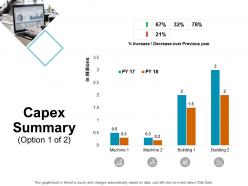
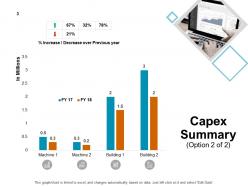
Slide 2: This slide shows Capex Summary.
Slide 3: This slide showcases Capex Summary. Percentage Increase / Decrease over Previous year
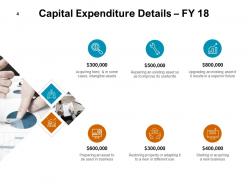
Slide 4: This slide showcases Capital Expenditure Details – FY 18
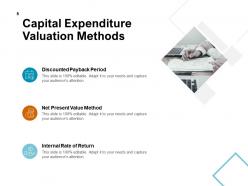
Slide 5: This slide shows Capital Expenditure Valuation Methods contaning- Discounted Payback Period, Net Present Value Method, Internal Rate of Return.
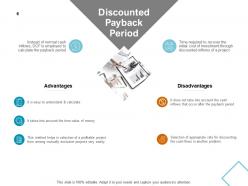
Slide 6: This slide showcases Discounted Payback Period
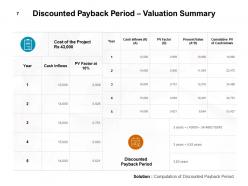
Slide 7: This slide showcases Discounted Payback Period – Valuation Summary
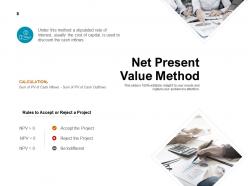
Slide 8: This slide shows Net Present Value Method.
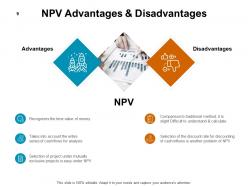
Slide 9: This slide showcases NPV Advantages & Disadvantages.
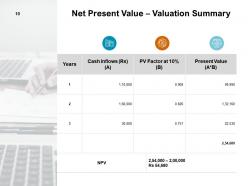
Slide 10: This slide presents Net Present Value – Valuation Summary.
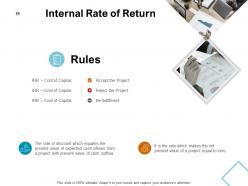
Slide 11: This slide shows Internal Rate of Return. It is the rate which makes the net present value of a project equal to zero
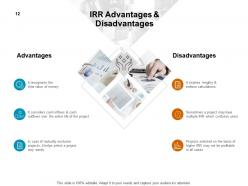
Slide 12: This slide showcases IRR Advantages & Disadvantages.
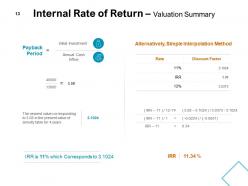
Slide 13: This slide shows Internal Rate of Return – Valuation Summary.
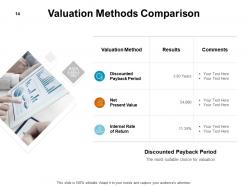
Slide 14: This slide depicts Valuation Methods Comparison.
Slide 15: This is Operating Expense Icons Slide.
Slide 16: This slide showcases Additional Slides for moving forward.
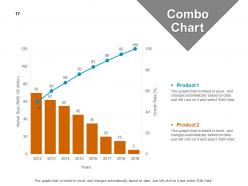
Slide 17: This slide shows Combo chart for product comparison.
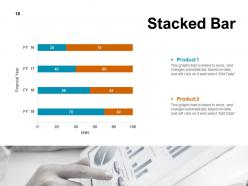
Slide 18: This slide depicts Stacked Bar chart.
Slide 19: This is Our Mission slide with Vision, Mission and Goal.
Slide 20: This is Our Team slide with Names and Designations.
Slide 21: This is Financial slide to showcase finance related stuff here.
Slide 22: This is Thank You slide with Email address, Address and Contact number.
Operating expense powerpoint presentation slides with all 22 slides:
Handle folks who insist with our Operating Expense Powerpoint Presentation Slides. Get them to consider equally good alternatives.




FAQs for Operating expense
So your biggest expense is gonna be payroll and benefits - that's usually like 60-70% right there. Then you've got rent, utilities, marketing spend. Insurance too. All those damn software subscriptions really sneak up on you nowadays! Professional services like your accountant or lawyer. Office supplies, travel, equipment repairs, phone bills - the usual suspects. Really depends on what kind of business you're running though. I'd track everything monthly so you can actually see where your money's going and plan better for next year.
Hey! So operating expenses are totally different depending on what industry you're looking at. Retail companies blow through cash on inventory, rent, and all those employees you see working the floors. Manufacturing is more about equipment upkeep and raw materials - honestly less flashy but usually more predictable once they get their systems down. Retail generally has higher OpEx ratios because keeping stores running is just expensive as hell. The whole focus is different too - retail worries about customer experience while manufacturing obsesses over production efficiency. Just make sure you're comparing companies within the same industry, not across different ones.
First thing - audit where your cash is actually going. I bet you've got at least 2-3 subscriptions you completely forgot about (we all do). Big wins come from renegotiating supplier contracts and automating the boring repetitive stuff. Energy upgrades usually pay for themselves pretty fast too. Oh, and try consolidating vendors when you can - dealing with fewer companies is honestly just easier. Don't go crazy cutting everything though, or you'll tank quality and piss off your team. Track expenses monthly so you're making smart cuts based on actual data, not just freaking out.
So fixed costs are the ones that'll bite you - rent, salaries, insurance. They don't budge whether you're crushing it or barely scraping by. Variable costs though? They move with your sales, which honestly makes them way less stressful to deal with. When business slows down, at least those costs drop too. The trick is balancing them right. Too many fixed expenses and you're screwed if revenue tanks. But you need some fixed investments to actually grow. I learned this the hard way last year - keep an eye on that ratio because cash flow problems sneak up fast.
So basically your operating expenses get subtracted straight from revenue to figure out your operating profit. More expenses = less money in your pocket, obviously. We're talking rent, payroll, utilities, marketing - you know the drill. The trick is spending enough to actually grow without just hemorrhaging cash for no reason. I'd track your opex-to-revenue ratio monthly to see if you're getting better at this over time. Oh and definitely sort your expenses into buckets first - figure out what's actually bringing in money versus what's just... there. Some overhead you can't avoid, but you'd be surprised how much random stuff adds up.
Honestly, automation is a game-changer for expense management. Start by figuring out which manual tasks eat up most of your time - that's where you'll see the biggest wins. Good software can handle expense tracking, approval workflows, and budget alerts automatically. My old team cut processing time in half once we got everything set up properly. The real magic happens with AI categorization and predictive analytics (sounds fancy but it actually works). Just make sure whatever you pick plays nice with your current systems. Oh, and those budget alerts? They're lifesavers for catching overspending before it spirals.
Honestly, real-time monitoring is a game changer - you'll catch budget issues while you can still fix them. Like when someone forgets that test server running and your AWS bill goes crazy (happened to my team last month, ugh). Way better than getting surprised at month-end when you're already 20% over. You can actually do something about problems instead of just tracking the damage after. Short bursts work best. Set alerts for your big expense categories so you get pinged when spending hits certain levels. Gives you real control over where your money's going.
Your operating expenses are basically all the money flowing out each month - rent, utilities, payroll, marketing, you know the drill. The annoying thing is these costs hit whether you're crushing it or barely scraping by. I'd definitely categorize them into fixed vs variable first, then forecast monthly so you can see trouble coming. Cash flow gets weird when revenue's unpredictable but your OpEx stays steady. Oh, and keep 3-6 months of expenses stashed away - learned that one the hard way. Track everything closely because surprises suck when you're already tight on cash.
Oh man, the worst one I see is people mixing up capital vs operating expenses - like putting equipment under office supplies. That's a mess waiting to happen. Don't dump everything into "miscellaneous" either, you'll never track patterns that way. Personal stuff getting mixed with business costs? Yeah, that'll hurt during an audit. People also switch up how they categorize similar expenses, which drives me nuts honestly. Just pick clear definitions from day one and actually stick to them. Trust me, you'll be so grateful when April rolls around and everything's organized.
First thing - write down all your must-haves like rent, salaries, software, utilities. Add at least 20% on top because random stuff WILL come up. Our "basic" office setup? Yeah, that became like a million little charges we totally didn't see coming. Just use a basic spreadsheet and split things into fixed vs variable costs. That way you can see what's cuttable if money gets tight. Don't stress when your first budget is way off - mine was terrible. You'll figure out your real burn rate after a month or two and can adjust from there.
So there are a few ratios that'll really help you out here. Operating expense ratio is probably your best bet - just divide your OpEx by revenue and watch for it to go down over time. Operating margin shows what's left as profit after expenses, which is obviously crucial. Oh, and expense per employee is honestly my favorite metric to track - it's crazy how much it reveals about whether you're actually getting more productive. Just pick 2-3 of these that make sense for your business and check them every quarter. Compare against industry standards if you can find decent data. Don't overthink it though, consistency matters more than perfection.
Yeah, new regulations almost always jack up your operating costs. Most of the time you're looking at hiring compliance people, buying new software, getting audited - the whole nine yards. Finance and healthcare get hit the hardest since they need specialized staff and tech upgrades. Once in a blue moon you'll see regs that actually make things easier, but honestly? Don't hold your breath. I learned this the hard way at my last job. Best thing you can do is set aside some extra cash in your budget each year so you're not scrambling when new rules drop.
High operating costs will totally crush your margins over time. You won't have cash for growth or R&D, and forget about having a cushion when things get rough. Investors hate seeing expense ratios climb - I've watched companies get turned down for funding because of it. The worst part? You lose pricing power since you need way more revenue just to break even. Honestly, quarterly expense audits are a lifesaver. Go line by line and catch that cost creep early before it becomes a real headache.
Start by figuring out where your money's actually going - what's making you cash versus what's just bleeding you dry. Hit the big stuff first: payroll, rent, tech expenses. That's where the real savings are hiding. Here's the thing - spend like it's coming out of your own pocket (which it basically is). Put your money into stuff that keeps customers happy or brings in more revenue. Everything else? Cut it or dial it way back. I track expense-to-revenue ratios every month so I can catch problems before they get ugly. Sounds boring but it's saved my ass more than once.
Yeah, seasonal swings will totally wreck your budget if you're not ready for them. Holiday retail is brutal - labor costs explode, inventory gets crazy expensive, and don't even get me started on shipping. Tourism companies blow their marketing budget months before anyone actually travels, which is smart but painful. Construction and farming get hit backwards though - they're stuck paying to maintain equipment during slow months when money's not coming in. Your electric bill alone can swing like 30% if you're selling ice cream or running heaters. Honestly, just bake these patterns into your yearly planning so December doesn't blindside you.
No Reviews