


Capital Expenditure Powerpoint Presentation Slides





Try Before you Buy Download Free Sample Product
 Impress Your
 Audience
 100%
100% Editable
 Save Hours
 of Time


Capital Expenditure Powerpoint Presentation Slides are suitable to present capex summary. Use this to showcase expenditure of funds, cost of sales, gross and net profit. Assets expenditure PPT contains set of visually appealing slides such as capex summary, capital expenditure details, and valuation methods, discounted payback period, valuation summary, net present value method, NPV advantages and disadvantages, internal rate of return, valuation methods comparison, etc. These financial statements PowerPoint templates help businesses to maintain their scope of operations. Capital budgeting PPT slides can also be used for cash flow analysis, capital asset management, operating expenses, balance sheet, income statement, corporate finance, capital cost management, accounting reports, financial planning and forecasting, capital and revenue expenditure and many more. This complete deck is perfect for financial reviews and annual presentations. Download capital asset management PPT slides to analyze operating, financing and investing activities for your business. Handle flippant attitudes with our Capital Expenditure Powerpoint Presentation Slides. Convince folks to concentrate hard.
People who downloaded this PowerPoint presentation also viewed the following :
Content of this Powerpoint Presentation
Slide 1: This slide introduces Capital Expenditure. State Your Company Name and begin.
Slide 2: This slide showcases Capex Summary (Option 1 of 2). Add the data to for two financial year.
Slide 3: This slide presents Capex Summary (Option 2 of 2). Use the graph as per your need.
Slide 4: This slide showcases Capital Expenditure Details – FY 18.
Slide 5: This slide shows Capital Expenditure Valuation Methods. Add the details and make use of it.
Slide 6: This slide showcase Discounted Payback Period with advantage and disadvantages.
Slide 7: This slide shows Discounted Payback Period – Valuation Summary. You can add the data in the table as per your requirement.
Slide 8: This slide presents Net Present Value Method. You can use the formula for calculations.
Slide 9: This slide shows NPV Advantages & Disadvantages. You can your own or edit it as per your requirement.
Slide 10: This slide showcases Net Present Value – Valuation Summary table. You can add the information and use it accordingly.
Slide 11: This slide presents Internal Rate of Return. You can add the data as per your need.
Slide 12: This slide displays Internal Rate Of Return with these - Advantages, Disadvantages.
Slide 13: This slide presents Internal Rate of Return – Valuation Summary. Use it as per your requirement.
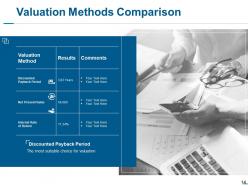
Slide 14: This slide showcases Valuation Methods Comparison with these you can compare the results of- Discounted Payback Period, The most suitable choice for valuation.
Slide 15: This slide shows Capital Asset Expenditure Icon.
Slide 16: This is a Coffee Break slide to halt. You may change it as per requirement. ge. Just right click and replace image.
Slide 17: This slide is titled Charts & Graphs to move forward.
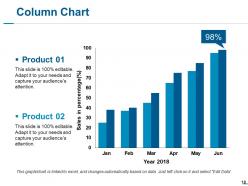
Slide 18: This is a Column Chart slide for product/entity comparison.
Slide 19: This is an Area Chart slide for product/entity comparison.
Slide 20: This slide presents Donut Pie Chart. Add your parameters and use it.
Slide 21: This slide shows a Bar Chart for two product comparison.
Slide 22: This slide presents Area Chart for comparing two of the products.
Slide 23: This slide presents a Radar Chart graph/chart. Compare Product 01, Product 02 and use as per required.
Slide 24: This slide is titled Additional slides to proceed forward
Slide 25: This is Our mission slide with imagery and text boxes to go with.
Slide 26: This is an About us slide to state company specifications etc.
Slide 27: This slide presents a Project Management Team with names and designation.
Slide 28: This is an Our Goal slide. State your important goals here.
Slide 29: This slide showcases comparison slide. You can use it to compare the men and women.
Slide 30: This slide presents Financial scores to display.
Slide 31: This is a Dashboard slide displaying- Revenue, Purchase Value, Units Sold.
Slide 32: This is a Quotes slide to convey message, beliefs etc.
Slide 33: This is a Timelines slide to show- Plan, Budget, Schedule, Review.
Slide 34: This is a Puzzle slide with the following subheadings- PPC Advertising, Media Marketing, Print Marketing, E-mail Campaigns.
Slide 35: This slide shows Target image with text boxes.
Slide 36: This is a Location slide to show global growth, presence etc. on world map.
Slide 37: This slide shows a Mind map for representing entities.
Slide 38: This is a Post it slide to mark reminders, events etc.
Slide 39: This is a Venn diagram image slide to show information, specifications etc.
Slide 40: This slide displays a Bulb or idea image.
Slide 41: This is a Thank You image slide with Address, Email and Contact number.
Capital Expenditure Powerpoint Presentation Slides with all 41 slides:
Highlight important information with our Capital Expenditure Powerpoint Presentation Slides. Ensure it gets the focus it deserves.
-

Capital Expenditure
-
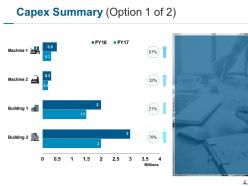
Capex Summary Option 1 of 2
-
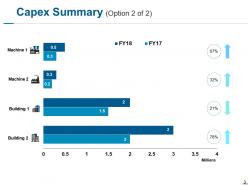
Capex Summary Option 2 of 2
-
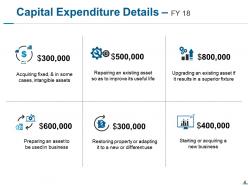
Capital Expenditure Details FY 18
-
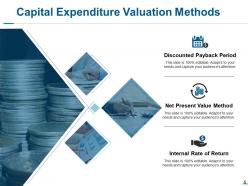
Capital Expenditure Valuation Methods
-
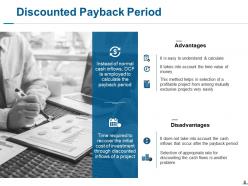
Discounted Payback Period
-
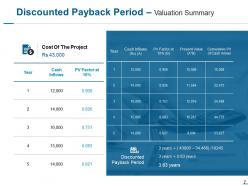
Discounted Payback Period Valuation Summary
-
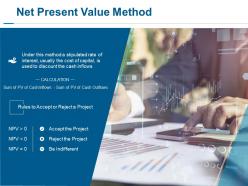
Net Present Value Method
-
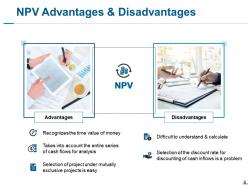
NPV Advantages Disadvantages
-
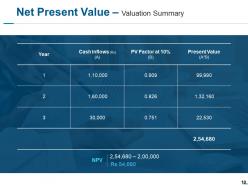
Net Present Value Valuation Summary
-
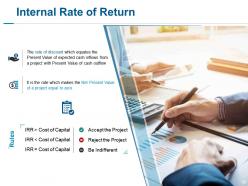
Internal Rate of Return
-
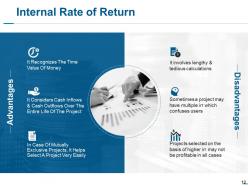
Internal Rate of Return
-
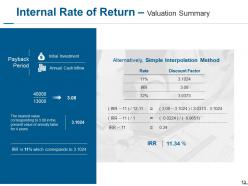
Internal Rate of Return Valuation Summary
-
Valuation Methods Comparison
-
Capital Expenditure Icon slide
-

Have A Coffee Break
-

Charts Graphs
-
Column Chart
-
Line Chart
-
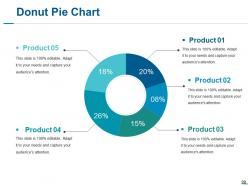
Donut Pie Chart
-
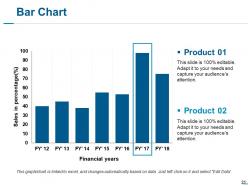
Bar Chart
-
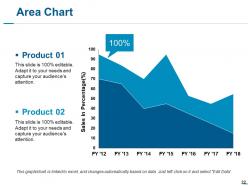
Area Chart
-
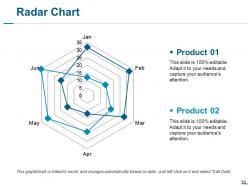
Radar Chart
-

Additional Slides
-

Our Mission
-

About Us
-

Our Team
-
Our Main Goals
-
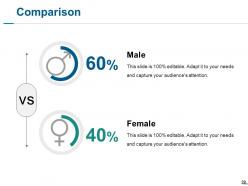
Comparison
-
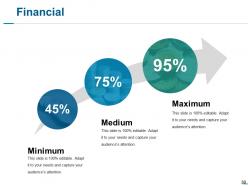
Financial
-
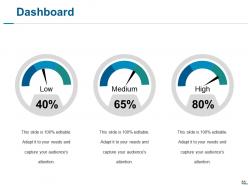
Dashboard
-

Quotes
-
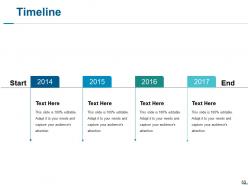
Timeline
-
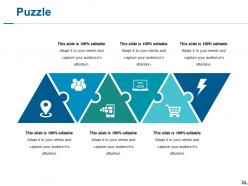
Puzzle
-
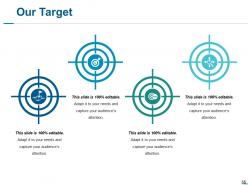
Our Target
-
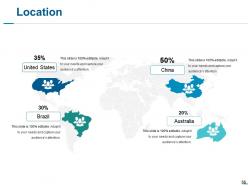
Location
-
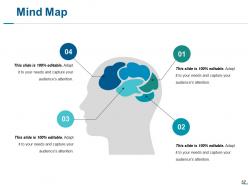
Mind Map
-
Post It
-
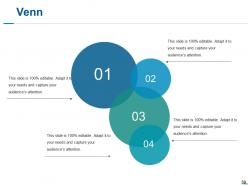
Venn
-
Bulb With Idea
-

Thank you slide with contact information
FAQs for Capital Expenditure
So capex is basically big stuff you buy that'll last more than a year - think buildings, equipment, vehicles, computers. Not your regular expenses like office supplies or monthly software fees. Those get depreciated over time instead of hitting your books all at once. Your accounting people will thank you if you set a clear dollar cutoff (like $2K or $5K) to separate the big purchases from everyday costs. Honestly, without that threshold you'll drive yourself crazy trying to categorize every single purchase.
So here's the deal - capex goes on your balance sheet as an asset, then you depreciate it over time. Opex? Hits your P&L right away. Buy a new server for $10k? That's capex, probably depreciated over 3-5 years. Your monthly Slack subscription though - that's opex hitting immediately. Both are cash out the door but totally different accounting. This actually matters more than you'd think because capex won't crush your current profitability numbers, while opex will. I learned this the hard way during budget season last year. Always double-check which bucket your spending falls into when you're planning.
So capex is basically the expensive stuff companies buy that lasts for years. Manufacturing companies grab machinery and equipment upgrades. Tech firms blow serious cash on servers and data centers - those things aren't cheap. Retail goes for store renovations, POS systems, warehouses. Healthcare buys medical equipment and expands facilities. Oil companies? Don't even get me started on their drilling equipment costs. It's all long-term investments that depreciate over time instead of getting expensed right away. Pretty much any industry has these patterns if you look.
So there's a few ways to tackle this. NPV is honestly your best bet - it shows whether the project actually makes money after factoring in your cost of capital. IRR gives you the return rate, and payback period tells you how fast you get your money back. Pretty straightforward stuff. Oh, and profitability index is useful if you're comparing multiple projects. I'd definitely run NPV as your main analysis, then maybe do IRR and payback just to double-check everything makes sense. Payback period isn't perfect but it's nice for a quick gut check.
So instead of taking a massive hit when you buy equipment, depreciation lets you spread that cost out. Buy a $100K machine? You'll expense maybe $10K each year over 10 years rather than the full amount upfront. Your income statement stays way more predictable this way. The asset's value drops on your balance sheet annually too. It's honestly pretty clever - you're matching the expense to when you're actually using the thing to make money. Just pick the right depreciation method though, some work better depending on what you bought.
So CapEx is just your company betting on stuff that'll pay off later - new equipment, facilities, tech upgrades, whatever builds long-term value. Different from regular expenses because you're buying assets that stick around and give you an edge. The annoying part is balancing cash flow now versus future returns. Honestly, I've seen too many companies blow their budgets on shiny new toys without thinking it through. When you're looking at proposals, just make sure they actually connect to where you want the business to go. Don't get caught up in quarterly thinking - this is about years down the road.
Ugh, tech changes are brutal for capital planning. One day you're set, next day your equipment's basically junk because something better dropped. COVID was the perfect example - companies scrambled to buy remote work setups they never budgeted for. Here's the thing though: new tech usually needs big upfront cash but can save you tons later or give you a real edge. You don't want to be too early (expensive mistake) or too late (competitors win). Build some wiggle room into your capex budget so you can actually move when the next big disruption hits.
Biggest thing with huge CapEx? Cash flow gets tight real quick. Your investment might not pay off like you hoped, then you're stuck paying for this thing for years. Tech moves crazy fast too - remember all those companies that bought expensive office equipment right before remote work exploded? Brutal. Plus there's opportunity cost since that money could've gone somewhere else entirely. Market shifts can make your shiny new asset worth way less overnight. Honestly, I'd run different scenarios first. Test your assumptions against various market conditions before you pull the trigger on anything major.
Start with ROI and how each project fits your bigger goals. Make a scoring system that factors in expected returns, risk, and how critical stuff is day-to-day. Timing's huge too - some things can wait, others are urgent for compliance or whatever. Honestly, you gotta be brutal about cutting because there's never enough money. I'd focus on projects that either bring in cash fast or stop you from getting screwed later. Oh, and write down your reasoning so you can justify the choices when people inevitably complain about what got cut.
Yeah, CapEx hits your cash flow hard right away - like, you drop all this money on equipment but won't see returns for years. Honestly kind of sucks in the moment. Timing is everything though. Don't buy that massive machine right when you're already tight on cash or during your busy season. I learned this the hard way once, but whatever. Plan these big purchases way ahead in your forecasts. Best move? Time them when cash is flowing well, or at least have a credit line set up as backup so you're not scrambling.
So basically, high interest rates make borrowing crazy expensive - nobody wants to drop serious cash on new equipment when financing costs that much. Add economic uncertainty on top? Forget it. CFOs just hunker down and only spend on absolute necessities. But flip that scenario - cheap money plus a stable economy? Companies go nuts with capital spending because the math actually works. I've seen this cycle play out so many times. Bottom line: you gotta read both the rate environment and economic vibes before pitching any major investment. Timing is everything with this stuff.
Ok so first thing - set up a 3-5 year rolling forecast and update it every quarter. Split your capex between maintenance stuff and growth projects so you know what to cut first if money gets tight. Department heads are honestly the worst part of this whole process - they either ask for nothing or want a golden toilet, no middle ground. I always build in 10-15% buffer because something always goes sideways. Make sure every project connects back to your main goals with solid ROI numbers. Oh and track actual vs. forecast spending like your life depends on it. That data will save you so much headache next time around.
CapEx can seriously make or break where you stand against competitors. You invest in new tech or equipment, you get better capabilities than rivals who aren't spending. Manufacturing companies that upgrade to automated systems? They'll produce faster and cheaper than anyone stuck with old equipment. Timing is everything though - you can't just throw money around. Need to invest enough to stay competitive without killing your cash flow. Honestly, I'd keep an eye on what your biggest competitors are doing with their spending and make sure you're not falling behind.
Definitely track ROI and payback period first - that's your baseline. But don't sleep on the operational stuff like capacity utilization and productivity gains. Quality metrics too if you bought new equipment. Honestly? Most people get obsessed with the financial numbers and totally ignore whether the thing actually works better day-to-day. That's where you see if it was worth it or not. Compare everything against what you originally projected. Oh, and set up quarterly check-ins for the first couple years - you'll want to catch problems early before they snowball.
Honestly, compliance stuff is such a pain but you've gotta budget for it upfront. Emissions controls, safety upgrades, all those regulatory boxes to check - none of it makes you money but you're screwed without it. What's crazy is how fast things change. Something that was just a "nice to have" last year becomes mandatory overnight. I learned this the hard way watching companies get blindsided. Try to stay ahead of what's coming down the pipeline instead of playing catch-up. Always build in extra cushion for surprise requirements too.
-
Content of slide is easy to understand and edit.
-
Design layout is very impressive.