


Private equity investment deck powerpoint presentation slides





Try Before you Buy Download Free Sample Product
 Impress Your
 Audience
 100%
100% Editable
 Save Hours
 of Time


If you are planning for a startup and looking for business ideas, our private equity investment PowerPoint presentation slide is just what you need. These equity-based crowdfunding PPT templates will definitely fill the gap between the investors and your company. Our innovative approach crowdcube strategy presentation illustration helps you raising funds from multiple individual donors. These finance crowdfunding strategy PPT templates include all the relevant slides such as growth platforms, income statements, disambiguation, financial benefits, key customer relationship, competitive landscape, revenue stream, organizational structures and strategic planning. Our entrepreneurial ventures PowerPoint visuals are designed by a team of experts. If you want to deliver a presentation on related topics such as crowd-investing, P2P lending, , threshold pledge system, crowdcube equity, budget crowdsourcing, crowd financing, royalty-based financing, equity ownership, crowdsourcing management and investment funds, our private equity investment presentation templates will come into use. Download investment ppt today and get the investor’s attention. Have help at hand with our Private Equity Investment Deck Powerpoint Presentation Slides. They are available round the clock.
People who downloaded this PowerPoint presentation also viewed the following :
Content of this Powerpoint Presentation
Hello! Are you out there, lurking in the exciting world of private equity, just ready to crush your next landmark pitch? Well, look no further. We've found a game-changer of a tool that will change the game for your presentation—the Private Equity Investment Deck from SlideTeam.
Whether you're pitching to potential investors, updating existing stakeholders, or dissecting your portfolio companies, this one is going to be your best pal! This set is not just a stack of slides; it's a kit thoughtfully designed to touch base on all your necessary sections: investment strategies, market analysis, financial models, and even exit plans. With 59 professionally designed slides, each one carefully crafted to be the best, most impactful slide, you're not just throwing in information; in fact, you're telling a story. Why settle for less when you can deliver it with class and flair? Keep reading and join us now as we walk you through this Private Equity Investment Deck from SlideTeam and learn how this could turn your presentations into something spectacular and allow you to seal the deal! Are you in? These are the points, and imagine what this deck would do to your pitch!
Let’s explore!
Template 1: Executive Summary
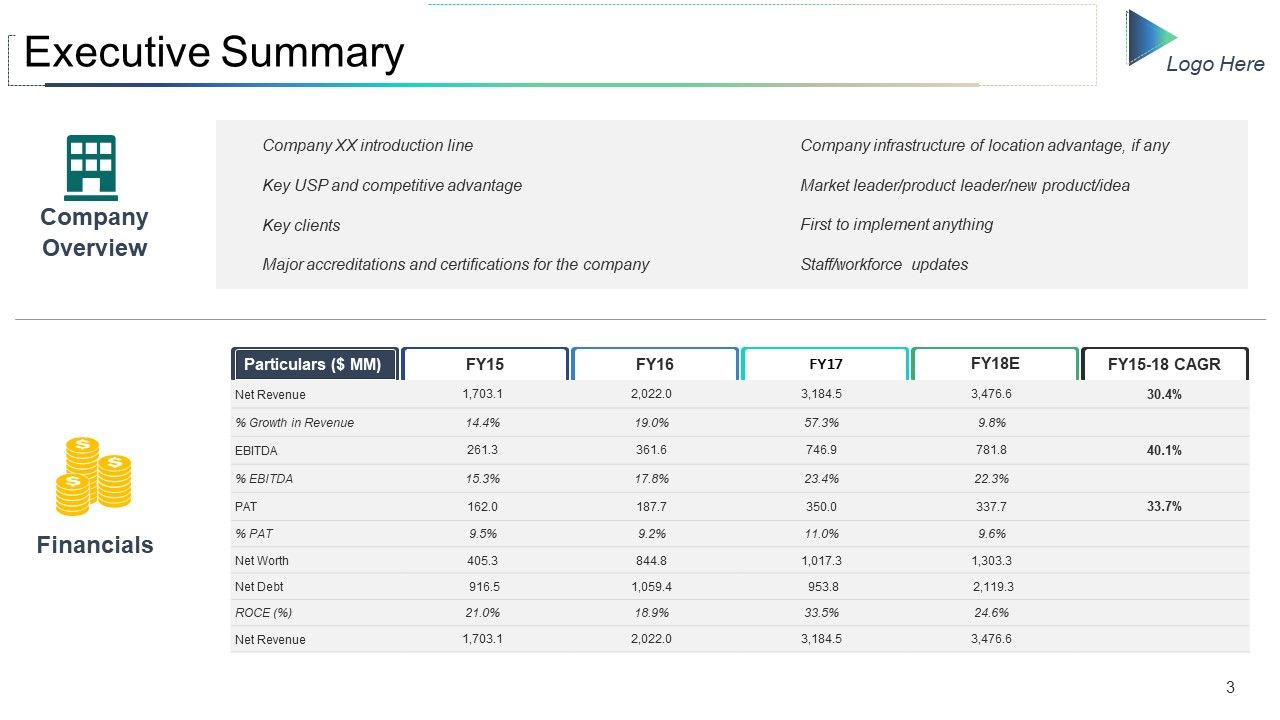
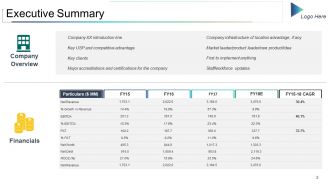
This presentation layout is your professional curriculum, enabling you to make your business's story and its financial health crystal clear. Our collection's first slide, the Executive Summary, is well-polished and prompts you to present your enterprise. A brief tagline introduces its several merits. It also guides you to demonstrate your uniqueness and leadership in the market as well as innovation. Since this is an all-inclusive PPT Slide, the best client and accreditation profiles automatically appear for you. The final section on the financial track provides you with a beautiful graphic of your business’s financial worth side by side with easy-to-read datasets. These facts, mentioned in the tables, span four years from net revenue to EBITDA, PAT, net worth, and debt. Included is the CAGR, which gives you an idea of how your operating business in the market is doing. With this one-stop solution, your approach will be more direct and take you further down the brand story road.
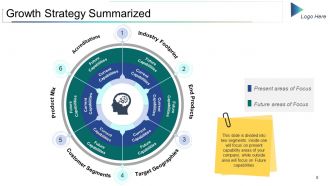
Template 2: Growth Strategy Summarized
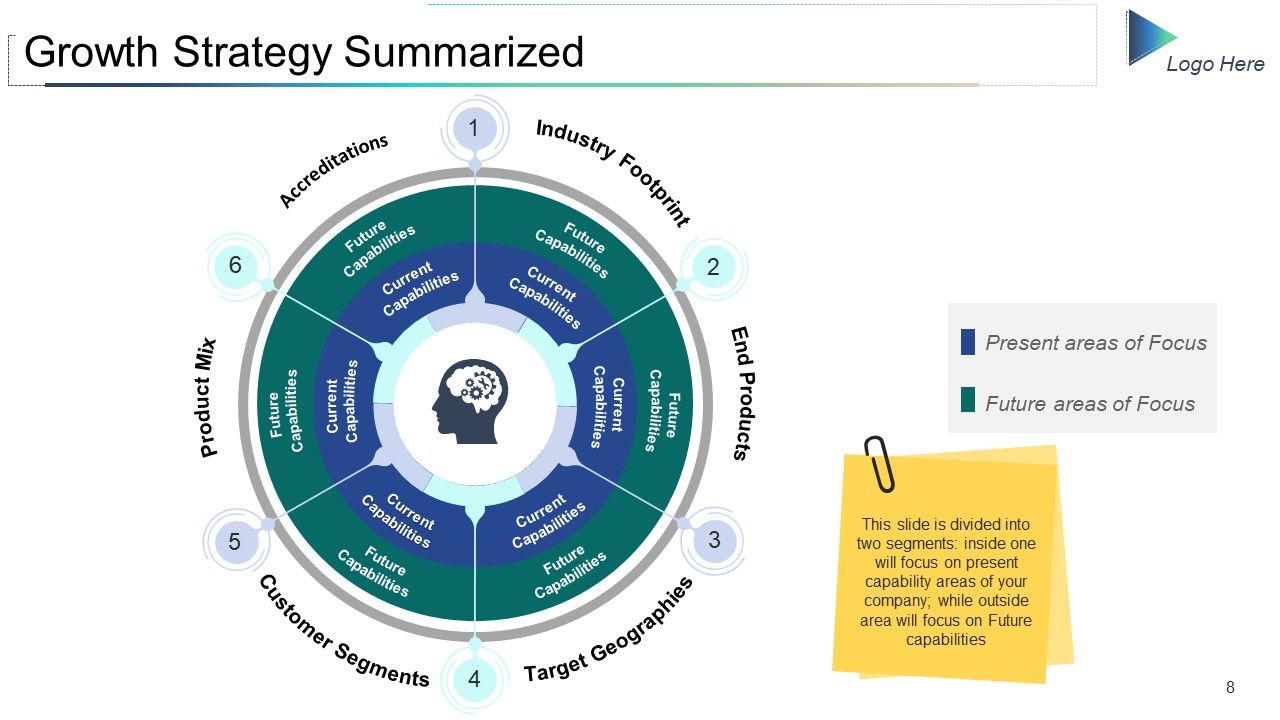
Take a modern step towards the strategic planning of your organization’s future with the presentation slide that will not only help you chart your growth strategy but will also do it in a manner that is visually pleasing to the core. The PPT Slide is an excellent aid for executives and strategists who wish to show a cohesive intermediary plan for growth that can be segmented easily into six key segments, further broken down into the present status and future capabilities. It is a lucid introductory visual tool to identify areas of present strength in conjunction with the target areas of growth and innovation. The use of a color spectrum to differentiate between the regions that are already under focus and the areas that lie open for future development is lucid enough for a discussion regarding strategic focus and resource allocation. Whether it is the stakeholders that require convincing or the team that requires alignment, the slide has been created for clear and aesthetic visualization of the growth targets.
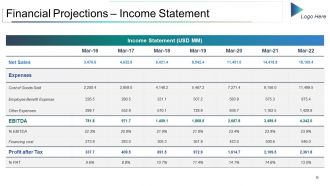
Template 3: Financial Projections–Income Statement

Introducing a neat and sophisticated presentation slide to help illustrate your company’s financial path over time. Represent the core of your business’s economic performance using the six-year income statement included – clearly chart your net sales growth and trace the evolution of expenses, EBITDA, and net profit. A great tool for stakeholder presentations and financial analysts, this slide is intuitively structured around key data-oriented elements. Each category is meticulously divided to ensure that your audience members can immediately see the health of your finances. Whether you are drawing attention to your growing year-over-year metrics, effective expense control, or strategic profitability distribution, this slide helps you emphasize the best aspects of your financial systems and stewardship.
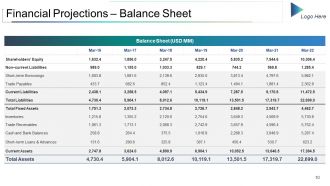
Template 4: Financial Projections–Balance Sheet
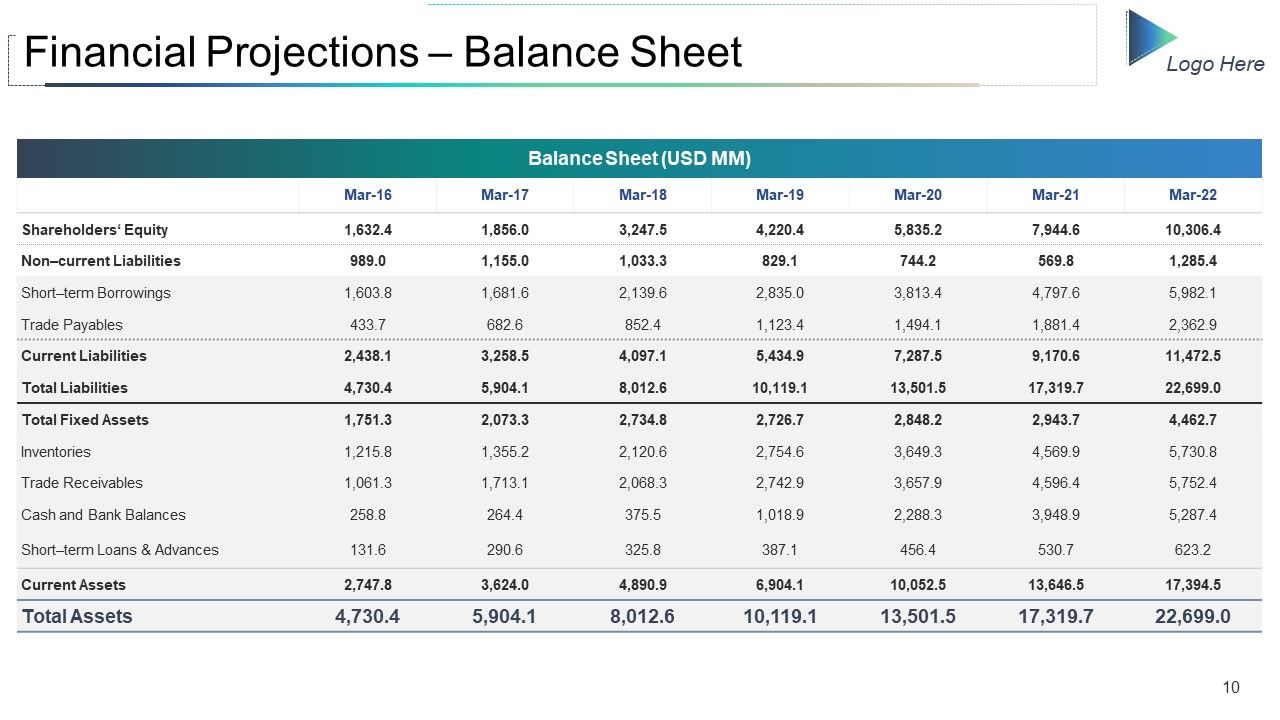
Lay a strong foundation for your company's financial history with this professionally designed PPT Template. This critical asset should briefly present the financial stability and development of the company throughout the years, according to the balance sheet. The slide provides a coherent, year-to-year picture of vital indices, such as shareholders' equity, liabilities, and assets. The presentation of categories is carried out for both current and non-current parts, which permits the assessment of the balance between short-term financial obligations and long-term investments. By comparing total assets and total liabilities, the presentation Template enables the presenter to speak convincingly in front of an audience about the financial condition and economic feasibility. This tool will be the last that no person can afford to miss in their quest to prove to investors, stakeholders, and even their own management teams that they are financially creditworthy and that their managers are prudent in handling financial matters.
Template 5: Goals of Funding
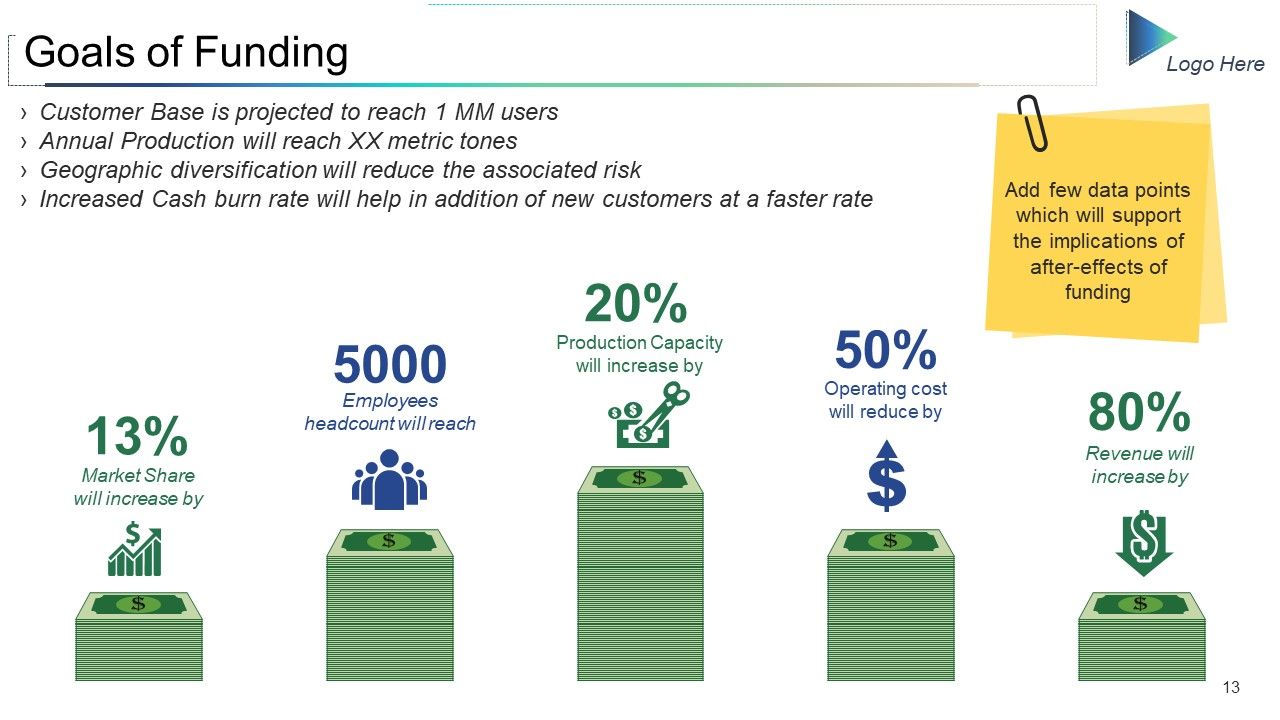
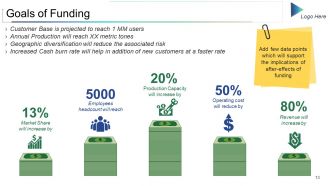
Use our goal-oriented presentation slide to reach the maximum potential of your business and to display future milestones after you have raised funds. You can show, in one PPT Slide, the most ambitious goals your company is looking forward to achieving—a few examples could be to grow your existing customer base to 1 million users, buy new machinery capacities, or increase market share by a significant percentage. This visual also represents the strategic move in targeting new geographies and enhancing operational efficiency. Assisted by our clear icons and forceful percentage increases, this slide mirrors the intended growth metrics as well as operational benchmarks, including an increase in headcount and a decrease in other operating expenses. Our presentation template is your best option for any company to present their investor pitch or for their internal review; it summarizes what good things can result from financing activities.
Template 6: Geographical Footprint
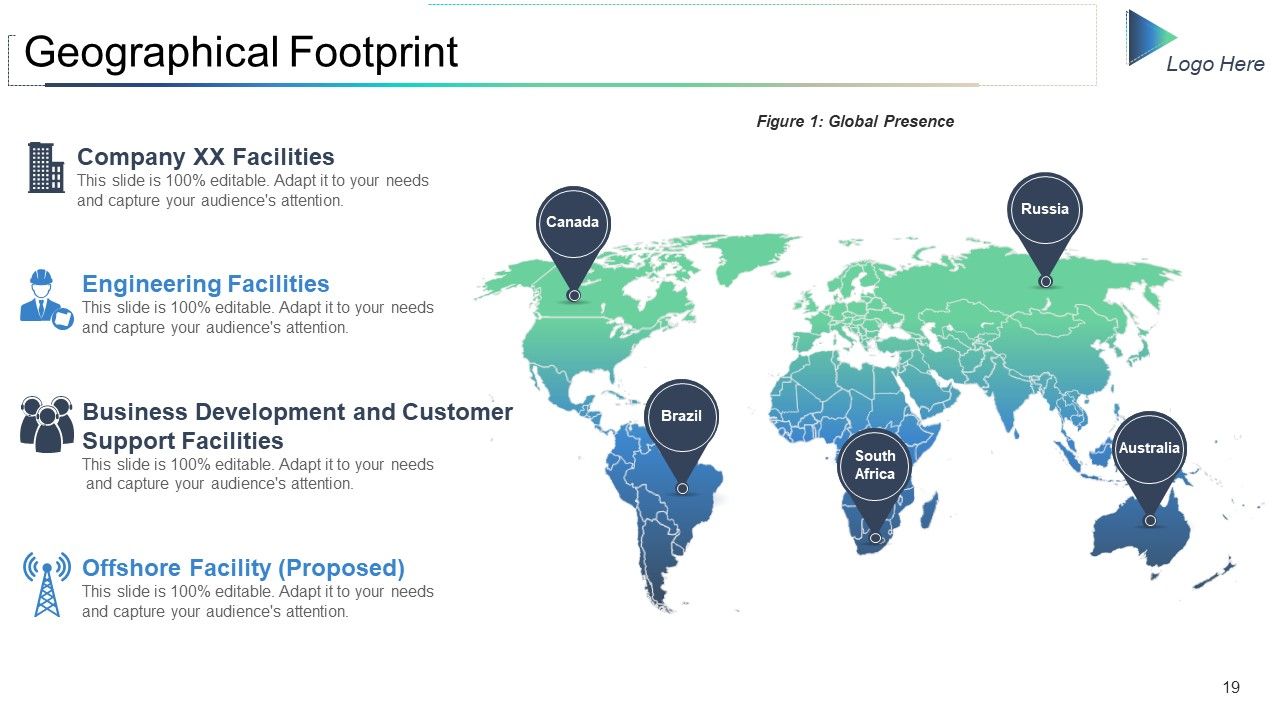
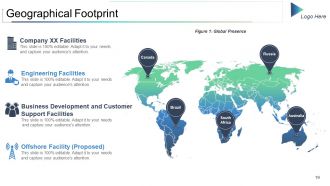
This PPT Design is designed to use a world map background to showcase your company's global presence and the strategic positioning of its facilities. It defines all of your operating sites across the world, from Canada to New Zealand, with customized icons at each point to represent the type of facility and the expansion site. It's not just a facility and engineering hub; it also includes a business development center and offshore facilities under construction. This presentation design is ideal for any business seeking to display its global footprint and logistic support capabilities. It can be used for an internal strategy meeting or a presentation to investors. Beautifully convey the scale of your operation in a way that validates your story as a modern, globally-minded business.
Template 7: Business Model
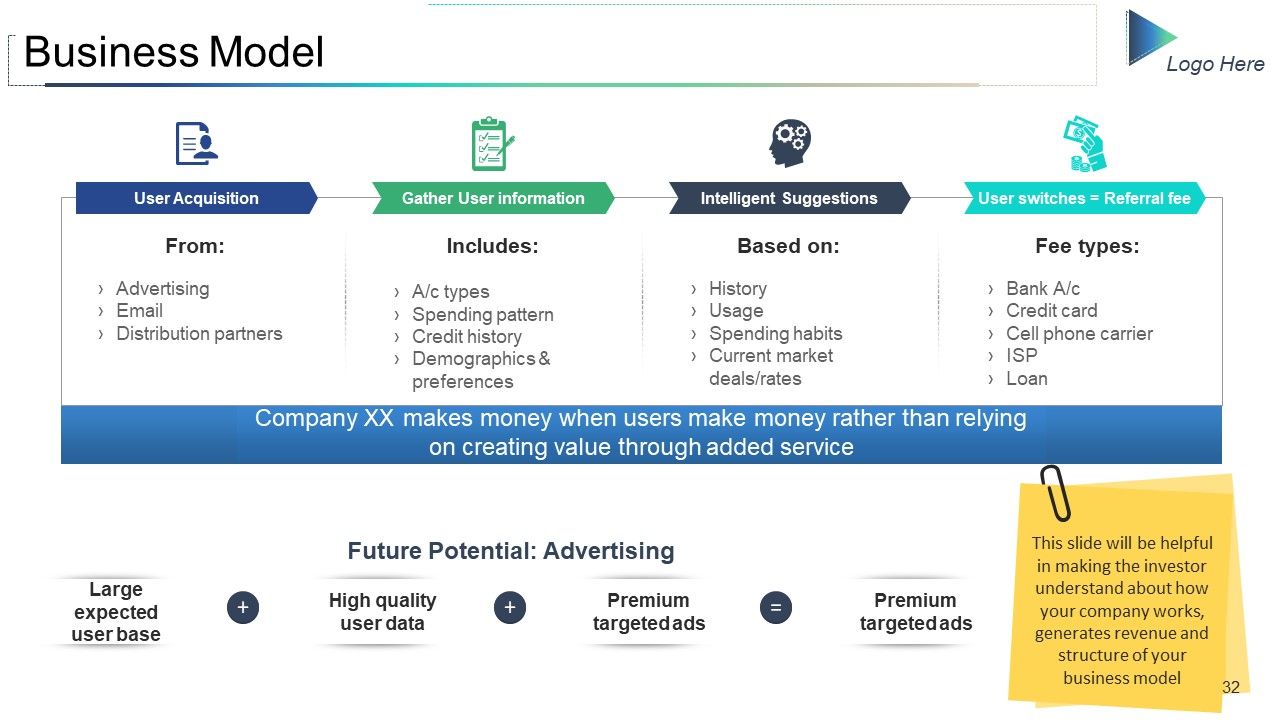
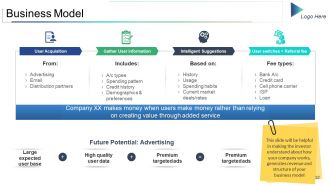
Put the soul of your business out there with our comprehensive slide showing how your firm really works. Walk the audience through the processes, from user acquisition to user data harvesting, and possible intelligent recommendations for the user. Additionally, it elaborates on how user engagement converts into revenues via referral fees from various categories of services. It shows how the approach you have taken is new and different, provoking innovation in service fee profits and allowing users to profit. This PPT Layout also focuses on the next generations of revenue from advertising from the vast user base and the use of high-quality user data to deliver high-class targeted adverts. Any business willing to explain its business model in terms of value and profits will find great utility in this PPT Template.
Template 8: Summary Financials–Revenue, EBITDA, PAT
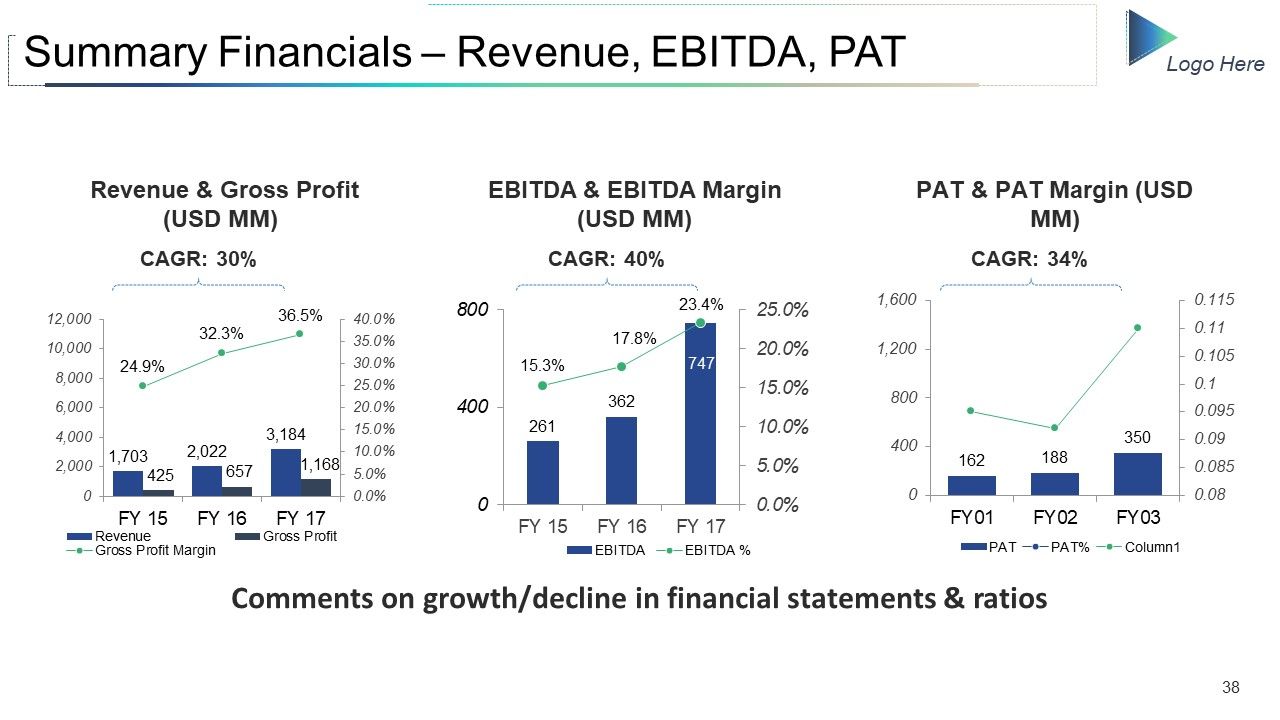
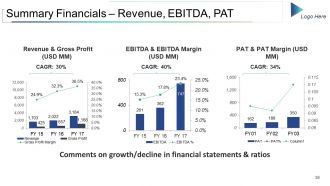
Fantastic slides exhibiting the financial health of your company: total views of your revenues, EBITDA, and profit after tax for three fiscal years. The presentation design is a trilogy of three charts, each reflecting a specific financial aspect. The first one shows the dynamics of growth in revenues and gross profits, where the CAGR percentage easily tells the level of success in selling. The second graph focuses on the profitability of your operations—it displays EBITDA and its margin with the purpose of defining the effectiveness and quality of the earnings within your business. The third graphical interpretation measures net income after all expenditures and reflects the realism of the bottom-line profitability and its margin, with typical deviations over time. With this short form of presentation, you can easily define development trends and operational performance appropriate for stakeholders.
Template 9: Summary Financials–WC Analysis, ROCE, ROE
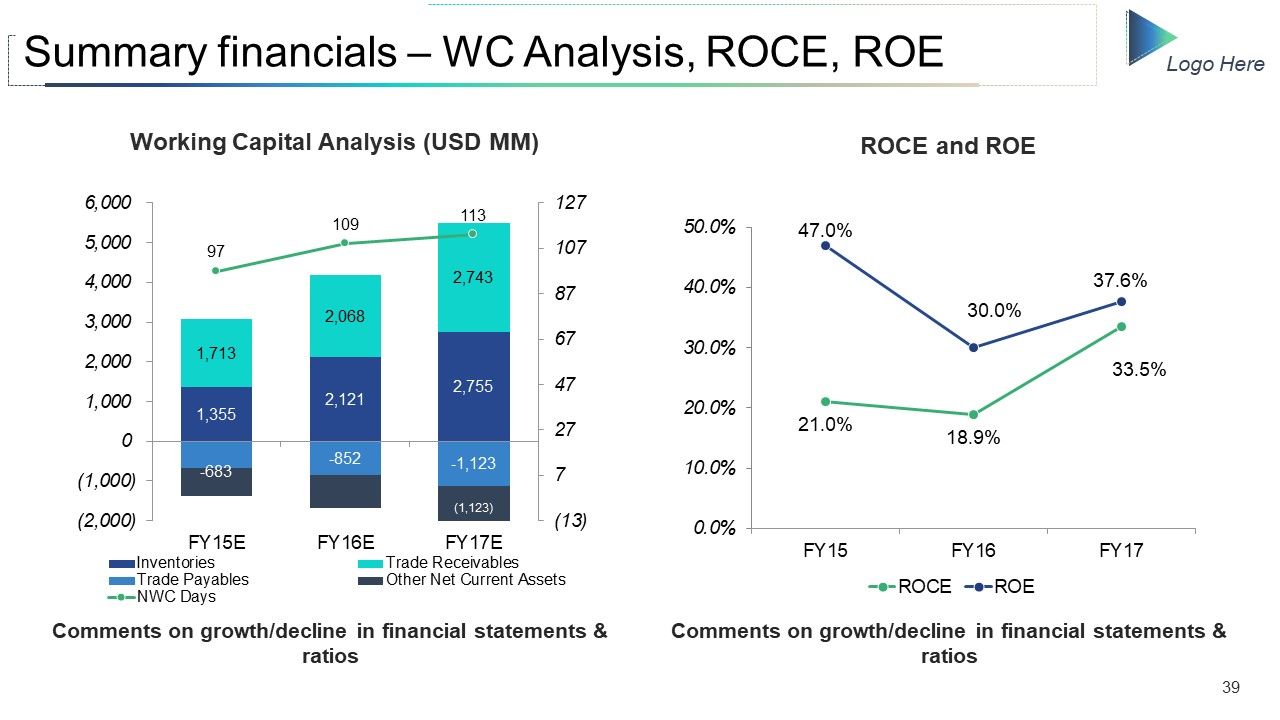
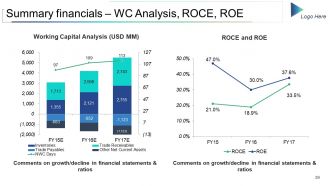
This PPT Design provides a complete image of the financials: all the main key performance measures needed to understand capital management in a business. The picture describes details of working capital, from inventories to receivables and payables, over two fiscal periods, enabling the reader to make a quick efficiency estimate using net working capital days. To provide more clarity, a comparative analysis of ROCE and ROE will effectively map the profitability and share value generation of the company. This PPT Slide would be the primary reference for C-level top management, investors, and financial analysts because the data is straightforward and easy to read due to the predictive design. It is also the basic foundation for discussing any operational strategy and business health in monetary terms.
Template 10: Revenue Split–By Product and Segment
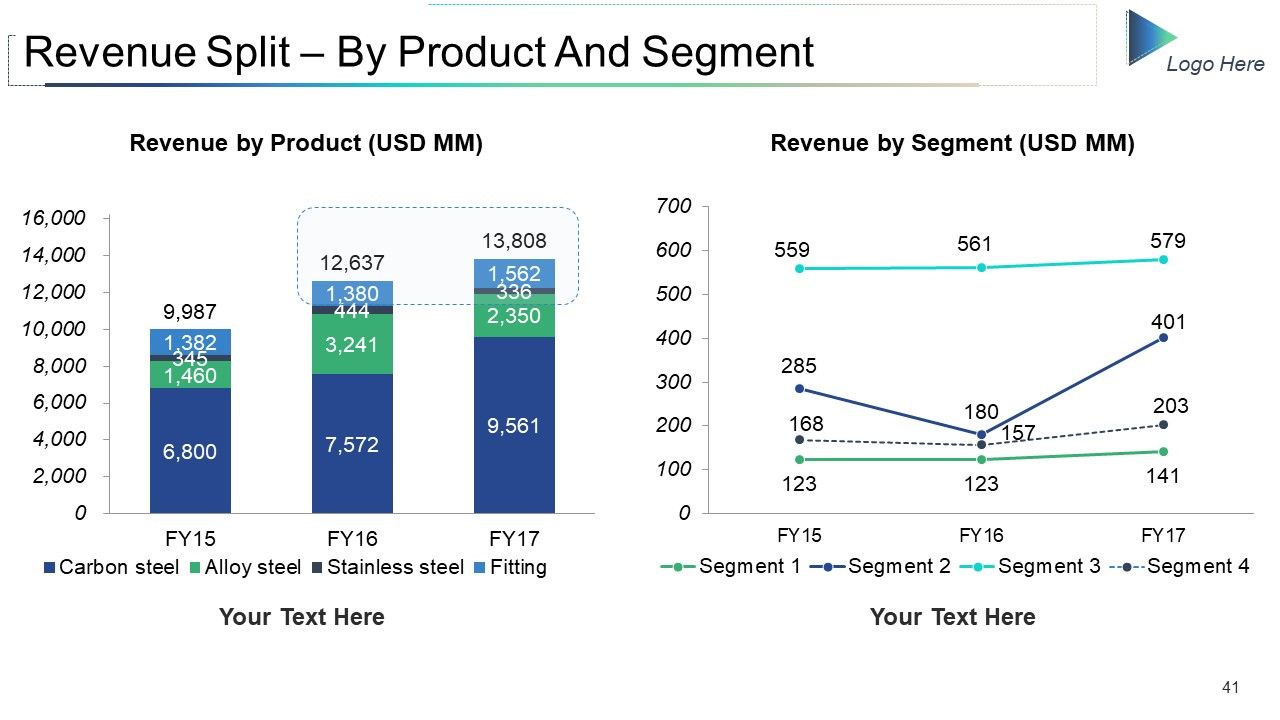
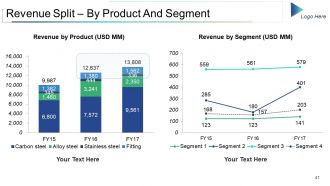
This PPT Setup is a simple example of how to demonstrate sales breakdown within your firm. It is comparative: on one side, there is a bar chart reflecting the sales dynamics in lines of products—carbon steel, alloy steel, stainless steel, and fittings; on the other side, there is a line chart monitoring stable and developing markets. The bar graph shows how the company's product mix strategy helps contribute toward its revenues; in contrast, the line graph shows the trends of market growth and where the company's offerings are actually gaining traction. Here, in this combined presentation, quick comparisons and effective conclusions are possible on which products and market segments are driving the business's financial success. It is one of those must-have slides in whatever kind of financial discussion, pre-investment workshop, or crucial strategy meeting.
Crafting An Engaging Financial Narrative For Today's Market
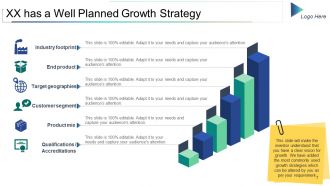
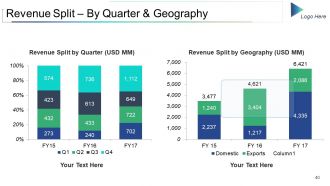
In conclusion, these are the Private Equity Investment PowerPoint Templates by SlideTeam, not just tools but a storytelling medium created for today's finance professionals. Executive summaries are clear, financial overviews are exhaustive, and the presentations are meticulously crafted—that is the PowerPoint Framework where an impression is set to excite the investors and the stakeholders. A canvas developed with solid data and bold visuals to paint the future of your company. Your Growth Strategy template outlines an overall strategic growth strategy up front, and your financial projection painting paints a picture of your company having an understanding of how to make money as if each theme was a small piece to a larger puzzle, and lastly, the Revenue Split template covers such a good percentage of your earnings and puts it up front and center in a way that's easy to look at and easy to understand. These themes allow you to imply that you are more than a sum of numbers and trends. You're a dynamic company willing to expand and make an impact. Each slide, and each graph in these themes sets a path that you have to tread if you are determined to expand in the private sector.
PS: Level up your investment strategy with our Private Equity Scorecard! Click now to take the first step into a better, smarter, data-driven future.
Private equity investment deck powerpoint presentation slides with all 77 slides:
Be completely at ease in any environment with our Private Equity Investment Deck Powerpoint Presentation Slides. You will definitely feel you belong.












FAQs for Private equity investment deck
So PE goes after bigger, established companies that need some fixing up or cash to grow. VC is all about those scrappy startups with crazy potential. PE firms basically buy the whole company (or most of it) and flip it in like 3-7 years. VCs just grab a smaller piece and might stick around longer. Risk-wise, they're completely different animals. PE is more predictable - you're improving operations, doing financial tweaks, that sort of thing. VC? Total gamble on the founders. Way more startups crash and burn, but the wins can be insane. Oh, and PE needs way more money upfront if you're thinking about investing.
Dude, PE due diligence is insane compared to public markets. You're literally dissecting the entire company for weeks/months. Public stuff? You've got financials, analyst reports, whatever's filed publicly. But PE gives you everything - management access, real financials, customer lists, operational data that normal investors never touch. Think reading about a movie vs actually making one. You'll be doing management presentations, site visits, digging through IT systems and employee contracts. Honestly the amount of detail still surprises me sometimes. Just know you'll need way more time and resources than regular equity research.
So PE firms are basically doing math on how much they'll make in 3-7 years when they sell. They want to see solid financials - revenue growth, good EBITDA margins, strong cash flow. Management team matters a ton too. Market position and competitive advantages? Huge factors. Growth potential is everything to these guys, honestly they get pretty obsessed with scalability stories. Oh and they're always looking at operational improvements they can make - like where can we cut costs or boost efficiency. Industry trends matter but that's more obvious stuff. Clean books and a clear growth narrative will get you in the door.
So PE firms set up as limited partnerships - they're the general partner, pension funds and endowments are limited partners. These funds run way longer than you'd think, like 7-10 years total. First 3-5 years they're buying companies, then another 3-5 selling them off. Fee structure is pretty standard: 2% management fee plus 20% of profits (carried interest) once they hit their hurdle rate. Oh and definitely ask what vintage year their current fund is - tells you where they are in the cycle. Makes a big difference for timing.
So basically you use debt to buy way bigger companies than you could afford with just your own cash. It's like steroids for deals, honestly. When it works, you make crazy returns because you're playing with borrowed money. But here's where it gets sketchy - those companies are loaded with debt payments they have to make every month. Business hits a rough patch? Interest rates go up? You're screwed. I've seen deals go sideways fast when companies can't handle the debt load. The trick is not going completely overboard with how much you borrow.
So basically PE firms buy companies they think are undervalued, then spend like 3-7 years fixing them up. They'll cut costs, streamline stuff, maybe buy other companies to bolt on - whatever makes the business more profitable. Most use debt to buy bigger deals (risky but potentially way higher returns). Then they sell for hopefully way more than they paid. You get paid from that price difference plus any cash the company throws off while they own it. The whole game is really about that operational improvement phase - that's where the real money gets made.
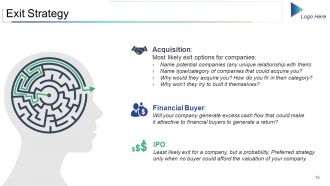
So PE firms have four main ways out: IPOs, selling to other companies, secondary buyouts (basically selling to another PE firm), and management buyouts where the current team buys it. IPOs get all the buzz but selling to other companies happens way more often - it's just easier and faster. Secondary buyouts are getting really popular too, especially when they need more time to grow the business. Oh and here's the thing - they're thinking about the exit from day one, so if you ever pitch to them, make sure your business makes sense for their usual 3-7 year timeline.
PE firms bring serious cash and know-how that can really speed things up. You'll probably get new management systems, streamlined processes, plus tech upgrades you couldn't swing before. Growth happens through acquisitions, expanding markets, or developing products - they've got the network and resources to scale way faster than going it alone. But here's the thing: they need returns in 3-7 years, so expect them to push hard timelines. Honestly, the pressure can be intense. Be ready to move fast on whatever they suggest and show measurable results quickly.
Honestly, the biggest red flags are how they treat workers and the environment. A lot of PE firms will slash jobs or benefits to juice returns - pretty brutal for employees and their communities. Then there's the debt-loading issue where they pile on debt and cash out fast, which screws over long-term stability. I'd dig into how your target firms actually handle stakeholders, not just what their websites say. Their ESG stuff matters, but actions speak louder. Due diligence on real practices is everything here.
So macro stuff totally controls PE cycles through rates and market vibes. Low rates = cheap LBO debt and inflated valuations, which makes fundraising way easier. When rates spike though, LPs get spooked and deals become expensive to finance. GDP growth and inflation mess with institutional appetite too. Bull markets? Everyone's throwing money at PE funds. Bear markets... not so much. Honestly, I just watch Fed moves and credit spreads - they'll tell you what PE activity looks like 6-12 months ahead. Way more reliable than trying to guess deal flow.
ESG stuff is basically mandatory now - LPs won't even look at you otherwise. Tech consolidation deals are everywhere, and digital transformation targets are still hot (though getting pricier). Interest rates have made exit timing a total nightmare, not gonna lie. Secondary markets are way busier since everyone needs liquidity options. Also seeing way more focus on actually improving operations instead of just shuffling debt around. Oh and if you're eyeing anything, think about how the sustainability angle plays into your exit - it'll matter more than you think.
Dude, PE tech has gotten insane lately. AI can rip through data rooms in hours instead of weeks - seriously saves so much time. Most firms now use machine learning dashboards that track portfolio companies in real-time, which is honestly game-changing for spotting problems early. Virtual data rooms are basically standard now, some places even use blockchain for document security (though that feels a bit extra to me). The catch? Your team actually has to know how to use this stuff. I've seen firms drop serious cash on fancy software that just sits there because nobody bothered learning it.
So healthcare and fintech are crushing it right now in PE deals. The whole aging population thing plus COVID really accelerated digital health stuff. Fintech's still huge too - embedded payments, B2B solutions, all that jazz. SaaS companies with recurring revenue are getting tons of love. Industrial tech is picking up steam because everyone's obsessed with ESG now (honestly kind of annoying but whatever). Software with clear digitization plays should be your focus. Defensive sectors help too when the economy's being weird. Short version: stick with tech that solves real problems and you'll probably do fine.
PE firms are totally integrating ESG into their deal process now. They're looking at environmental stuff, labor practices, governance - the whole nine yards - before they even write a check. Most do ESG due diligence right alongside the financial deep dive, then set targets once they own the company. Honestly, it's not just virtue signaling anymore. Their LPs are pushing for it hard, plus companies with solid ESG tend to perform better operationally and get higher exit multiples. Many firms have dedicated ESG teams now - like, actual full-time people, not just someone wearing multiple hats. So if you're pitching PE shops, definitely have your ESG story ready and some kind of improvement roadmap.
Competition is absolutely brutal right now - way too much money chasing the same decent deals, so valuations are honestly ridiculous. Exits are a nightmare too since IPO and M&A markets keep bouncing around like crazy. Your LPs are being way more demanding about returns and terms. Oh, and debt financing costs went through the roof with rates where they are. Here's what I'd do: stop trying to engineer deals financially and actually help your portfolio companies run better. Also maybe hunt in sectors that aren't totally saturated yet? You can still find reasonable multiples if you're not fighting twenty other funds for the same target.
-
Content of slide is easy to understand and edit.
-
Top Quality presentations that are easily editable.