


Example Investor Presentation Powerpoint Presentation Slides





Try Before you Buy Download Free Sample Product
 Impress Your
 Audience
 100%
100% Editable
 Save Hours
 of Time


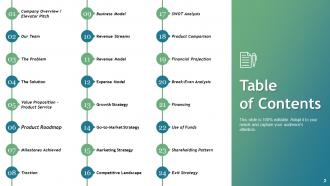
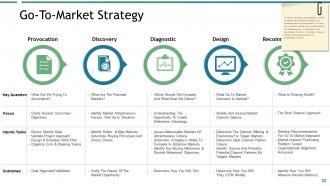
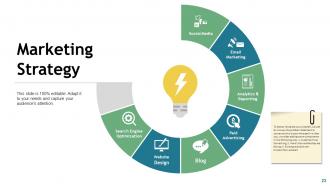
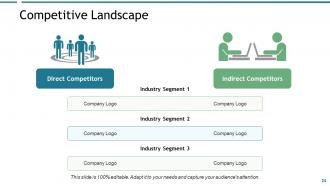
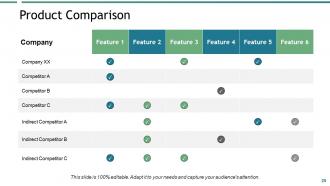
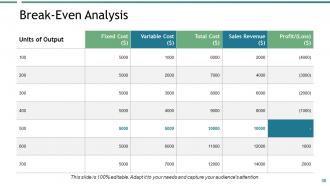
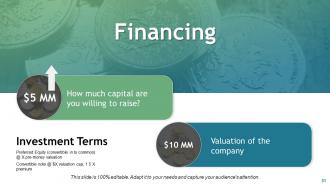
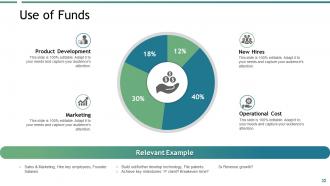
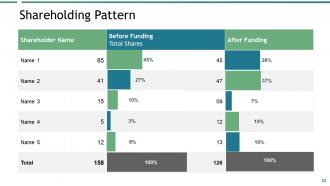
Introducing Example Investor Presentation PowerPoint Presentation Slides that provides an overview of a business plan. The fund-raising presentation to investors PowerPoint complete deck contains content ready slides such as company overview, elevator pitch, our team, the problem, the solution, value proposition, product roadmap, milestones achieved, traction, business model, revenue streams, revenue model, expense model, growth strategy, go-to-market strategy, competitive landscape, product comparison, SWOT analysis, financial projections, break-even analysis, use of funds, shareholding patterns, exit strategy etc. Business Investment proposal PowerPoint template can also be used to present the scope of business and financial performance. Showcase projected financial performance to your potential investors using this investor pitch deck PPT slides. Explain how you reach your target customers. Convince the audience that you have effective go to market strategy. Download this business pitch deck presentation layout to provide a complete view of the competitive landscape. Create a healthy climate for discussion with our Example Investor Presentation Powerpoint Presentation Slides. Conduct them in a cordial environment.
People who downloaded this PowerPoint presentation also viewed the following :
Content of this Powerpoint Presentation
A laconic, clear, and intrusive summary of your company is provided to the possible investors through an investor presentation. We have launched this exclusive Investors Presentation PowerPoint slide deck that contains a detailed summary of organizing your business plan for investors. The latitude of financial and company performance could be easily manifested using this PowerPoint template, which contains excellent ideas for planning out your business and flaunting your goals, motivation, concepts, and achievements to your investors.
Our Investor Presentation PowerPoint slide contains momentous topics such as business model, elevator pitch, product roadmap, growth strategy, milestone achieved, and many other crucial slides that can help your company to present to your audience and investors how your company is superior in market strategy than others. Use our PPT slides to communicate with your investors, provide them with appropriate business ideas, and learn more about Investors Presentation.
This PowerPoint presentation for investors may be useful for your company because it provides financial and commercial results. Show your potential investors your long-awaited growth and financial success with correct enlightenment using our Investors Presentation PowerPoint presentation. Our slides offer great guidance on making an Investor Presentation that your company can exploit to pitch to potential investors.
Check out the templates on One Page Startup Business Executive Summary For Investors from here!
Template 1: Company Overview
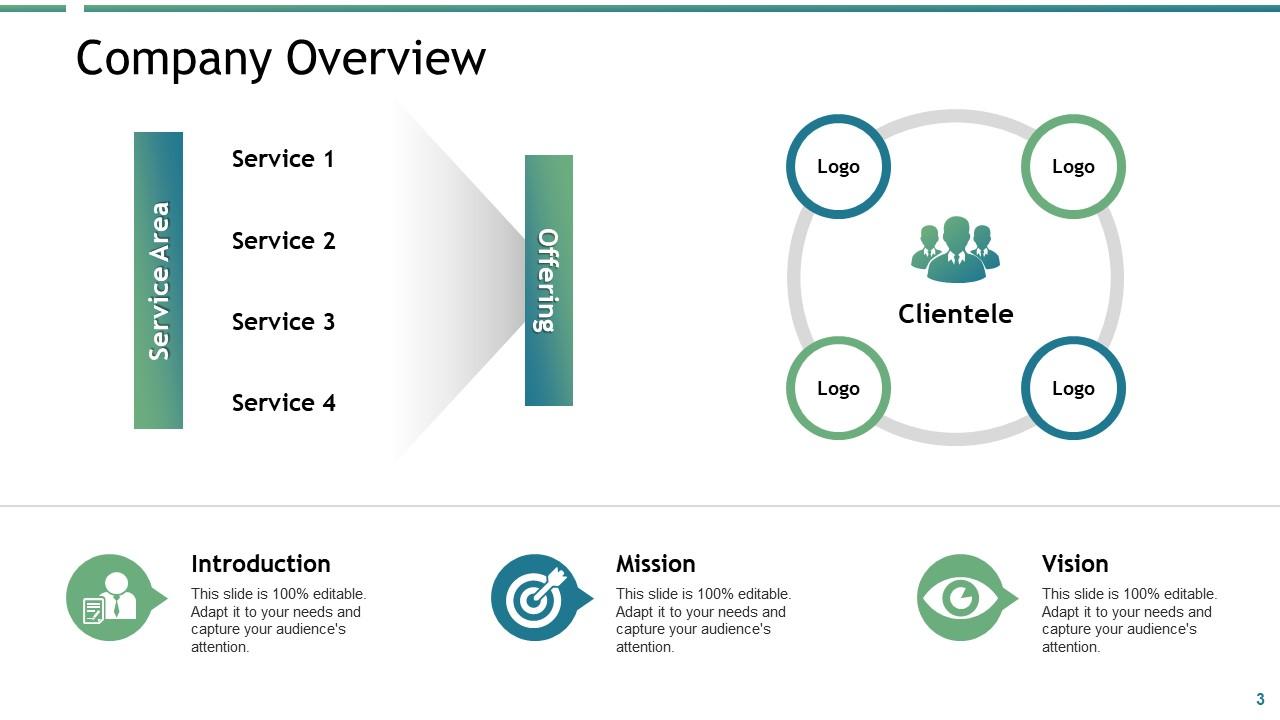
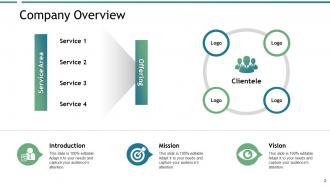
Basic elements about your business, such as its history, goals, target market, administration group, product, and services, should be incorporated in an overview of the company for the investors. Your company should emphasize how suitable your company is for its investments and how your company can solve the difficulties of the target audience. Concisely delivering all this crucial information will help your company attract and grab the interest of investors, possible partners, clients, and other stakeholders. This PowerPoint presentation slide will help you create a great company overview by providing information on the key elements that make up the overview of your firm. Features like the magnificent logo of the company, delivering info on your service area, your offerings, introduction, vision, and mission should be precise for your potential investors. Our slides will help your business plan out your company’s overview perfectly
Template 2: Elevator Pitch
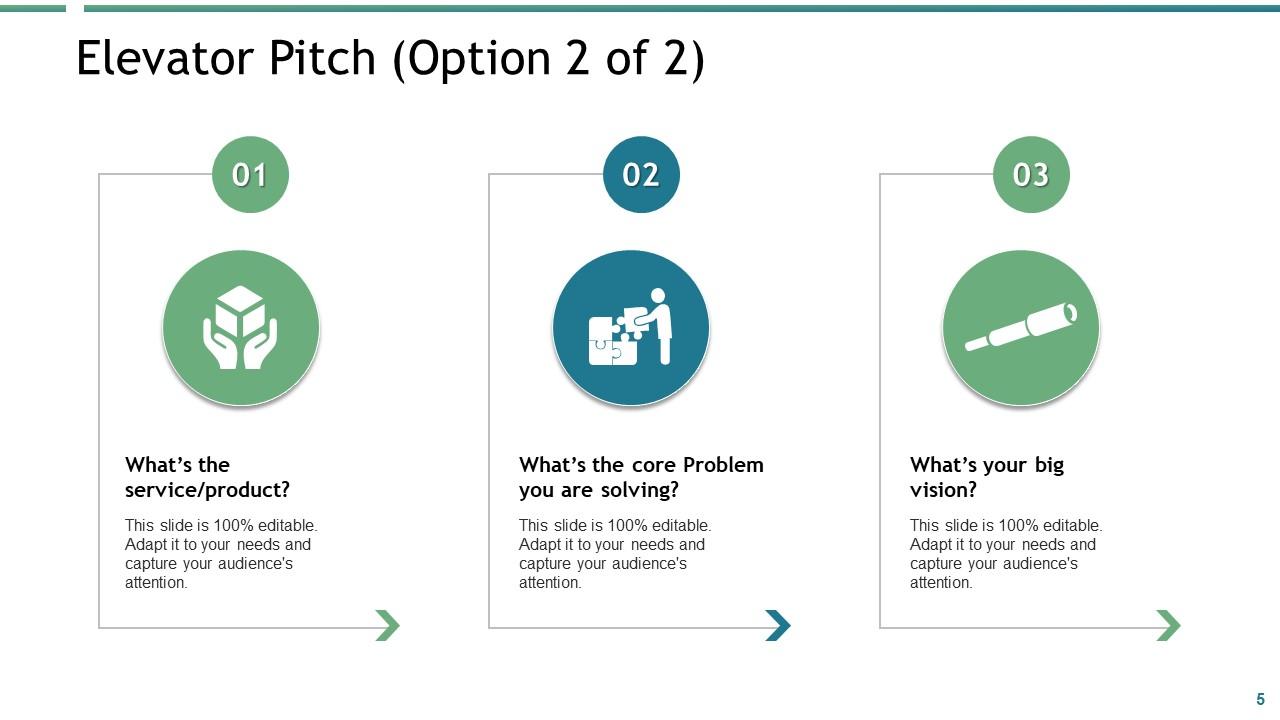
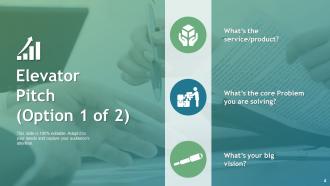
Persuade the audience that your go-to-market perspective is effective. This slide deck will help your business create a wonderful elevator pitch and will fascinate many potential investors. Your Elevator Pitch should cover an explanation of the benefits, characteristics, and cost savings of your product to let them know why it is worth investing in it. If you are looking forward to representing your business plan to the investors and making them understand the vision of your company, this Example Investor Presentation PowerPoint slide deck is the one for you.
Template 3: The Problem
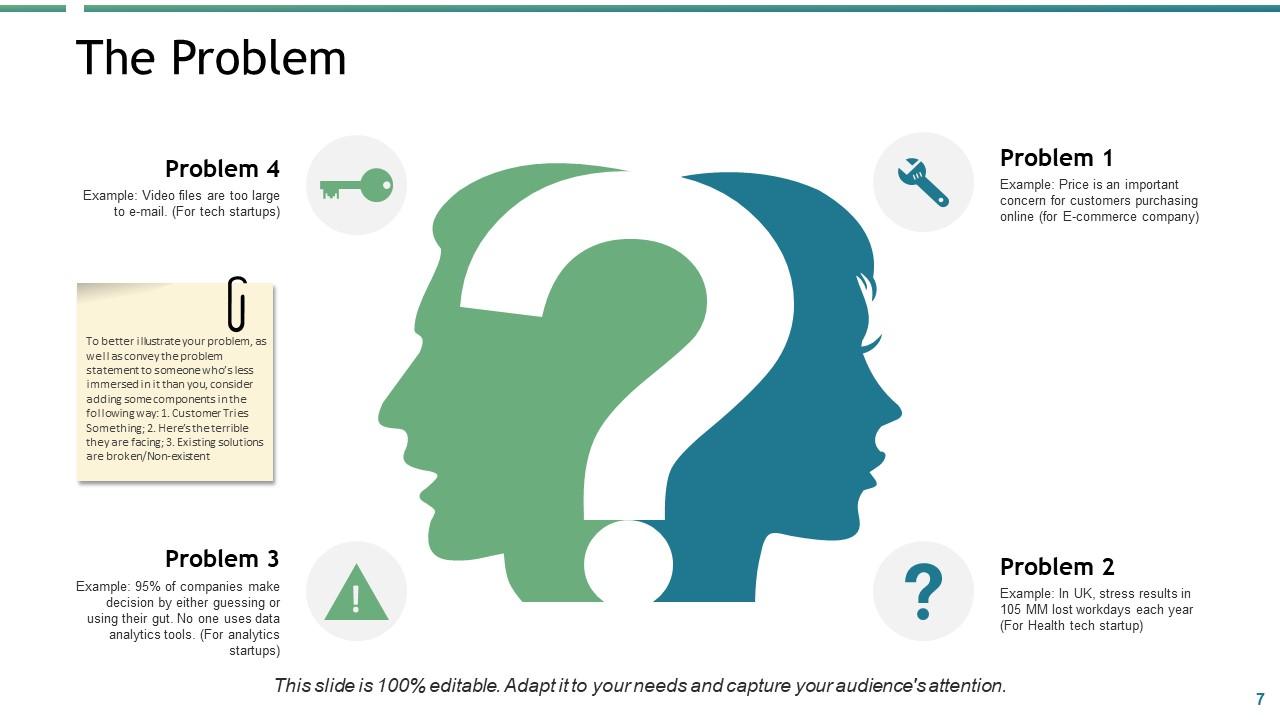
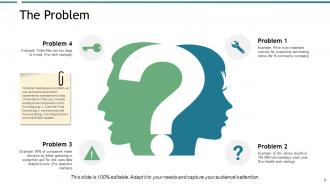
This is a significant PowerPoint Deck that informs us and makes the essential components clear for investors. This slide focuses on the problems faced by customers and how the company intends to resolve these issues. It lets them find out if the business can provide a feasible solution that might be effective in the market. The serious problems that the company faces involve pricing as the cost is a major consideration for consumers when making purchases, video files are too enlarged to be included under an e-mail, companies don’t use analytic data while making any decision, and stress. These are problems faced by the companies that need to be solved, and with the help of our PowerPoint slide deck, you can understand how to resolve problems for the investors.
Template 4: The Solution
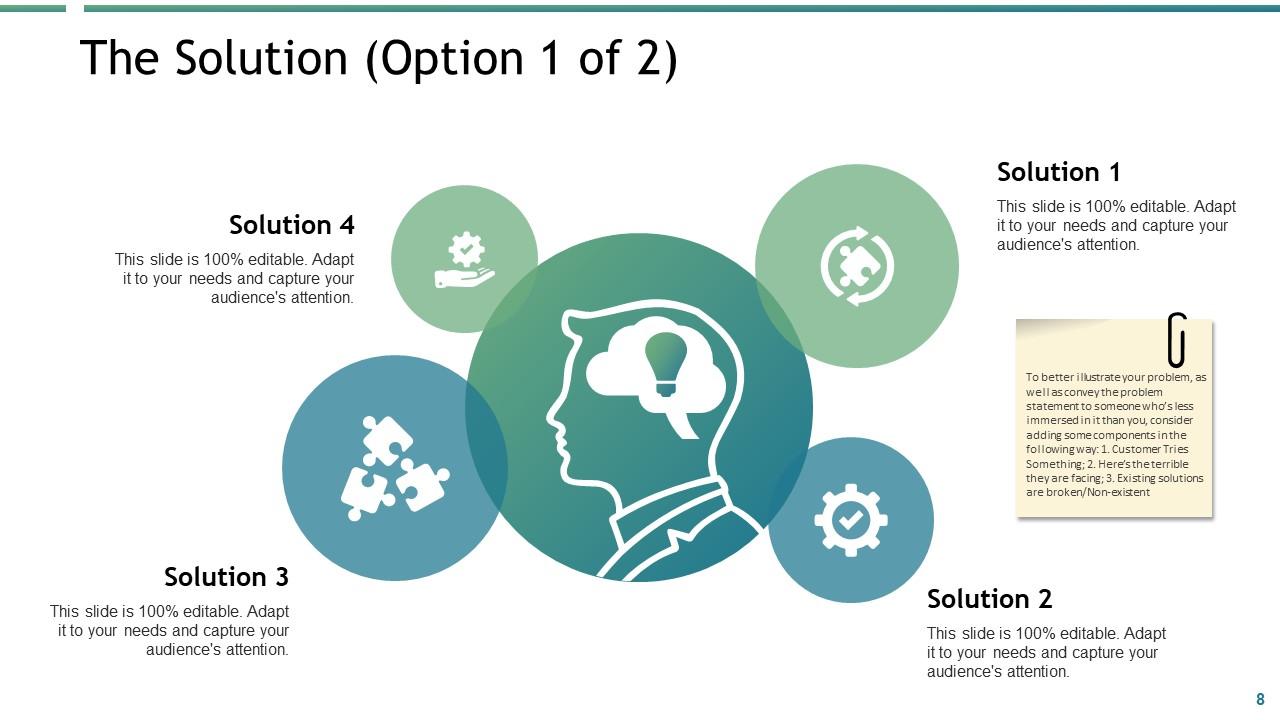
Our PowerPoint Presentation guides you in finding problems faced by the companies and emphasizes how well they can fix these issues while trying to pitch your solution to investors. Highlighting the solution to your problems to potential investors should be precise and clear. Demonstrate to your investors that your business values its clients and is prepared to address their issues and provide solutions. Our PPT slides can be useful for your business in understanding what the target audience needs and how to solve their queries. They can also help you grab numerous investors by letting them know that your company is better than others.
Read about the Glossier Investor Funding Elevator Pitch Deck in this blog.
Template 5: Value Proposition- Product/Services
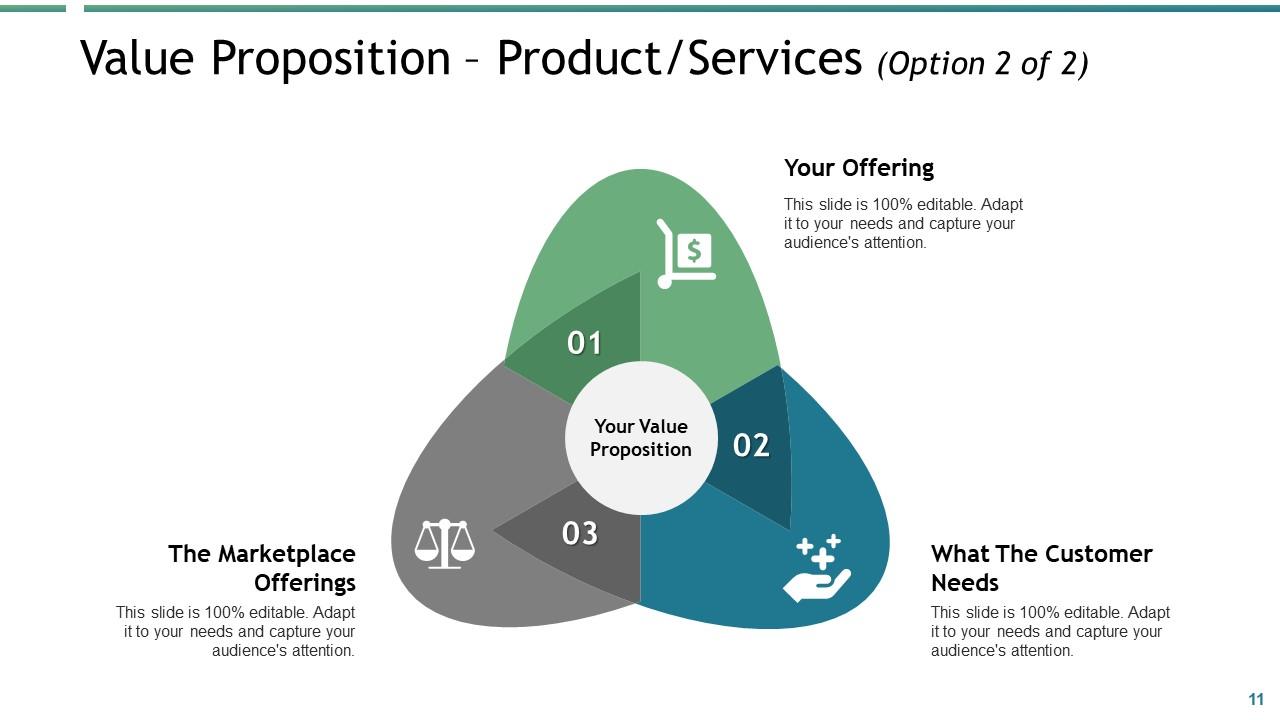
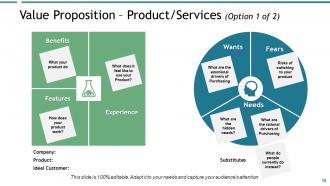
A Value Proposition is a business's commitment to its customers. A value proposition should outline the characteristics of a product's added advantage, describe how it meets its needs, and explain why it's superior to competing products on the market. It conveys to the clients the advantages that they experience while doing business with you. Value Proposition helps address customers' issues and determines how your company can resolve those issues. Using our PowerPoint slide deck, you can recognize the interests of your clients, and you can give them what they are looking forward to, like:
-
Your offerings
-
Needs of your customers
-
Marketplace offerings
It helps portray how your product and services may differ from those of your competitors.
Template 6: Product Roadmap

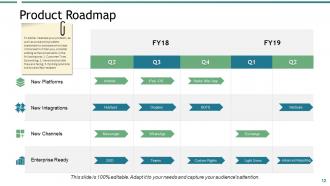
One of the best presentation tips is to share the roadmap for your product adoption and prove you are the right founder and team, making a lasting impression. A roadmap is a plan that carries out the product game plan in addition to serving as a strategic leading document. Through a roadman, details like new platforms, integrations, new channels, and enterprise-ready are displayed in our PPT slide deck. Our PowerPoint will help you understand that gaining the support of executives can be facilitated by clearly communicating the product vision and strategy. This helps you ensure that all the parties are pursuing the same objectives.
Template 7: Milestone Achieved
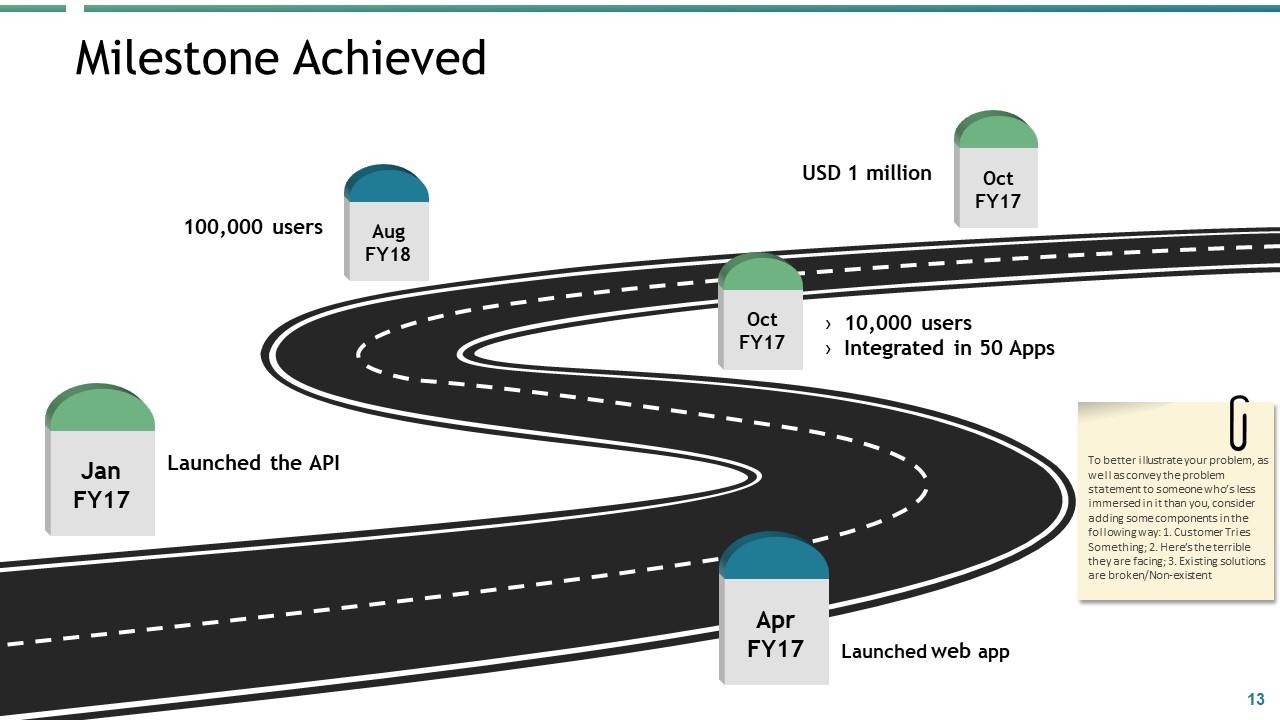
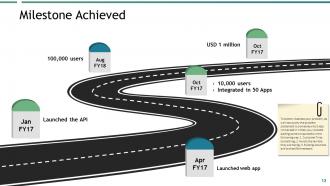
A milestone is a remarkable success that a business has attained in a predetermined amount of time. This will assist in letting your potential investors know about your company’s growth and triumph journey. This PPT slide deck can easily demonstrate the significance of the milestone achieved roadmap for your company by showcasing all your firm's accomplishments and your upcoming plans. Milestones are very important for your company as it attracts more investors to your cause. This slide shows the roadmap of when the API was launched (Jan), web app launch (April), one lakh users (Aug), and USD 1 million (Oct).
Template 8: Traction
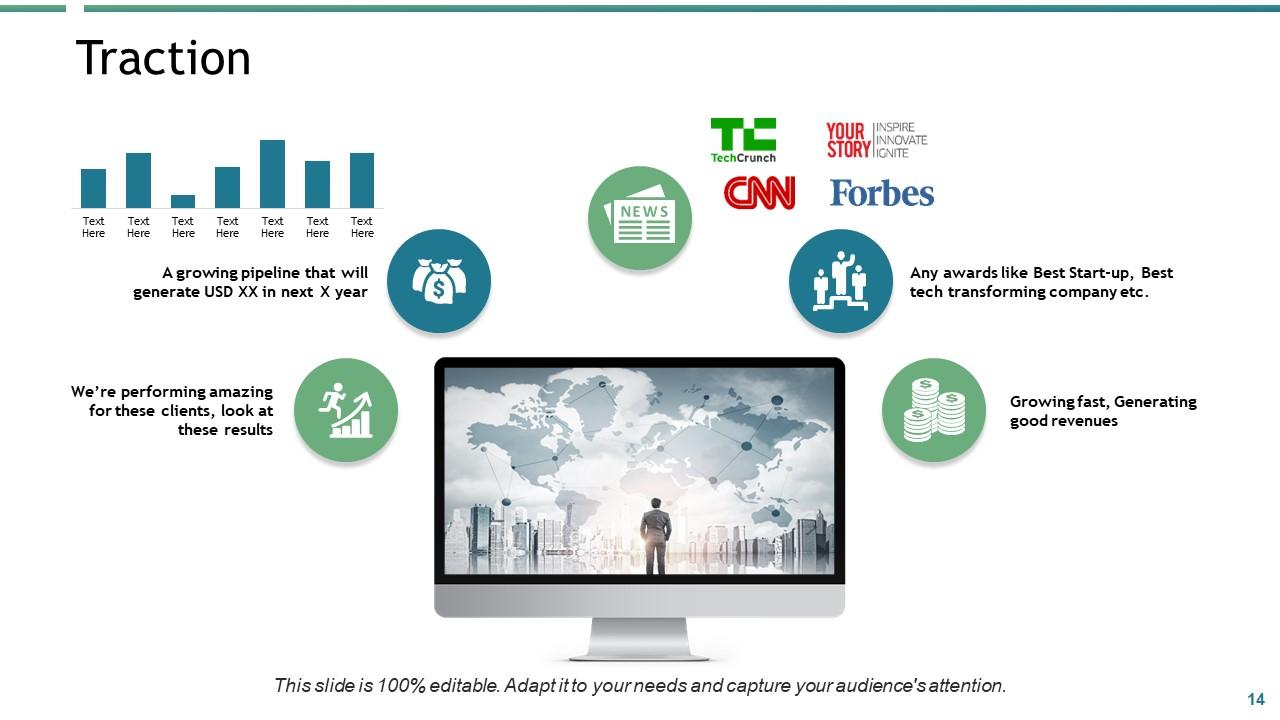
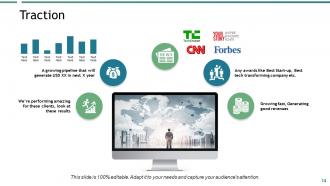
Traction is recognized as a progression and impetus of any company’s start-up. Traction helps demonstrate to investors that there is a market for your product and service, that your business model is viable, and that customers will receive your designs well. Traction helps reflect the growth of your company, and this ensures that investors can rely on your company and invest in your business. You can avail of our Presentation that reveals pointers like generating a good amount of USD, news, awards for best start-up and best tech company, growing fast & generating revenues, and things that will help your business in alluring investors.
Template 9: Business Model
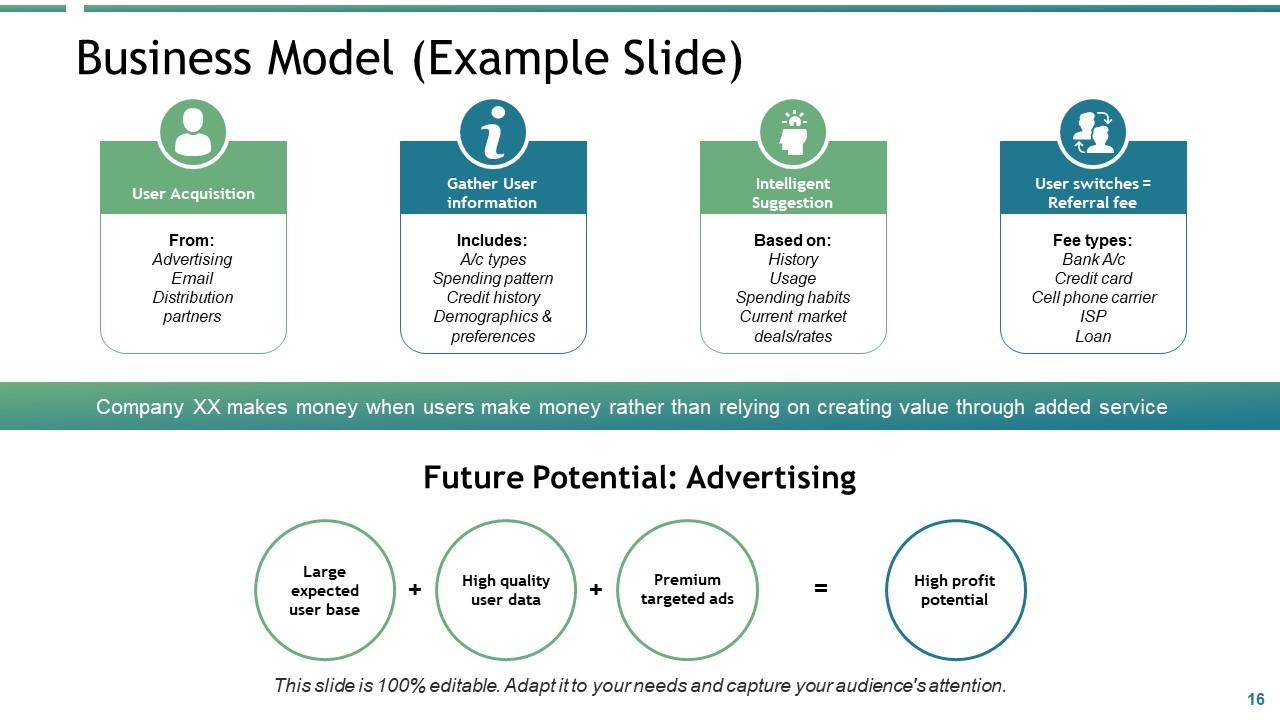
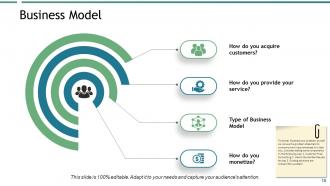
Your company's income generation game plan is outlined in your business model. This PowerPoint slide displays four important business models: user acquisition, gathering user information, intelligent suggestions, and referral fees. This slide also helps you demonstrate ways for future potential, such as advertising. You can easily advertise your business through a large expected user base, high-quality user data, and premium targeted ads that give your business high-profit potential.
Template 10: Revenue Streams
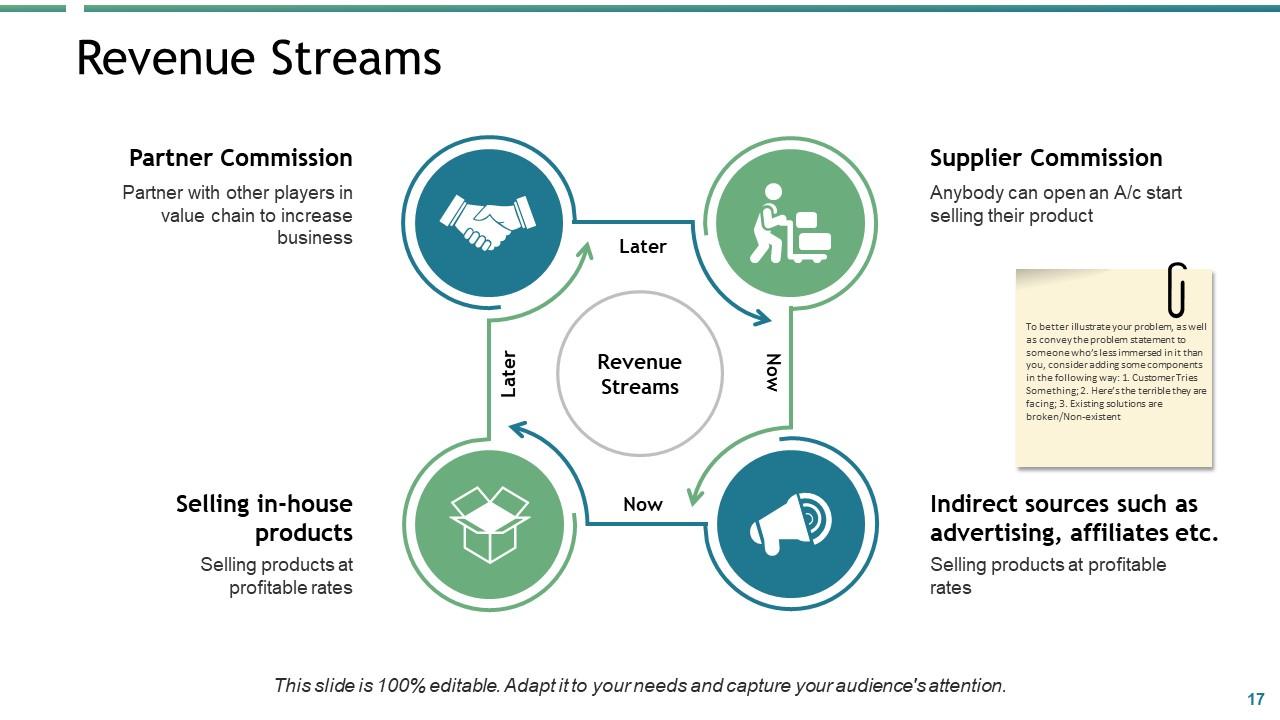
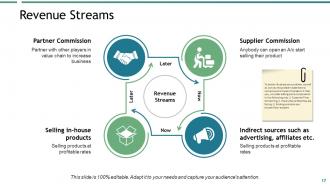
The Revenue Streams are the assets that a company avails to balance expenses and makes revenue & profits out of it. Our PowerPoint Presentation describes that the revenue streams consist of partner commission, supplier commission, selling in-house products, and indirect sources such as advertising and affiliates. It is a structure for producing revenue, and it explains how a company produces its income from various streams. These slides are very revealing and will guide your business and help you bring exposure to your company.
Learn about the Hellofresh investor funding elevator pitch deck blog from here.
Conclusion
Using an Investor Presentation, companies can easily describe their business plan to possible investors and secure the capital that they need for their upcoming well-being. Our Example Investor Presentation template has everything that you need for the investors to form a roadmap and how to achieve milestones. These PPT slides can help you reach the target audience and help your company attract customers by providing them with what they are looking for in products and services.
Example Investor Presentation Powerpoint Presentation Slides with all 50 slides:
Enable folks to build an authentic impression with our Example Investor Presentation Powerpoint Presentation Slides. Ensure they are correctly informed.















FAQs for Example Investor Presentation
Okay so you need the basics: problem, solution, market size, how you make money, any traction you've got (even super early stuff counts), competitors, financial projections, and why your team rocks. Keep it 10-15 slides tops - seriously, nobody wants to sit through 50. Tell a story that makes sense from start to finish. What's the problem? Here's how you fix it. Why will you crush it? I always end with exactly what I need and where the money goes. Oh, and practice until you're not just reading slides like a robot.
Honestly, visual storytelling is what makes investors actually pay attention instead of zoning out during your pitch. You're basically turning boring data into a story they'll remember - problem, solution, why you're crushing it, where the money is. Netflix vibes, not some dry research paper, you know? Good visuals help people connect with your vision emotionally while making complicated stuff easier to digest. Map out your story first, then find visuals that actually support each part. Consistent design matters too. The whole thing should flow logically toward your big ask at the end.
Dude, biggest thing I see founders mess up? They get obsessed with how amazing their features are instead of proving there's actually a market that'll pay for it. Like, cool tech is nice but investors care way more about traction and revenue potential. Also - and I can't stress this enough - you HAVE to nail your numbers. They'll tear apart your unit economics if you seem shaky on the basics. Oh, and stop making your pitch so damn complicated! Tell a simple story, practice until it feels natural, then honestly just cut like 30% of it. Less is more.
Okay so first thing - walk them through your assumptions step by step. Don't just throw random numbers at people. Charts and graphs are your friend here, way better than boring spreadsheet dumps (seriously, nobody wants to stare at rows of data). Break everything into chunks: what drives revenue, main costs, big milestones. You'll definitely want three scenarios - best case, realistic, worst case. Oh and here's the thing investors really care about - tie it all back to your actual strategy and why the market opportunity makes sense. Makes the whole pitch way more convincing.
Look, market analysis is what separates serious founders from dreamers - investors need to see you actually get the space you're entering. Show them market size, growth patterns, who you're up against. I've watched too many pitches crash because people just improvised this part. Your research validates the problem AND proves timing matters. Be specific about where your data comes from. Don't inflate those TAM numbers either - honestly, investors spot BS immediately. This section proves there's real money to be made and you're not just guessing.
Think of data as your proof and story as what makes investors actually give a damn about that proof. Lead with a solid story about the problem you're tackling, then drop your best metrics to show why it matters and why you're crushing it. Most people just vomit charts everywhere - terrible move. Instead, work 2-3 key numbers into each part of your story. So when you're talking market opportunity, start with the customer pain point, then BAM - hit them with TAM numbers. Every metric should feel like the obvious next piece after your story setup.
Dude, forget the boring "About Us" intro - nobody cares yet. Jump straight into your biggest win or some crazy market stat that makes people sit up. I always tell founders to practice that opening line like crazy because you literally get one shot at a first impression. Keep the slide super clean visually, maybe just your logo and one punchy line. Then give them a quick roadmap of what's coming next so they're not wondering where this is headed. Oh, and test it on your mom or someone who has zero clue about your business first - if they're not hooked, investors definitely won't be.
Hey! So problem first, then market size and your solution. Business model comes next, followed by traction and competitive stuff. Your team credentials matter too. Here's the thing though - get that demo in early, like right after you explain the problem. Trust me on this one. Investors check out if you make them wait forever to see what you actually built. Financials and funding ask go at the end with specific use of funds. Keep sections to 2-3 slides each and practice those transitions so it doesn't feel choppy. The whole pitch should flow like you're telling a story, not just throwing facts at them.
Dude, investors are gonna want to see your revenue growth and customer acquisition costs first thing. LTV matters too - shows you're not just burning cash on users who vanish. If you're SaaS, MRR is basically everything. Your burn rate tells them how long you'll survive, which honestly feels brutal but whatever. Retention rates and market size stuff round it out nicely. Here's the thing though - don't dump like 15 charts on them. Pick maybe 6 solid metrics and actually tell a story. They'll grill you hard on the numbers during questions, so know your stuff inside out.
Honestly, templates are lifesavers - you won't be sitting there staring at blank slides forever. The whole structure is already mapped out, so you can jump straight into your actual story and data. No more wasting time wondering if market size goes before the problem slide (I've literally spent hours on that kind of stuff). Your messaging stays consistent too, which investors appreciate. If you're working with teammates, everyone knows the format already. I learned this the hard way after my first pitch was all over the place. Just find a decent template and plug in your content.
Dude, you've gotta do your homework on each type first. VCs are obsessed with scale and disruption potential. Angels? They want to fall in love with you and your story - the passion stuff really matters to them. PE guys live and breathe numbers and exit plans, period. Your pitch deck should change too. Growth-stage investors want proof of traction right up front, but early-stage ones need the big vision first. Pro tip I learned the hard way: spend like 10 minutes before each meeting checking out their recent deals. You'll pick up on what actually excites them vs just saying the right buzzwords.
Know your numbers cold - practice that stuff until you could recite it in your sleep. But here's what most people miss: prepare for the weird questions too. Think about what they'll grill you on regarding competitors, market size, all that fun stuff. Honestly, the biggest mistake is trying to wing it when you get stumped. Just be straight up - "Great question, let me circle back on that tomorrow" then actually do it. I swear investors would rather hear that than watch you flail around making stuff up. Oh, and write down their questions as you go so you don't forget anything.
Honestly, investors will judge you in like 3 seconds based on how your deck looks. I've watched amazing companies get shut down because their slides looked straight out of 2003 - it's brutal but true. Bad design makes you look amateur, and then they start wondering if you can actually execute anything properly. You don't have to become some design genius, but get a solid template or find someone who knows their stuff. Clean layouts, matching fonts, consistent colors - that stuff matters way more than you'd think. First impressions are everything in this game.
So after your pitch, get them an executive summary ASAP - like within 24 hours while you're still on their radar. Financial projections are obviously huge. Include your detailed spreadsheet plus any market research you mentioned. Oh, and definitely send the actual pitch deck as a PDF (I've seen people forget this somehow). A simple one-pager with key metrics helps too since they'll probably discuss you internally later. Honestly, investors see so many pitches that having everything organized makes you stand out. Just don't overwhelm them with random stuff they didn't ask for.
Honestly, watch how people react during your pitch - are they scribbling notes or checking their phones? That tells you a lot right there. The real proof comes after though. Do they actually email back asking for financials or want to grab coffee next week? I've seen people nail the presentation part but then... crickets. Track your follow-up response rates in a basic spreadsheet or something. How many "great pitch!" comments turn into actual meetings? That's your real metric. Oh and if multiple investors are passing for similar reasons, probably time to tweak the deck.
No Reviews