


Project Closure Activities In Project Management Powerpoint Presentation Slides





Try Before you Buy Download Free Sample Product
 Impress Your
 Audience
 100%
100% Editable
 Save Hours
 of Time


Are you searching for professional templates and slides to outline a presentation on Project Closure Activities? Well if yes, then download our ready to use project closure activities in project management PowerPoint presentation slides. Highlight the performance of your business project to the client using this project closure tasks in project management PPT presentation. Using these project management presentation templates, you will be able to confirm if the team members have met all sponsor and consumer needs. This closing a project PowerPoint presentation includes relevant topics such as project brief, project description, project timeline, project progress summary, project status report, and project health card. It also covers a slide on project dashboard, project closure report, work breakdown structure, and project conclusion report-performance analysis, deadline, budget/costs. With the help of the project presentation ppt, you will be able to represent throughout the progress of the project. Use of stunning graphics and visuals will help you describe the different project stages performance. Download our project closure checklist PPT presentation. Focus on earnings with our Project Closure Activities In Project Management Powerpoint Presentation Slides. Choose the correct asset to create.
People who downloaded this PowerPoint presentation also viewed the following :
Content of this Powerpoint Presentation
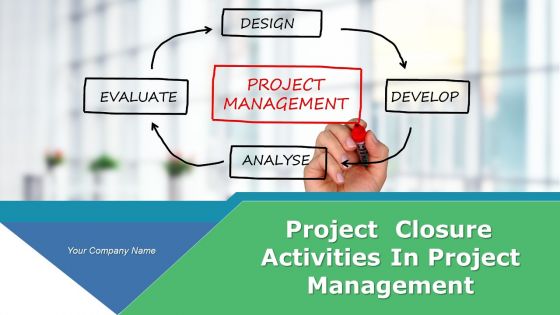
Slide 1: This slide presents Project Closure Activities In Project Management . State Your Company Name and begin.
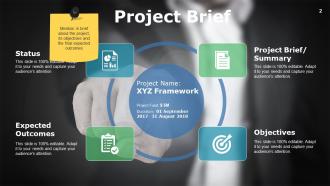
Slide 2: This slide showcases Project Brief/ Summary. Mention in brief about the project, its objectives and the final expected outcomes
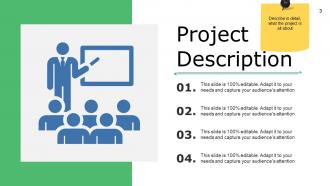
Slide 3: This slide presents Project Description. Describe in detail, what the project is all about
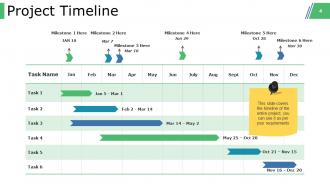
Slide 4: This slide presents Project Timeline. This slide also covers the timeline of the entire project, you can use it as per your requirements
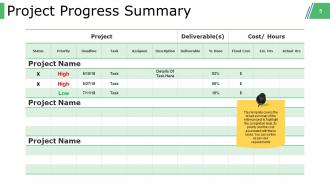
Slide 5: This slide presents Project Progress Summary. This template covers the broad summary of the entire project to highlight the completion level, its priority and the cost associated with these tasks. You can se this as per your requirements
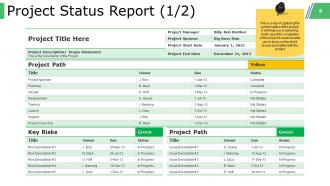
Slide 6: This slide presents Project Status Report (1/2). This is a report capturing the current status of the project. It will help you in achieving clarity about the completion of the project & would enable you to focus on the risk & issues associated with the project
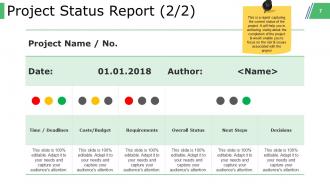
Slide 7: This slide showcase Project Status Report (2/2). This is a report capturing the current status of the project. It will help you in achieving clarity about the completion of the project & would enable you to focus on the risk & issues associated with the project
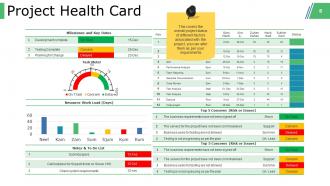
Slide 8: This slide presents Project Health Card. This covers the overall project status of different factors associated with the project, you can alter them as per your requirements
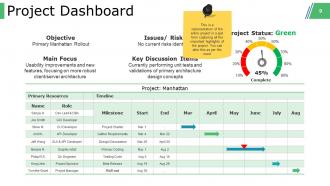
Slide 9: This slide showcases Project Dashboard with these .This is a representation of the entire project in a gist form capturing all the important highlights of the project. You can alter this as per the need
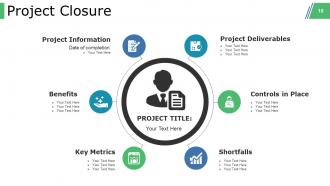
Slide 10: This slide presents Project Closure with these factors- project title, Project Deliverables, Controls in Place, Shortfalls, Key Metrics, Benefits, Project Information, Date of completion.
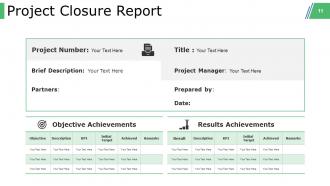
Slide 11: This slide shows Project Closure Report with these some of the parameters- Project Number, Title, Project Manager, Brief Description.
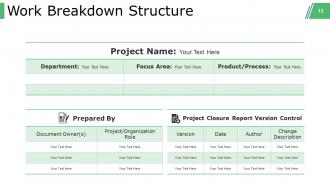
Slide 12: This slide presents Work Breakdown Structure.
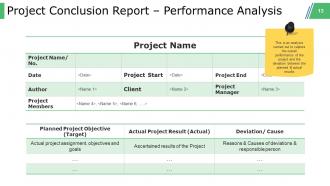
Slide 13: This slide showcases Project Conclusion Report – Performance Analysis. This is an analysis carried out to capture the overall performance of the project and the deviation between the planned & actual results
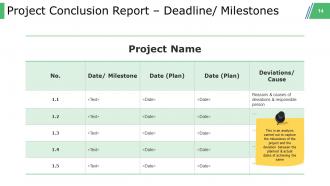
Slide 14: This slide presents Project Conclusion Report – Deadline/ Milestones. This is an analysis carried out to capture the milestones of the project and the deviation between the planned & actual dates of achieving the same
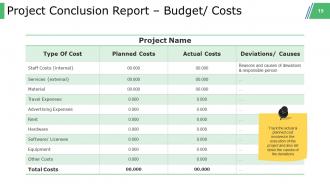
Slide 15: This slide showcases Project Conclusion Report – Budget/ Costs. Track the actual & planned cost involved in the execution of the project and also list down the causes of the deviations
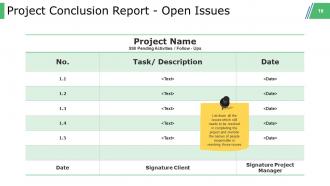
Slide 16: This slide presents Project Conclusion Report - Open Issues.List down all the issues which still needs to be resolved in completing the project and mention the names of people responsible in resolving those issues
Slide 17: This is a Coffee Break slide to halt. You may change it as per requirement.
Slide 18: This slide is titled Charts & Graphs to move forward.
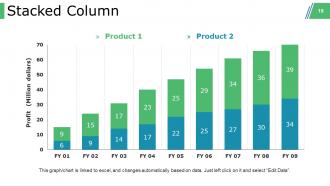
Slide 19: This slide presents Stacked Column with a product comparison.
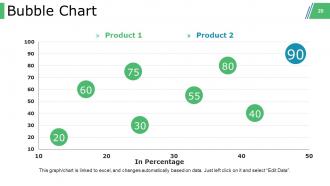
Slide 20: This slide presents Bubble Chart.
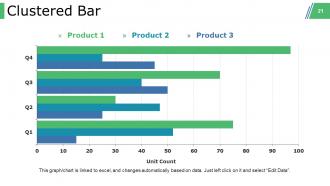
Slide 21: This slide showcases Clustered Column.
Slide 22: This slide is titled Additional Slides.
Slide 23: This slide represents Our Mission. State your mission, goals etc
Slide 24: This slide showcases Our Team with Name and Designation to fill.
Slide 25: This slide helps show- About Our Company. The sub headings include- Creative Design, Customer Care, Expand Company.
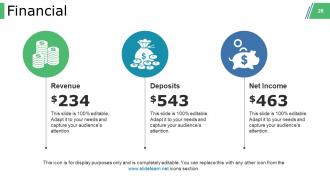
Slide 26: This slide presents Financial scores to display.
Slide 27: This is an Our Goal slide. State them here.
Slide 28: This slide shows Comparison of Positive Factors v/s Negative Factors with thumbsup and thumb down imagery.
Slide 29: This slide displays Our Target with a background image
Slide 30: This slide shows a Mind map for representing entities.
Slide 31: This is a Thank You image slide with Address, Email and Contact number.
Project Closure Activities In Project Management Powerpoint Presentation Slides with all 31 slides:
Our Project Closure Activities In Project Management Powerpoint Presentation Slides cater for impulsive ideas. It is ideal for any job.




FAQs for Project Closure Activities In Project Management
So first thing - wrap up your deliverables and get the client to actually sign off on everything. Then do a retrospective with your team (this is honestly the best part because you'll figure out what was a disaster and what worked). Archive all your documents somewhere people can find them later - I swear half the time stuff just disappears into the void. Release your team members back to whatever they were doing before, close out contracts with vendors. And celebrate! Everyone always forgets this step but you earned it. Document lessons learned while it's all still fresh in your head.
Definitely do this within a week while details are still crisp in everyone's heads. After that, people either forget or get pulled into their next thing. Get your core team together for a proper debrief session. When you're documenting stuff, skip the vague "we should communicate better" nonsense - be brutally specific about what broke and why. Like if handoffs were messy, write down exactly where that happened. Oh and actually put this somewhere people can find it later! I've seen so many teams do great post-mortems that just disappear into some random folder.
Your stakeholders are basically the gatekeepers for wrapping things up - without their formal approval, you can't actually close the project. They need to review final deliverables, sign off that requirements were met, and participate in lessons learned sessions. Here's the annoying part: people get super slow to respond during closure because mentally they've already moved on. Give them hard deadlines for sign-offs though, or you'll be chasing approvals forever. Their official thumbs-up is literally what lets you call it done and move on to whatever's next.
Before you even think about closing this thing out, go through every single deliverable against your original acceptance criteria. Check each one systematically - does it hit the requirements, quality standards, and success metrics from kickoff? I know everyone's dying to be done (honestly, this part always feels tedious), but don't skip it. Get written sign-off from stakeholders on each piece. Missing something? Document what's wrong and fix it first. A simple checklist works wonders for tracking where you're at with everything.
Honestly, the two biggest headaches are people bailing early and crappy documentation. Everyone gets excited about their next project and half-asses the wrap-up stuff. Set hard deadlines for deliverables and get formal sign-offs before you release anyone. Scope creep is sneaky too - clients always want "just one tiny thing" at the end. Don't budge on your original scope. Do your lessons learned session ASAP while it's all fresh. Oh, and make a closure checklist at the start of your project, not when you're rushing to finish.
Honestly, I just compare what actually happened to what I promised at the start. Did we hit our deadlines? Stay on budget? Quality good enough? Then I check if people are actually happy with what we delivered - stakeholders can be picky about weird stuff sometimes. Team dynamics matter too, like did everyone burn out or did we work well together? I make a quick scorecard weighing whatever was most important upfront. The real trick is being brutally honest about what sucked. Write it all down while you remember the details, then share those lessons with your team so you don't repeat the same mistakes.
Start with rock-solid documentation - handover guides covering tech specs, maintenance schedules, the works. Then do formal walkthrough sessions so your team can demo everything and field questions directly. Stakeholder mapping is clutch here (seriously wish more people did this) - everyone needs to know who owns what going forward. Keep your key people available during transition as a safety net while the new team finds their footing. Oh, and document literally everything. Even the "obvious" stuff that'll bite you later if you don't write it down.
Hey! So for your closure report, start with an exec summary, then compare what you planned vs what actually happened. Honestly, I'd put lessons learned right after the summary - that's the juicy stuff people actually care about. Numbers are your friend here, so throw in specific metrics instead of wishy-washy statements. Oh, and don't just focus on what went wrong - mention the wins too! Finish with recommendations for next time and call out any tools or processes that really worked. The whole thing should tell a clear story of what happened.
Honestly, proper project closure is so underrated but it makes a huge difference with stakeholders. People remember how things end way more than all the chaos in the middle - which is kinda weird but totally true. You want those final meetings, thank-you notes, the whole thing. It shows you actually respect everyone's time and investment. I've watched too many projects just... disappear into nothing, and stakeholders are left confused about what even happened. Bad move. When you wrap things up right, you get to celebrate wins, capture what you learned, and hand stuff off properly. Plus it keeps relationships solid for next time.
Honestly, closure stuff can be your secret weapon for future projects. Document what actually worked vs what you thought would work - there's usually a gap there. Run retrospectives where people can be brutally honest about failures without drama. Those awkward conversations? That's where the gold is. Build templates from your wins and keep a lessons learned database that's actually searchable (not buried in some random folder). Oh, and be super specific about what you'd change. Instead of vague "better communication," write down exactly which stakeholders needed weekly check-ins or whatever. Future you will thank you.
Honestly, just stick with whatever project management tool you're already using - Asana, Monday, Jira, whatever. Create a closure checklist there and track your final deliverables. SharePoint or Google Drive work great for storing lessons learned and handover docs. But real talk? A shared spreadsheet does the job perfectly fine if your project isn't super complex. I've seen teams overthink this part way too much. You just need one spot where everyone can see closure tasks and who's responsible for what. Don't reinvent the wheel - use what your team actually knows.
So financial closure is basically wrapping up all your budget stuff - reconciling everything, processing those last invoices, documenting where you actually spent vs what you planned. Honestly, this part always takes longer than you think! Get those remaining budget allocations released, settle up with vendors, and make sure expense reports are approved. Oh and capture some notes about how accurate your budget was - future you will thank you later. Start this early though because finance teams need their time to close books properly. Trust me, you don't want to be that person everyone's waiting on at month-end.
Set up regular check-ins with your stakeholders and team - keeps everyone on the same page about what needs wrapping up and when. Be really transparent about handoffs, what's getting archived, all that stuff. Nobody wants to be blindsided during project closure, trust me on that one. Document everything and make sure people can access it easily. Those lessons learned sessions? Actually useful if people feel safe being honest. Oh, and create some kind of communication plan so everyone knows who needs what info. Don't forget to celebrate the wins before your team disperses - seriously, people remember that.
Document all the unresolved stuff first - that's crucial. Make a list showing what's incomplete, who needs to handle it, and realistic timelines. Some tasks might go to operations, others to different teams. Maybe some just get scrapped honestly. I've watched projects where loose ends became total nightmares six months later because nobody claimed ownership. Get written commitments from whoever's taking things over. Don't let people just nod and walk away. Update your docs to show what's officially done versus what's getting passed along, and make stakeholders sign off on their new responsibilities.
So project closure is when you officially wrap everything up and call it done. Document what you learned, release your team, get those final approvals from stakeholders, and archive everything. Most PMs honestly hate this part - everyone's already thinking about what's next, you know? But skipping it is such a mistake. Without proper closure, you'll miss capturing the good and bad stuff, plus random loose ends will definitely come back later. Oh and schedule these activities before people scatter to other projects, trust me on that one.
-
Thanks for all your great templates they have saved me lots of time and accelerate my presentations. Great product, keep them up!
-
Qualitative and comprehensive slides.