


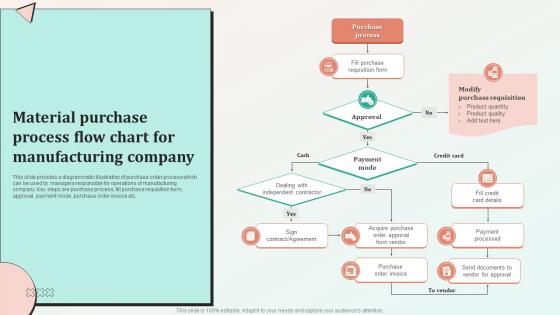
Material Purchase Process Flow Chart For Manufacturing Company




Try Before you Buy Download Free Sample Product
 Impress Your
 Audience
 100%
100% Editable
 Save Hours
 of Time


This slide provides a diagrammatic illustration of purchase order process which can be used by managers responsible for operations of manufacturing company. Key steps are purchase process, fill purchase requisition form, approval, payment mode, purchase order invoice etc.
People who downloaded this PowerPoint presentation also viewed the following :
Material Purchase Process Flow Chart For Manufacturing Company with all 6 slides:
Use our Material Purchase Process Flow Chart For Manufacturing Company to effectively help you save your valuable time. They are readymade to fit into any presentation structure.





FAQs for Material Purchase Process Flow Chart
So basically you've got five main steps to deal with. First, figure out what you actually need - check your inventory and forecast demand. Then pick your suppliers based on price, quality, delivery speed, all that stuff. Create purchase orders, receive the goods (don't skip inspecting them), and process invoices for payment. Honestly the whole thing's a pain if you're doing it manually. Oh and track your lead times religiously - I can't tell you how many times I've seen that completely screw up someone's planning when suppliers run late.
Honestly, start by checking the basics - quality standards, pricing, delivery times, and whether they're financially stable. If you can swing it, visit them in person. I know it sounds old school but you'll pick up on stuff you'd never catch over email. Get references from their other customers and see what certs they have. Also figure out if they can actually grow with you - nothing worse than outgrowing a supplier six months in. One thing people forget is testing how they communicate. Are they responsive? Do they actually answer questions? Make yourself a little scoring sheet so you're not just going with whoever seems nicest.
Honestly, the biggest win is getting rid of all that manual busy work that drives you crazy. Set up auto-reordering when stock gets low, and use AI to figure out what you'll actually need (super helpful btw). Your purchasing system can sync with suppliers for live pricing updates. The approval process goes digital too - no more hunting down your boss with paperwork! You'll spot spending patterns and savings opportunities that would've been impossible to catch before. I'd start with whatever tasks you do most often and automate those first.
Having a good purchasing process saves you tons of money, honestly. Bulk orders get you better deals, and suppliers actually respect you more when you're organized - they'll negotiate instead of just giving standard pricing. No more expensive rush orders because someone forgot to reorder something (we've all been there). Your inventory stays cleaner too. Less random overstock sitting around, fewer times you run out and stop production. The best part? Once you can predict what you need and work with solid suppliers, they start giving you their good customer pricing.
Okay so here's what I'd do - start with your actual usage data, not just wild guesses from last month. Storage costs will eat you alive if you're not careful, especially with bulky stuff. Bulk discounts can be tempting but don't tie up all your cash flow chasing them. Lead times are annoying but crucial - longer waits mean you need more safety stock sitting around. Calculate your basic EOQ first (economic order quantity if you haven't done this before), then tweak it based on your space and money situation. Most people way overcomplicate this honestly.
Oh man, payment terms are huge for supplier relationships! Longer terms like Net 60 squeeze their cash flow hard - smaller suppliers especially hate this. They'll bump up prices or just ignore you for customers who pay faster. I've literally watched suppliers drop us over payment drama. Net 15 or early pay discounts? Total game changer. You'll get better prices, they'll prioritize your rush orders, and honestly the whole relationship just works better. My advice? Figure out terms that don't screw them over from the start - it pays off big time later.
Oh man, supplier delays will drive you absolutely crazy - and budget overruns are right behind them. Quality issues with materials? Happens way more than it should. Everything needs like three approvals these days, which slows everything down. Engineering loves throwing curveball spec changes at the worst times, plus your inventory counts are never accurate when you actually need them. Departments don't talk to each other either, which is honestly just dumb. Build in extra time for everything and keep backup suppliers on speed dial. Seriously, having that safety net will save your sanity.
Build vendor checks into your workflow right from day one - verify their certifications and licenses before you even think about working with them. Document literally everything because auditors love their paper trails. Your purchasing team needs training on regulations that actually affect your materials, plus simple checklists they can follow without thinking too hard about it. Set up approval levels for different purchase amounts and review compliance stuff regularly with legal (boring but necessary). The whole point is making it automatic instead of scrambling later when something goes wrong.
Look, demand forecasting is basically what decides how much you buy and when. Get it right? You'll order at the perfect times, never run out of stock, and keep storage costs low. Mess it up and you're either panic-buying expensive stuff last minute or drowning in inventory nobody wants. Honestly, most companies are terrible at this part. Use your sales history, watch market trends, and actually listen to your sales team's input. I'd start by checking where your current forecasts are most wrong - that's probably where your purchasing problems come from.
Honestly, most lead time issues come down to better supplier relationships and actually knowing what you have in stock. Get cozy with multiple vendors for your critical stuff - never rely on just one because they'll screw you over eventually. Demand forecasting helps you order way earlier, and keep safety stock for anything you absolutely can't run out of. Here's the thing though - half your delays are probably internal approval bottlenecks, not supplier issues. Set up automatic reorder triggers and check in with suppliers regularly. Catches problems before they bite you.
Honestly, start with cost savings and how long it takes from requisition to delivery - that's where you'll see the biggest wins. Supplier performance ratings matter too. PO accuracy is huge because redoing paperwork is such a pain. Also track your approval times and budget variance since those hit your bottom line hard. Contract compliance rates are worth watching if you have the bandwidth. Real-time dashboards are great but don't go crazy - stick to maybe 3-4 key metrics at first. You can always add more later once you've got the basics down.
Honestly, most supply chain disasters happen because people assume things instead of just asking. Set up weekly check-ins with your key suppliers - ask about delivery dates, quality stuff, any delays brewing. I'd start with monthly calls for your top three vendors to talk through what's coming up. Use some kind of shared tool (even basic email templates work) so nothing gets forgotten. Here's the thing though - don't only reach out when shit hits the fan. Touch base during the good times too. Builds way better relationships, and they'll actually want to help you out when problems do come up. Clear expectations from day one saves everyone headaches later.
Don't put all your eggs in one basket - spread your suppliers around so you're not screwed if one falls through. I learned this the hard way during COVID when everyone was scrambling. Build up some extra inventory for the stuff you really can't do without, and try to get flexible contracts with solid backup plans. Regular check-ins with your suppliers are clutch too. You want to know if they're having money troubles before they disappear on you. Start by figuring out what materials would totally mess you up if they vanished, then find at least two other sources for each. Trust me, future you will thank present you for this prep work.
Dude, market conditions totally control your buying strategy. When supply chains get messy or inflation hits, stock up on the important stuff before prices go crazy. It's honestly like grocery shopping before a hurricane - you snooze, you lose. During economic downturns, suppliers get desperate so you can usually negotiate better deals. But when business is booming? Good luck, everyone's competing and costs shoot up. I always check commodity indexes and keep tabs on how my suppliers are doing financially. Oh, and build relationships with multiple suppliers now while you can - trust me, you'll need options when things get weird.
Honestly, start with the procurement software training - you're dead in the water without it. Get your team up to speed on supplier evaluation and basic contract negotiation too. The compliance stuff depends on your industry but it's usually mandatory. Budgeting and cost analysis might seem dry but trust me, you'll need it. Most places also want you to understand their approval workflows and how they document everything. One thing that actually works? Have new people shadow experienced buyers for a week or two before they touch anything solo. Way better than just reading manuals.
-
Much better than the original! Thanks for the quick turnaround.
-
The quality of the templates is as fine as it could get. It was a purchase well made!