


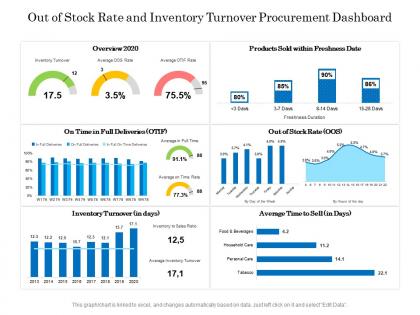
Out of stock rate and inventory turnover procurement dashboard




Try Before you Buy Download Free Sample Product
 Impress Your
 Audience
 100%
100% Editable
 Save Hours
 of Time


Our Out Of Stock Rate And Inventory Turnover Procurement Dashboard are topically designed to provide an attractive backdrop to any subject. Use them to look like a presentation pro.
People who downloaded this PowerPoint presentation also viewed the following :
Out of stock rate and inventory turnover procurement dashboard with all 2 slides:
Use our Out Of Stock Rate And Inventory Turnover Procurement Dashboard to effectively help you save your valuable time. They are readymade to fit into any presentation structure.
FAQs for Out of stock rate and inventory
Honestly, cash flow vs inventory is gonna be your biggest headache. Too much stock? Your money's just sitting there. Too little? Customers bounce when you're sold out. Spreadsheets will make you want to scream once you start growing - trust me on that one. Warehouse costs are brutal too, especially when you're paying for empty space. My advice? Get basic inventory software early and just focus on your bestsellers first. Don't try to track every single thing perfectly from day one.
Dude, get yourself some RFID tags or barcode scanners - they'll update your counts instantly instead of those manual counts that are always wrong. Demand forecasting software is where it's worth spending money though. Uses your old sales data to predict what you actually need so you're not stuck with crap nobody wants. Short sentences work. AI analytics can spot slow-moving stuff before it becomes a real headache. Honestly, literally anything beats spreadsheets at this point. Oh, and automated reorder points are clutch - saves you from running out of stuff or buying way too much.
Start with demand forecasting - you need solid data to know what'll actually move. ABC analysis is huge for this. Focus your energy on high-value, fast-moving stuff first. Automated reorder points will save your sanity instead of babysitting every single SKU. Just-in-time ordering cuts down excess inventory, though honestly supply chains have been weird lately so YMMV. Don't skip regular audits - they catch problems before they snowball. Also, push for better payment terms with suppliers. Your cash flow will thank you later. Pick one thing to tackle first though. I've seen people try to fix everything simultaneously and it never ends well.
Dude, seasonal demand is brutal - you basically have to throw your normal inventory rules out the window. Historical data becomes your best friend for predicting those crazy swings. Order way more stuff before peak season hits, then cut back hard afterward. Safety stock? Constantly changing. Those reliable reorder points you use all year? Totally useless during busy periods. I learned this the hard way last Christmas, honestly. Find suppliers who can roll with your ups and downs - flexibility is everything. Track your patterns now so you're not panicking later when orders explode.
Look, demand forecasting is huge for inventory - it's what keeps you from either drowning in stock or constantly running out. Pull your sales data from the last year and hunt for patterns. Seasonal stuff, trends, whatever jumps out. Then predict what you'll need going forward so you can order smart amounts at the right times. Honestly, without this you're just winging it and that gets expensive fast. It cuts your storage costs while keeping customers happy since you actually have what they want. Oh, and don't forget to factor in any big changes you know are coming up.
Honestly, analytics is a game-changer for this stuff. You'll spot patterns in sales and seasonal trends that you'd never catch just eyeballing spreadsheets. Predicting demand gets way more accurate - no more being stuck with dead inventory or scrambling because you're out of bestsellers. What really saves your sanity though? Catching slow-moving stock before it kills your cash flow. I learned this the hard way lol. Set up automated alerts based on actual sales velocity, not just whatever feels right. Those threshold reports become your best friend once you get them dialed in.
Start by mapping what you're doing at each location right now - that's where you'll spot the biggest problems. Get a decent inventory system that syncs everything in real time so you can actually see stock levels everywhere. Honestly, setting up consistent reorder points is boring but you've got to do it for each spot based on their demand. Do regular cycle counts or things will get messy fast. Oh, and make sure you have clear rules for moving inventory between locations - that's usually where companies save the most money. Centralizing your data is really the foundation for everything else.
So JIT can really cut down your storage costs and free up cash since you're only ordering what you actually need. But honestly? It makes you super vulnerable when suppliers mess up - we all saw that during COVID. Your suppliers have to be rock solid, which isn't always realistic. I'd probably start with a mix - keep some backup stock for the stuff that would kill you if it ran out, then try JIT on your predictable high-volume items first. When it works though, you'll respond way faster to market shifts and waste less money on inventory just sitting around.
Dude, the biggest thing I see is people either buying way too much stuff that just sits there eating up cash, or constantly running out of the things customers actually want. Most places are still doing everything manually which is honestly insane at this point. Poor forecasting is killer too - everyone just wings it instead of looking at actual data. Your reorder points are probably off if you're always scrambling. Also safety stock calculations? Yeah, most people have no clue how to do those right. Set up automated reordering and check your turnover monthly. That'll fix most of your problems right there.
Honestly, both are game-changers for inventory management. You'll stop manually typing in item numbers and quantities - just scan stuff during receiving, picking, cycle counts, whatever. RFID's pretty sweet because it reads multiple tags without needing perfect line-of-sight like barcodes do. Either way, you're looking at way fewer mistakes and real-time visibility of what's actually in your warehouse. The time you'll save is insane. Plus better accuracy for reordering and planning demand. I'd probably start with barcodes though - they're way cheaper to set up initially and still make a huge difference. You can always upgrade later if you need to.
So here's what I'd focus on if I were you: inventory turnover ratio shows how fast you're moving stuff, and carrying costs as a percentage tells you what it's costing to sit on everything. Track stockout frequency too - nothing worse than pissed off customers who can't buy what they want. Days of inventory on hand is clutch for planning. Oh, and don't sleep on order accuracy and fill rates. Dead stock percentage will show you what's just eating up space and money. GMROI helps figure out which products actually pay the bills. Set up daily dashboards so you catch issues early instead of scrambling later.
Honestly, it's all about nailing your reorder points using real sales data - not just guessing. Check your historical patterns and seasonal stuff to predict what you'll actually move. Safety stock is clutch for those random spikes, but yeah, sometimes you're still just winging it lol. Get some inventory software that tracks turnover and pings you when stock's low. Oh, and definitely rank your products by how fast they sell. Focus the tightest tracking on your bestsellers since those hurt most when you're out. Lead times matter too - factor those in or you'll be scrambling.
Honestly, cloud inventory management is pretty solid. Real-time tracking across locations means you won't randomly run out of stuff. Your team can check everything from their phones or whatever - way better than being stuck at the office computer. Growing your business doesn't mean buying expensive new servers either, which is nice. Most of these systems play well with your existing e-commerce setup and accounting tools. Oh, and don't just pick the most popular option. Actually compare a few based on how you guys work day-to-day.
Having the right stuff in stock makes customers way happier - no one wants to hear "we're out" when they're ready to buy. I swear there's nothing more annoying than finding out something's backordered after you've already gotten excited about it. You'll fulfill orders faster too, which people love. Plus your products won't sit around getting gross or expired. Start tracking which items fly off the shelves - those are your priority for keeping stocked. It's basically about avoiding those awkward moments where customers bounce to your competitors because you don't have what they want.
Dude, e-commerce inventory is honestly a whole different beast. Customers want to know if stuff's in stock RIGHT NOW, not next week after you count everything. Traditional retail could get away with quarterly stock checks and mountains of safety inventory - that doesn't fly anymore. You're juggling way more products, seasonal crazes are impossible to predict (remember the toilet paper thing?), and everyone expects next-day shipping. The smart move? Get inventory software that connects to wherever you're selling. Real-time data beats guessing every time. Oh, and ditch the old "push everything to stores" mentality - let actual demand drive what you restock.
-
Excellent Designs.
-
Great quality product.