


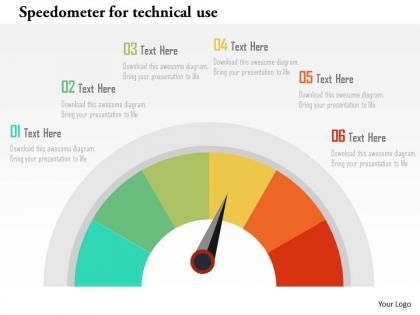
Speedometer for technical use flat powerpoint design




Try Before you Buy Download Free Sample Product
 Impress Your
 Audience
 100%
100% Editable
 Save Hours
 of Time


Geography is no barrier for our Speedometer For Technical Use Flat Powerpoint Design. They cut across all boundaries.
People who downloaded this PowerPoint presentation also viewed the following :
Speedometer for technical use flat powerpoint design with all 5 slides:
Build big on the firm foundation of our Speedometer For Technical Use Flat Powerpoint Design. They will help cement your growth.
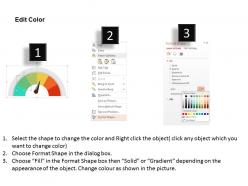
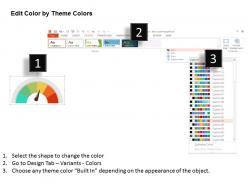
FAQs for Speedometer for technical use
Key speedometer components include the speed sensor, cable or electronic transmission system, magnetic assembly, needle mechanism, and calibrated dial face. These components work together by converting wheel rotation data into electrical or mechanical signals, which drive the magnetic field that moves the needle across the calibrated scale, ultimately delivering real-time speed readings for enhanced vehicle safety and operational control.
Speedometer design has evolved from mechanical analog gauges with rotating needles to sophisticated digital displays featuring LCD screens, customizable interfaces, and integrated data systems. Modern digital speedometers enhance driver experience by combining speed readings with navigation data, fuel efficiency metrics, and vehicle diagnostics, while offering clearer visibility and programmable features that analog systems cannot match.
Speedometers ensure vehicle safety and legal compliance by providing real-time speed monitoring, enabling adherence to traffic laws, preventing accidents through speed awareness, and supporting law enforcement verification. Through accurate speed displays, drivers maintain safe following distances, navigate speed-limited zones effectively, and avoid costly violations, while insurance companies and fleet operators increasingly rely on this data for risk assessment and regulatory reporting.
Modern speedometers achieve significantly higher accuracy than historical mechanical versions, typically within 2-5% variance compared to 10-15% in older vehicles. Digital speedometers using GPS and advanced sensors deliver precise readings through real-time satellite data, electronic calibration, and integrated vehicle systems, while mechanical speedometers relied on cable-driven mechanisms that degraded over time, ultimately providing drivers with more reliable speed information for safer navigation.
Common speedometer inaccuracies stem from tire size changes, worn drivetrain components, electrical system issues, cable wear, and calibration drift over time. These factors disrupt the mechanical or electronic signals measuring wheel rotation, with automotive technicians and fleet managers finding that regular calibration checks and component maintenance ultimately ensure accurate readings and regulatory compliance.
GPS-based speedometers calculate speed using satellite signals and digital processing, while traditional mechanical ones rely on physical connections to the transmission through cables, gears, and rotating components. GPS systems deliver enhanced accuracy, real-time data integration, and reduced maintenance requirements, with many fleet operators and logistics companies finding that digital speedometers streamline vehicle monitoring and ultimately improve operational efficiency.
Recent speedometer advancements include digital displays, GPS integration, heads-up display technology, smartphone connectivity, and real-time data analytics capabilities. These technologies enhance driver safety by providing more accurate readings, integrating navigation data, and delivering comprehensive vehicle diagnostics, with automotive manufacturers increasingly finding that digital speedometers reduce manufacturing costs while improving user experience and enabling advanced driver assistance features.
Speedometers contribute to fuel efficiency by enabling drivers to maintain optimal speeds, avoid aggressive acceleration, and monitor speed consistency for better mileage. Through real-time feedback, drivers in fleet management and personal transportation can reduce fuel consumption by 15-20%, while promoting safer driving habits that ultimately deliver cost savings and enhanced vehicle performance across commercial and individual applications.
Different vehicle types require distinct speedometer designs based on speed ranges, visibility needs, and operational requirements, with motorcycles featuring compact, weather-resistant displays, cars emphasizing driver ergonomics and dashboard integration, and trucks prioritizing durability with extended speed ranges. These specialized designs enhance safety and functionality by optimizing readability for specific driving conditions, ultimately delivering better operational control and regulatory compliance across transportation sectors.
High-performance vehicles feature digital HUDs projecting speed onto windshields, customizable LCD displays with multiple data configurations, analog-digital hybrid gauges combining traditional needles with digital readouts, and adaptive interfaces that adjust based on driving modes. These advanced speedometer designs enhance driver awareness by providing clearer visibility, faster information processing, and integrated performance metrics, ultimately delivering improved safety and more intuitive driving experiences.
Speedometers integrate into smart vehicle systems through digital dashboards, connectivity protocols, and sensor networks that enable real-time data sharing with navigation, safety, and performance systems. These integrations streamline adaptive cruise control, collision avoidance, and fuel optimization by automatically adjusting vehicle responses, while delivering enhanced driver assistance and ultimately improving safety outcomes across modern automotive platforms.
Speedometer calibration significantly impacts vehicle performance by ensuring accurate speed readings, optimizing fuel efficiency, and maintaining proper engine timing synchronization. Incorrect calibration can lead to transmission shifting issues, reduced fuel economy, and potential engine strain, with many automotive technicians finding that precise calibration ultimately delivers better vehicle longevity and operational efficiency.
Environmental factors affect speedometer performance through temperature fluctuations, vibration, magnetic interference, moisture exposure, and altitude changes. Extreme temperatures can alter mechanical components and electronic calibration, while vibration from rough terrain impacts needle stability and digital display accuracy, ultimately requiring regular recalibration and environmental protection systems for reliable vehicle instrumentation.
Speedometer accuracy requirements vary globally, with most regions mandating tolerances between -0% to +10% of actual speed, though some allow up to +7% or -5%. European Union standards typically require speedometers to never under-read, while North American regulations permit slight variations, with automotive manufacturers and fleet operators finding that compliance ensures regulatory adherence, reduces liability risks, and maintains operational safety standards across international markets.
Speedometers can be customized through adjustable display formats, personalized alert thresholds, color-coded performance zones, custom measurement units, and configurable dashboard layouts. These customization features enable drivers, fleet managers, and automotive manufacturers to enhance user experience, improve safety monitoring, and streamline performance tracking, with many finding that personalized interfaces ultimately deliver better engagement and more effective speed management.
-
Easy to edit slides with easy to understand instructions.
-
Editable templates with innovative design and color combination.