

Circular roadmap for process flow flat powerpoint design




Try Before you Buy Download Free Sample Product
 Impress Your
 Audience
 100%
100% Editable
 Save Hours
 of Time


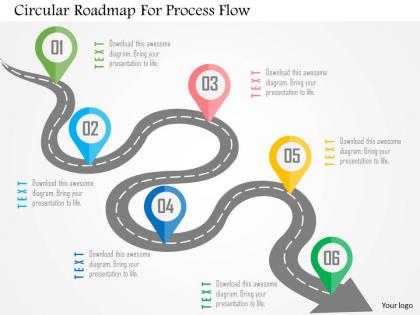
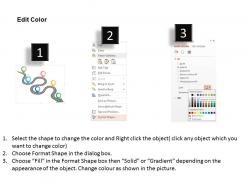
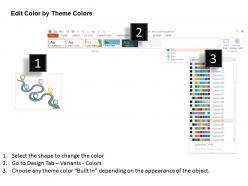
Talking about roadmaps, the first picture that comes to mind is detailed pictorial depiction of the entire text content. And this is what we intend to offer through our circular roadmap for process flow flat PowerPoint design. So, if you must talk about entire process with multiple steps through a PPT presentation, then just click on the download link of the provided PowerPoint slide template and incorporate your data. This strategic roadmap can be used as a tool for business planning. It’s a time-based mapping of where the business is, where it will go and which route it will traverse. The curvy roadmap template slide background designed by our team of experts is unidirectional in nature. There are several turning points marked on the PowerPoint slide graphic to help you mark the milestones in the journey of success, with desired details to be mentioned alongside. Therefore, to add laurels in your corporate journey, accelerate your step towards downloading this circular roadmap PPT template. Go creative with our Circular Roadmap for Process Flow Flat PowerPoint Design. You will come up with a glorious effort.
People who downloaded this PowerPoint presentation also viewed the following :
Circular roadmap for process flow flat powerpoint design with all 5 slides:
Create a festive feel with our Circular Roadmap For Process Flow Flat Powerpoint Design. Their array of colors bring an air of good cheer.
FAQs for Circular roadmap for process flow
So you'll want clear milestones and feedback loops that actually work. Circular roadmaps are way better than linear ones because you can go back and fix stuff based on what you figure out later - honestly wish more people did this. Build in stakeholder checkpoints and buffer time for when things inevitably go sideways. Track both progress and quality with real metrics, not just feel-good numbers. The whole idea is staying flexible while still moving forward. Map out your main phases first, then connect them with those feedback loops between each stage. Oh, and don't forget flexible timelines since requirements always shift on complex projects.
Color coding is your best friend here - use it to separate different workstreams so people don't get lost. Icons work great for milestones, and curved arrows literally show where the eye should go next. Trust me, skip the visuals and you'll just have a hot mess of text boxes nobody wants to read. Progress bars or little status badges let everyone see at a glance where things stand. Oh, and make your critical stuff pop with bolder colors or bigger fonts. Keep everything consistent though - same visual style throughout makes it look way more professional.
So circular roadmaps are basically the opposite of those straight-line plans where you pretend everything will go perfectly. Instead of just checking boxes, you're constantly cycling back - getting feedback, tweaking stuff, improving. Way more honest about how development actually works, you know? Your roadmap stays flexible and changes with what users actually want (not what you think they want). I'd honestly try mapping your next quarter this way instead of the usual linear format. It'll probably shift how you think about planning entirely. Makes the whole process feel less rigid and more... real?
Honestly, manufacturing and fashion are killing it with circular strategies right now - they've got huge waste problems that these approaches actually solve. Food companies are seeing major wins too, especially with packaging waste. Construction's probably the most obvious though, like the amount of perfectly good material that just gets thrown away is insane. Tech companies are hopping on board since people actually care about this stuff now. My advice? Figure out where you're bleeding the most waste first, then build your strategy around fixing those spots. Makes way more sense than trying to do everything at once.
So basically you map out all the places you're wasting stuff in your business, then figure out how to turn that waste into something useful again. Instead of the whole "make it, use it, throw it away" thing, you create loops where materials keep getting reused. Start small though - pick one area to test it out first. Honestly, most companies bite off way more than they can chew at the beginning. Once you see what actually works, you can copy that approach everywhere else. Think of it like... idk, meal planning but for your entire operation? You're setting specific goals for using less resources and tracking whether you hit them.
Honestly, Figma's probably your best shot for circular roadmaps - way easier than Adobe but still looks professional. Miro's awesome too if your team likes the whiteboard vibe, plus everyone can jump in and edit. I've messed around with Lucidchart which works fine for more structured stuff. Canva has some okay templates if you just want to grab something quick and dirty. The main thing is making sure everyone on your team can actually use whatever you pick - no point choosing something fancy if half your people can't figure it out. Start with Figma though, seriously.
Honestly, circular roadmaps just make more sense for agile. You're not building products in a straight line anyway - it's all cycles of planning, building, testing, learning. When priorities shift (and they always do), you can pivot without throwing out your whole plan. Short sentences work better here. The circle format actually shows your sprints naturally instead of this weird linear checklist thing most teams use. Plus your team starts thinking about continuous improvement rather than just... done, next, done, next. I'd try mapping your next quarter in a circle - it's kind of a game changer for how people think about progress.
Biggest mistake? Cramming way too much stuff into one circle. I've watched people try to fit every single milestone and detail until it looks like a hot mess. Keep phases spread out so you can actually read them. Also don't fight how people naturally look at things - we read clockwise, so start your most important phase at the top and flow from there. Oh, and make your circle big enough! Sounds obvious but you'd be surprised how many teams squeeze everything together. Consistent visual hierarchy helps too, otherwise it's just chaos competing for attention.
Build feedback loops into your roadmap right from the start. Figure out who matters - customers, suppliers, employees, regulators - then set up regular check-ins like quarterly surveys or workshops. Here's the hard part: everyone thinks their opinion should come first (spoiler: they can't all be right). Create some kind of framework to weigh their feedback against your circular goals and what you can actually afford to do. Always document what you're implementing and what you're not. Then tell people why you made those choices. Honestly, this transparency thing really works - it keeps stakeholders engaged instead of feeling ignored.
Track your cycle completion rates and how long each phase takes - that's the baseline stuff. Resource utilization matters too, but honestly? Don't overthink it at first. Focus on feedback speed and how fast you're spotting when to pivot. Most teams I know get way too obsessed with tracking everything perfectly. Just measure cycle velocity and whether each iteration actually produces better outcomes than the last. The learning rate thing is huge though - are you actually getting smarter each round? Start with maybe 3-4 metrics max, then add more later if you need them.
So basically, circular roadmaps work because everyone can actually see how their stuff connects to other teams. Marketing flows into product, then engineering, then customer success - it's like one big loop instead of separate timelines that make people work in silos. What's cool is you can spot dependencies right away and nobody's sitting there wondering why they're doing something. I mean, my old company tried this and it actually worked pretty well once people got used to checking it. The tricky part is making sure teams update their section regularly, but when they do? Game changer.
Think of each phase as a chapter in your product's story. Start with the "why we're building this" origin moment, then connect each milestone like plot points. The hero's journey framework actually works great for this - sounds cheesy but it really does! Weave real user pain points throughout as your narrative thread. Instead of boring timelines, show how your solution evolves and impacts people at each stage. I'd open with "Imagine if..." to hook them right away. Way more engaging than just rattling off deliverables and dates.
Tech is basically your execution engine for circular stuff - handles tracking materials, optimizing loops, connecting everyone in your supply chain. IoT sensors monitor waste streams. AI predicts when to recover materials. Digital platforms coordinate suppliers, manufacturers, recyclers. Trust me, doing this manually is insane - the data complexity will drown you. I learned this the hard way on a project last year. Map your current tech against circular goals first. Find the biggest gaps, then grab tools that play nice with your existing setup. Start there.
Honestly, startups need way more flexibility since you're basically changing direction every few months. Keep everything lightweight with short cycles - ditch features that aren't working without getting attached. Big companies can plan further ahead and have better data, but man do they move slow. I've watched enterprise teams spend months on decisions startups make in a week. You can actually dig deep into user patterns when you have resources though. The trick is matching your planning timeline to how fast things actually change. Don't roadmap six months out if your product pivots weekly - learned that one the hard way!
Start with WHY your circular approach matters - how it cuts waste and creates ongoing value. Your diagram better be crystal clear because squinting at messy visuals kills momentum fast. Walk through 2-3 real examples of these loops in action. Abstract stuff loses people immediately. Focus on ROI and measurable wins over just the warm fuzzy sustainability pitch - though honestly, both matter these days. They'll definitely push back on complexity, so have realistic implementation answers ready. Practice timing beforehand and think through their biggest objections. You've got this!
-
Great product with effective design. Helped a lot in our corporate presentations. Easy to edit and stunning visuals.
-
Presentation Design is very nice, good work with the content as well.