

Working capital analysis powerpoint presentation slides





Try Before you Buy Download Free Sample Product
 Impress Your
 Audience
 100%
100% Editable
 Save Hours
 of Time


Introducing Working Capital Analysis PowerPoint Presentation Slides. With the help of this net- working capital PPT template, you can manage your finances efficiently. By using the working capital management presentation deck, you can highlight the various resources like inventory, receivables, payable, and other current liabilities. You can create a report on entire net capital assets, using this professionally designed net-working capital PPT template. The working capital analysis PPT deck comprises a total of 30 slides that contain high-quality icons with which you can make your presentation more engaging. Maintain the record of the total amount of accounts receivable and payable by using operating capital cycle PowerPoint presentation slides. Analyze the growth and performance with the help of graphs, pie-charts, sheets, and tables that are present in our working capital management PPT visuals. Therefore, download this ready-to-use cash conversion cycle PowerPoint complete deck and expand your business.
People who downloaded this PowerPoint presentation also viewed the following :
Content of this Powerpoint Presentation
“A man who does not plan long ahead will find trouble right at his door.” – Confucius.
It teaches us all to plan better for the future. One of the things that all businesses must include in the planning stage is analyzing and managing net working capital. For those unaware, net working capital is the capital of a business calculated by deducting current liabilities from the assets and used in daily operations.
Looking for more? Check out the Financial Snapshot with Current Working Capital here.
Managing net working capital is crucial as it lets a business owner know about its liquidity and confirms that the company can take care of short-term obligations without complications. Ideally, net working capital is zero or higher than that. It must not be negative. Net working capital differs from gross working capital, which includes current liabilities. Such liabilities include short-term loans, creditors, dividends payable, etc.
Current liabilities include trade payables or creditors, short-term loans, dividends payable, and long-term debts maturing within a year. You must deduct items in the current assets or gross working capital to determine the exact net working capital.
Also, look at the Working Capital Management Defines Process Issues here.
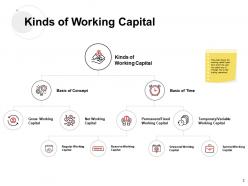
Template 1: Kinds of Working Capital
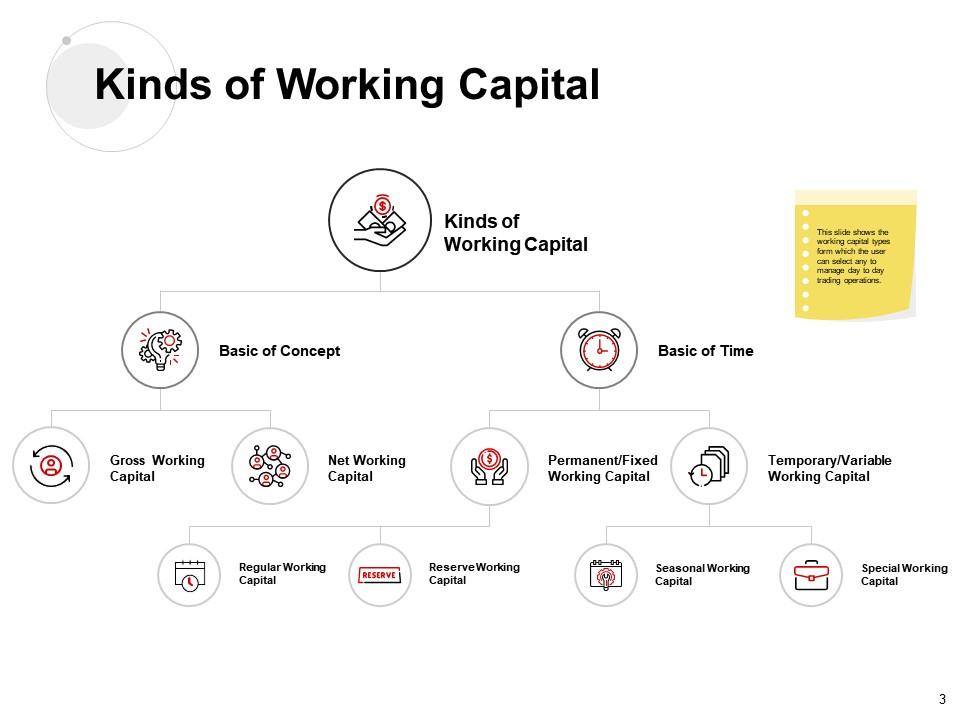
If you are new to the financial world, you should know about different kinds of working capital. This slide by SlideTeam will help you get that information. Use this presentation to understand the various types of working capital based on time and concept. The former includes seasonal, special, permanent, or temporary working capital, while the latter includes gross, regular, reserve, and net working capital. Gaining this knowledge will help you better categorize working capital.
Template 2: Working Capital Components
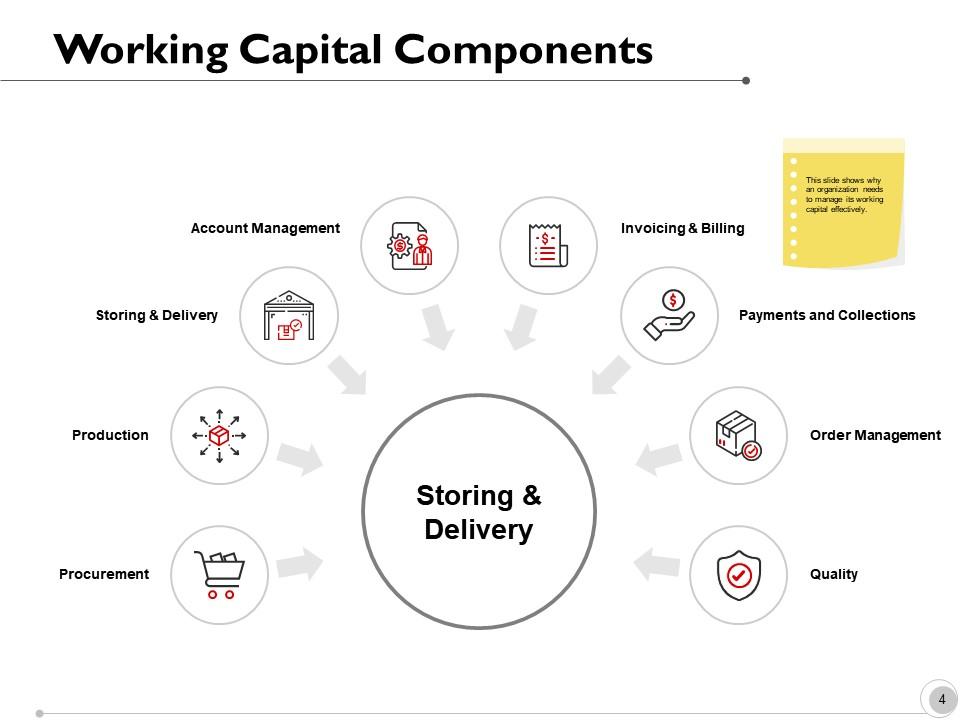
Like everything around us, working capital has many components; learning about them is essential. The components vary from account management to production, quality to procurement, and order management to invoicing and billing. You can add or remove any element in the above slide per your requirements. It's simpler and takes a few seconds!
Template 3: Working Capital Elements
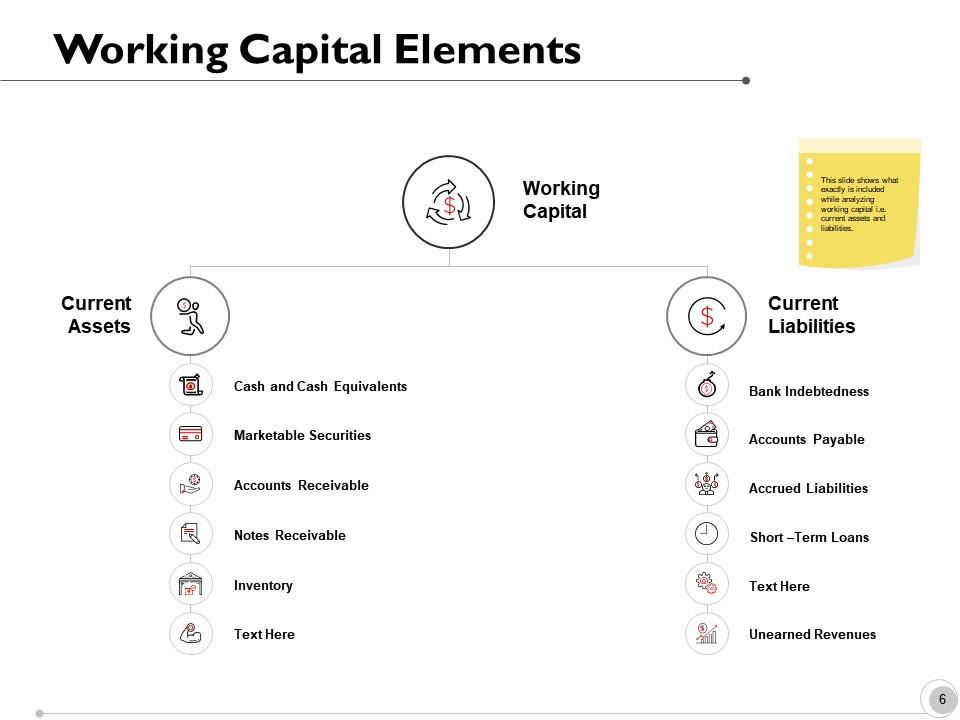
This PPT Template explains working capital elements. It includes a company's current liabilities, such as short-term loans and accounts payable, and current assets, such as marketable securities and accounts receivable.
Template 4: Working Capital Cycle
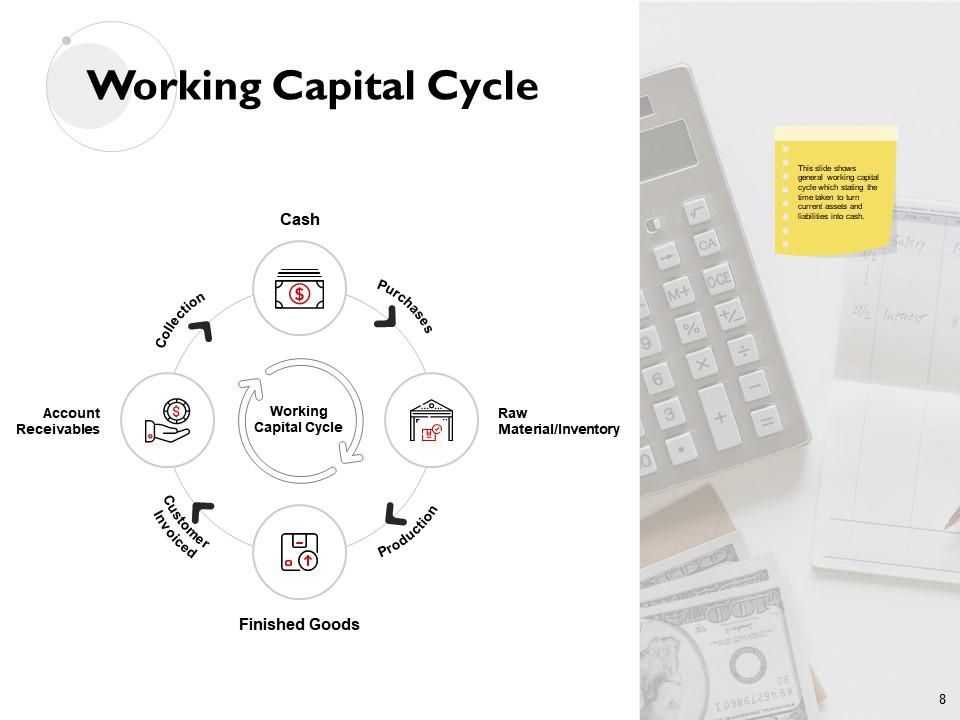
When you are on the path to learning about working capital, you need to understand how the cycle works. This PPT Slide helps you with this by explaining the simple cycle, which has different elements like using cash to buy raw materials, completing the production, preparing the list of account receivables, and going for collection, which leads to getting cash again. The cycle repeats itself endlessly.
Template 5: Working Capital Optimization

When managing working capital, you must also consider working capital optimization. For that, you need to focus on essentials like operational working capital, create a strategy, ensure better visibility and control, and consider additional factors like supply chain financing and treasury management. The creative slide above deftly covers all these vital elements.
Template 6: Working Capital Description
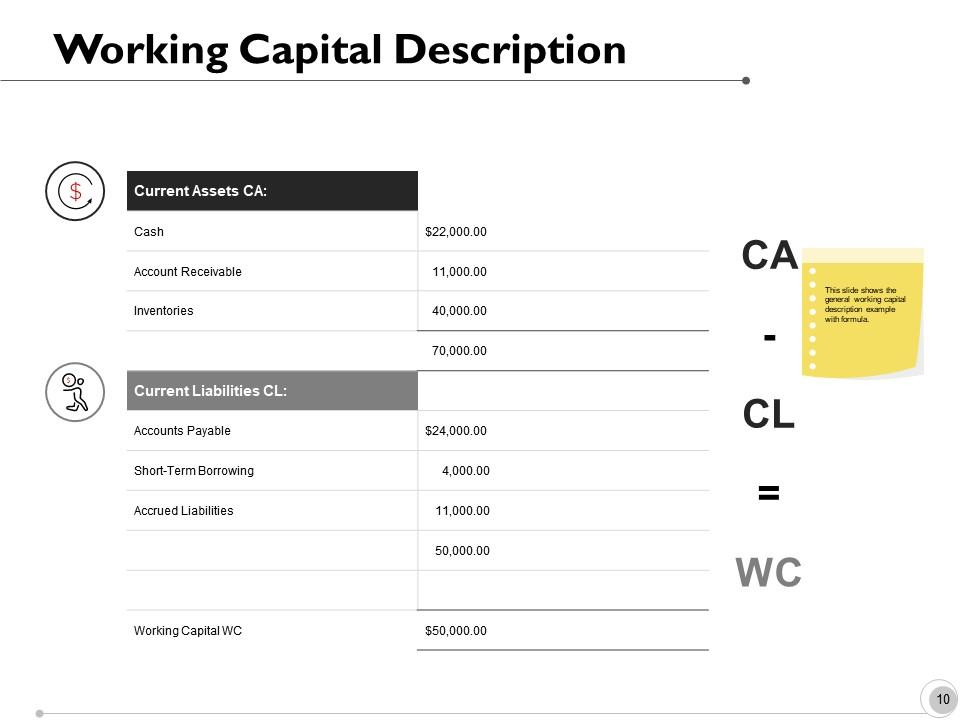
Working capital, or need to train someone new on working capital? Use this PowerPoint Presentation to learn the working capital description. The working capital means current liabilities minus current assets. Examples of current assets are accounts receivables or inventories, while examples of current liabilities include accounts payable, accrued liabilities, etc.
Template 7: Working Capital Management
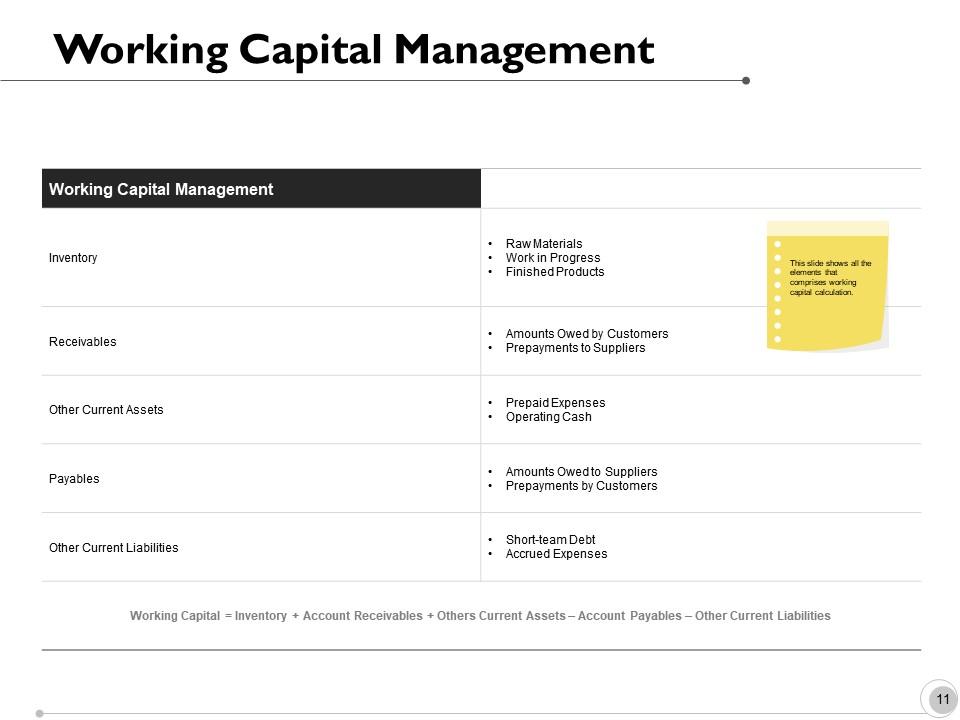
Working Capital Management means totaling your inventory, account receivables, and other current assets minus current liabilities like account payables, short-term debts, etc. Employ this PPT Layout to prepare a detailed list of all assets and liabilities. This will help you understand your company's working capital while ensuring you get all the benefits.
Template 8: Yearly Net Working Capital Table
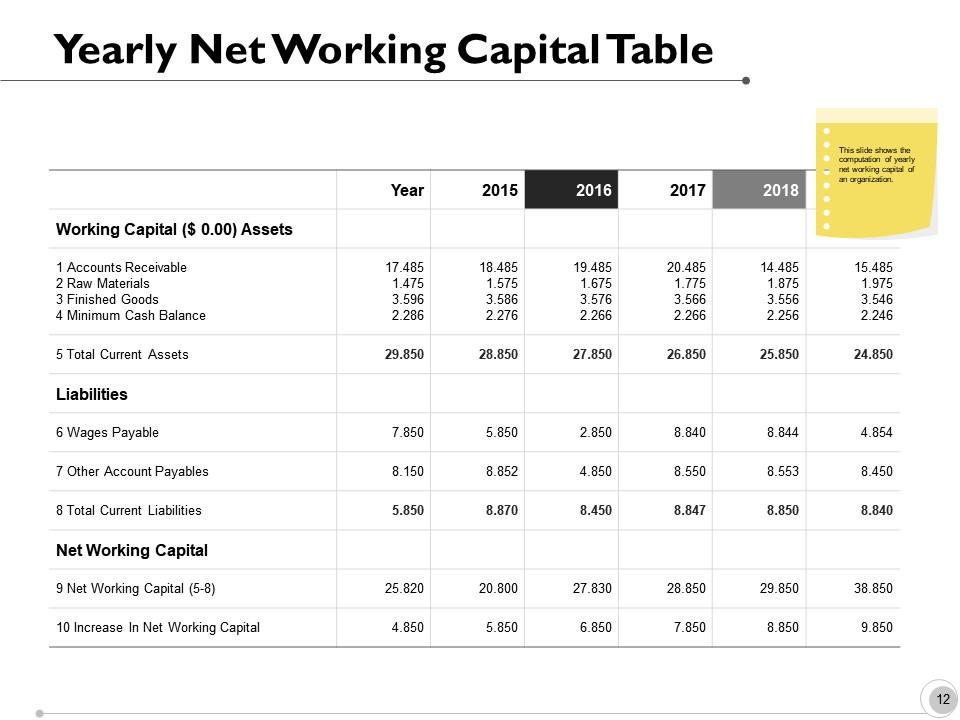
A simple net working capital analysis approach includes creating a yearly net working capital table. This PPT Framework helps you understand all assets, liabilities, and working capital available to you from one year to another. This will help in long-term decision-making, financial planning, or yearly budgets.
Template 9: Monthly Working Capital Calculation Table
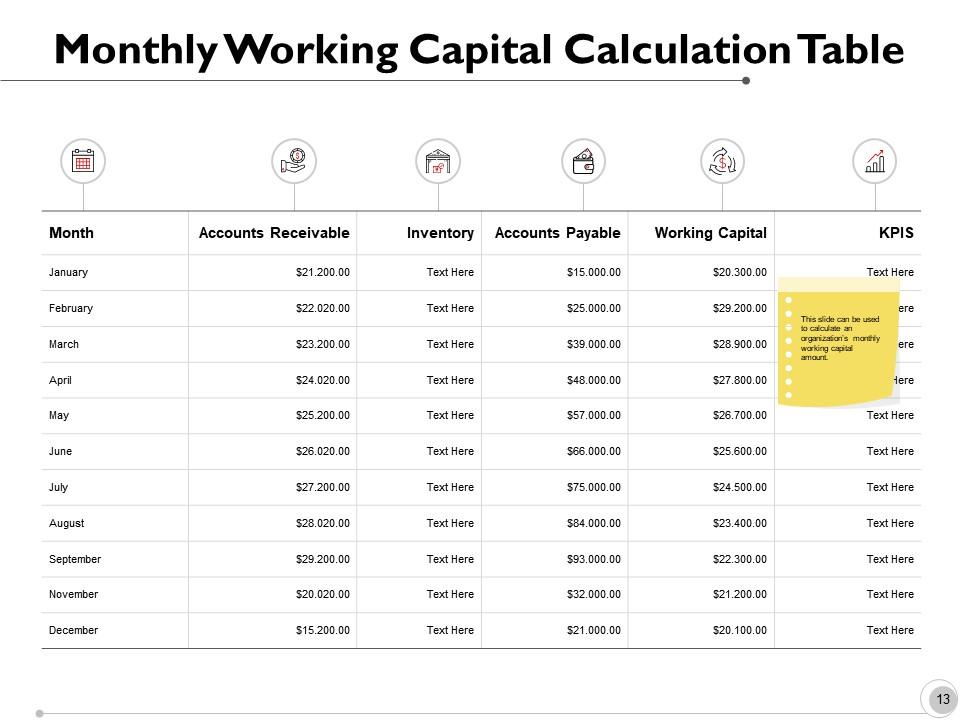
To stay updated, you must calculate your working capital once a month. The above slide can help you with this. It lists all the current assets, liabilities, and working capital for each month from January to December. Feel free to change the elements, the numbers, and the months at your convenience.
Template 10: Working Capital Modelling Chart
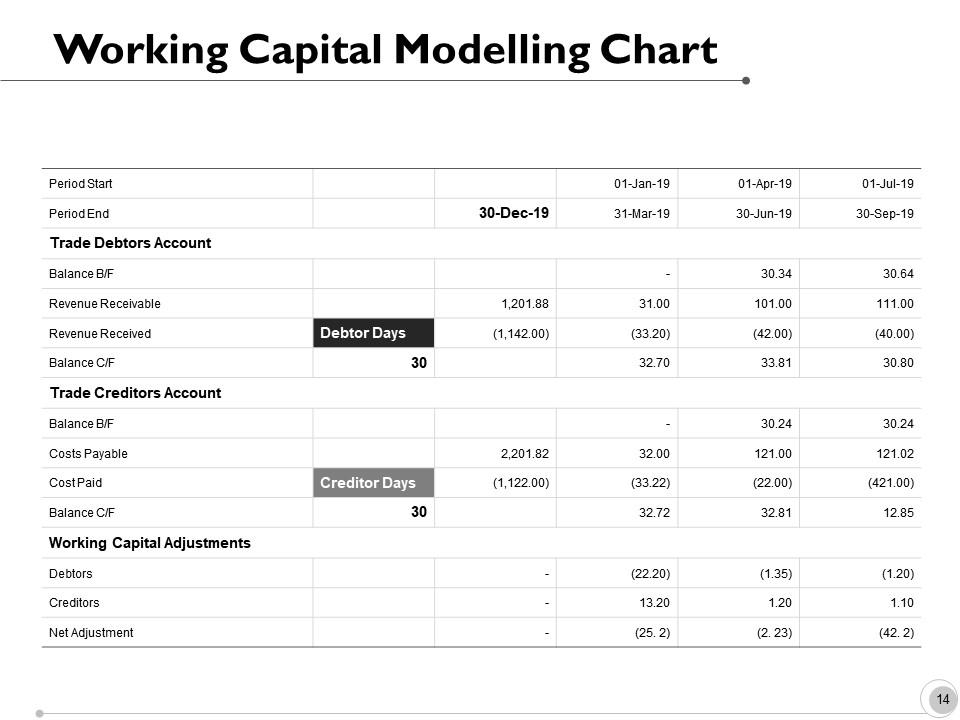
This slide can be your go-to option if you are looking for a working capital modeling chart. It lets you focus on trade debtors and' trade creditors' accounts and easily make working capital adjustments. Use this presentation to include the number of debtor and creditor days and focus on three quarters simultaneously.
Template 11: Working Capital Calculation Steps Chart
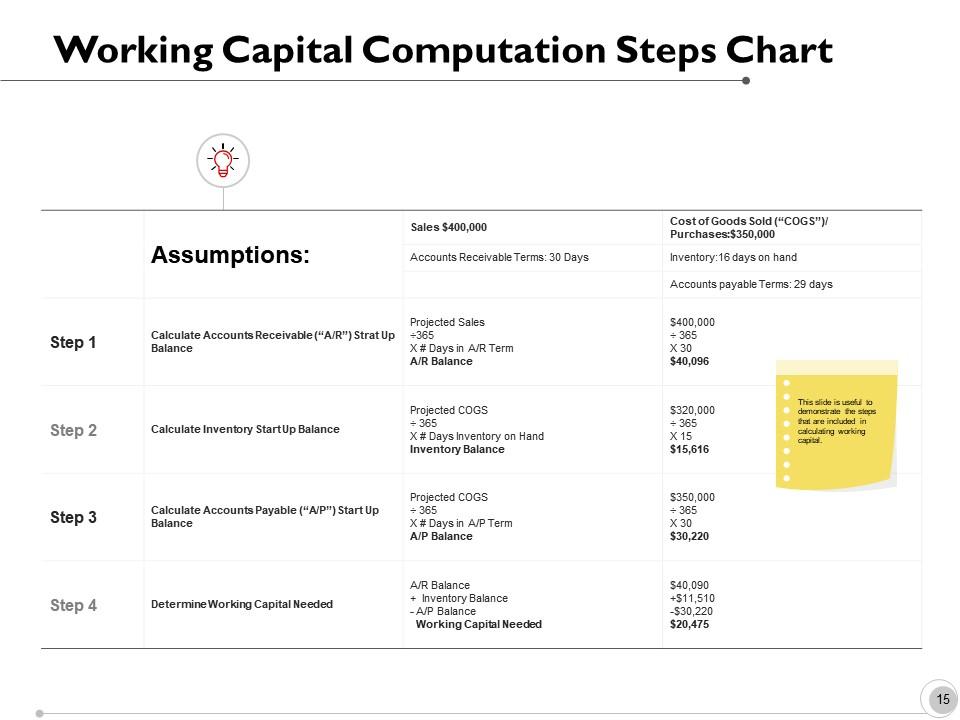
This PPT Slide describes the detailed process of working capital computation. The entire process is captured in four simple steps. The first is where you calculate all the accounts receivable, and the second is when you calculate the inventory startup balance. The third is calculating the accounts payable, and the final and fourth step is determining the working capital a business needs. All the stages include the sales and the cost of goods or services a company sells.
Final Words
Designed to entirely focus on net working capital, these slides by SlideTeam cover all essential elements like calculation, optimization, and management of working capital. They also focus on different types of working capital and their components and elements. Download these content-rich and 100% editable slides in an instant. Try it and see!
Want more assistance regarding working capital management? Explore the Accounts Payable Dashboard with Working Capital and Cash Conversion.
Working capital analysis powerpoint presentation slides with all 30 slides:
Dispel inhibitions with our Working Capital Analysis Powerpoint Presentation Slides. Build confidence in folks to be expressive.
-

Working Capital Analysis
-
Content
-
Kinds of Working Capital
-
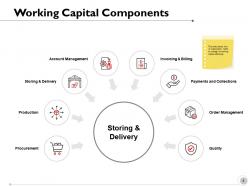
Working Capital Components
-
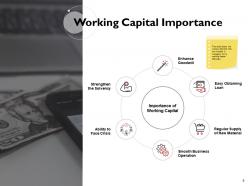
Working Capital Importance
-
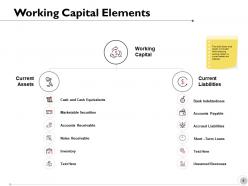
Working Capital Elements
-
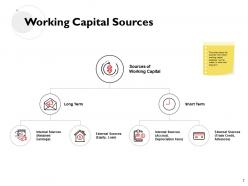
Working Capital Sources
-
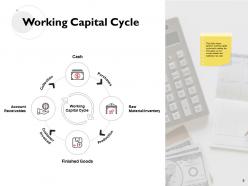
Working Capital Cycle
-
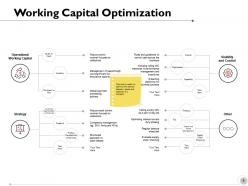
Working Capital Optimization
-
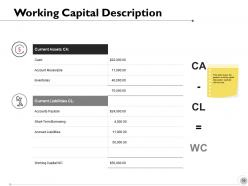
Working Capital Description
-
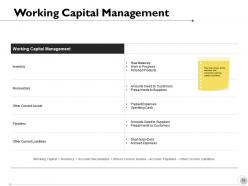
Working Capital Management
-
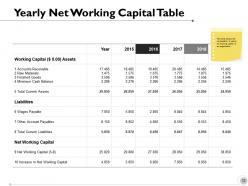
Yearly Net Working Capital Table
-
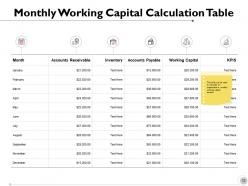
Monthly Working Capital Calculation Table
-
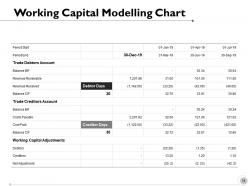
Working Capital Modelling Chart
-
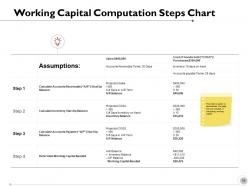
Working Capital Computation Steps Chart
-

Coffee Time
-
Net Working Capital Analysis Icon Slide
-

Additional Slides
-

Line with Markers
-
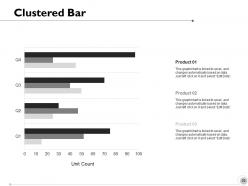
Clustered Bar
-
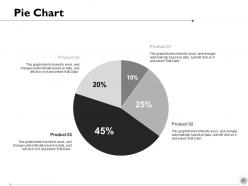
Pie Chart
-

Our Mission
-

Meet Our Team
-

About Us
-
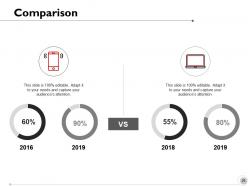
Comparison
-
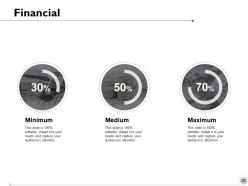
Financial
-

Quotes
-
Timeline
-
Timeline Cont
-

Thank You
FAQs for Working capital analysis
So working capital is just current assets minus current liabilities - your cash, inventory, receivables minus short-term debts. It's the actual money available for daily operations. Payroll, suppliers, new inventory, all that stuff. When it goes negative? You're basically robbing Peter to pay Paul, which honestly gets ugly real quick. I'd check this monthly because it's like your canary in the coal mine for cash problems. Way better to catch it early than scramble later when you can't make payroll or something.
So you need to track your cash conversion cycle - basically how long it takes to turn inventory into actual cash. Days sales outstanding shows how long customers take to pay you. Days inventory outstanding is how long stuff sits in your warehouse collecting dust. Days payable outstanding tracks how long you wait to pay suppliers. The formula is simple: DSO + DIO - DPO = your cycle time. Most businesses honestly just ignore this until they're scrambling for cash, which is kinda crazy when you think about it. Run these numbers every month and compare against what other companies in your space are doing. You'll catch problems way before they bite you.
So working capital is just current assets minus current liabilities - pretty straightforward. Your current assets are cash, accounts receivable, inventory, short-term investments. Basically stuff you can turn into cash within a year. Current liabilities? That's accounts payable, short-term debt, accrued expenses - anything you owe in the next 12 months. Here's the thing though - not all assets are created equal. Old inventory that's been sitting there forever isn't worth much compared to solid receivables from customers who actually pay their bills. You want to look at the quality, not just the numbers on paper.
So basically, working capital shows if you can actually pay your bills without panicking. Positive working capital means your current assets beat your liabilities - you're golden. But if it's negative? Yeah, that's rough. You're scrambling to cover expenses and it shows. Honestly, creditors and investors judge you hard on this stuff. They want to see you're not living paycheck to paycheck (business-wise). Don't just look at one month though - track the trends. My cousin's landscaping business looks terrible in winter but kills it in spring, so context matters.
Look at your current ratio first (current assets ÷ current liabilities), plus the quick ratio and working capital turnover. Cash conversion cycle is honestly my favorite - shows how fast you're turning inventory back into actual money. Individual turnover ratios help too, like inventory and receivables turnover, since they'll show you where things are getting stuck. Oh, and definitely compare these to industry averages so you know where you stand. I'd check them monthly because trends sneak up on you fast if you're not paying attention.
You'll definitely need extra cash during growth spurts or busy seasons. When you start offering customers longer payment terms, that ties up money too. Economic weirdness is huge - having a cushion saves your butt when everything goes sideways. New product launches are cash killers because you're buying inventory way before sales kick in. Same thing happens when you expand to new markets. I learned this the hard way, but seriously overestimate rather than scrambling later. Watch your cash conversion cycle and build worst-case scenarios into your planning. Trust me on this one.
Ugh, seasonal demand is brutal for cash flow. You're stuck buying tons of inventory way before people actually want to buy it. Like those Halloween costumes? Retailers are paying for them in July while they sit in warehouses doing nothing. All your cash gets locked up in products that won't sell for months. Meanwhile you're still paying suppliers on time. Then sales finally hit in these crazy bursts and you scramble to restock. Honestly, the trick is nailing your forecasts and getting a credit line that covers your worst inventory periods, not just normal months.
Three main things to tackle here: get paid faster, don't hoard inventory, and delay payments smartly. Tighten up your credit terms and actually chase down those overdue accounts - I know it's awkward but you gotta do it. Most companies honestly just sit on way too much inventory "just in case" something happens. Try just-in-time ordering or focus on your fast movers. With suppliers, negotiate longer terms but grab those early payment discounts when they make sense. Oh, and track your cash conversion cycle monthly so problems don't sneak up on you.
So A/R boosts your working capital - it's cash customers owe you. A/P does the opposite since you owe suppliers money. Working capital is just current assets minus liabilities, so receivables go on the asset side and payables hit liabilities. The tricky part? Timing really screws with things. If receivables grow faster than payables, you're basically lending more money to customers than you're borrowing from suppliers. That ties up cash. I learned this the hard way at my last job - you've got to watch collection periods and payment terms or your cash flow gets wonky fast.
So inventory turnover basically shows how fast you're selling through your stock, which matters because it tells you how much cash is just sitting there doing nothing. Faster turnover = less money trapped in products gathering dust. Days inventory outstanding breaks this down further - literally how many days your cash flow is stuck in unsold stuff. Honestly, slow turnover is a recipe for working capital headaches. You'll want to check what's normal for your industry though, since some businesses naturally move inventory slower than others. Seasonal swings mess with this too, but once you dial it in, you free up cash for everything else.
Dude, cash flow forecasting is like having a heads up on when you'll be broke before it actually happens. Instead of panicking when bills are due, you'll see the crunch coming weeks ahead. Shows you when customers will actually pay (spoiler: usually later than promised), supplier payment dates, all that stuff. Then you can time when to buy inventory or maybe sweet-talk vendors into better payment terms. I'd set up financing beforehand too - way easier when you're not desperate. Just keep updating it with real numbers, not the fantasy version where everyone pays on time.
So negative working capital basically means you owe suppliers more than customers owe you. Sounds bad but it's actually pretty sweet for cash flow if you can handle it. Companies like Amazon do this - they get paid by customers way before they pay suppliers. It's like using free money to run your business, honestly. But here's where it gets tricky: your supplier relationships better be rock solid, and you need sales you can count on. If revenue tanks or suppliers want their money faster, you'll be scrambling for cash. Watch that cash conversion cycle and definitely keep some backup funding around just in case.
Honestly, speed up how fast people pay you - throw them an early payment discount or cut those net-30 terms down to net-15. Then flip it with suppliers and ask for longer payment windows so your cash sticks around. I probably sound like a broken record, but check your inventory too. All that sitting stock? That's just money doing nothing. Oh, and if you're really tight on cash, factoring receivables is an option (costs more though). Point is, money needs to come in quicker while you slow down what's going out.
Dude, you're basically sitting on a pile of cash that could be working harder for you. Too much working capital means money's just stuck in inventory or unpaid invoices instead of generating real returns. Think of it like - why leave thousands in a checking account earning nothing when you could invest it? Your shareholders probably aren't happy since it screams poor money management. That inventory might go stale too, or customers could bail on paying you back. Run some quick efficiency ratios to spot where you're bleeding cash. Then free that money up for actual growth opportunities or better investments.
Dude, inflation makes cash feel like ice cream in the sun - it just melts away. I'd definitely tighten up those payment terms and maybe throw in some early-pay discounts to get money flowing in faster. Then flip the script with suppliers and stretch out what you owe them since you're basically paying with cheaper dollars down the road. Oh, and inventory turnover becomes your best friend during these times. You don't want stuff just sitting there losing value. Get money in quick, don't hoard cash, and milk every payment day your vendors give you. It's honestly brutal but that's the game right now.
No Reviews