


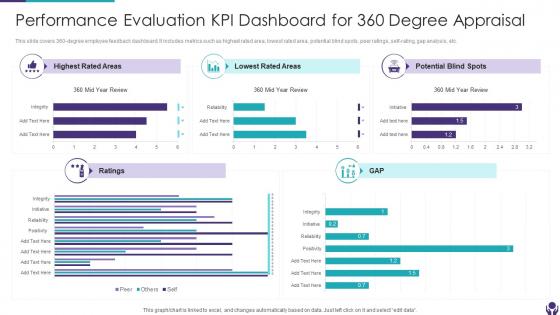
Performance Evaluation KPI Dashboard For 360 Degree Appraisal




Try Before you Buy Download Free Sample Product
 Impress Your
 Audience
 100%
100% Editable
 Save Hours
 of Time


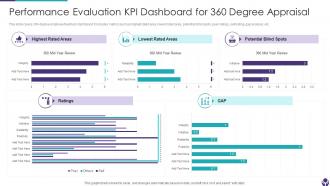
This slide covers 360 degree employee feedback dashboard. It includes metrics such as highest rated area, lowest rated area, potential blind spots, peer ratings, self rating, gap analysis, etc.
People who downloaded this PowerPoint presentation also viewed the following :
Performance Evaluation KPI Dashboard For 360 Degree Appraisal with all 7 slides:
Use our Performance Evaluation KPI Dashboard For 360 Degree Appraisal to effectively help you save your valuable time. They are readymade to fit into any presentation structure.





FAQs for Performance Evaluation KPI Dashboard For
So basically every company tracks productivity stuff - like how much you get done per hour or hitting sales goals. Quality metrics are huge too, think error rates and customer satisfaction scores. Finance bros are always obsessing over revenue per employee, manufacturing can't stop talking about defects. Then there's the usual suspects: attendance, teamwork ratings, communication skills, leadership effectiveness. Honestly though? Most places throw way too many metrics at people. Pick 3-5 that actually help someone improve their job, not just busy work that looks good in spreadsheets.
Honestly, you've got to start with standardized criteria for everyone in similar roles - that's the foundation. Train your managers on unconscious bias too (and yeah, it actually does help when it's done properly). Get feedback from multiple people, not just the direct boss. Document everything with real examples instead of fuzzy "impressions." The consistency piece is huge. Maybe have HR review stuff before it goes final? Oh, and definitely audit what you're doing now first - that'll show you exactly where the bias sneaks in. Short version: structure everything and make it transparent from day one.
Okay so feedback is literally what makes performance reviews worth doing - otherwise you're just writing down stuff for HR files. Make it specific with real examples, not that useless "be better at communication" garbage that tells people nothing. Ask what they actually need from you to succeed. Give them space to push back or share their side too. Honestly, the quarterly check-ins work way better than waiting a whole year. Balance the good stuff with concrete next steps. Oh and timing matters - don't wait three weeks to mention something that happened.
Honestly, stop obsessing over whether they're "at their desk" and focus on what they're actually getting done. I'd suggest monthly check-ins instead of quarterly - way too long to wait if something's going sideways. Video calls are clutch here since you can read people better than just voice (body language is everything). Track their deliverables and project milestones, not login times. You'll need to document stuff way more thoroughly now - can't just walk over and ask "hey what's the context on this?" Oh, and start doing regular one-on-ones if you aren't already. Remote teams fall apart without that consistency.
Pick about 5-8 people - your boss, some peers, maybe direct reports if you have them. Anonymous feedback is everything here, trust me on this one. People won't be honest otherwise. Give them 2-3 weeks with a structured questionnaire that focuses on actual behaviors, not personality stuff. Oh, and brace yourself - some of it might sting a bit, but that's kinda the whole point. Don't just read it and forget about it though. Set up a debrief with HR or your manager afterward to actually build a development plan from what you learned.
Honestly, tech makes performance reviews so much less painful. Instead of trying to remember what someone did months ago (impossible), you can track everything as it happens. Those digital platforms keep your criteria consistent across teams, which is huge for fairness. 360-degree feedback tools automatically pull input from different people too. I love that everything stays documented - means you spend review time actually talking instead of digging through old emails. The bias reduction through data is pretty solid too, though obviously it's not perfect.
Okay so basically you want to break down those big company goals into smaller chunks for each department first. Then turn those into actual measurable stuff for individual people - like specific KPIs and what behaviors you expect. Most places are terrible at this part honestly. When someone's doing their daily work, they should be able to see how it connects to the bigger company picture. Your performance review forms should literally spell out how each person's goals tie back to what the company's trying to accomplish. Otherwise you're just going through the motions instead of actually tracking things that matter for the business.
Ugh, yeah this is tricky because "good" creative work is so subjective, right? Like what I think is brilliant, you might hate. I've watched so many creative teams get totally demoralized by stupid metrics that don't actually matter. What works better: get feedback from other creatives who actually get it, listen to your audience/clients, and use real numbers when they make sense (engagement, conversions, whatever). Oh and definitely set clear goals upfront with your team - saves you from that awkward "wait, this isn't what we wanted" conversation later. Let them help define what success looks like too.
Honestly, ditch the once-a-year thing if that's what you're doing now. Quarterly check-ins should be your bare minimum - monthly is even better if you can manage it. People are starving for feedback these days. When you wait a whole year, problems just pile up and good moments get forgotten. I've seen teams totally transform when managers start doing regular touchpoints. Course corrections happen faster, wins get celebrated when they're still fresh. Your people won't feel like they're guessing how they're doing all the time. Even just switching to quarterly from annual will boost engagement like crazy. Trust me on this one.
Oh man, continuous feedback beats annual reviews hands down. Why wait an entire year to tell someone they're screwing up? That's just cruel honestly. Real-time feedback lets people actually fix things while it matters. Your team stays on track with goals that inevitably change throughout the year anyway. Plus those dreaded annual reviews become way less awkward - more like "here's what we've already discussed" instead of blind-siding someone. I'd start small though. Maybe weekly 10-minute chats? Even that makes a huge difference.
Definitely focus on hands-on practice over boring slideshow stuff. Role-play exercises work best - have them practice those awkward conversations about actual performance problems they're dealing with. PowerPoint training is honestly useless for this kind of thing. Teach them how to set clear expectations upfront and document issues year-round, not just during review season. They need to know your rating system cold too. Oh, and start with your best managers first as a pilot group. Once they get it down, they can help train the others when you expand it. Way more effective than trying to train everyone at once.
Ugh, performance reviews stress people out SO much - I literally still get sweaty palms before mine lol. Your employees are probably panicking about getting criticized or hearing something awful. Instead of doing the whole once-a-year ambush thing, try giving feedback regularly so nothing comes as a shock. Start with what they're crushing, then talk about growth stuff as opportunities rather than failures. Focus on specific actions they can take, not personality stuff. Oh and maybe don't schedule them right after lunch when everyone's sleepy? Create that safe space where they won't feel attacked.
Oh man, this is such a real issue! Direct feedback? Forget about it in some cultures - they'll see harsh criticism as incredibly disrespectful. Meanwhile, you've got other places where team wins matter way more than individual star performance, which totally breaks our usual review systems. Goal-setting gets weird too. Some people need step-by-step guidance while others just want you to back off and let them work. And honestly, the communication thing trips everyone up - your "confident" might read as straight-up arrogant to someone else. Train your managers on this stuff and maybe tweak your criteria by region. Worth the effort.
Okay so first thing - be really specific about what you want to see happen. Like actual numbers and deadlines, not just "communicate better" because that's useless. Definitely do this conversation in person or on video, not email - trust me, tone gets lost in text and this stuff is too important. Let them help set some of the goals too since they know their workload better than you do. Write everything down after so nobody can be like "wait, I thought we said..." later. Oh and schedule a mid-point check-in to adjust if things aren't working.
Honestly, the trick is flipping the whole script from "what went wrong" to "what's next for you." Come in with your own goals already mapped out - like, what do you actually want to be doing in six months? Then ask the hard questions: "What skills am I missing for that promotion?" Your manager should help you spot the gaps and figure out what training or projects will get you there. Yeah, these conversations feel weird at first, but they're way more useful when you're both looking ahead instead of just rehashing old mistakes. It's basically turning your review into a career GPS.
-
Definitely a time saver! Predesigned and easy-to-use templates just helped me put together an amazing presentation.
-
Easy to use and customize templates. Helped me give a last minute presentation.