


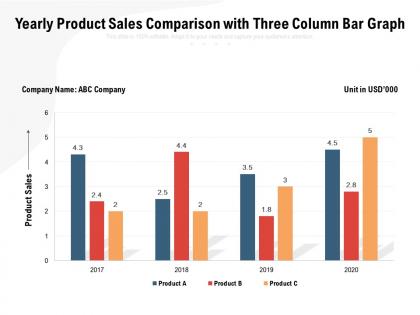
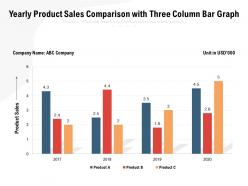
Yearly product sales comparison with three column bar graph




Try Before you Buy Download Free Sample Product
 Impress Your
 Audience
 100%
100% Editable
 Save Hours
 of Time


Our Yearly Product Sales Comparison With Three Column Bar Graph are topically designed to provide an attractive backdrop to any subject. Use them to look like a presentation pro.
People who downloaded this PowerPoint presentation also viewed the following :
Yearly product sales comparison with three column bar graph with all 2 slides:
Use our Yearly Product Sales Comparison With Three Column Bar Graph to effectively help you save your valuable time. They are readymade to fit into any presentation structure.
FAQs for Yearly product sales comparison with three
For sales comparisons, start with price per square foot, days on market, and sale-to-list ratios - those show you what's really happening. Conversion rates and average deal size matter too. Honestly, I used to obsess over total revenue numbers but they're kinda misleading. The ratios are where the good stuff is. Sales cycle length tells you if things are speeding up or slowing down. Oh, and don't forget customer acquisition costs - that one bites people later if they ignore it. These basics will show you patterns fast without making your head spin.
Look, sales comparisons are basically your business GPS - way better than flying blind and hoping for the best. Check them monthly to see what's actually crushing it versus what's totally flopping. Honestly, I learned this the hard way when my gut was telling me one product was gold but the numbers showed it was trash. You'll spot trends faster, figure out where competitors are stealing your customers, and know exactly where to put your money. The data doesn't care about your feelings, which is annoying but super helpful. Pull those reports and let them smack you with reality.
Honestly, I'd go with Tableau or Power BI first - both let you build really interactive dashboards where you can slice by time, region, whatever. Excel's fine for basic stuff but gets messy quick with bigger datasets. Oh, and Google Data Studio is free and plays nice with most CRMs if budget's tight. The real trick though? Pick something your sales team will actually use. I've seen too many fancy dashboards that just collect dust because nobody can figure out the filters. Maybe start with whatever you guys already have licenses for and see how it goes.
Yeah, seasonality will totally mess with your head if you're not careful. Don't compare Q4 to Q1 - that's like comparing Christmas shopping to post-holiday hangover spending. I made this mistake once and freaked out over January sales being down 40%. Turns out that was just... normal January behavior lol. You want year-over-year comparisons instead. So January 2024 vs January 2023, not January vs December. If you're doing month-to-month tracking, figure out what your seasonal patterns actually look like first. Otherwise you'll be panicking every slow season thinking the business is dying when really it's just Tuesday.
Dude, segmentation is a game changer for sales comparisons. You're actually comparing similar things instead of jumbling everything together. Break it down by customer size, industry, location - whatever makes sense for you. Here's the thing though - patterns pop up that you'd totally miss otherwise. Product A might look weak overall, but turns out it's killing it with big enterprise clients and just sucks for small businesses. Who knew, right? Start simple with maybe 2-3 segments that actually matter to your business. Trust me, the trends become way clearer immediately.
Honestly, the biggest mistake is comparing totally different things without thinking it through. You can't just look at raw revenue - your margins are probably all over the place between products. Also, don't forget about seasonal stuff (learned this the hard way last quarter). Different price points and customer types matter too. Marketing spend throws everything off if you're not careful about it. My take? Build some kind of standard framework that accounts for these differences, then actually use it consistently. Short sentences help sometimes. Trust me, everyone screws this up at first.
Honestly, sales comparisons are your best friend here - they show you what people actually shell out for similar stuff instead of just winging it. Check out competitor pricing and see how different features match up with price points. Pricing without that context is like... well, you're basically guessing and hoping for the best. Look at how comparable products do at various price levels - you'll spot the sweet spots pretty fast. If you're the new guy, start a bit under the competition. Got clear advantages? Go premium. Grab some recent sales data, map it against features, and the patterns will jump out at you.
Hey! Yeah, geo differences totally mess with sales comparisons. You can't just compare NYC numbers to rural Montana - completely different markets, competition, customer behavior, all that stuff. I learned this the hard way at my last job lol. Instead of raw revenue, look at market penetration or sales per capita. That actually tells you something useful. Also watch for seasonal patterns hitting regions differently. Honestly, the main thing is contextualizing everything with local market data. Otherwise you'll make decisions based on totally misleading info and wonder why nothing works.
Look, you gotta know what you're up against if you want to position your stuff right. I'd start by picking your top 3-5 competitors and really dig into their pricing, features, strengths - but honestly, their weaknesses are where the gold is. That's your opening. Spend time on their websites (yeah, it feels like stalking but whatever), figure out not just what they're selling but HOW they're selling it. What messaging actually works on prospects you both want? Then make comparison sheets your sales team can use without wanting to throw them in the trash.
Keep your sales comps straightforward - same time periods, solid data sources. Bar charts beat pie charts every time, trust me on that one. Context is huge though, so call out market shifts or seasonal stuff that explains weird numbers. Bold the key insights or throw them in callout boxes since execs won't dig for them. Oh, and definitely prep backup slides with regional breakdowns because someone always wants to go deeper. You know they're gonna ask about any big variances, so have those explanations ready. Makes you look way more prepared when you can just flip to the detail slide.
So sales comparisons are basically your way to see what's actually happening with buying patterns. You'll spot seasonal stuff, which products are hot or dying off, how customer tastes change over time. Honestly, it's way better than just guessing. Compare different time periods, age groups, locations - that's where the real story comes out. Oh, and focus on the patterns that keep showing up, not random spikes. Those consistent trends? That's your best shot at figuring out what comes next and tweaking your approach.
First thing - check what changed between those periods. Q4 vs Q1 is gonna look weird no matter what. Did your sales territories shift? New pricing or product mix? I always get tripped up by the operational stuff too - different team members, marketing campaigns, process changes. Economic factors and competitor moves can totally mess with your data. Oh, and industry trends obviously. What I usually do is make a list of everything that was different between the periods you're comparing. Then you can either break down your analysis by segments or just add notes explaining the context. Trust me, it'll save you from some really bad assumptions later.
Look, nobody wants to stare at boring feature lists and pricing charts - their eyes will glaze over instantly. Try turning your data into actual stories instead. Show them "Company X slashed costs by 30%" with visuals, or map out customer journeys they can relate to. Before/after shots work great too. People need to picture themselves winning with your product, not decode spreadsheets. Find your strongest selling point first, then build the whole visual story around that one thing. Honestly, I've seen so many pitches fail because they dump information instead of telling a story. Make the choice feel obvious through narrative, not numbers.
Honestly, looking at your past sales is like having a cheat sheet for the future. You'll spot seasonal spikes, see when things typically slow down, and figure out how external stuff affected your numbers before. Way smarter than shooting in the dark! Pull at least 2-3 years of data - that's your sweet spot for finding real patterns. The recurring trends become your baseline for better forecasts. Plus you can set targets that actually make sense instead of just hoping for the best. Oh, and it helps you catch problems early too, which is huge.
Yeah so each sales channel has totally different customer behaviors and conversion patterns, which makes comparing them super tricky. Online might give you higher volumes but thinner margins. Retail partnerships usually mean fewer sales but they're higher-value. Direct sales take forever but close better - I swear the sales cycle feels endless sometimes. You gotta segment by channel first, then pick metrics that actually make sense for each one. Otherwise you're just throwing everything in a blender and wondering why the numbers look weird.
No Reviews