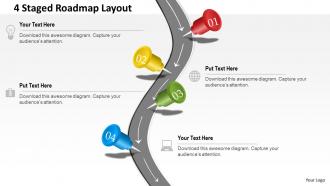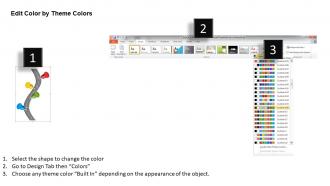
Modèle PowerPoint de mise en page de feuille de route par étapes 0314 Business Ppt Diagram

Rating:
80%
0314 business ppt diagram 4 staged roadmap layout powerpoint template
Slide 1 of 5
Favourites Favourites

Try Before you Buy Download Free Sample Product

Audience Impress Your
Audience
Editable 100%
Editable
Time Save Hours
of Time
The Biggest Sale is ending soon in
0
0
:
0
0
:
0
0
Rating:
80%

Caractéristiques de ces diapositives de présentation PowerPoint :

Images et icônes haute résolution dans la conception des diapositives. Autoriser le téléchargement instantané du modèle. Facilité d'enregistrement dans une variété de formats tels que JPG ou PDF. A offert des instructions pour apporter des modifications. Conception entièrement personnalisable. Compatible avec les diapositives Google et d'autres logiciels Microsoft Office hors ligne. Bénéfique pour les entrepreneurs, les concepteurs de stratégies et les autres professionnels.

FAQs for 0314 business ppt diagram 4 staged roadmap

Essential business roadmap components include strategic objectives, timeline milestones, resource allocation plans, key performance indicators, and stakeholder responsibilities. These elements work together by aligning teams around shared goals, tracking progress systematically, and ensuring accountability, with many organizations finding that structured roadmaps ultimately deliver improved project coordination and faster strategic execution.

A business roadmap template helps align team goals by providing visual clarity on strategic priorities, timelines, and interdependencies between different departments and projects. Through shared milestone tracking and clear communication channels, teams can coordinate efforts more effectively, reduce conflicting initiatives, and maintain focus on common objectives, with many organizations finding that structured roadmaps significantly enhance cross-functional collaboration and strategic execution.

Essential visual elements include timeline axes, milestone markers, progress indicators, color-coded categories, and dependency arrows connecting related initiatives. These components enhance comprehension by clearly delineating phases, priorities, and interconnections, with many organizations finding that strategic use of icons, consistent typography, and visual hierarchy ultimately delivers improved stakeholder alignment and more effective communication of complex business strategies.

Customizing a business roadmap template involves adapting timelines, milestones, regulatory requirements, and success metrics to align with specific industry characteristics and operational frameworks. Healthcare organizations prioritize compliance and patient outcomes, while tech companies focus on product iterations and market launches, with manufacturing emphasizing supply chain optimization and production scalability, ultimately delivering industry-relevant strategic guidance.

Business roadmaps typically use short-term (3-6 months), medium-term (6-18 months), and long-term (1-3 years) timeframes, with quarterly milestones providing strategic checkpoints for progress evaluation. These structures enable organizations to balance immediate operational needs with strategic initiatives, while many companies find that flexible timeframes accommodate market changes, ultimately delivering enhanced planning precision and competitive responsiveness.

A business roadmap template facilitates stakeholder communication by providing visual clarity, standardized messaging, timeline transparency, and clear milestone tracking across all organizational levels. This structured approach enables executives, investors, and team members to quickly understand strategic priorities, resource allocation, and expected outcomes, while ensuring consistent updates and alignment, ultimately reducing miscommunication and accelerating decision-making processes.

Common mistakes include setting unrealistic timelines, lacking stakeholder input, ignoring market changes, failing to prioritize initiatives, and creating overly rigid plans without flexibility. These oversights can derail strategic execution, with many organizations finding that successful roadmaps require regular review cycles, cross-functional collaboration, and adaptive frameworks that balance long-term vision with responsive planning, ultimately delivering sustainable growth and competitive positioning.

Business roadmaps should be updated quarterly for strategic reviews and monthly for tactical adjustments, with major pivots requiring immediate revisions. Many organizations find that regular quarterly assessments allow them to adapt to market changes, resource shifts, and competitive pressures, while maintaining strategic focus and ensuring stakeholders remain aligned with evolving business priorities.

Business roadmap templates integrate with project management tools through API connections, data synchronization features, and shared workspace platforms like Microsoft Project, Asana, and Trello. These integrations streamline workflow management by automatically updating timelines, tracking milestone progress, and maintaining alignment between strategic goals and tactical execution, with many organizations finding enhanced visibility and reduced administrative overhead.

Market research provides critical foundation for business roadmaps by identifying customer needs, competitive landscapes, market trends, and growth opportunities that inform strategic direction. Through comprehensive market analysis, companies can prioritize initiatives, allocate resources effectively, and time product launches strategically, with many organizations finding that research-driven roadmaps deliver higher success rates and competitive advantage.

A business roadmap helps in resource allocation and budgeting by providing clear timeline visibility, priority identification, and strategic alignment across departments and initiatives. Through structured planning templates, organizations can optimize budget distribution, prevent resource conflicts, and track spending against milestones, with many companies finding that roadmap-driven allocation reduces costs while enhancing operational efficiency.

Key metrics include revenue growth, customer acquisition costs, market share expansion, operational efficiency ratios, and milestone completion rates. These indicators enable organizations to measure strategic progress, identify performance gaps, and adjust resource allocation accordingly, with many companies finding that regular metric reviews against roadmap objectives ultimately deliver better decision-making and competitive advantage.

Digital tools enhance business roadmap templates by enabling real-time collaboration, automated progress tracking, and dynamic visualization of strategic initiatives across departments. Through cloud-based platforms and integrated analytics, organizations streamline resource allocation, accelerate decision-making processes, and maintain strategic alignment, with many enterprises finding that digital roadmaps deliver greater transparency and faster strategic pivots in increasingly competitive markets.

Companies like Amazon, Tesla, Microsoft, Google, and Apple exemplify successful roadmap implementation, using these strategic frameworks to align product development, market expansion, and technological innovation across their organizations. These industry leaders leverage roadmaps to coordinate complex initiatives, communicate vision to stakeholders, and maintain competitive advantage, with many finding that systematic roadmap planning enables faster decision-making and more effective resource allocation.

A business roadmap template assists in risk management by identifying potential obstacles, establishing mitigation strategies, and creating timeline buffers for unforeseen challenges. Through structured scenario planning and milestone tracking, organizations can proactively address market shifts, resource constraints, and operational disruptions, while maintaining strategic flexibility, ultimately enabling faster pivots and more resilient business operations.

Ratings and Reviews

80% of 100
Review Form
Write a review
Most Relevant Reviews
  1. 80%

    by Li Stewart

    Helpful product design for delivering presentation.
  2. 80%

    by Danilo Woods

    Awesome use of colors and designs in product templates.

2 Item(s)

per page: