

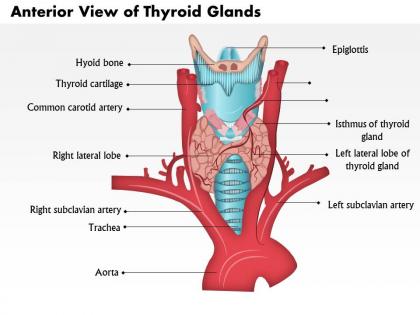
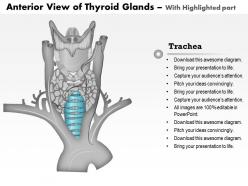
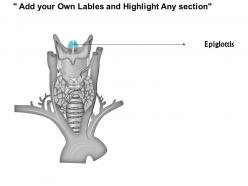
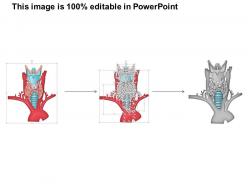
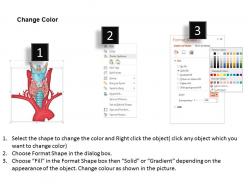
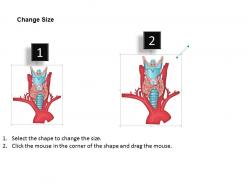
0514 anatomy of thyroid glands anterior view




Try Before you Buy Download Free Sample Product
 Impress Your
 Audience
 100%
100% Editable
 Save Hours
 of Time


Your team will begin to bond closer. Enhance their EQ with our 0514 Anatomy Of Thyroid Glands Anterior View.
People who downloaded this PowerPoint presentation also viewed the following :
0514 anatomy of thyroid glands anterior view with all 10 slides:
Bring down the burden with our 0514 Anatomy Of Thyroid Glands Anterior View. They will contribute a great chunk.


FAQs for 0514 anatomy of thyroid
So your thyroid is basically like your body's gas pedal - it controls how fast everything runs. This tiny butterfly-shaped thing in your neck pumps out hormones (T3 and T4 mostly) that tell your cells how quickly to burn energy. Heart rate, body temp, digestion - it affects all of it. Oh, and it makes calcitonin too for calcium stuff. Honestly, it's wild how much this little gland controls. Been feeling super tired or weirdly hyper lately? Might be worth getting those levels checked out.
Thyroid anatomy is all over the place honestly. Size and shape vary tons between patients. You'll see some people with that pyramidal lobe sticking up (still catches me off guard sometimes), others won't have it at all. The isthmus can be super thick or barely there - I've even seen cases where it's completely missing. Accessory tissue shows up in weird spots too, anywhere from the tongue down to the chest. Always double-check your imaging before you start working. Can't just assume it'll look like the textbook because it probably won't.
Dude, thyroid surgery is honestly terrifying because of where that thing sits. It's literally pressed against your trachea with these tiny recurrent laryngeal nerves snaking right behind it. Damage those and boom - vocal cord paralysis. You've also got carotid sheaths on both sides, esophagus in back, plus those microscopic parathyroid glands hiding back there too. The blood supply is crazy rich from superior and inferior thyroid arteries, so bleeding gets messy fast. I always tell people - find and protect those recurrent laryngeal nerves first, everything else comes after.
Four arteries feed the thyroid - superior ones branch off the external carotids, inferior ones come from the thyrocervical trunk. There's occasionally this weird thyroid ima artery straight from the aortic arch, but I've honestly rarely seen it. During thyroidectomy, you've got to be super careful ligating these vessels. The tricky part? Those recurrent laryngeal nerves hug the inferior thyroid arteries really closely. Mess that up and your patient's voice is toast. I always map out the nerve-vessel anatomy first before touching anything. Saves you from disaster later.
Okay so follicular cells are basically the main workers - they grab iodine and make T3 and T4 hormones, storing everything in those little colloid-filled follicles. Pretty straightforward stuff. But parafollicular cells (or C-cells) are completely different. They're just hanging out scattered around the follicles, pumping out calcitonin to keep your calcium levels in check. Honestly I feel like calcitonin doesn't get enough credit for bone health. Anyway, easy way to remember: follicular = thyroid hormones, parafollicular = calcium. You'll see tons more follicular cells when looking at tissue samples since they make up most of the thyroid.
So basically your pituitary shoots out TSH to tell your thyroid "make more hormones!" When T3 and T4 levels climb high enough, they flip the script and tell the pituitary to chill out. TSH drops back down. Think of it like your home thermostat - always trying to hit that sweet spot. Oh, and there's this third player called the hypothalamus that releases TRH when it notices thyroid levels are too low. Honestly, the whole system's pretty elegant when it works right. When your doc mentions wonky TSH numbers, you'll know which part of the loop is probably misbehaving.
So thyroid follicles are like these hollow spheres with follicular cells lining the walls. The middle part gets filled with colloid - it's this gel-like stuff packed with thyroglobulin where your T3 and T4 hormones get made. Pretty neat setup if you ask me. When your body needs more hormones, TSH tells those follicular cells to suck the colloid back in, break down all that thyroglobulin, and dump T3/T4 into your blood. Short sentences work too. What's cool is how one structure handles both making AND storing hormones at once.
So basically your thyroid follicular cells grab iodide from your blood and mix it with this protein called thyroglobulin inside these little fluid sacs. There's this enzyme - thyroid peroxidase - that sticks iodine onto specific spots, creating T3 and T4 hormones. They just hang out stored in the follicle until you need them. When TSH kicks in, the cells suck the thyroglobulin back up, chop off the hormones, and dump them into your bloodstream. Pretty cool system honestly. Oh and those colloid-filled follicles you see in histology pics? That's literally your hormone warehouse.
Ultrasound is definitely where you'd start - it's cheap, shows great detail of the thyroid structure, and you can see blood flow too. Works for like 90% of what you need. CT or MRI come in handy when you're dealing with substernal extension or need to check if there's compression of nearby stuff. There's also nuclear medicine scans (technetium, iodine uptake) but those are more about function than anatomy. Honestly though, ultrasound first. If that doesn't give you enough info about how everything sits together, then move to cross-sectional imaging.
Hey! So when you're checking for thyroid issues, the physical changes are usually pretty obvious clues. Goiters make the whole thing swell up - sometimes it's the entire gland, other times just bumpy nodular spots that feel weird when you press on them. The texture gets firmer and irregular too. Cancer's way sneakier though, especially early on. You might only notice tiny nodules or slight asymmetry that's super easy to miss just by feeling around. That's honestly why I think ultrasound is such a game-changer here - some cancerous nodules look totally harmless at first, so you really need both the physical exam plus imaging to catch everything.
So the thyroid actually comes from two totally different places during development. Around week 3-4, follicular cells (the hormone-making ones) start as this little bud at the base of your tongue - kinda weird when you think about it. Then it migrates down your neck through this duct that's supposed to disappear but sometimes doesn't, which is how people end up with those thyroglossal cysts. Meanwhile, the C-cells that make calcitonin come from neural crest tissue and migrate in separately. It's why you see such different tumor types in the same gland - honestly makes pathology way more interesting once you know the backstory.
So your thyroid actually gets bigger during pregnancy - like 10-30% bigger, which is kinda crazy when you think about it. Happens because of all the hormonal changes your body's dealing with. It gets more blood flow too and can look a bit different on scans, more lumpy I guess? Same butterfly shape though, just supersized. This is way more noticeable if you're not getting enough iodine. Oh and it happens during other times too - puberty, your period, getting older - but pregnancy's definitely the most dramatic. Totally normal thing, so don't freak out if someone mentions it during checkups.
So about 50% of people have pyramidal lobes - these little extensions that stick up from the isthmus. Honestly, spotting them on scans was such a pain when I first started. You'll also run into thyroglossal duct cysts and random bits of thyroid tissue floating around the neck. The ectopic stuff can pop up literally anywhere from tongue to chest, which is kinda wild. Just make sure you check imaging before any neck work because accidentally yanking out someone's only working thyroid tissue would be... not great. Also matters for biopsy planning and reading thyroid scans.
Dude, thyroidectomies are honestly nerve-wracking because of how cramped everything is in there. You've got the recurrent laryngeal nerves right next to your working area - mess those up and your patient's voice is toast. Plus all four parathyroid glands are scattered around, and if you accidentally remove them, their calcium levels get totally screwed. The whole butterfly shape thing doesn't help either, especially with that isthmus sitting directly on the trachea. I always spend extra time at the start identifying those parathyroids and nerves before touching anything else. Partial vs total removal changes your game plan, but honestly? Mark your landmarks first or you'll be kicking yourself later.
So the parathyroid glands are these four tiny things that basically hitchhike behind your thyroid. They're neighbors but do totally different jobs - thyroid handles metabolism with T3/T4 hormones, parathyroids control calcium through parathyroid hormone. Super annoying for surgeons honestly, because they have to be crazy careful not to damage those little parathyroids during thyroid surgery. My prof always drilled this into us. When you're looking at thyroid cases, definitely check if they mention parathyroid function afterward. It's one of those complications that can really mess with patients.
-
Amazing product with appealing content and design.
-
Much better than the original! Thanks for the quick turnaround.