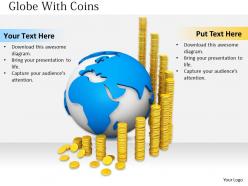
0514 illustration global economic growth image graphics for powerpoint
Try Before you Buy Download Free Sample Product
Audience
Editable
of Time
Try your hand at any assignment. Our 0514 Illustration Global Economic Growth Image Graphics For Powerpoint assure you expert assistance.
People who downloaded this PowerPoint presentation also viewed the following :
0514 illustration global economic growth image graphics for powerpoint with all 4 slides:
Display fortitude with our 0514 Illustration Global Economic Growth Image Graphics For Powerpoint. They encourage a fearless disposition.
FAQs for 0514 illustration global economic growth image
Key indicators of global economic growth include GDP growth rates, unemployment levels, inflation rates, trade balances, and consumer spending patterns. These metrics can be effectively visualized through interactive dashboards, trend charts, and comparative infographics, with many financial institutions and policy organizations finding that visual representations enhance stakeholder understanding and strategic decision-making processes.
GDP growth rates vary significantly across countries, with emerging economies like India and Vietnam often achieving 6-8% annual growth while developed nations like Germany and Japan typically range between 1-3%. This disparity can be effectively represented through comparative bar charts, multi-line trend graphs, heat maps showing regional performance, and bubble charts correlating GDP growth with population size, enabling businesses and investors to identify emerging markets and strategic opportunities for expansion.
Line charts, area charts, bar charts, combination charts, and multi-axis charts are most effective for illustrating global economic growth trends over time. These visualizations streamline data interpretation by highlighting growth trajectories, comparing regional performance, and revealing cyclical patterns, with many financial institutions and research organizations finding that combination charts deliver enhanced clarity for stakeholder presentations and strategic planning.
Infographics simplify complex global economic growth data by transforming statistics into visual narratives, using charts, maps, and icons to highlight trends, comparisons, and regional variations. Through strategic design elements like color coding and simplified metrics, organizations streamline communication across diverse audiences, with financial institutions, government agencies, and media outlets finding that visual storytelling enhances comprehension and engagement significantly.
Emerging markets serve as key drivers of global economic growth, contributing significantly through rapid GDP expansion, increased consumer spending, infrastructure development, and foreign investment attraction. These markets can be depicted graphically through comparative GDP growth charts, heat maps showing investment flows, demographic transition visualizations, and trade volume matrices, with many financial institutions finding that interactive dashboards combining multiple data streams effectively communicate emerging markets' strategic importance in portfolio diversification and growth opportunities.
Global trade policies affect economic growth through tariff modifications, market access agreements, supply chain disruptions, foreign investment flows, and currency exchange fluctuations. These complex relationships can be visualized through comparative GDP charts, trade flow maps, sector-specific impact graphs, and timeline visualizations showing policy implementation effects, enabling organizations to present compelling economic analyses that demonstrate strategic market opportunities and competitive positioning.
Bar graphs enable comprehensive sectoral growth comparisons by displaying manufacturing, services, technology, agriculture, and energy performance across multiple countries or regions simultaneously. Through standardized scales and grouped arrangements, economists can identify which sectors drive growth in emerging versus developed markets, revealing strategic investment opportunities and competitive advantages that inform policy decisions and business expansion strategies.
Historical recession and recovery data reveals cyclical patterns including V-shaped recoveries with rapid rebounds, U-shaped downturns with prolonged stagnation, and L-shaped crises with extended recovery periods. Visual analytics enable organizations to identify leading indicators, sector-specific vulnerabilities, and regional variations, with financial institutions and policy makers finding that pattern recognition ultimately delivers enhanced forecasting capabilities and strategic risk management advantages.
Demographic data influences global economic growth through workforce size, age distribution, education levels, and consumption patterns, directly impacting productivity and market demand. Effective graphic formats include population pyramid charts showing age structures, multi-variable scatter plots correlating demographics with GDP growth, and interactive dashboards combining workforce data with economic indicators, enabling organizations to visualize complex demographic-economic relationships for strategic planning and investment decisions.
Economic growth's environmental impacts include increased carbon emissions, resource depletion, deforestation, water consumption, and waste generation, alongside pollution across air, water, and soil systems. These complex relationships can be effectively visualized through interactive dashboards, comparative infographics, and trend analyses that showcase sustainability metrics, with many organizations finding that compelling environmental data presentations drive strategic decision-making around green initiatives and sustainable business practices.
Technological advancements drive global economic growth through increased productivity, automation of processes, enhanced connectivity, and innovation in manufacturing and services. Interactive line charts showing GDP growth alongside technology adoption rates, heat maps displaying digital infrastructure correlation with economic indicators, and scatter plots comparing R&D investment to productivity gains effectively illustrate these relationships, enabling policymakers and businesses to identify strategic opportunities.
Asia-Pacific, particularly India and Southeast Asian nations, along with parts of Africa including Nigeria and Kenya, are projected to experience the highest economic growth rates. These projections can be effectively illustrated through interactive world maps with color-coded growth rates, comparative bar charts showing regional GDP forecasts, and timeline visualizations displaying growth trajectories, ultimately enabling businesses and investors to identify emerging market opportunities and strategic expansion priorities.
**INPUT**: What challenges in data accuracy might arise when creating graphics on global economic growth, and how can they be addressed? **OUTPUT**: Data accuracy challenges include inconsistent reporting standards across countries, currency fluctuation impacts, timing delays in official statistics, and varying measurement methodologies between institutions like IMF and World Bank. These issues can be addressed by using multiple verified sources, clearly noting data collection periods and methodologies, applying consistent currency conversions, and including disclaimer notes, ultimately ensuring transparent and reliable economic visualizations for strategic decision-making.
COVID-19 created unprecedented economic contractions followed by varied recovery patterns across regions, with developed economies experiencing sharper initial drops but faster rebounds than emerging markets. Interactive dashboards, animated time-series charts, and comparative heat maps effectively visualize these complex trends, enabling organizations to track recovery trajectories, sectoral impacts, and policy responses while delivering clear insights for strategic planning.
Compelling visual storytelling techniques for global economic growth futures include interactive scenario modeling, animated trend progressions, comparative regional dashboards, predictive timeline visualizations, and dynamic data overlays. These approaches enhance audience engagement by transforming complex economic projections into digestible narratives, enabling stakeholders to explore multiple growth scenarios while facilitating strategic decision-making and investment planning conversations.
-
Presentation Design is very nice, good work with the content as well.
-
Great quality product.