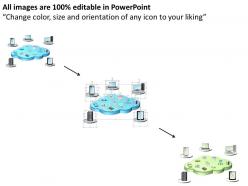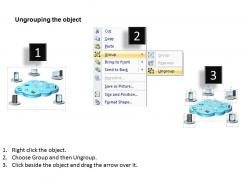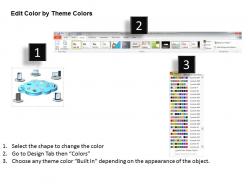
0814 Cloud Computing mit Komponenten der Infrastruktur umgeben von mobilen Geräten Ppt Slides
Try Before you Buy Download Free Sample Product
Audience
Editable
of Time
Unsere 0814 Cloud Computing mit Komponenten der Infrastruktur umgeben von mobilen Geräten Ppt Slides ermöglichen den Zugang zu den Fakten. Sie müssen nicht raten.
Funktionen dieser PowerPoint-Präsentationsfolien:
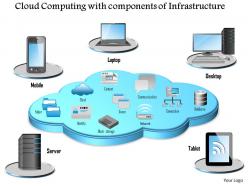
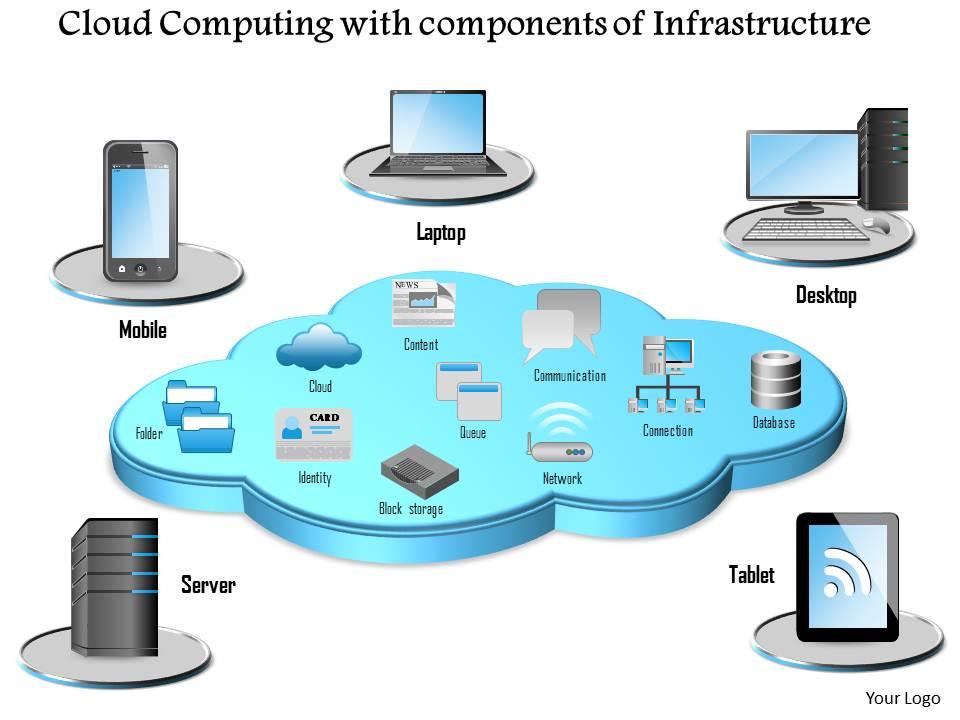
Wir sind stolz, Ihnen unser 0814 Cloud Computing mit Infrastrukturkomponenten, umgeben von mobilen Geräten ppt-Folien, präsentieren zu können. Diese Bildfolie zeigt eine Cloud mit Infrastrukturkomponenten, die von mobilen Geräten umgeben sind. Diese Bildfolie wurde mit einer 3D-Cloud-Grafik mit Komponenten von Infrastrukturtext und verschiedenen Technologiegeräten erstellt. Diese Bildfolie zeigt Cloud Computing. Sie können Größe, Farbe und Ausrichtung jedes Symbols nach Ihren Wünschen ändern. Verwenden Sie diese PowerPoint-Vorlage in Ihren Präsentationen, um Konzepte wie Cloud Computing, Technologie und Wirtschaft zu erläutern. Diese Bildfolie verbessert die Qualität Ihrer Präsentationen.
People who downloaded this PowerPoint presentation also viewed the following :
0814 Cloud Computing mit Komponenten einer von Mobilgeräten umgebenen Infrastruktur Ppt-Folien mit allen 6 Folien:
Unsere 0814 Cloud Computing mit Komponenten der Infrastruktur umgeben von mobilen Geräten Ppt Slides ermöglichen freien Ideenfluss. Sie ermöglichen einen Meinungsaustausch.
FAQs for 0814 cloud computing with components of infrastructure surrounded by mobile
Cloud computing delivers scalability, cost reduction, enhanced collaboration, improved security, and increased operational flexibility for organizations. These technologies streamline business operations by eliminating infrastructure overhead, enabling remote workforce productivity, and providing automatic updates, with many enterprises finding that cloud adoption accelerates innovation while reducing IT costs by up to 30%.
Cloud computing enhances collaboration by providing real-time document sharing, centralized data access, unified communication platforms, and seamless project management tools accessible from anywhere. Through cloud-based solutions, distributed teams achieve instant file synchronization, concurrent editing capabilities, and integrated video conferencing, while reducing coordination delays and enabling organizations to maintain productivity across global operations.
Public clouds offer shared infrastructure managed by providers like AWS or Azure, private clouds deliver dedicated resources within single organizations, and hybrid clouds combine both approaches for strategic flexibility. These models enable businesses to balance cost efficiency, security requirements, and scalability needs, with many financial institutions and healthcare organizations finding that hybrid approaches deliver optimal resource allocation while maintaining compliance standards.
Organizations ensure cloud security and compliance by implementing multi-factor authentication, data encryption, regular security audits, robust access controls, and comprehensive backup strategies. Through strategic partnerships with certified cloud providers, businesses achieve enhanced data protection, streamlined regulatory adherence, and improved operational efficiency, while maintaining transparency and control over sensitive information across scalable infrastructure environments.
Service Level Agreements (SLAs) in cloud computing contracts establish performance standards, uptime guarantees, response times, data security requirements, and compensation frameworks for service failures. These agreements enable organizations to maintain operational predictability and accountability, with many enterprises finding that well-structured SLAs deliver measurable service quality, risk mitigation, and competitive advantage through guaranteed cloud performance standards.
Common cloud migration challenges include data security concerns, application compatibility issues, cost management complexities, staff training requirements, and integration difficulties with existing systems. Many organizations find that addressing these through phased migration approaches, comprehensive security frameworks, and strategic partnerships with cloud providers ultimately delivers improved scalability and operational efficiency.
Cloud computing reduces costs and enhances operational efficiency by eliminating upfront infrastructure investments, minimizing maintenance expenses, and enabling pay-as-you-use models. Organizations across sectors like healthcare, retail, and manufacturing streamline resource allocation, automate scaling processes, and accelerate deployment times, ultimately delivering reduced operational overhead and improved competitive positioning.
Future cloud innovations include edge computing, serverless architectures, AI-integrated platforms, quantum cloud services, and multi-cloud orchestration tools. These technologies streamline operations by reducing latency, automating resource management, and enhancing scalability, with organizations across healthcare, finance, and manufacturing finding that strategic cloud adoption ultimately delivers competitive advantages and operational efficiency.
Cloud computing platforms handle scalability through auto-scaling technologies, load balancers, elastic resource allocation, distributed computing frameworks, and containerization services like Kubernetes. These systems automatically adjust computing power, storage, and bandwidth based on real-time demand, enabling organizations to minimize costs during low-usage periods while seamlessly expanding capacity during peak times, ultimately delivering operational efficiency and competitive advantage.
Cloud computing adoption presents both environmental challenges and opportunities, including increased data center energy consumption, electronic waste generation, carbon footprint concerns, water usage for cooling, and resource extraction for infrastructure. However, cloud providers increasingly leverage renewable energy, optimize server efficiency, and enable resource sharing that reduces overall IT environmental impact, with many organizations finding that consolidated cloud services deliver lower per-user emissions than traditional on-premises systems.
Businesses can optimize cloud usage through automated scaling, resource monitoring, rightsizing instances, eliminating unused services, and implementing cost allocation tags. Through strategic governance policies and regular audits, organizations streamline operations while reducing expenses by 20-40%, with many financial services and retail companies finding that proactive optimization delivers significant competitive advantage and operational efficiency.
Vendor lock-in implications include limited migration flexibility, dependency on single providers, potential cost escalation, reduced negotiation power, and compatibility constraints with proprietary systems. While this presents challenges for organizations seeking strategic agility, many enterprises mitigate risks through multi-cloud strategies, standardized APIs, and careful contract negotiations, ultimately maintaining competitive advantages while leveraging specialized cloud capabilities.
Industries leverage cloud computing through scalable infrastructure, data analytics, automation, and collaborative platforms to transform operations and customer experiences. Healthcare organizations streamline patient records and telemedicine, financial services enhance fraud detection and mobile banking, while retail companies optimize inventory management and personalized marketing, ultimately delivering faster services, reduced costs, and competitive advantage.
Best practices for managing multi-cloud environments include standardized governance policies, centralized monitoring and security protocols, automated deployment pipelines, and consistent data management strategies. These approaches streamline operations by reducing complexity, enhancing visibility across platforms, and minimizing vendor lock-in risks, with many organizations finding that strategic multi-cloud management delivers greater flexibility and operational resilience.
Artificial intelligence integrates with cloud computing through machine learning platforms, automated resource management, intelligent data analytics, predictive scaling, and AI-powered security monitoring. These technologies streamline operations by optimizing server allocation, enhancing user experiences through personalized recommendations, and enabling real-time threat detection, with many organizations finding that this strategic combination delivers faster services, reduced operational costs, and significant competitive advantages.
-
Top Quality presentations that are easily editable.
-
Best Representation of topics, really appreciable.