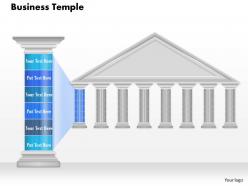
0914 business plan business temple graphic with pillar for text powerpoint presentation template
Try Before you Buy Download Free Sample Product
Audience
Editable
of Time
Create the image of being the 'Go to' man. Strengthen this view with our 0914 Business Plan Business Temple Graphic With Pillar For Text Powerpoint Presentation Template.
People who downloaded this PowerPoint presentation also viewed the following :
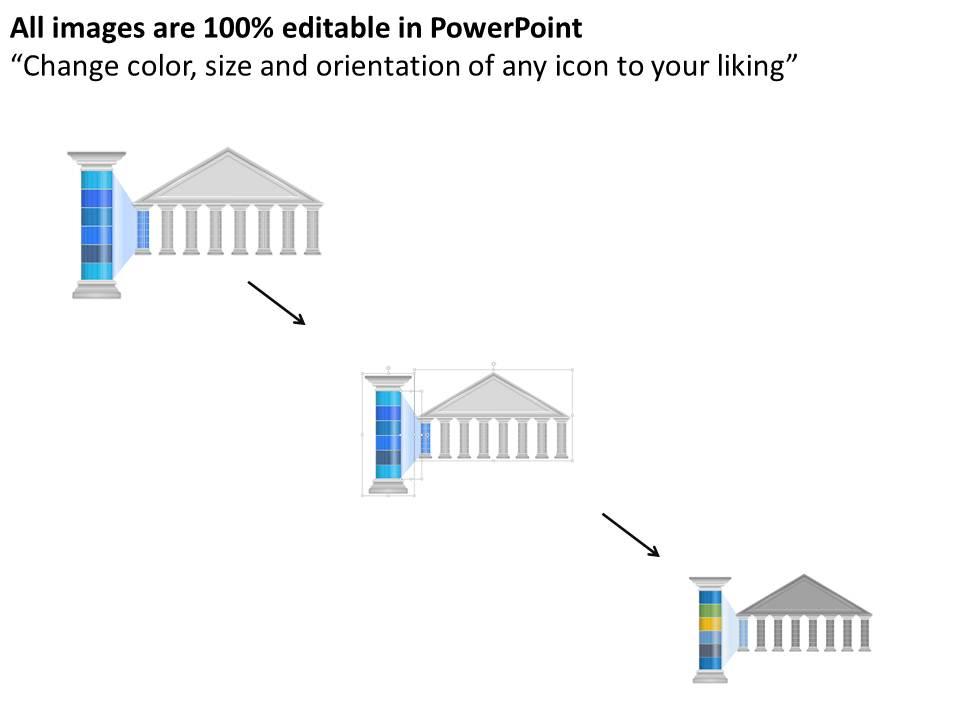
0914 business plan business temple graphic with pillar for text powerpoint presentation template with all 6 slides:
Benefit from the block buster effect of our 0914 Business Plan Business Temple Graphic With Pillar For Text Powerpoint Presentation Template. Demands for your creativity will double.
FAQs for 0914 business plan business temple graphic with pillar for text
Hey! So you'll need the usual suspects: executive summary, company description, market analysis, your org structure, product details, marketing plan, funding requests, and financial projections. Most people totally forget about the appendix but that's where all your supporting docs go. Honestly, the executive summary is make-or-break since investors basically decide if they're gonna keep reading after that first page. Don't go crazy optimistic with your numbers either - that screams amateur hour. Just grab a template online and tweak it for whatever industry you're in.
Dude, you NEED visuals in your business plan presentation. Seriously, I've sat through so many slide decks that were just walls of text - instant snooze fest. Charts make your financial stuff actually readable. Product mockups help investors picture what you're building. For the complicated sections, think infographics or timelines. White space is your friend too. Just don't get carried away with crazy animations (learned that one the hard way). Keep it clean but interesting. Oh, and graphs are way better than spreadsheet dumps for showing market data.
Don't just fill in the blanks like it's some worksheet - that's the biggest trap. You need to actually customize everything to fit your real business, not just throw in answers that sound professional. Half these templates are way too long anyway, so cut sections that don't apply to you. Your numbers better make sense too - investors can smell BS financial projections from miles away. Oh, and here's something people forget: keep updating the thing as your business changes. It's not homework you finish once and never touch again.
The template structure works fine for most industries, but you gotta swap out all the generic stuff with real data. Focus on the industry analysis and competitive sections first - that's where investors will spot BS immediately. Replace those cookie-cutter financial projections with actual metrics your industry cares about. SaaS companies need CAC numbers, retail needs inventory turnover, etc. Same with marketing channels - if your industry runs on trade shows, don't put social media as your main strategy. Honestly the biggest thing is using real benchmarks and terminology instead of placeholder examples. That's what separates legit business plans from template garbage.
Look, market analysis is what separates actual businesses from those random "million dollar ideas" people have in the shower. You're basically proving your concept isn't totally delusional. Start with your ideal customer - who are they, what do they want? Then figure out how big this market actually is and who you're competing against. Your template should cover demographics, market size, growth trends, all that stuff. This is what convinces investors (and honestly, yourself) that people will actually buy your product. Without it, you're just guessing and hoping for the best.
Honestly, templates are clutch because everyone already knows how to read them. Investors can jump straight to the financials, partners check out your market research, employees want the vision stuff - you know the drill. It's like speaking the same language. Templates also make sure you don't forget the obvious stuff that people always ask about anyway. The cool part is you can tweak the same template depending on who you're pitching to. Just highlight whatever section matters most to them and you're golden.
So you need three main projections: income statement, cash flow, and balance sheet - usually 3-5 years out. Income statement tracks revenue vs expenses (tons of people mess this up by mixing revenue with actual cash). Cash flow is honestly more crucial since it shows the timing of money moving in and out. Balance sheet covers your assets, liabilities, equity stuff. Break-even analysis is smart too - shows when you'll actually turn profitable. I'd do monthly for the first year, then quarterly after that. Way easier than trying to predict every single month five years out.
Okay so business plan templates are actually pretty clutch - they make you think through your goals step by step instead of just winging it. Like instead of "let's make more money," you're forced to write down actual numbers, deadlines, and how you'll hit them. The sections walk you through market research, who you're competing against, what resources you need. Honestly feels like training wheels but in a good way? You end up with realistic goals backed by actual data instead of just hoping for the best. I'd grab a basic template and tackle one section at a time.
Definitely stick with consistent headings and bullet points - makes it so much easier to scan through. Your exec summary should be one page tops. I'd go Arial or Calibri for fonts (nothing fancy). Charts work way better than cramming all those financial numbers into paragraphs - trust me on this one. Each section needs to flow logically from market stuff to your financial projections. Don't forget page numbers! Oh, and leave plenty of white space because walls of text are brutal. Have someone else look it over first though - you'll miss formatting mistakes you've been staring at forever.
Honestly, templates are lifesavers because you won't sit there staring at a blank page forever. They make you organize everything the way investors actually expect - financials, market stuff, competition analysis, all that. You don't accidentally skip the funding section or whatever else they always grill you about. Following the standard format gives you instant credibility too since investors review hundreds of these things. Oh, and definitely grab one with built-in financial spreadsheets if you can. Investors eat that stuff up when the numbers are laid out properly. Way better than trying to wing it from scratch.
So basically, traditional business plans are these massive 20-40 page beasts with all the financial projections and market research - banks eat that stuff up. Lean startup plans? Just one page focusing on your main assumptions. Here's the thing though - those detailed plans take forever to write and half the time they're wrong anyway. Lean plans let you test ideas fast and pivot when customers tell you something different than what you expected. Honestly, if you're just getting started, I'd go lean first. Way less painful, and you can always beef it up later once you actually know what you're doing.
Honestly, tech tools are a game-changer for business plans. Templates in Google Docs or Canva do all the formatting work for you - no more ugly Word docs. Financial stuff used to be such a pain, but LivePlan basically does your cash flow projections automatically. AI can help when you're totally stuck on market research too. Oh, and your whole team can edit at the same time, which is pretty clutch. I'd start simple with templates first. You can always get fancier tools later when things get complicated. Trust me, it's so much easier than the old-school way.
Honestly, at least once a year but quarterly is way better if you can manage it. I know it sounds like a pain, but hear me out. Your market's probably changing faster than you think, plus any big funding or pivot definitely needs an immediate update. I've watched so many people stick with plans from like 2019 that are completely irrelevant now - don't be that person. Just set a calendar reminder for a quick 30-minute review every few months. Check your numbers, see if your assumptions still make sense. Way easier than realizing six months later that you've been chasing the wrong goals.
Your executive summary is basically your elevator pitch in writing. Hit the main stuff: what problem you're solving, who's buying it, why you'll beat competitors, and your money projections. If you need funding, throw that in too. Management team highlights and how you make money should be there as well. Honestly, some investors skip straight to this part first, so don't mess it up. Keep it tight but interesting - it's their first look at everything you've built. Oh, and write it last even though it goes at the front. That way you can grab the best pieces from your full plan.
Look at what actually worked for real companies instead of just theory. Grab like 5-10 case studies from your industry and see which parts of their business plans investors cared about most. The failed ones are gold too - they'll show you what not to do. I've seen so many templates that look perfect on paper but miss the stuff that actually matters. Financial projections that made sense, sections that got funding, how they structured everything. Each industry does it differently anyway. Build your template around these real examples instead of generic academic stuff that sounds impressive but doesn't work.
-
Design layout is very impressive.
-
Excellent products for quick understanding.