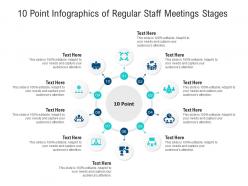
10 point of regular staff meetings stages infographic template

Rating:
90%
10 point of regular staff meetings stages infographic template
Slide 1 of 2
Favourites Favourites

Try Before you Buy Download Free Sample Product

Audience Impress Your
Audience
Editable 100%
Editable
Time Save Hours
of Time
The Biggest Sale is ending soon in
0
0
:
0
0
:
0
0
Rating:
90%
This is a single slide titled 10 Point Of Regular Staff Meetings Stages Infographic Template. It is crafted using high quality vector based visuals that are 100 percent editable and available for immediate download in standard and widescreen aspect ratios.

People who downloaded this PowerPoint presentation also viewed the following :

FAQs for 10 point of regular staff meetings

Regular staff meetings deliver improved communication, enhanced team alignment, faster problem resolution, increased employee engagement, and stronger collaborative relationships across departments. Through consistent touchpoints, organizations streamline decision-making processes, minimize miscommunications, and accelerate project timelines, with many companies finding that weekly structured meetings ultimately boost productivity and create more cohesive workplace cultures.

Regular staff meetings improve team communication and collaboration by creating structured opportunities for information sharing, addressing challenges collectively, and aligning on priorities and deadlines. These gatherings enable teams to clarify expectations, coordinate cross-functional projects, and resolve conflicts proactively, with many organizations finding that consistent meeting rhythms ultimately deliver stronger workplace relationships and enhanced operational efficiency.

Strategies include setting clear agendas with time limits, encouraging interactive participation through brainstorming sessions, rotating meeting leadership among team members, incorporating visual aids or presentations, and focusing discussions on actionable outcomes rather than status updates. Organizations across industries find that implementing structured feedback sessions, breakout groups for larger teams, and follow-up accountability measures significantly enhance engagement while streamlining decision-making processes.

Staff meetings should typically be scheduled weekly for most teams, though frequency depends on project urgency, team size, and organizational needs. Weekly sessions enable consistent communication, progress tracking, and issue resolution, while bi-weekly meetings work well for established teams with stable workflows, ultimately delivering improved coordination and productivity without overwhelming schedules.

The ideal staff meeting duration is 30-45 minutes for regular weekly meetings, with focused agenda items and clear objectives to maintain participant engagement and productivity. This timeframe allows sufficient discussion while preventing attention fatigue, with many organizations finding that shorter, structured meetings enhance decision-making efficiency and encourage active participation across teams.

Leaders foster inclusive staff meetings by establishing clear participation guidelines, actively soliciting input from quieter team members, rotating speaking opportunities, and ensuring diverse perspectives are heard. These approaches create psychological safety, encourage open dialogue, and enhance team collaboration, with many organizations finding that structured inclusivity practices significantly improve employee engagement and decision-making quality.

An agenda provides structure by outlining discussion topics, allocating time for each item, establishing priorities, and ensuring comprehensive coverage of important issues. This framework enables meeting leaders to maintain focus, facilitate productive discussions, and prevent tangential conversations, while participants can prepare effectively, contributing meaningfully to strategic outcomes and operational efficiency.

Technology enhances remote staff meetings through high-definition video conferencing, screen sharing capabilities, real-time collaboration tools, automated transcription services, and cloud-based document access. These solutions streamline communication by eliminating geographical barriers, enabling seamless file sharing, and providing meeting recordings for future reference, with many organizations finding that integrated platforms ultimately deliver improved engagement and operational efficiency.

Common pitfalls include lack of clear agendas, allowing discussions to drift off-topic, dominated conversations by few participants, inadequate follow-up on action items, and scheduling overly lengthy sessions. These challenges can be streamlined by establishing structured frameworks, encouraging balanced participation, and implementing accountability measures, with many organizations finding that focused, time-bound meetings ultimately deliver better engagement and measurable outcomes.

Team member feedback can be incorporated through post-meeting surveys, suggestion boxes, rotating agenda input responsibilities, and dedicated feedback segments during meetings themselves. Organizations increasingly find that soliciting input on meeting format, timing, topics, and effectiveness enhances engagement and productivity, with many teams implementing monthly feedback reviews to continuously optimize their meeting structure and outcomes.

Techniques include direct questioning with advance notice, rotating facilitation roles, small group breakouts, anonymous input methods, and creating structured speaking opportunities for each member. These approaches streamline participation by reducing intimidation, enhancing psychological safety, and ensuring diverse perspectives, with many organizations finding that quieter members often deliver the most valuable insights when given appropriate platforms.

Organizations can evaluate staff meeting effectiveness through engagement metrics, outcome tracking, time efficiency measures, participation rates, and follow-up completion statistics. These assessments enable companies to streamline their meeting processes by identifying productive discussion patterns, measuring decision implementation speed, and optimizing resource allocation, with many finding that data-driven meeting evaluation ultimately delivers enhanced team productivity and operational efficiency.

Regular staff meetings align team goals with organizational objectives by providing consistent communication channels, establishing clear performance metrics, and creating accountability frameworks that connect individual contributions to company-wide priorities. Through structured discussions, teams can adjust strategies, address resource allocation challenges, and track progress against strategic milestones, ultimately ensuring cohesive execution across departments.

Staff meeting minutes should include date and attendees, key discussion points and decisions made, action items with assigned owners and deadlines, and any unresolved issues requiring follow-up. These comprehensive records streamline future planning, enhance accountability across teams, and ensure continuity when staff transitions occur, with many organizations finding that detailed minutes significantly improve project tracking and strategic alignment.

Follow-up actions from staff meetings can be tracked through digital task management systems, shared action item spreadsheets, automated email reminders, and designated accountability partners for each initiative. Many organizations find that combining weekly progress check-ins with visual dashboards streamlines accountability, while regular follow-up meetings ensure completion rates improve significantly, ultimately delivering enhanced team performance and operational efficiency.

Ratings and Reviews

90% of 100
Write a review
Most Relevant Reviews
  1. 100%

    by Cordell Jordan

    Editable templates with innovative design and color combination.
  2. 80%

    by Earle Willis

    Best way of representation of the topic.

2 Item(s)

per page: