


1G zu 5G Evolution Powerpoint-Präsentationsfolien
Besorgen Sie sich unsere effektiv kuratierte 1G zu 5G Evolution-Vorlage. Es gibt einen kurzen Überblick über die Entwicklung und Hintergründe des ersten Mobiltelefons und die Entwicklung der 5G-Technologie im Laufe der Zeit. Wir haben die Entwicklung des 5G-Technologiesystems in der drahtlosen Telekommunikation in unserem 1G-zu-5G-Deck behandelt. Es enthält einen Überblick, eine Liste seiner Hauptmerkmale und eine Diskussion seiner Nachteile. Unsere 1G to 5G Evolution PPT enthält auch eine Zusammenfassung der 2,5G- und 2,75G-Systeme und Informationen zu den Hauptmerkmalen und Nachteilen von GSM, einem Kommunikationssystem der zweiten Generation. Eine Einführung in die dritte Generation von Kommunikationssystemen wird in der PPT-Präsentation gegeben, gefolgt von einer Diskussion ihrer Hauptvorteile, Nachteile und Systeme der Generation 3,5G bis 3,75G. Darüber hinaus enthält unsere 1G-zu-5G-Technologiepräsentation eine Zusammenfassung von 4G und 5G sowie Informationen zu ihren wichtigsten Merkmalen, Vorteilen, Anwendungsfällen, Sicherheitsmerkmalen und dem aktuellen Rollout-Status des 5G-Netzwerks. Darüber hinaus enthält es einen Zeitplan und eine Roadmap für die Entwicklung der drahtlosen Telekommunikation und stellt die Telekommunikationstechnologien der 1. Generation der 5. Generation gegenüber. Jetzt zugreifen.
Besorgen Sie sich unsere effektiv kuratierte 1G zu 5G Evolution-Vorlage. Es gibt einen kurzen Überblick über die Entwicklun..









































-

- Google Slides is a new FREE Presentation software from Google.
- All our content is 100% compatible with Google Slides.
- Just download our designs, and upload them to Google Slides and they will work automatically.
- Amaze your audience with SlideTeam and Google Slides.
-

Want Changes to This PPT Slide? Check out our Presentation Design Services
-

- WideScreen Aspect ratio is becoming a very popular format. When you download this product, the downloaded ZIP will contain this product in both standard and widescreen format.
-

- Some older products that we have may only be in standard format, but they can easily be converted to widescreen.
- To do this, please open the SlideTeam product in Powerpoint, and go to
- Design ( On the top bar) -> Page Setup -> and select "On-screen Show (16:9)” in the drop down for "Slides Sized for".
- The slide or theme will change to widescreen, and all graphics will adjust automatically. You can similarly convert our content to any other desired screen aspect ratio.
Compatible With Google Slides

Get This In WideScreen
You must be logged in to download this presentation.


Do you want to remove this product from your favourites?
Merkmale dieser PowerPoint-Präsentationsfolien :
Stellen Sie dieses vollständige Deck Ihren Teammitgliedern und anderen Mitarbeitern zur Verfügung. Umgeben von stilisierten Folien, die verschiedene Konzepte präsentieren, ist diese Powerpoint-Präsentationsfolie von 1G zu 5G Evolution das beste Tool, das Sie verwenden können. Personalisieren Sie den Inhalt und die Grafiken, um ihn einzigartig und zum Nachdenken anzuregen. Alle achtundsechzig Folien können bearbeitet und geändert werden, Sie können sie also gerne an Ihre Geschäftsumgebung anpassen. Die Schriftart, Farbe und andere Komponenten sind ebenfalls in einem bearbeitbaren Format erhältlich, was dieses PPT-Design zur besten Wahl für Ihre nächste Präsentation macht. Also, jetzt herunterladen.

People who downloaded this PowerPoint presentation also viewed the following :
Inhalt dieser Powerpoint-Präsentation
Folie 1 : Diese Folie stellt die Evolution von 1G zu 5G vor. Beginnen Sie mit der Angabe Ihres Firmennamens.
Folie 2 : Diese Folie zeigt die Agenda der Präsentation.
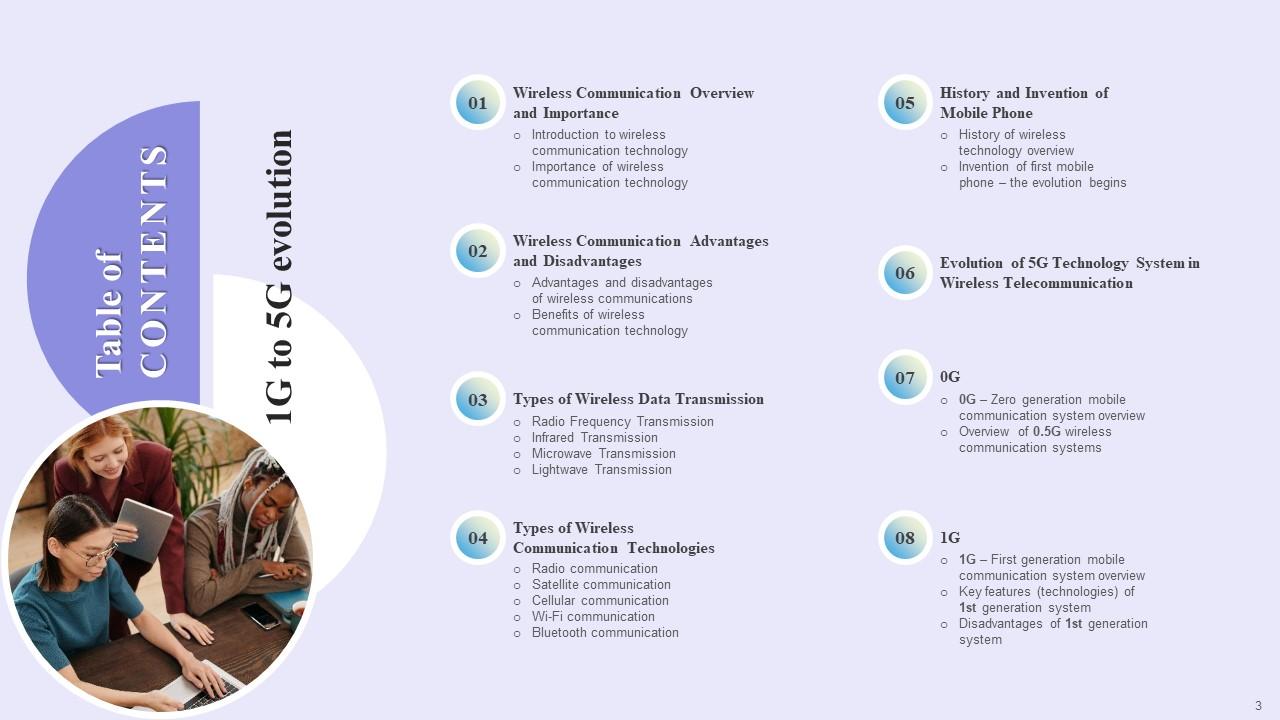
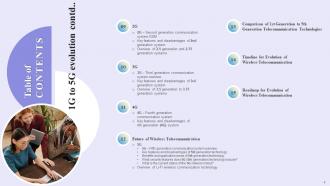
Folie 3 : Diese Folie enthält das Inhaltsverzeichnis.
Folie 4 : Dies ist eine weitere Folie, die das Inhaltsverzeichnis fortsetzt.
Folie 5 : Diese Folie hebt die Titel der weiter zu diskutierenden Themen hervor.
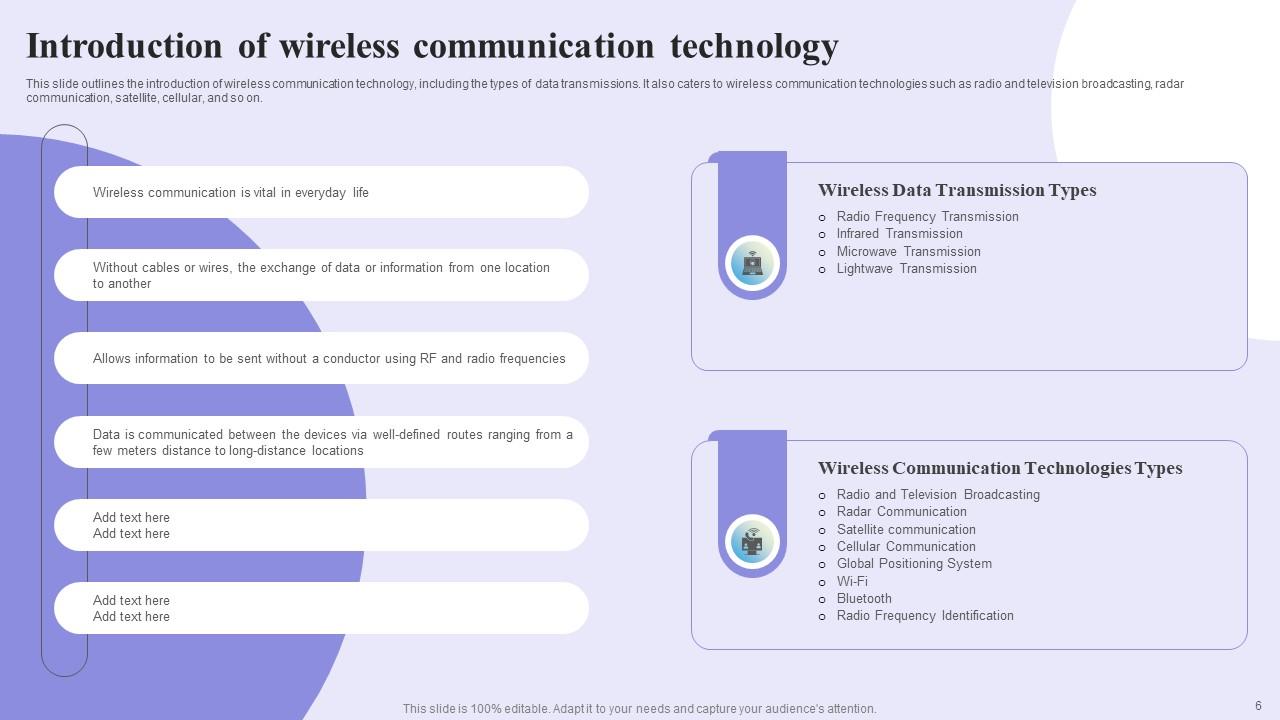
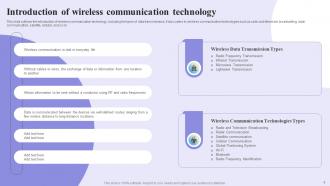
Folie 6 : Diese Folie skizziert die Einführung der drahtlosen Kommunikationstechnologie.
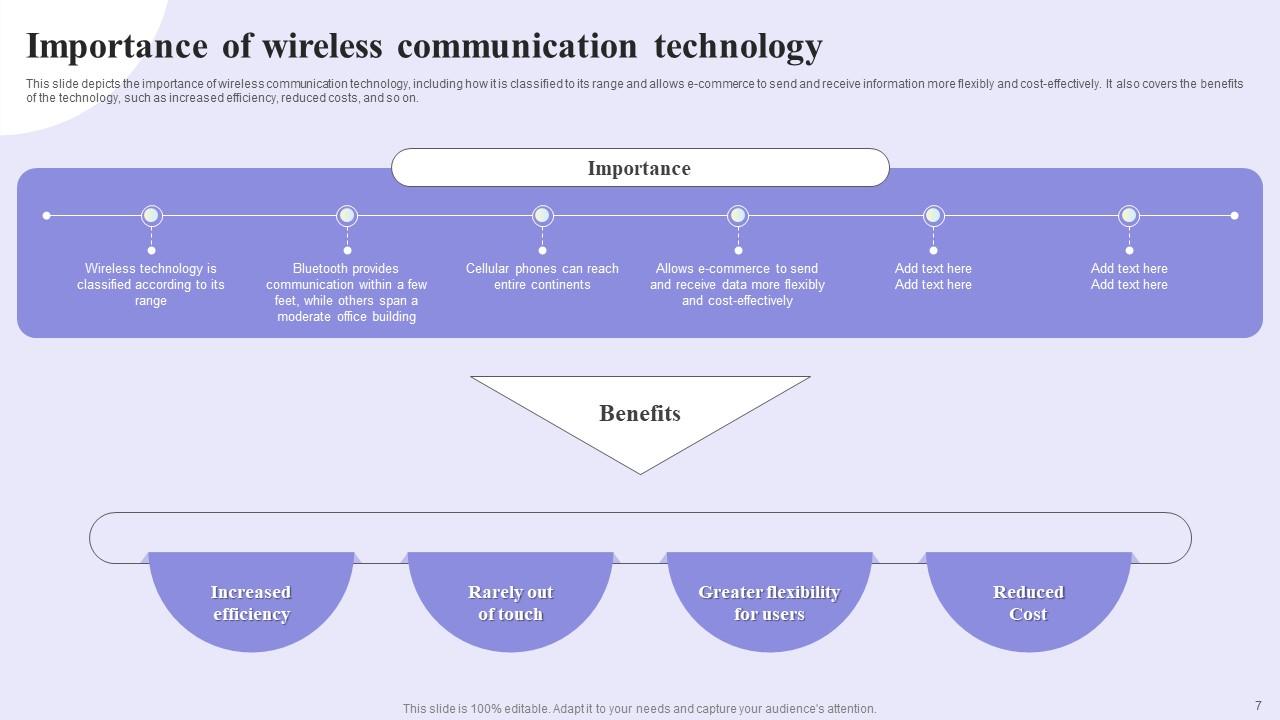
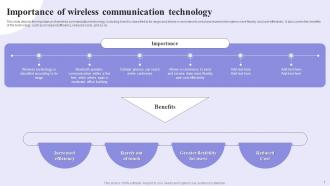
Folie 7 : Diese Folie zeigt die Bedeutung der drahtlosen Kommunikationstechnologie.
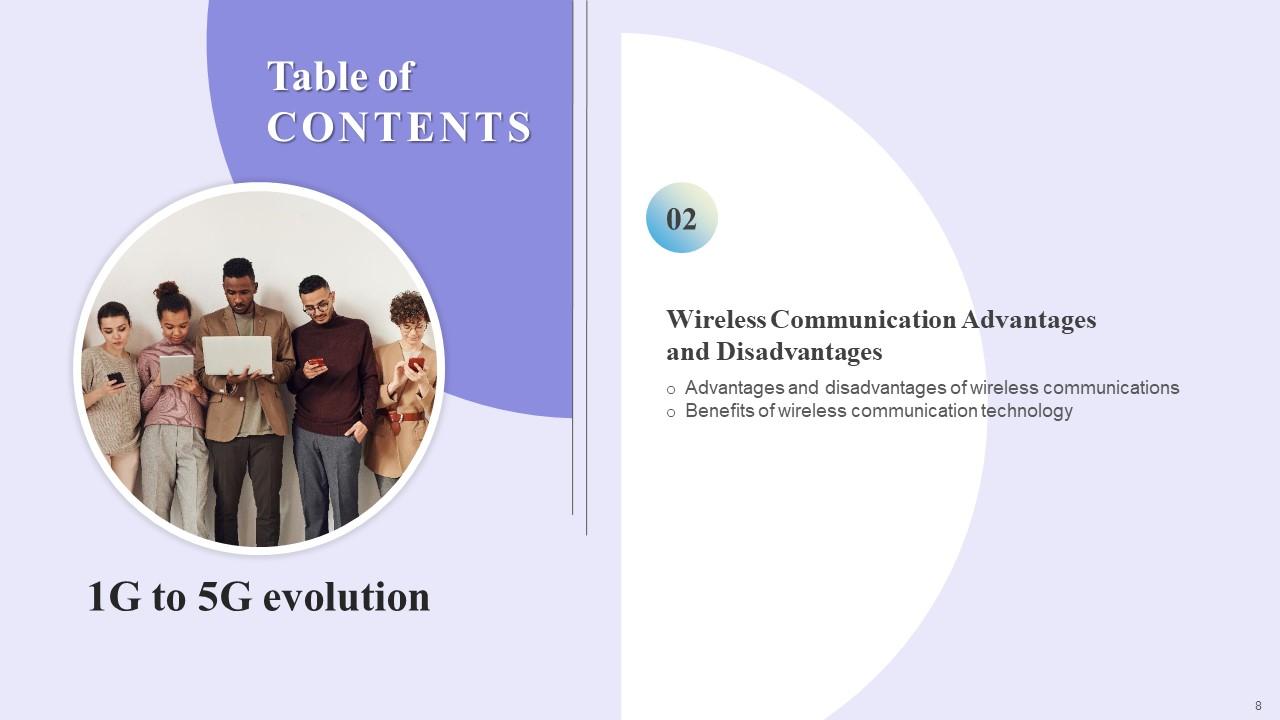
Folie 8 : Diese Folie zeigt die Überschrift für die Komponenten, die in der nächsten Vorlage behandelt werden sollen.
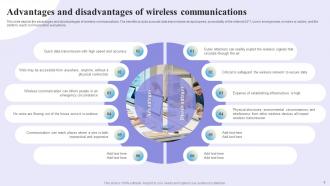
Folie 9 : Diese Folie zeigt die Vor- und Nachteile der drahtlosen Kommunikation.
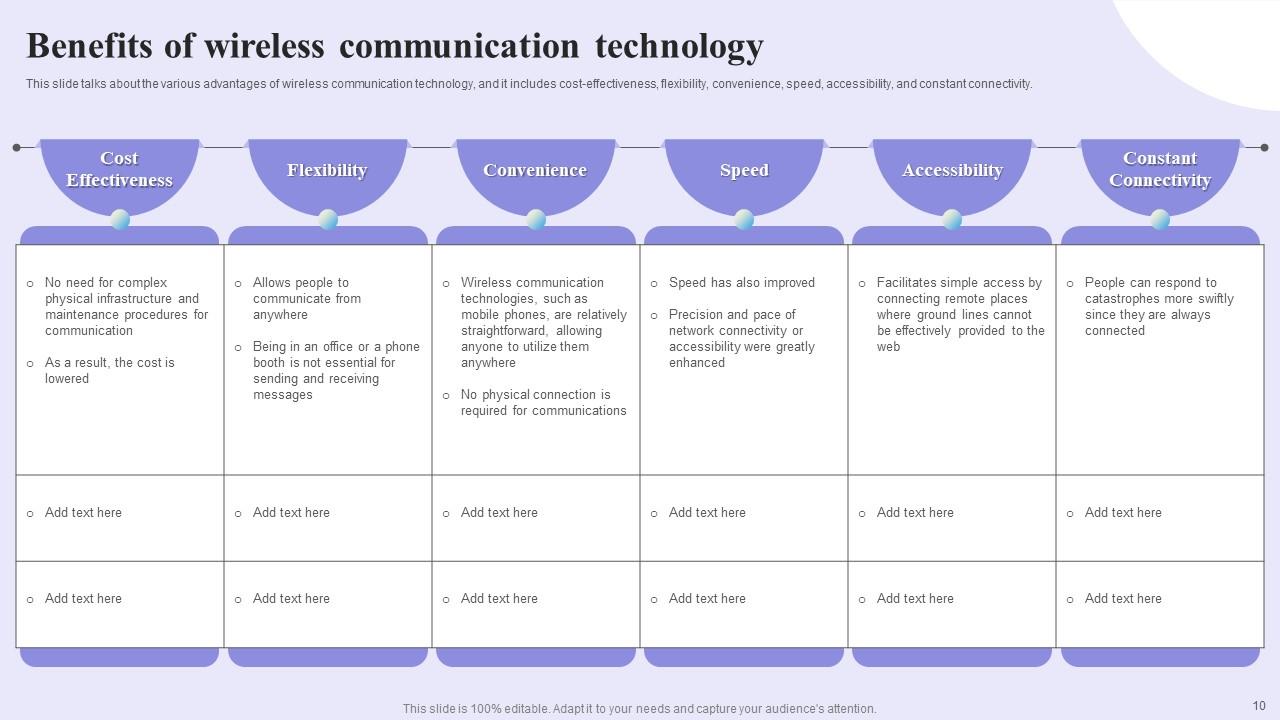
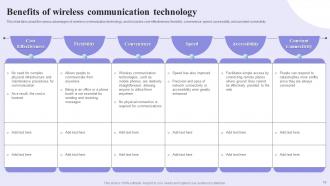
Folie 10 : Diese Folie zeigt die Vorteile der drahtlosen Kommunikationstechnologie.
Folie 11 : Diese Folie erwähnt den Titel für die Ideen, die in der bevorstehenden Vorlage diskutiert werden sollen.
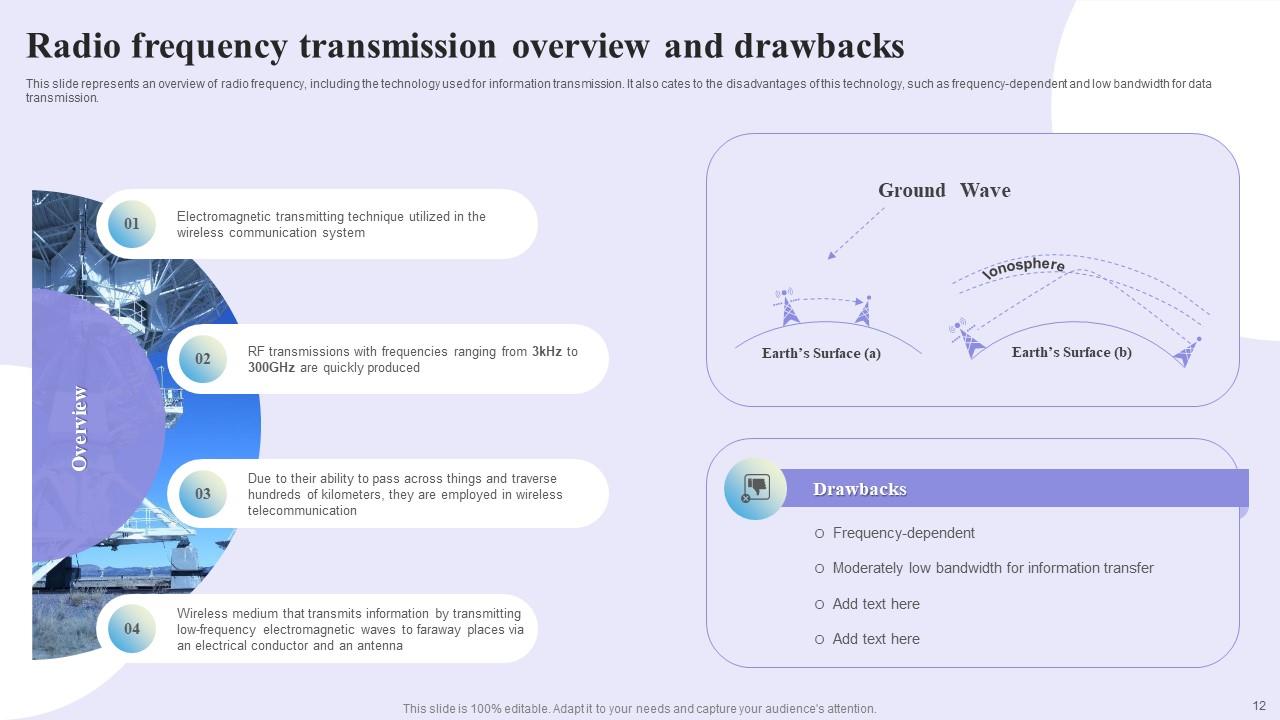
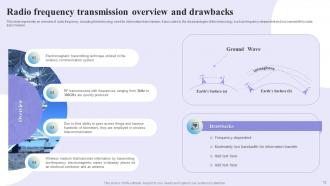
Folie 12 : Diese Folie hebt die Übersicht über die Funkfrequenzübertragung und ihre Nachteile hervor.
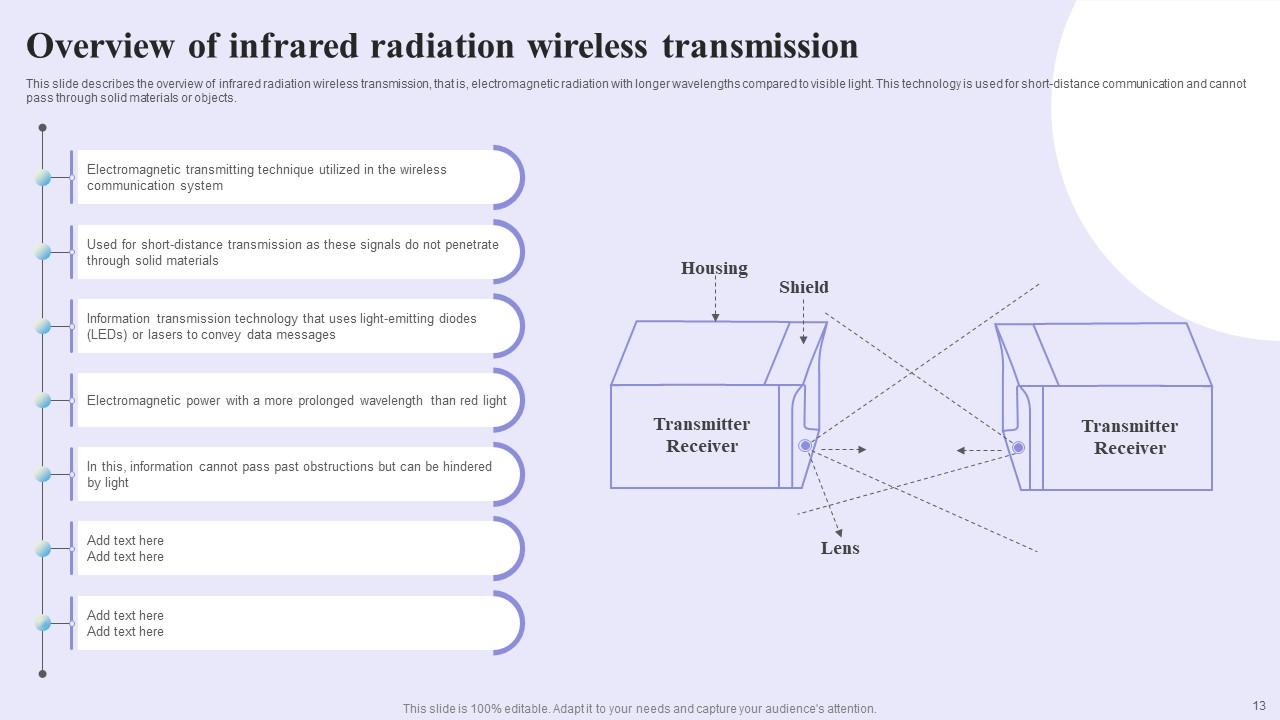
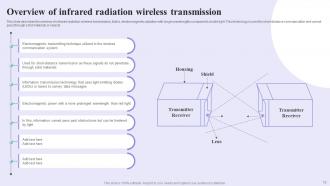
Folie 13 : Diese Folie beschreibt den Überblick über die drahtlose Übertragung von Infrarotstrahlung.
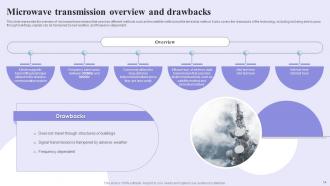
Folie 14 : Diese Folie gibt einen Überblick über die Mikrowellenübertragung, die zwei verschiedene Methoden verwendet.
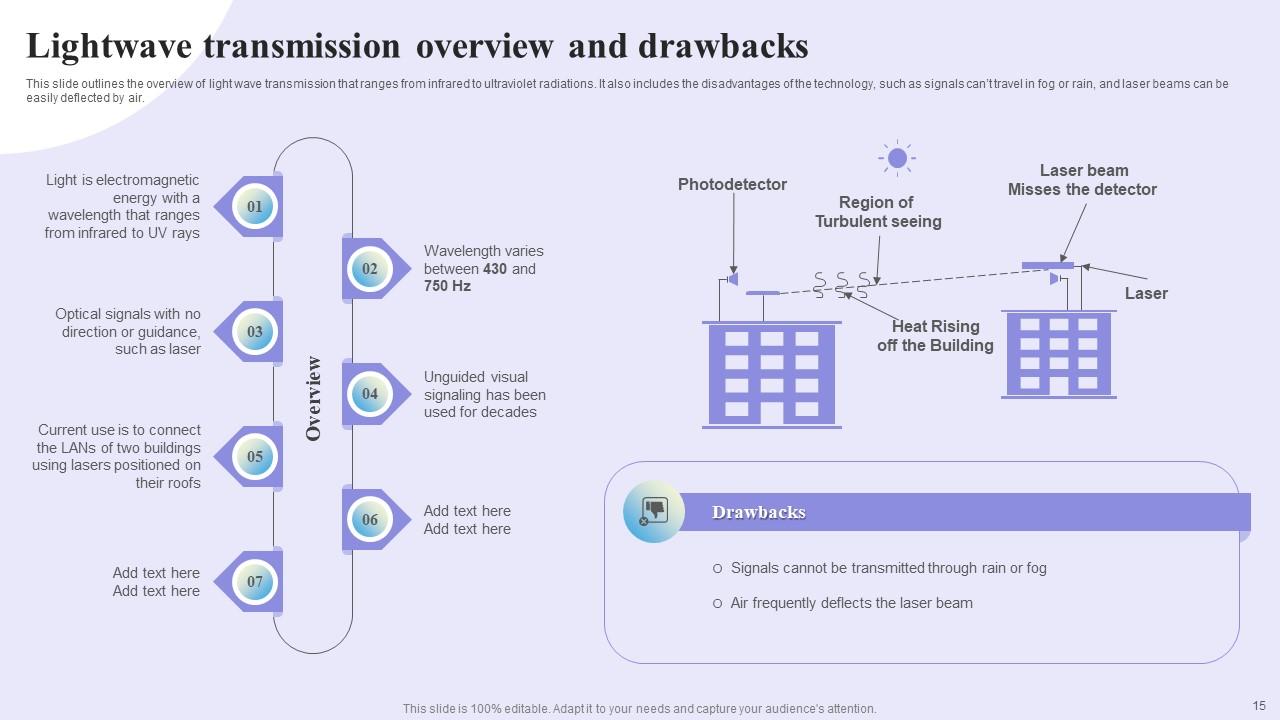
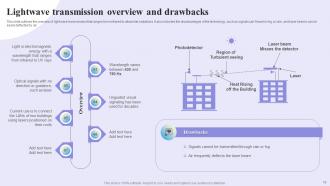
Folie 15 : Diese Folie gibt einen Überblick über die Übertragung von Lichtwellen, die von infraroter bis ultravioletter Strahlung reicht.
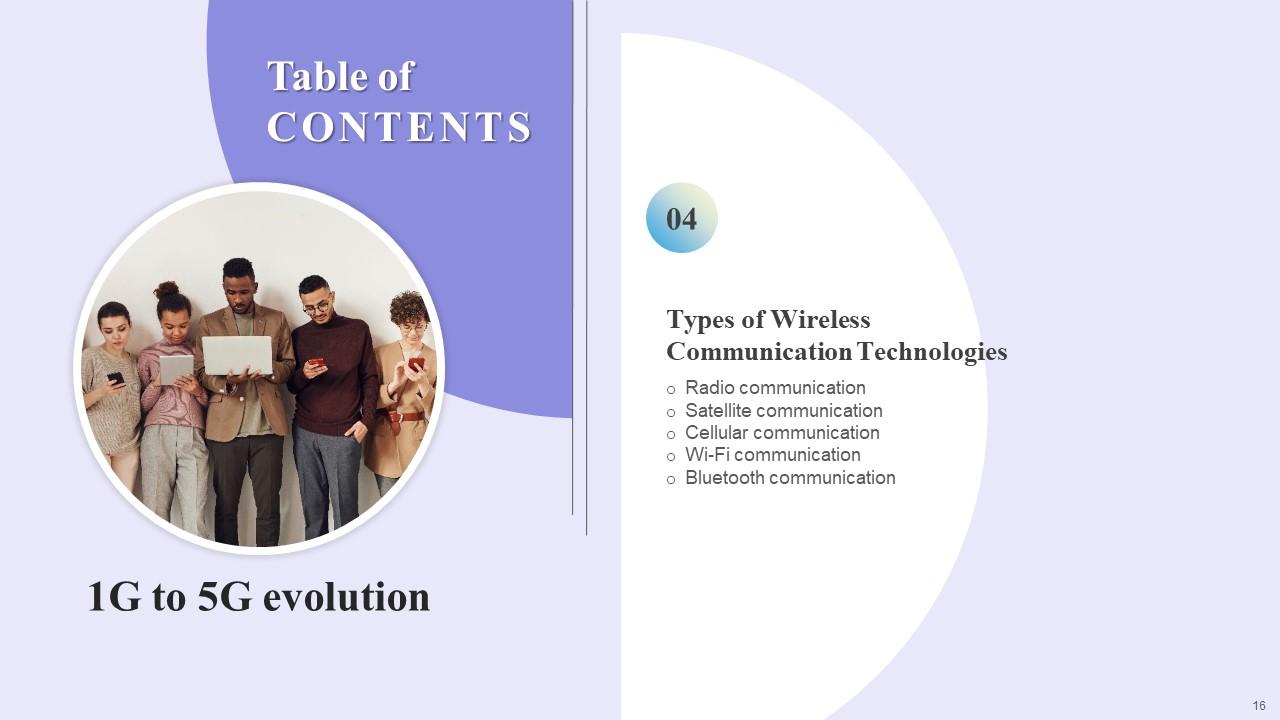
Folie 16 : Diese Folie zeigt die Überschrift für die als nächstes behandelten Ideen.
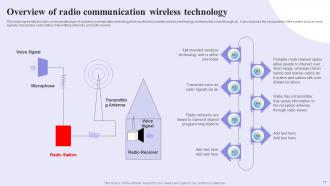
Folie 17 : Diese Folie stellt den Funkkommunikationstyp der drahtlosen Kommunikationstechnologie vor.
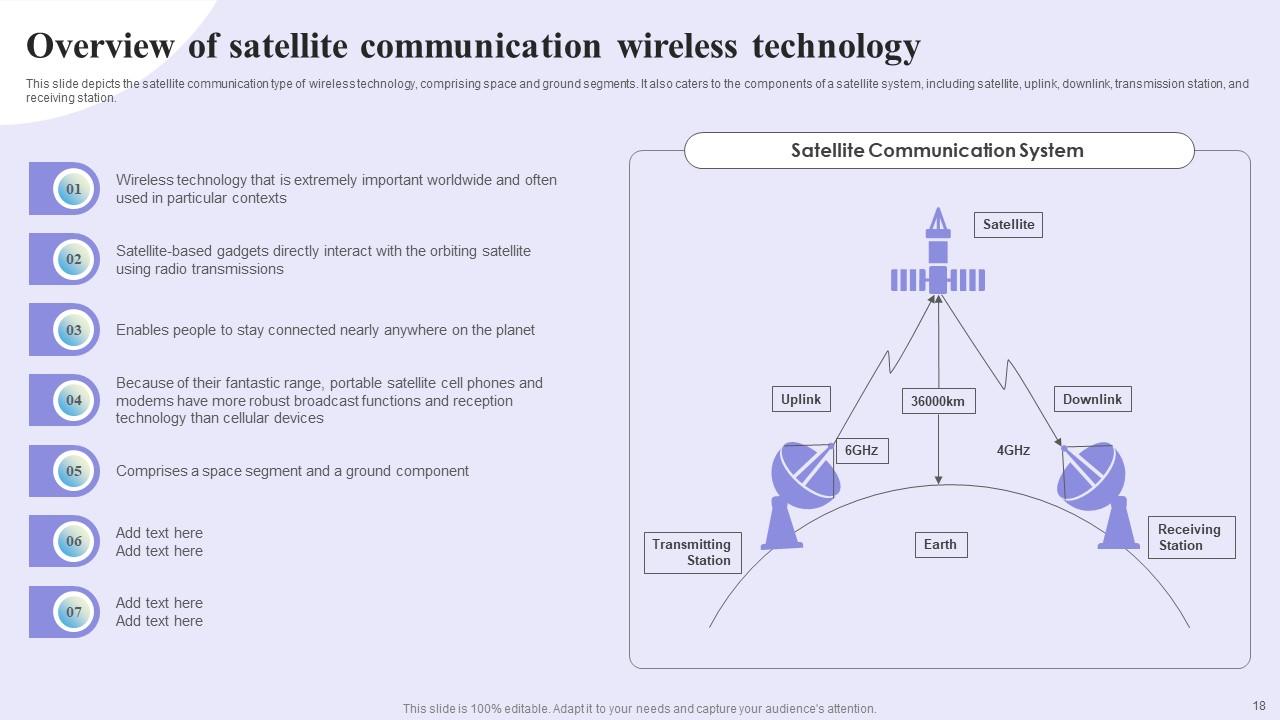
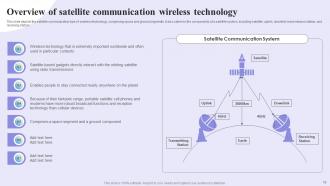
Folie 18 : Diese Folie zeigt die Satellitenkommunikationsart der drahtlosen Technologie, die Weltraum- und Bodensegmente umfasst.
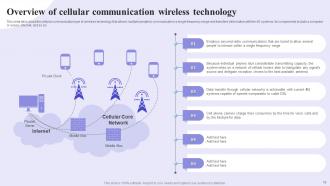
Folie 19 : Diese Folie spricht über die Art der Mobilfunkkommunikation der drahtlosen Technologie.
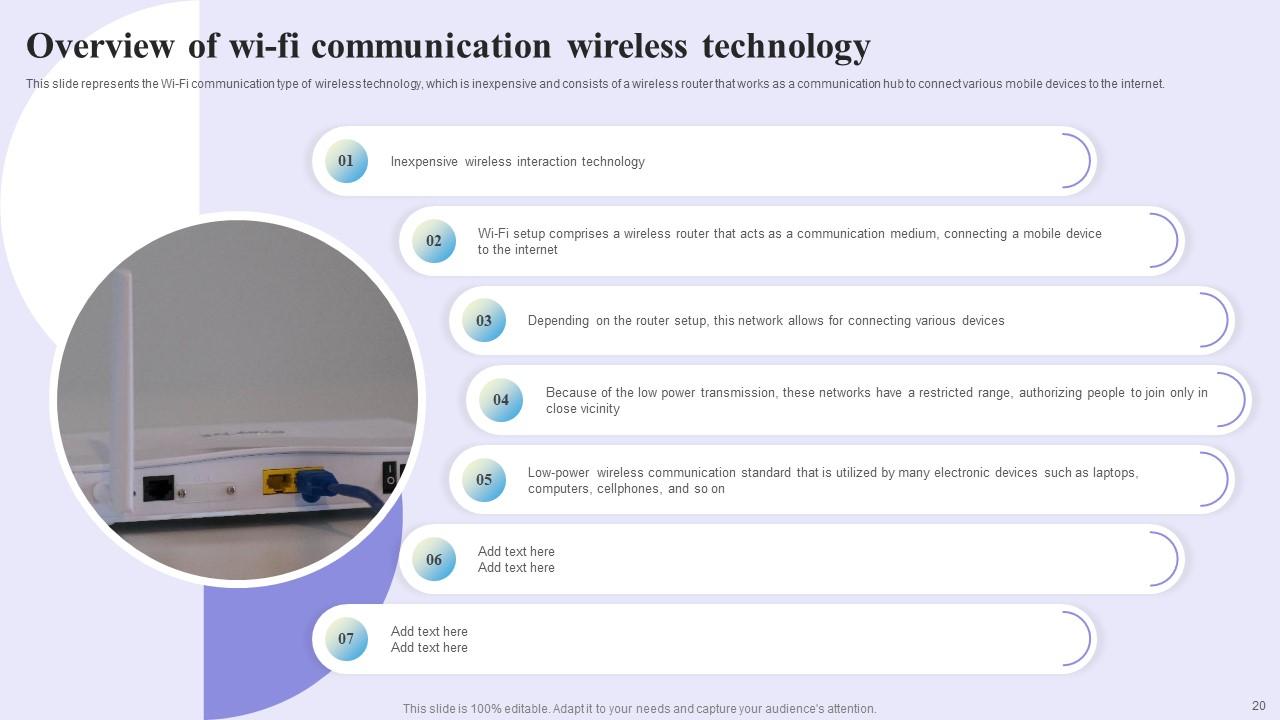
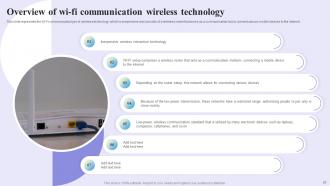
Folie 20 : Diese Folie repräsentiert den Wi-Fi-Kommunikationstyp der drahtlosen Technologie.
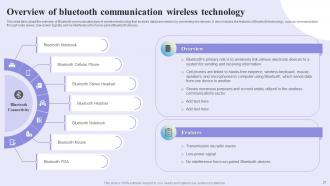
Folie 21 : Diese Folie gibt einen Überblick über den Bluetooth-Kommunikationstyp der drahtlosen Technologie.
Folie 22 : Diese Folie erläutert den Titel für die Themen, die in der folgenden Vorlage behandelt werden sollen.
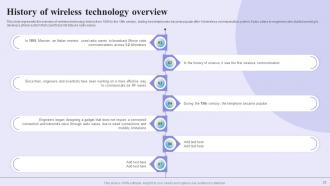
Folie 23 : Diese Folie gibt einen Überblick über die Geschichte der drahtlosen Technologie von 1895 bis zum 19. Jahrhundert.
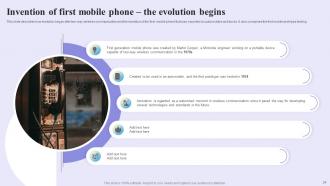
Folie 24 : Diese Folie beschreibt, wie die Evolution nach der drahtlosen Zwei-Wege-Kommunikation und der Erfindung des ersten Mobiltelefons begann, das in Autos und Lastwagen eingebaut wurde.
Folie 25 : Diese Folie enthält die Überschrift für die als nächstes zu besprechenden Inhalte.
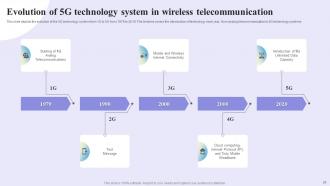
Folie 26 : Diese Folie zeigt die Entwicklung des 5G-Technologiesystems von 1G zu 5G von 1979 bis 2019.
Folie 27 : Diese Folie zeigt den Titel für die Ideen, die in der folgenden Vorlage behandelt werden sollen.
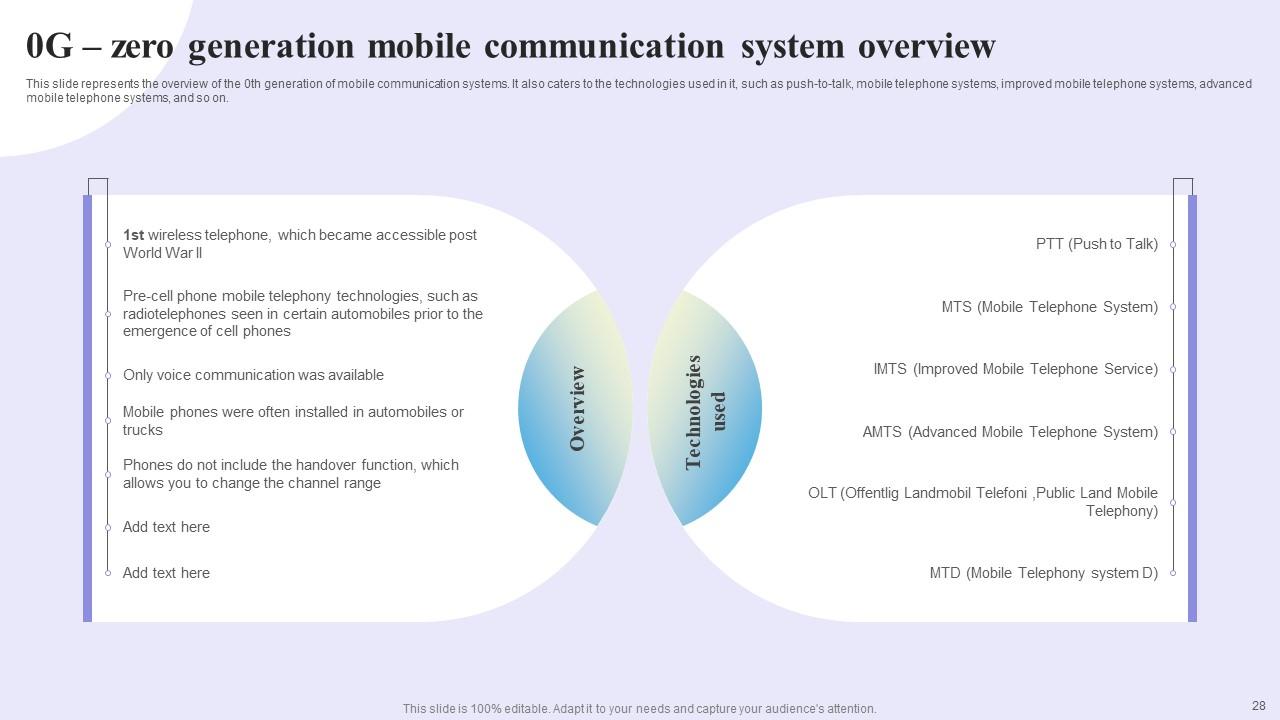
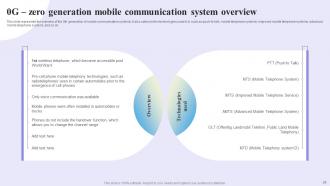
Folie 28 : Diese Folie gibt einen Überblick über die 0. Generation mobiler Kommunikationssysteme.
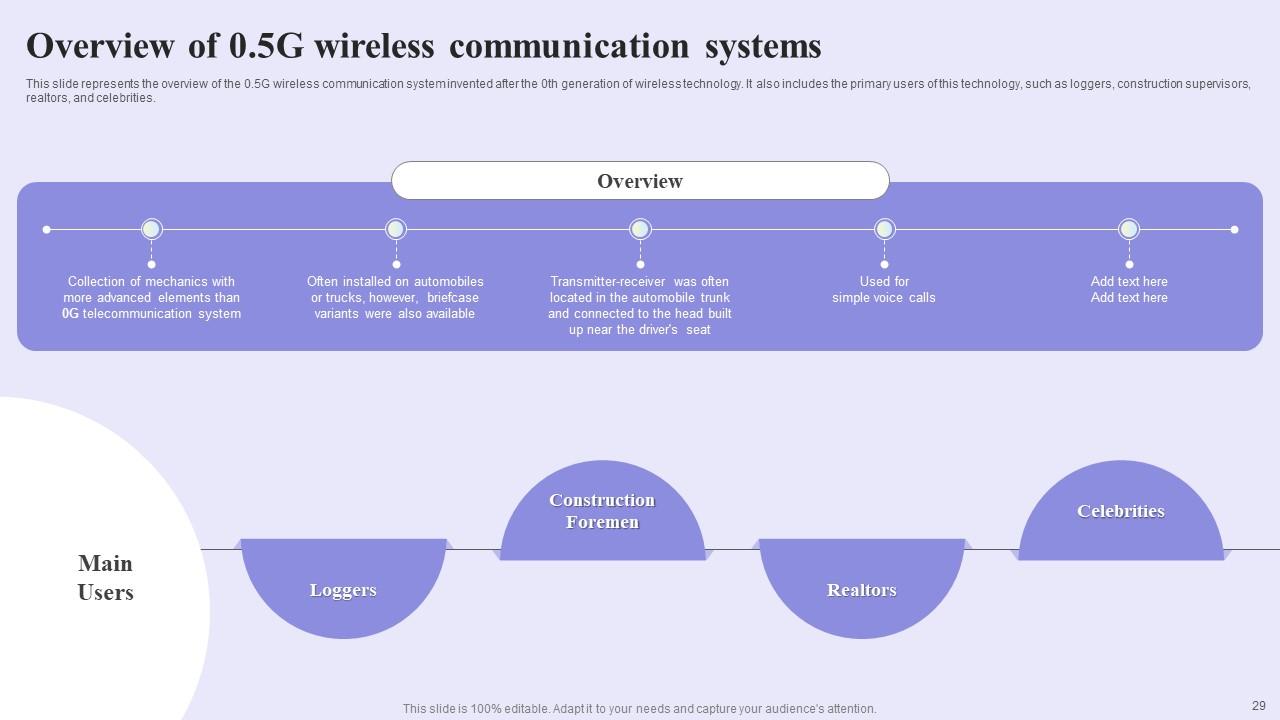
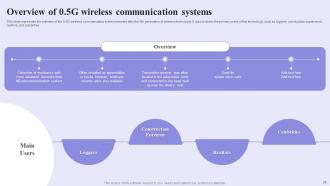
Folie 29 : Diese Folie zeigt den Überblick über drahtlose 0,5-G-Kommunikationssysteme.
Folie 30 : Diese Folie erläutert die Überschrift für die weiter zu diskutierenden Ideen.
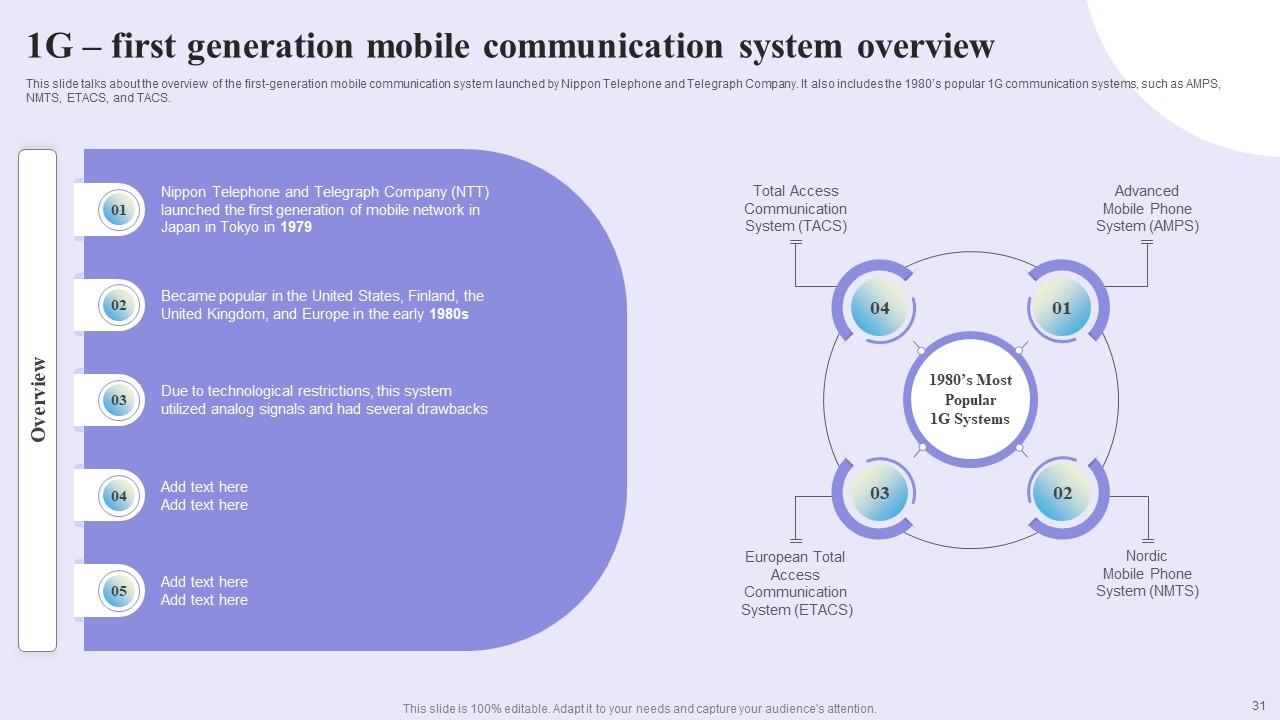
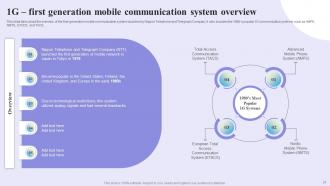
Folie 31 : Diese Folie gibt einen Überblick über das mobile Kommunikationssystem der ersten Generation, das von der Nippon Telephone and Telegraph Company eingeführt wurde.
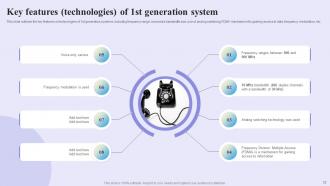
Folie 32 : Diese Folie umreißt die wichtigsten Merkmale oder Technologien von Systemen der 1. Generation.
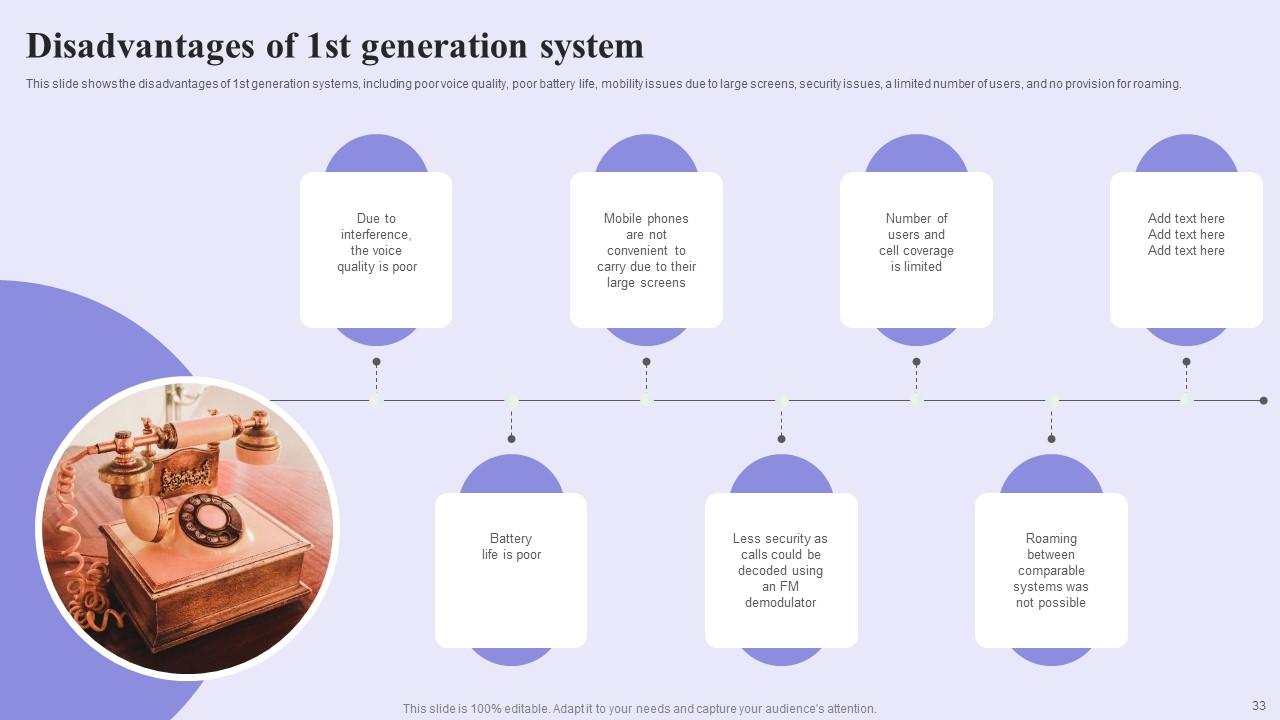
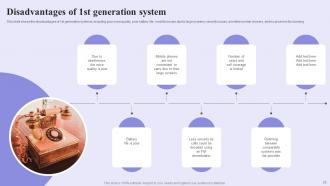
Folie 33 : Diese Folie zeigt die Nachteile des Systems der 1. Generation.
Folie 34 : Diese Folie zeigt den Titel für die Themen, die in der folgenden Vorlage behandelt werden sollen.
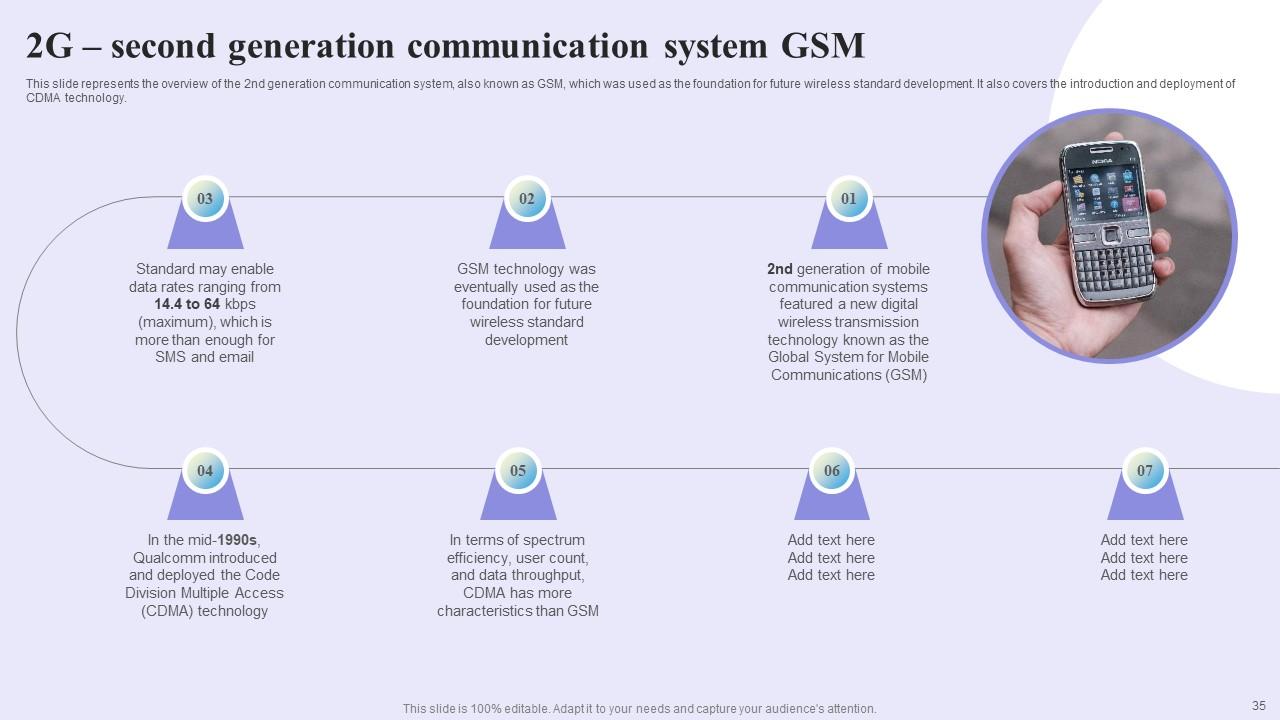
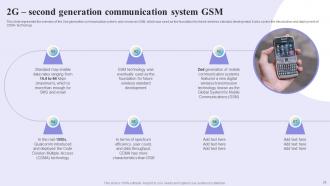
Folie 35 : Diese Folie gibt einen Überblick über das Kommunikationssystem der 2. Generation.
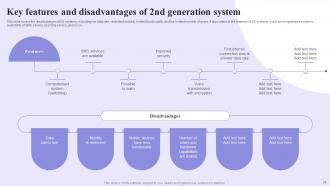
Folie 36 : Diese Folie zeigt die Hauptmerkmale und Nachteile des Systems der 2. Generation.
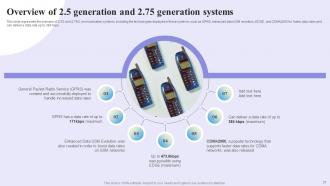
Folie 37 : Diese Folie gibt einen Überblick über 2,5-G- und 2,75-G-Kommunikationssysteme.
Folie 38 : Diese Folie hebt die Überschrift für die als nächstes zu besprechenden Komponenten hervor.
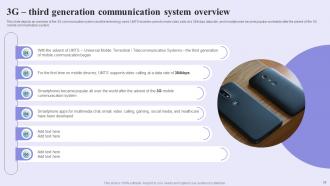
Folie 39 : Diese Folie gibt einen Überblick über das 3G-Kommunikationssystem und die verwendete Technologie.
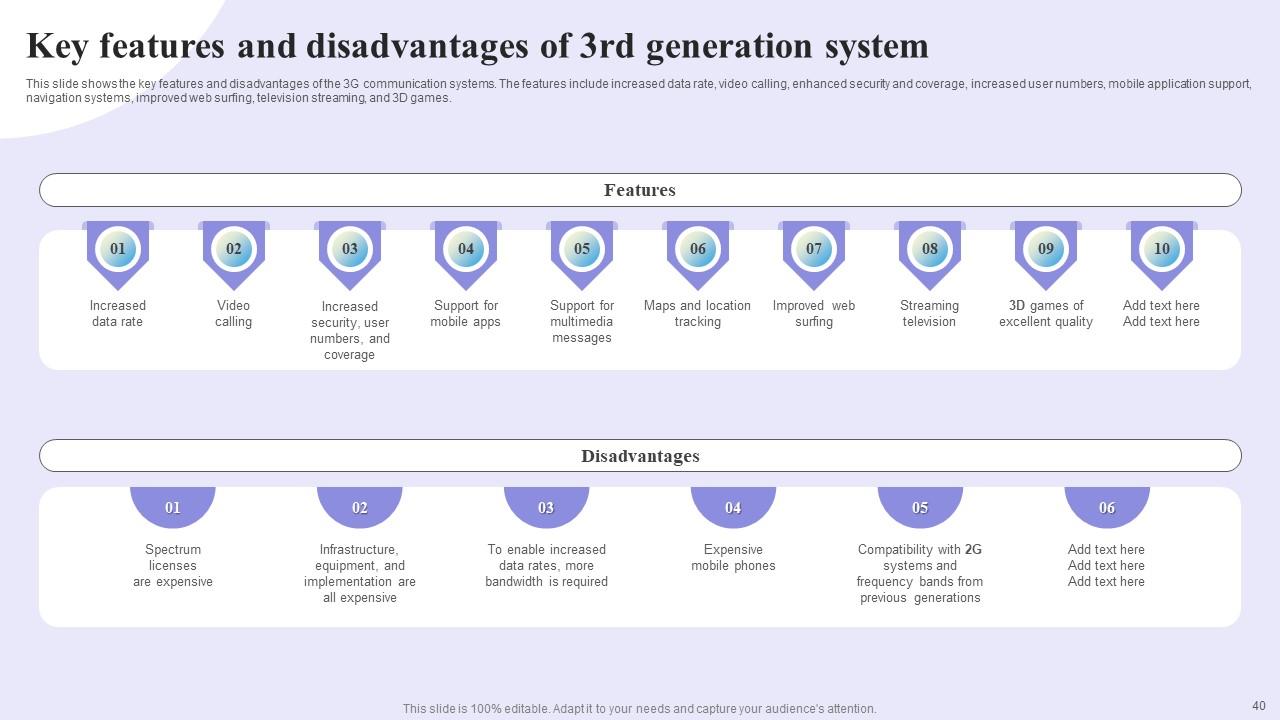
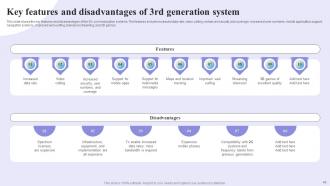
Folie 40 : Diese Folie zeigt die Hauptmerkmale und Nachteile des Systems der 3. Generation.
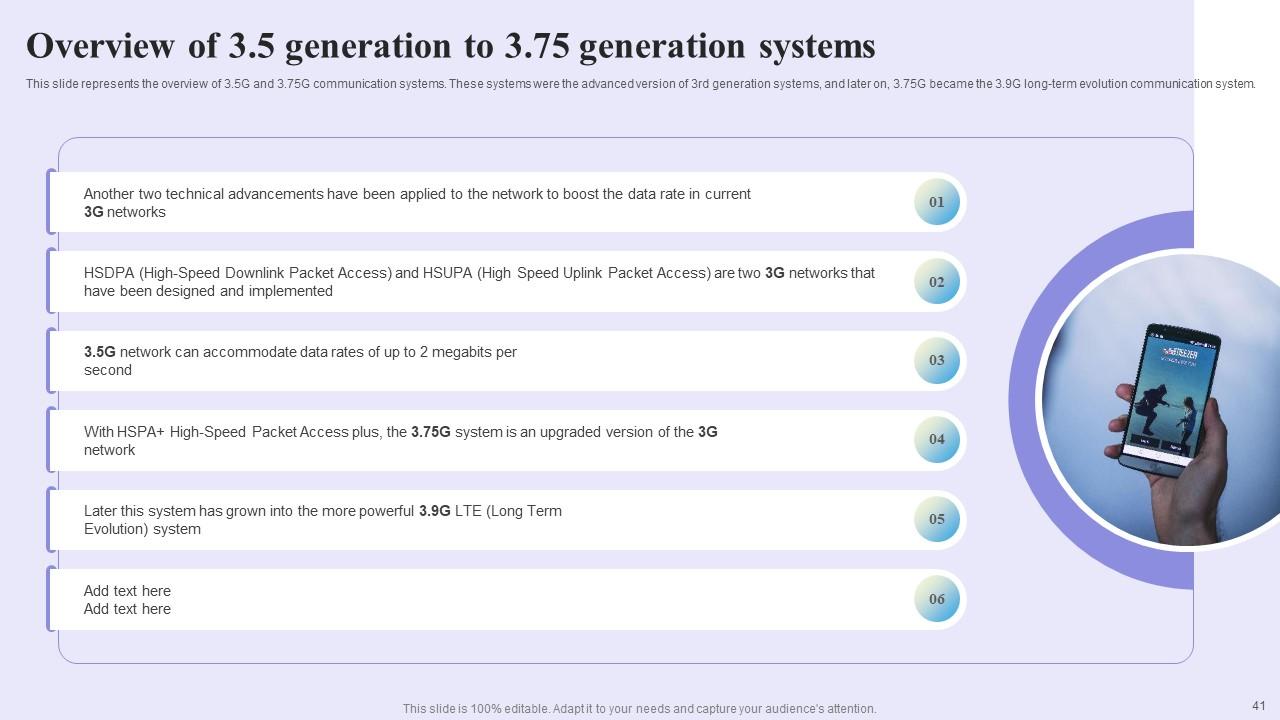
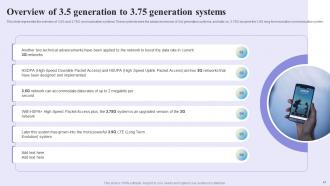
Folie 41 : Diese Folie gibt einen Überblick über 3,5G- und 3,75G-Kommunikationssysteme.
Folie 42 : Diese Folie gibt den Titel für die Inhalte an, die in der folgenden Vorlage behandelt werden sollen.
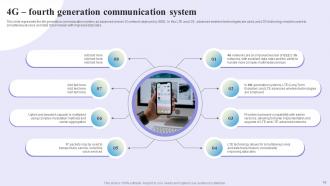
Folie 43 : Diese Folie zeigt das Kommunikationssystem der 4. Generation, eine erweiterte Version des 3G-Netzwerks, das von IEEE bereitgestellt wird.
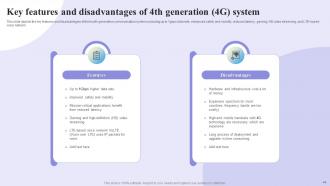
Folie 44 : Diese Folie zeigt die Hauptmerkmale und Nachteile des Kommunikationssystems der vierten Generation.
Folie 45 : Diese Folie präsentiert die Überschrift für die Themen, die in der demnächst erscheinenden Vorlage behandelt werden sollen.
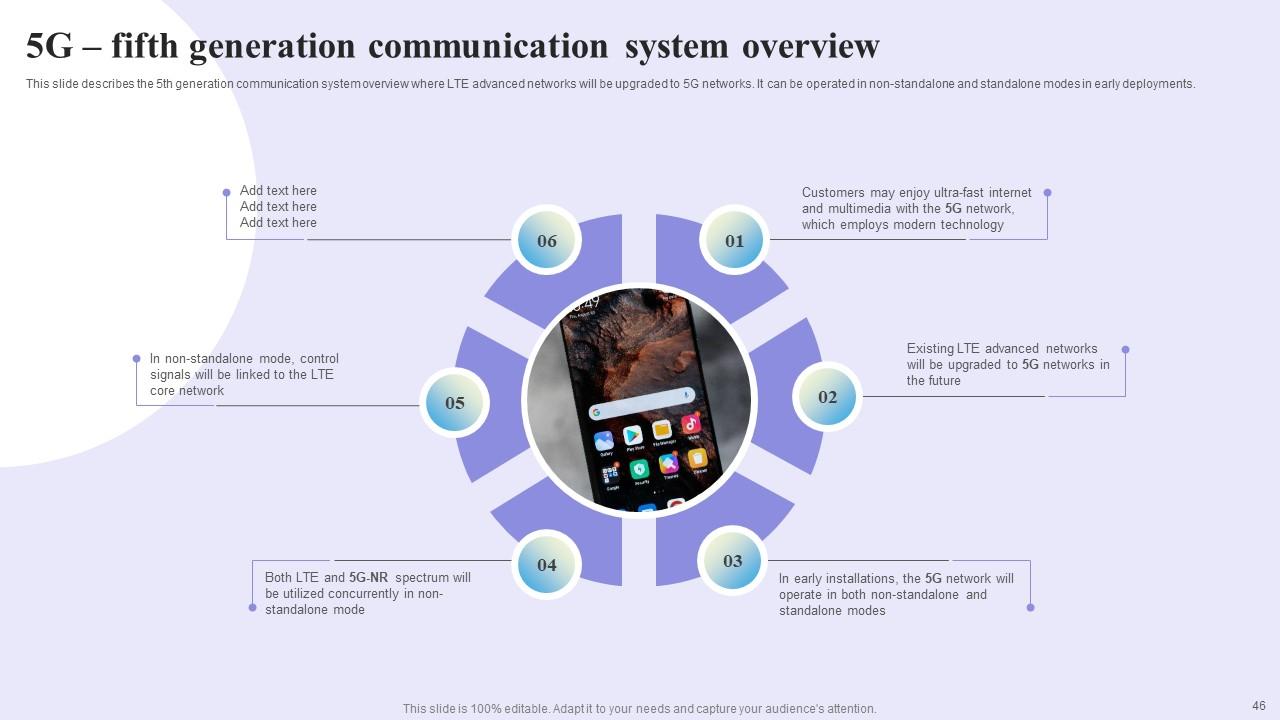
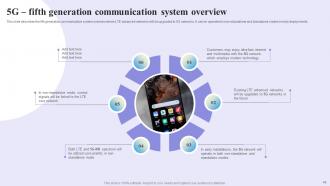
Folie 46 : Diese Folie beschreibt die Übersicht über die Kommunikationssysteme der 5. Generation, bei der erweiterte LTE-Netzwerke auf 5G-Netzwerke aufgerüstet werden.
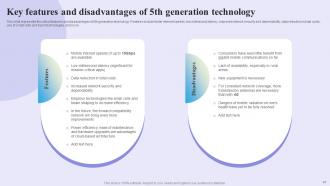
Folie 47 : Diese Folie zeigt die Hauptmerkmale und Nachteile der Technologie der 5. Generation.
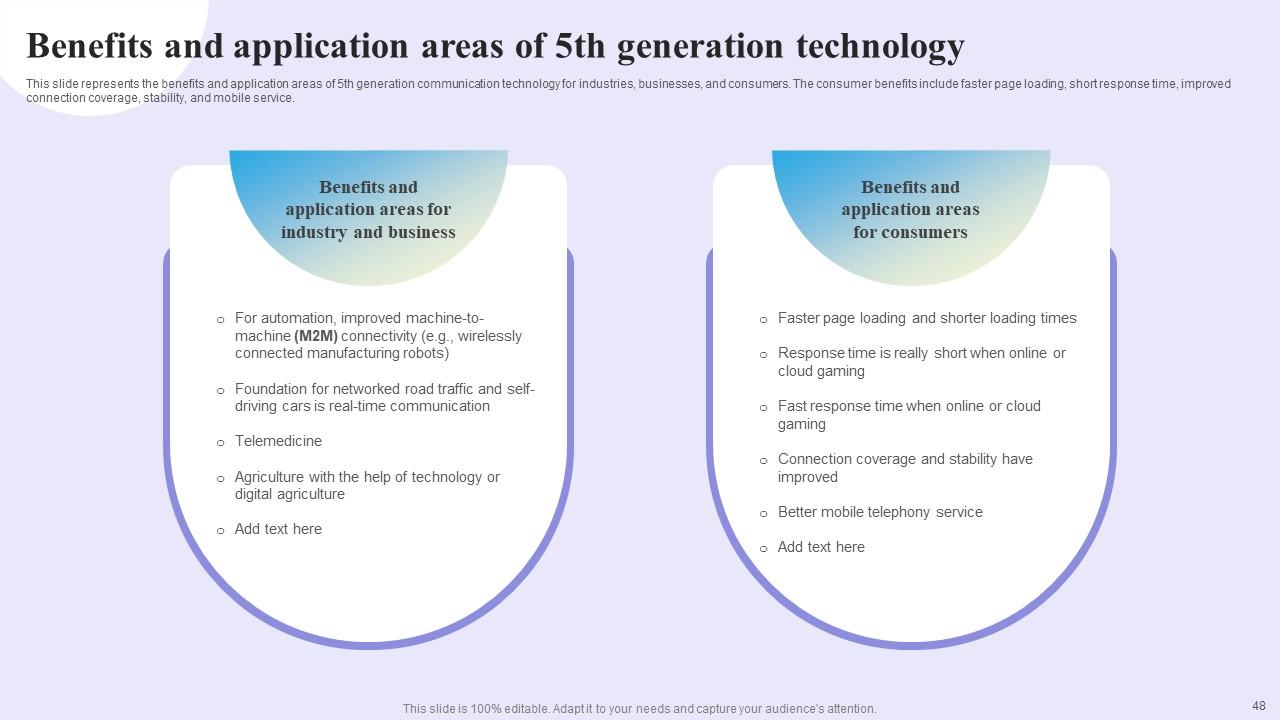
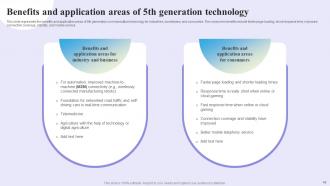
Folie 48 : Diese Folie zeigt die Vorteile und Anwendungsbereiche der Technologie der 5. Generation.
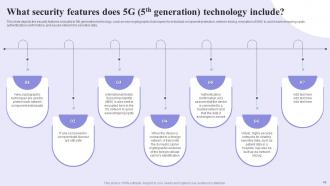
Folie 49 : Diese Folie zeigt die Sicherheitsmerkmale der Technologie der 5. Generation.
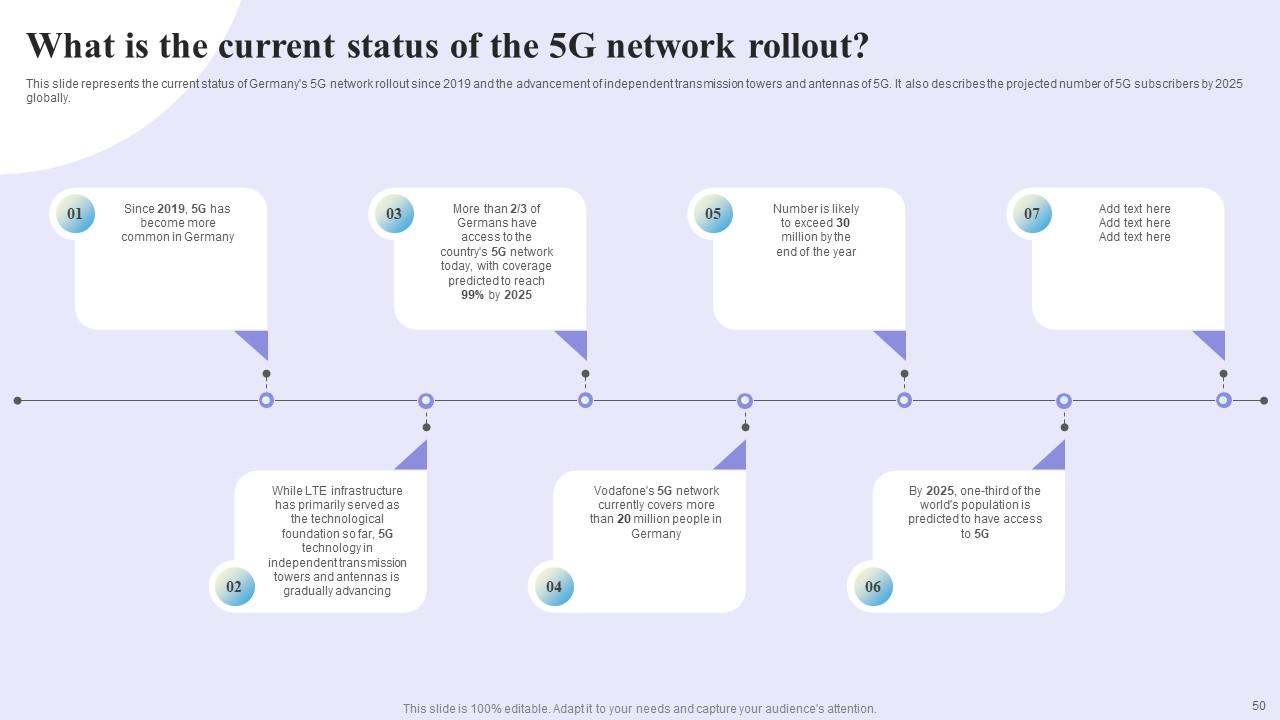
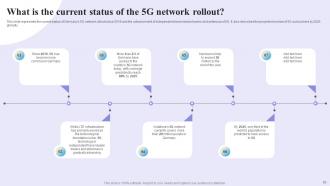
Folie 50 : Diese Folie repräsentiert den aktuellen Stand des 5G-Netzausbaus in Deutschland.
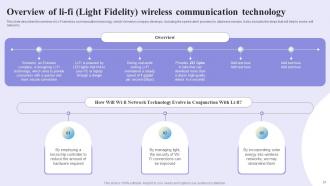
Folie 51 : Diese Folie beschreibt den Überblick über die drahtlose Li-Fi-Kommunikationstechnologie.
Folie 52 : Diese Folie gibt den Titel für die Ideen an, die in der folgenden Vorlage behandelt werden sollen.
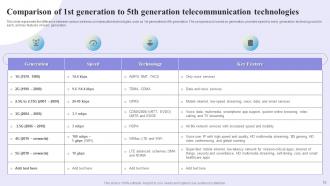
Folie 53 : Diese Folie stellt den Unterschied zwischen verschiedenen drahtlosen Kommunikationstechnologien dar.
Folie 54 : Diese Folie enthält die Überschrift für die als nächstes behandelten Ideen.
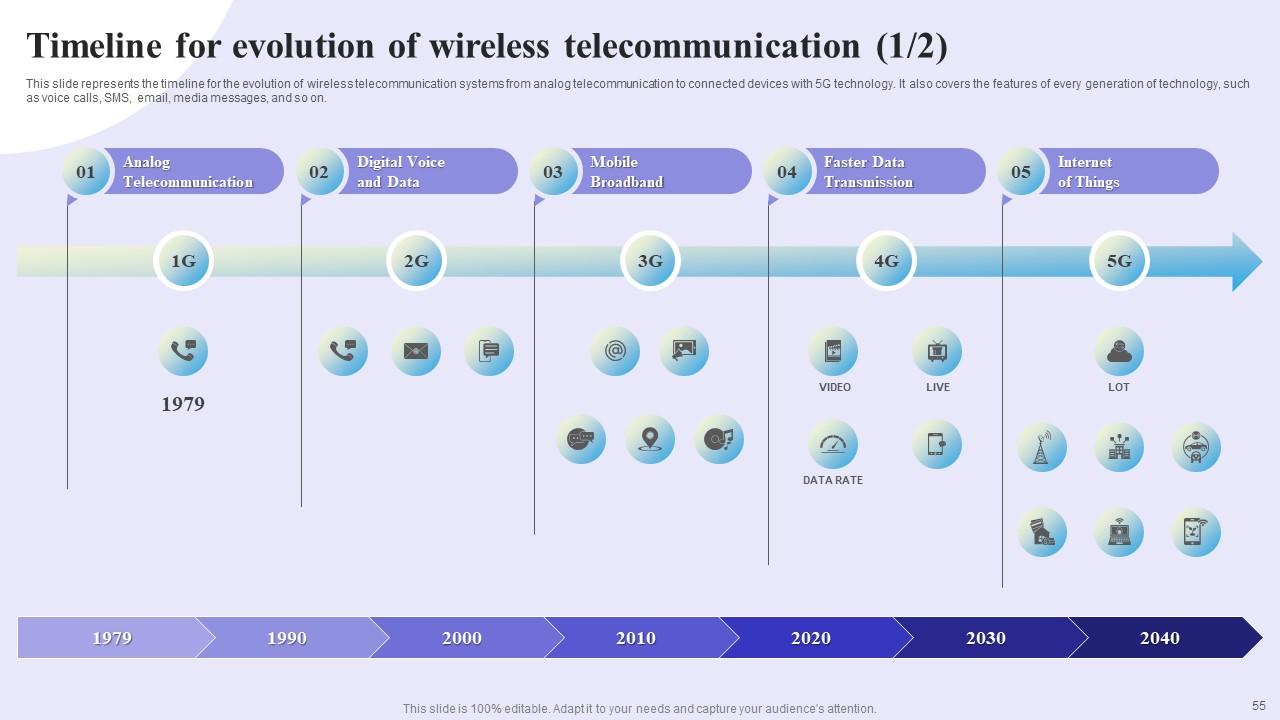
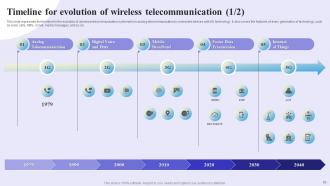
Folie 55 : Diese Folie zeigt die Zeitleiste für die Entwicklung der drahtlosen Telekommunikation.
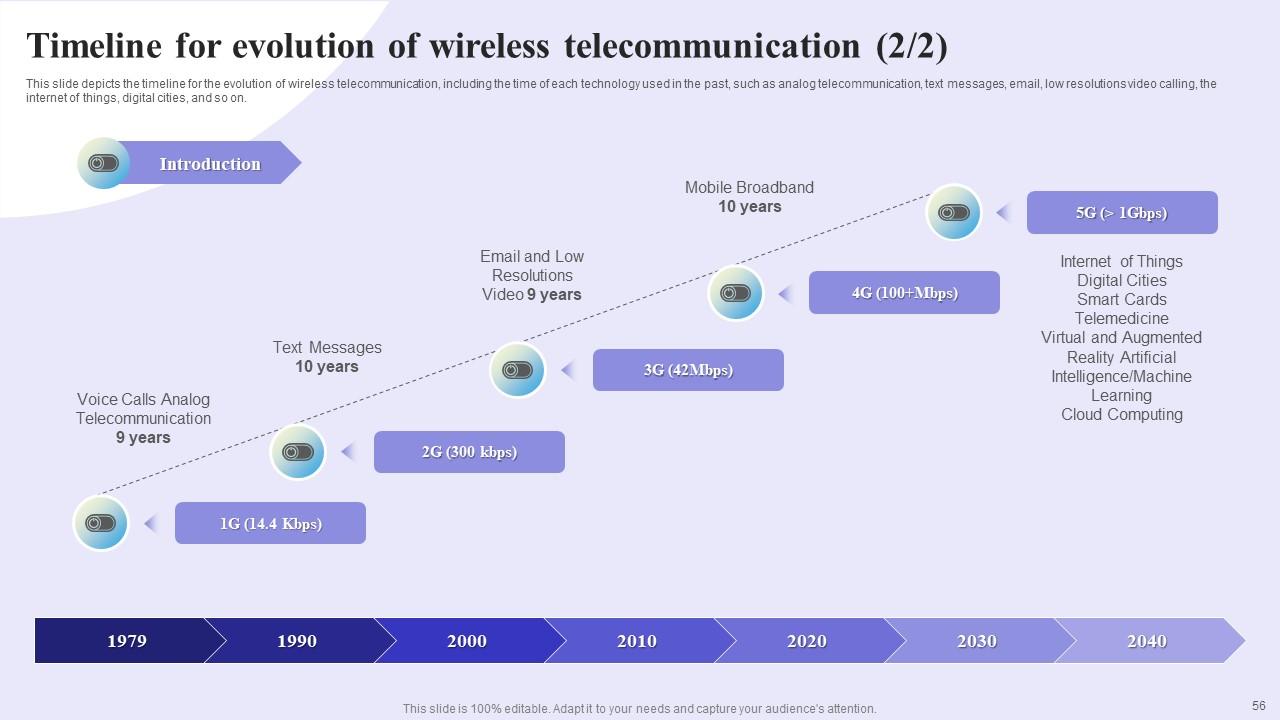
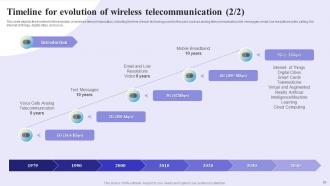
Folie 56 : Diese Folie setzt die Zeitleiste für die Entwicklung der drahtlosen Telekommunikation fort.
Folie 57 : Diese Folie zeigt den Titel für die als nächstes zu diskutierenden Themen.
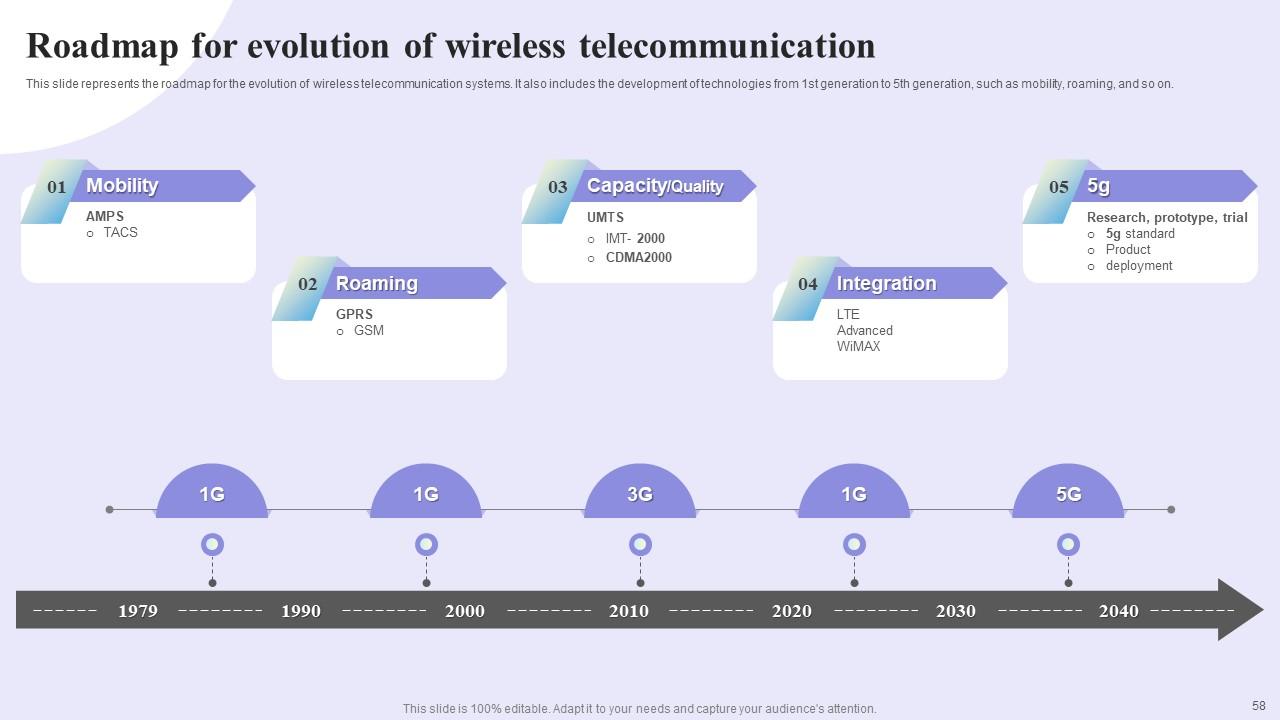
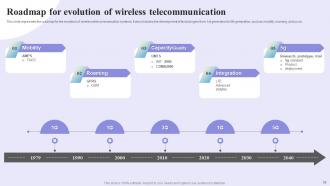
Folie 58 : Diese Folie präsentiert die Roadmap für die Entwicklung der drahtlosen Telekommunikation.
Folie 59 : Dies ist die Symbolfolie, die alle im Plan verwendeten Symbole enthält.
Folie 60 : Diese Folie zeigt zusätzliche Informationen.
Folie 61 : Diese Folie wird verwendet, um die Mission, Vision und Werte der Organisation zu präsentieren.
Folie 62 : Dies ist unsere Zielfolie. Geben Sie hier Ihre Unternehmensziele an.
Folie 63 : Dies ist die Folie des Venn-Diagramms.
Folie 64 : Dies ist die Puzzle-Folie mit verwandten Bildern.
Folie 65 : Diese Folie erläutert den organisatorischen Zeitplan.
Folie 66 : Dies ist die Folie unseres Teams. Geben Sie hier Ihre teambezogenen Informationen an.
Folie 67 : Diese Folie enthält die Haftnotizen für Erinnerungen und Fristen.
Folie 68 : Dies ist die Dankesfolie für die Bestätigung.
1G zu 5G Evolution Powerpoint-Präsentationsfolien mit allen 73 Folien:
Verwenden Sie unsere Powerpoint-Präsentationsfolien zur Entwicklung von 1G zu 5G, um Ihnen effektiv dabei zu helfen, wertvolle Zeit zu sparen. Sie sind gebrauchsfertig und passen in jede Präsentationsstruktur.
FAQs
The advantages of wireless communication technology include mobility, flexibility, convenience, cost-effectiveness, and increased productivity. The disadvantages of wireless communication technology include limited range, susceptibility to interference and signal loss, security concerns, and potential health risks.
5G communication systems are an advanced version of 4G, offering higher data rates, lower latency, increased capacity, improved reliability, and better security.
The different types of wireless communication technology include radio communication, satellite communication, cellular communication, Wi-Fi communication, and Bluetooth communication.
The history of wireless technology dates back to 1895, when Guglielmo Marconi first demonstrated the ability to transmit radio signals over a distance. Since then, wireless technology has evolved to include the invention of the mobile phone and the deployment of 5G networks.
The key features of 5G technology include faster data transfer rates, lower latency, and increased capacity. The disadvantages of 5G technology include the need for significant infrastructure investment, potential security risks, and concerns over the potential health effects of increased radiofrequency radiation exposure.
-
Delighted to see unique and eye-catching PowerPoint designs that are so easy to customize.
-
The way SlideTeam professionals work is exceptional. Thanks for being so helpful!
