Zeitachse des monatlichen Projektstatusplaners 2020

2020 monthly project status planner timeline
Slide 1 of 2
Favourites Favourites

Try Before you Buy Download Free Sample Product

Audience Impress Your
Audience
Editable 100%
Editable
Time Save Hours
of Time
The Biggest Sale is ending soon in
0
0
:
0
0
:
0
0

Merkmale dieser PowerPoint-Präsentationsfolien:

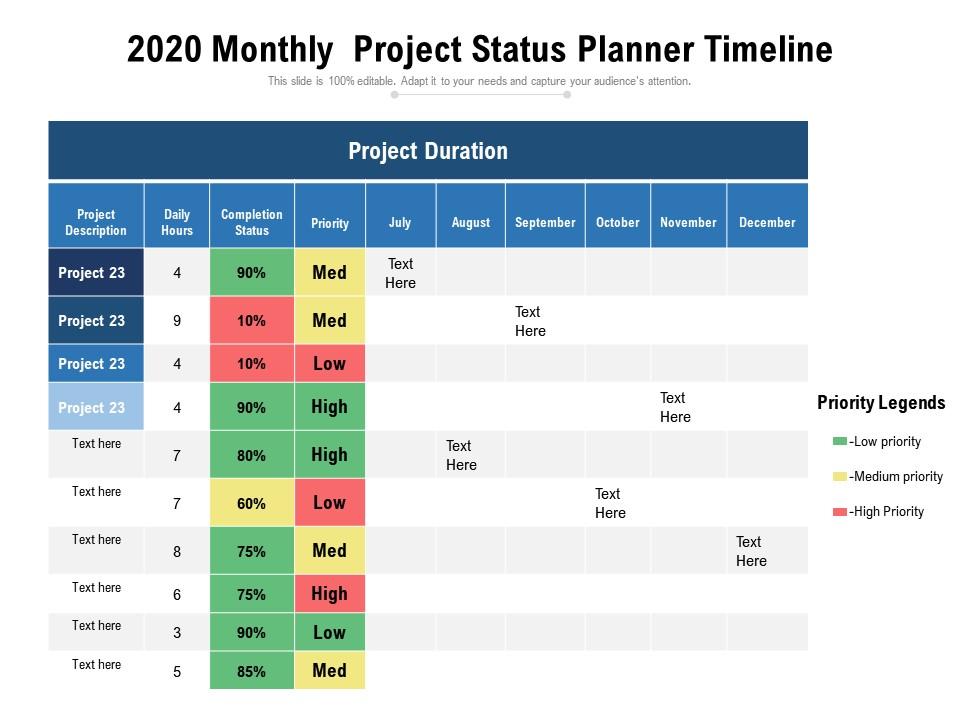
Präsentation dieses Satzes von Folien mit dem Namen 2020 Monthly Project Status Planner Timeline. Die auf dieser Folie behandelten Themen sind die Zeitachse des monatlichen Projektstatusplaners für 2020. Dies ist eine vollständig bearbeitbare PowerPoint-Präsentation und steht zum sofortigen Download zur Verfügung. Laden Sie es jetzt herunter und beeindrucken Sie Ihr Publikum.

FAQs for 2020 monthly project

Key components of an effective project status planner include milestone tracking, resource allocation charts, risk assessment matrices, budget monitoring tools, and stakeholder communication dashboards. These elements work together by providing real-time visibility into project progress, enabling proactive decision-making, and streamlining reporting processes, with many organizations finding that comprehensive planners reduce delays and enhance team accountability.

A project status planner enhances team communication by providing centralized visibility into project progress, deadlines, milestones, and individual responsibilities, ensuring everyone stays aligned on priorities and deliverables. Through real-time updates and shared dashboards, teams streamline coordination, minimize miscommunication, and accelerate decision-making processes, with many organizations finding that transparent status tracking ultimately delivers improved accountability and more efficient project outcomes.

**INPUT**: What tools and software are best for creating a project status planner? **OUTPUT**: Effective project status planner tools include Microsoft Project, Asana, Trello, Monday.com, and Smartsheet, each offering timeline tracking, resource allocation, and collaborative features. These platforms streamline project oversight by enabling real-time updates, automated reporting, and stakeholder visibility, with many organizations finding that integrated dashboards ultimately deliver enhanced accountability and faster decision-making across complex initiatives. [Word count: 58 words]

**INPUT**: How do you tailor a project status planner for different types of projects? **OUTPUT**: Tailoring project status planners involves customizing timelines, milestones, resource allocation methods, and progress metrics to match specific project requirements, industry standards, and stakeholder expectations. Software development projects emphasize sprint cycles and feature deployments, while construction projects focus on sequential phases and compliance checkpoints, with many organizations finding that strategic customization ultimately delivers enhanced visibility and improved project outcomes. [Word count: 58]

Key metrics include task completion percentages, budget utilization, timeline adherence, resource allocation efficiency, milestone achievements, and risk indicators. These metrics enable project managers to identify bottlenecks, optimize resource distribution, and maintain stakeholder transparency, with many organizations finding that comprehensive tracking ultimately delivers faster project completion and enhanced operational control.

Project status updates should typically be communicated weekly for most projects, with daily updates for critical phases and monthly summaries for executives or external stakeholders. The frequency depends on project complexity, stakeholder needs, and risk levels, with many organizations finding that consistent, structured communication schedules enhance transparency, enable faster decision-making, and ultimately strengthen stakeholder confidence while preventing costly miscommunications.

Common pitfalls include inaccurate status updates, over-complicating tracking metrics, neglecting stakeholder communication, inconsistent data entry, and failing to adjust timelines based on real progress. These issues undermine project visibility by creating false confidence, delaying critical decisions, and reducing team accountability, with many organizations finding that simplified, regularly updated planners deliver more reliable outcomes and strategic control.

Visual aids enhance project status planners by transforming complex data into easily digestible formats through charts, graphs, timelines, and color-coded indicators that enable instant comprehension of progress, bottlenecks, and resource allocation. These visual elements streamline stakeholder communication and accelerate decision-making processes, with many project managers finding that visual dashboards reduce meeting times while improving team alignment and project outcomes.

Risk management enables project status planners to identify potential threats, assess their impact on timelines and budgets, and develop mitigation strategies before issues escalate. Through proactive risk tracking, project managers can adjust resource allocation, update stakeholder communications, and maintain realistic project forecasts, ultimately delivering more predictable outcomes and enhanced organizational confidence in project execution.

Project status planners differ significantly between methodologies, with agile emphasizing iterative sprint tracking, daily standups, and adaptive milestone adjustments, while traditional approaches focus on fixed timelines, sequential phase gates, and comprehensive baseline comparisons. Agile planners streamline real-time visibility through burndown charts and retrospective insights, whereas traditional planners deliver structured progress reporting against predetermined schedules, with many organizations finding that hybrid approaches ultimately enhance both flexibility and accountability.

Project status planners significantly enhance team accountability by providing transparent visibility into individual responsibilities, deadlines, and progress milestones, while establishing clear ownership structures and regular check-in protocols. Through centralized tracking systems, teams experience improved communication flows, reduced missed deadlines, and stronger collaborative ownership, with many organizations finding that structured accountability frameworks ultimately deliver higher project success rates and enhanced team performance.

Feedback can be effectively integrated into project status planners through regular stakeholder review cycles, dedicated feedback tracking sections, automated notification systems, and real-time comment features. These mechanisms streamline communication by capturing insights, addressing concerns promptly, and maintaining transparency across teams, with many organizations finding that structured feedback loops enhance project outcomes and stakeholder satisfaction.

Best practices for reviewing and updating a project status planner include conducting regular milestone assessments, tracking budget variance, monitoring resource allocation, updating timeline adjustments, and documenting risk mitigation progress. These systematic reviews enable project managers to identify bottlenecks early, reallocate resources strategically, and maintain stakeholder alignment, with many organizations finding that weekly updates deliver improved project outcomes and enhanced team accountability.

A project status planner enhances stakeholder engagement by providing transparent visibility into progress, milestones, and potential challenges through regular updates and clear communication channels. This structured approach enables stakeholders to stay informed about project developments, participate in decision-making processes, and address concerns proactively, ultimately delivering improved satisfaction and stronger collaborative relationships across all project phases.

Digital project status planners offer real-time collaboration, automated updates, cloud accessibility, data analytics, and seamless integration with project management tools. While physical planners provide tactile engagement and eliminate screen dependency, digital solutions streamline workflows by enabling instant stakeholder communication, progress tracking across multiple projects, and automated reporting, ultimately delivering enhanced operational efficiency and competitive advantage in increasingly complex project environments.

Ratings and Reviews

0% of 100
Review Form
Write a review
Most Relevant Reviews

No Reviews