30 60 Plan de acción de ventas de 90 días
Try Before you Buy Download Free Sample Product
Audience
Editable
of Time
Nuestro plan de acción de ventas 30 60 90 días está diseñado temáticamente para proporcionar un telón de fondo atractivo para cualquier tema. Úselos para parecer un profesional de presentaciones.
Características de estas diapositivas de presentación de PowerPoint:
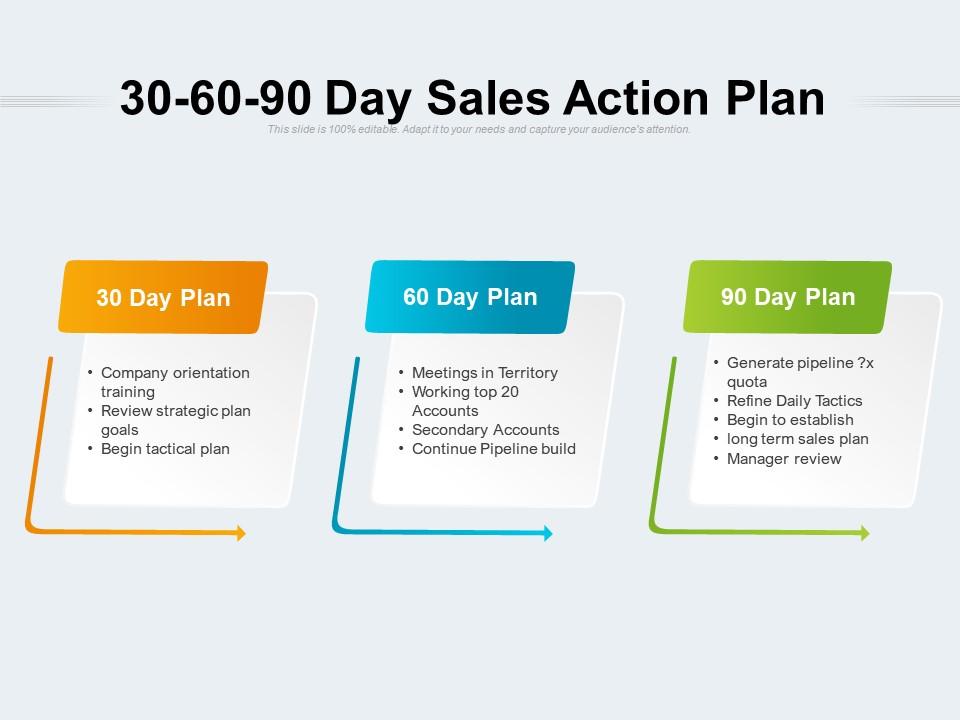
Presentar este conjunto de diapositivas con el nombre 30 60 Plan de acción de ventas de 90 días. Este es un proceso de tres etapas. Las etapas de este proceso son el plan de 30 días, el plan de 60 días y el plan de 90 días. Esta es una presentación de PowerPoint completamente editable y está disponible para su descarga inmediata. Descárguelo ahora e impresione a su audiencia.
People who downloaded this PowerPoint presentation also viewed the following :
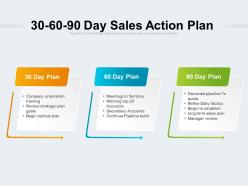
30 60 Plan de acción de ventas de 90 días con las 2 diapositivas:
Utilice nuestro Plan de acción de ventas 30 60 90 días para ayudarle a ahorrar su valioso tiempo de forma eficaz. Están listos para adaptarse a cualquier estructura de presentación.
FAQs for 30 60 90 day
Okay so first thing - figure out exactly who you're selling to and why they'd pick you over everyone else. That's your foundation right there. Next, map out your entire sales process because honestly, too many teams just improvise and wonder why results are inconsistent. Don't skip the enablement stuff either - your reps need proper tools and training to actually close deals. Track everything with solid KPIs so you know what's bombing and what's crushing it. I'd start by looking at what you've already got, then tackle the biggest holes first.
Okay so market research is basically your secret weapon for understanding who you're actually selling to. It reveals what problems your customers are dealing with and how they decide to buy stuff. Honestly, you'll probably be shocked at how wrong some of your assumptions are about your audience - I know I was! You'll figure out which messages work and which ones bomb completely. Plus you get the inside scoop on competitor pricing and new trends that might change everything. Oh, and definitely start by asking your current customers about their biggest pain points first.
So instead of blasting everyone with the same pitch, you split your prospects into groups that actually make sense - industry, company size, their specific problems, whatever. A startup founder isn't gonna care about the same stuff as some big corp procurement guy, you know? I'd stick to like 3-4 segments tops or you'll go crazy trying to manage it all. Then build different talking points and case studies for each group. Way more effective than just throwing stuff at the wall and hoping something sticks.
Honestly, you need both the predictive stuff and the results stuff to see what's actually happening. Track your conversion rates at each funnel stage, average deal size, how long sales cycles take, and total revenue obviously. Customer acquisition cost is critical though - spending more than customers are worth is a quick way to tank. Win/loss ratios by rep tell you a lot too, plus pipeline velocity. But here's the thing - don't get buried in spreadsheets. Pick maybe 4-5 metrics that'll actually change how you operate and review them weekly. More than that and you'll just confuse everyone.
Honestly, start by just listening to what your prospects are actually talking about online. Follow their accounts and engage with their posts for a few weeks - no sales stuff yet. LinkedIn's obviously king for B2B, but Twitter can be solid too depending on your crowd. When you do jump in, share helpful content that shows you know your stuff. I've seen people make the mistake of pitching right away instead of building that relationship first. Customer success stories work great as social proof. The whole thing's about staying top-of-mind so when they're ready to buy, they think of you.
Honestly, tech can be a game-changer for your sales process. CRM systems let you track every conversation and actually see patterns in your pipeline. AI tools are pretty solid for ranking leads and figuring out which deals might actually close. The automation stuff handles all the boring tasks (seriously, lifesaver). Real-time analytics show you what's working vs what you just think is working - there's usually a gap there. Digital tools help personalize outreach without doing everything manually. I'd pick one area where you're basically guessing right now and find something that gives you better visibility there.
First thing - figure out what your company's actually trying to achieve this year. Revenue goals, new markets, keeping customers happy, whatever the big stuff is. Map your sales work directly to that. Like if they want enterprise growth, stop wasting time on tiny leads (learned that one the hard way lol). Your metrics should match those business goals too. Oh and definitely have regular check-ins with leadership. Priorities change constantly and you don't want to be the person still chasing last quarter's focus while everyone else moved on.
Honestly, your biggest headache will be getting people to actually use the new system. Veteran reps are gonna hate it - they've been doing things their way forever and don't see why they should change. Training everyone while still hitting your numbers? That's brutal. It's like trying to renovate your kitchen while hosting Thanksgiving dinner. Customer relationships might get weird during the switch too, which nobody talks about enough. Start small though - pick your most flexible people first, let them figure it out, then parade their wins around. The holdouts will come around once they see results.
Dude, your sales reps are literally talking to customers all day - they know what's actually working and what isn't. Listen when they tell you which pitches land, what complaints keep popping up, or if your pricing is scaring people off. I've watched companies totally bomb because executives thought they knew better than the people doing the actual selling. Look for patterns too - when three different reps mention the same problem, that's not coincidence. Set up regular check-ins with them and actually do something about their feedback, otherwise they'll just stop telling you the real stuff.
Honestly, the biggest mess I see is people trying to sell to literally everyone instead of nailing down their ideal customer. Like, pick a lane! Also don't set these crazy unrealistic targets when your team can barely handle current workload. Most people build these fancy strategies but never actually track if anything's working - which is kinda pointless if you think about it. Oh and here's something that drives me nuts: everyone's obsessed with finding new customers while completely ignoring the ones they already have who might buy more stuff. Just start by figuring out exactly who wants what you're selling and why they'd pick you over competitors.
Look, competitive analysis is how you figure out where to position yourself and what to charge. Check out your top 3 competitors first - see where they're screwing up because that's your opening. Their messaging will show you what works (and what totally bombs). I actually learn way more from watching companies fail than succeed, which sounds mean but whatever. You don't want to price yourself into oblivion or leave cash sitting there. Use all this info to build your pitch around why you're better. Honestly, just start auditing their sales stuff this week and you'll spot opportunities everywhere.
Dude, customer feedback is like having a cheat sheet for sales. When deals crash and burn, you'll actually know why instead of just wondering what went wrong. Same with wins - you can see what made them bite. I've noticed the best salespeople obsess over this stuff because it shows you which objections pop up constantly and what messaging actually lands. Track the patterns after both your wins and losses, then adjust how you pitch. Way more effective than shooting in the dark and hoping something sticks.
Okay so here's the thing - don't force stories into your pitch, just let them flow naturally. Start with something like "We had a client dealing with the exact same inventory mess you mentioned." Keep it short though, like under 2 minutes max. Focus on their problem, what you did, and the actual results. Most salespeople honestly just drone on forever with these stories. The story has to connect to whatever benefit you're pitching, obviously. Practice a few solid ones so you can pick the right story depending on who you're talking to. Oh and make sure it sounds conversational, not like you've said it a thousand times before.
Timing is everything here - catch them when they're already excited about buying something. I always push complementary stuff early in the conversation, then save the upgrades for after they've decided on the main thing. Honestly, "customers who bought this also loved..." works way better than being pushy about it. Sure, high-margin add-ons are tempting, but stick with things that actually make sense together. Try "to get the most out of this, you might want..." instead of random suggestions. Track what combos work - you'll start seeing patterns with your specific customers pretty quickly.
Honestly, get yourself a decent CRM first - that's like your foundation. Regular video calls are clutch for keeping everyone on the same page, plus shared dashboards so people can actually see what's happening with deals. The spontaneous stuff you miss from being in person? Yeah, that's the hardest part to replace. Virtual deal reviews help though, and celebrating wins over video calls (even if it feels weird at first). You'll need to write way more stuff down since nobody can just walk over and ask quick questions anymore. I'd start by looking at what tools you're using now and figuring out where people are getting confused or missing info.
No Reviews